Top 25 Arboreal Animals in the Wild (images Included)
Trees are home to a surprisingly diverse range of wildlife. From the dense rainforests of South America to the eucalyptus forests of Australia, arboreal animals have adapted to life high above the forest floor. These tree-dwelling animals use the forest canopy for shelter, food, movement, and protection from predators. This article explores the top 25 arboreal animals in the world, adaptations that help them survive in the canopy, and the role they play in forest ecosystems.
List of 25 Arboreal Animals in the World
The world is full of animals that live in trees, across nearly every continent and forested region. Below is the list of 25 arboreal animals name.
- 1. Sloth
- 2. Koala
- 3. Howler Monkey
- 4. Gibbon
- 5. Slow Loris
- 6. Spider Monkey
- 7. Tree Kangaroo
- 8. Colobus Monkey
- 9. Kinkajou
- 10. Squirrel
- 11. Dormouse
- 12. Clouded Leopard
- 13. Margay
- 14. Tree Porcupine
- 15. Green Tree Python
- 16. Orangutan
- 17. Green Iguana
- 18. Binturong
- 19. Flying Squirrel
- 20. Red-Eyed Tree Frog
- 21. Aye-Aye
- 22. Tree Frog
- 23. Emerald Tree Boa
- 24. Chameleon
- 25. Green Tree Monitor
Detailed Look at Arboreal Animals in the World
Now we will discuss the top 25 arboreal animals in detail with images.
Sloth
Scientific Name: Folivora (suborder; includes multiple species such as Bradypus and Choloepus)
Class: Mammalia
Diet: Herbivore
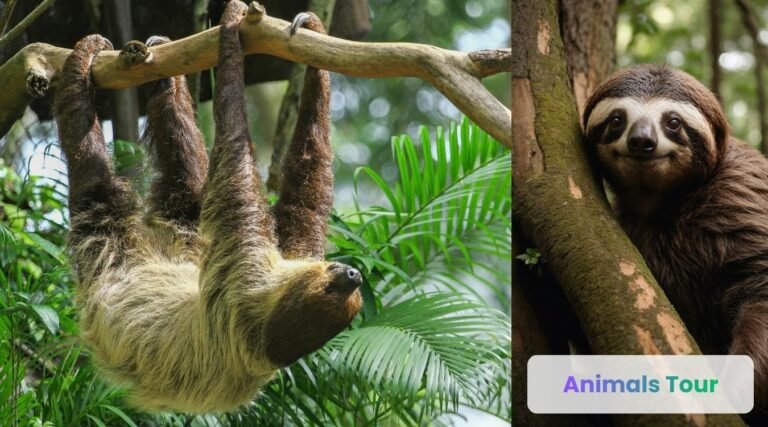
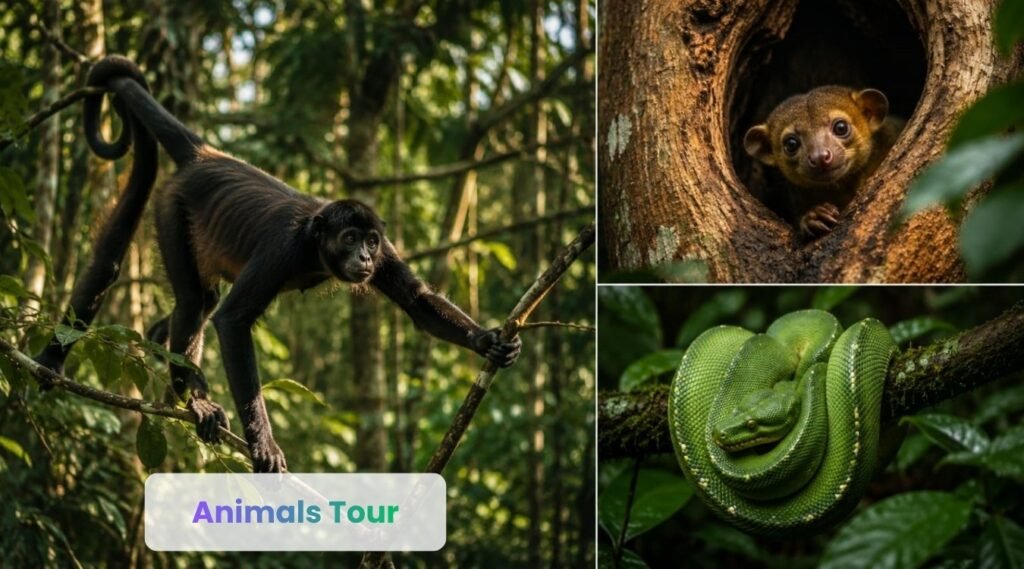
The sloth is perhaps the most well-known of all arboreal animals. Found in the tropical rainforests of Central and South America, sloths spend nearly their entire lives hanging from branches, eating leaves, sleeping, and moving at a slow pace that matches their low-energy diet. Their curved claws are designed for gripping branches rather than walking, which is why they are extremely awkward on the ground.
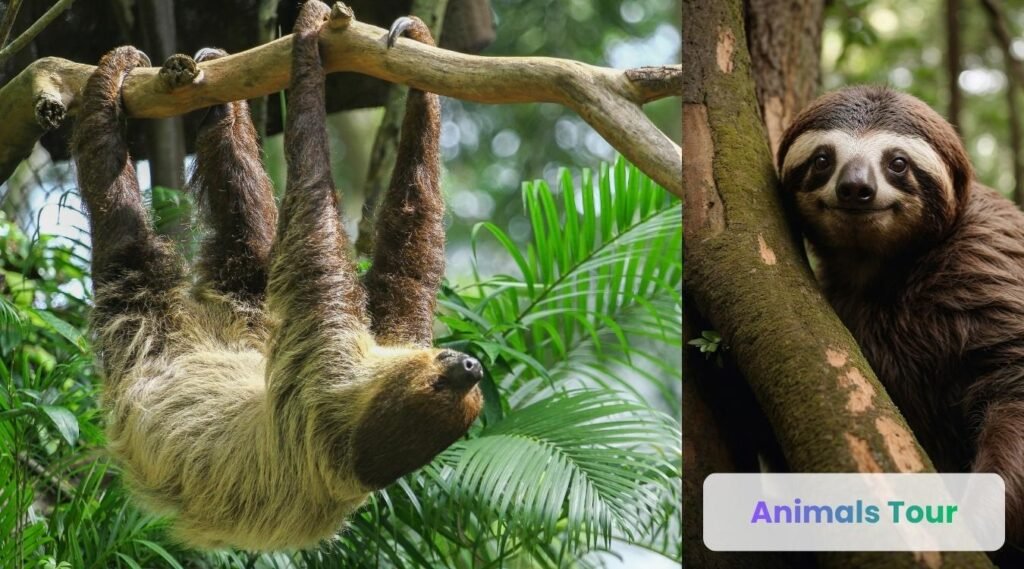
One lesser-known fact is that their slow movement also helps them stay hidden. Algae grows on their fur, giving it a greenish tint that blends into the forest canopy and makes them harder for predators to spot. Sloths come down from the trees only about once a week, making them one of the most dedicated tree-dwelling mammals in the world.
There are two main types of sloths, two-toed and three-toed sloths, both specially adapted for life in the trees. Their long limbs, strong grip, and flexible joints allow them to hang upside down for hours while moving carefully through the rainforest canopy.
Koala
Scientific Name: Phascolarctos cinereus
Class: Mammalia
Diet: Herbivore
Koalas live almost entirely in eucalyptus trees along the eastern and southeastern coasts of Australia. Although they are often called bears, koalas are actually marsupials that carry their young in a pouch. Their diet consists almost entirely of eucalyptus leaves, which are toxic to most animals, but koalas have a specialized digestive system that allows them to break down these tough leaves safely.
They sleep up to 20 hours a day, which is a direct result of the low nutritional value of their food. When awake, they are careful and deliberate climbers. Each koala has a home range of trees it returns to, and they are very selective about which eucalyptus species they eat depending on the region.
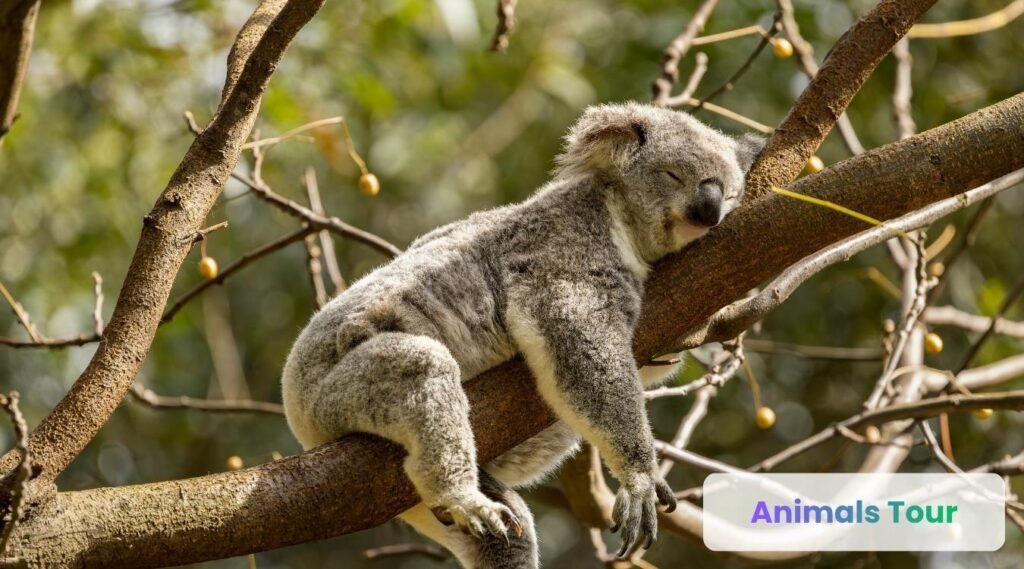
Koalas are currently listed as endangered in Australia, with habitat clearance, disease, and climate-related events like bushfires being the main threats. The 2019–2020 Australian bushfires alone wiped out significant portions of their habitat. Their survival depends heavily on protecting the specific eucalyptus forests they rely on, and conservation efforts are ongoing across several Australian states.
Howler Monkey
Scientific Name: Alouatta (genus; multiple species)
Class: Mammalia
Diet: Herbivore (mainly leaves, also fruits and flowers)
Howler monkeys are among the loudest land animals in the world. Native to the forests of Central and South America, these arboreal animals spend almost all their time in the trees. Their prehensile tail acts as a fifth limb, allowing them to grip branches and hang freely. They travel through the canopy in groups, feeding on leaves, fruit, and flowers.

Their famous call, which can be heard up to three miles away, is used to communicate territory between groups. This keeps conflict low since different troops can announce their location without physical confrontation. They are a good example of how arboreal animals adapt both physically and behaviorally to life in the treetops.
Gibbon
Scientific Name: Hylobatidae (family; includes multiple species)
Class: Mammalia
Diet: Omnivore
Gibbons are found in the forests of Southeast Asia and are among the most agile arboreal animals. They move by brachiation, swinging from branch to branch using only their arms, covering long distances through the canopy with speed and control. Their arms are proportionally the longest of any primate relative to body size, perfectly suited for life in the trees.
Unlike great apes, gibbons are monogamous and live in small family groups. They are territorial and mark their range with loud morning calls. Habitat loss through deforestation is one of the biggest threats they face today, and several gibbon species are now listed as endangered.
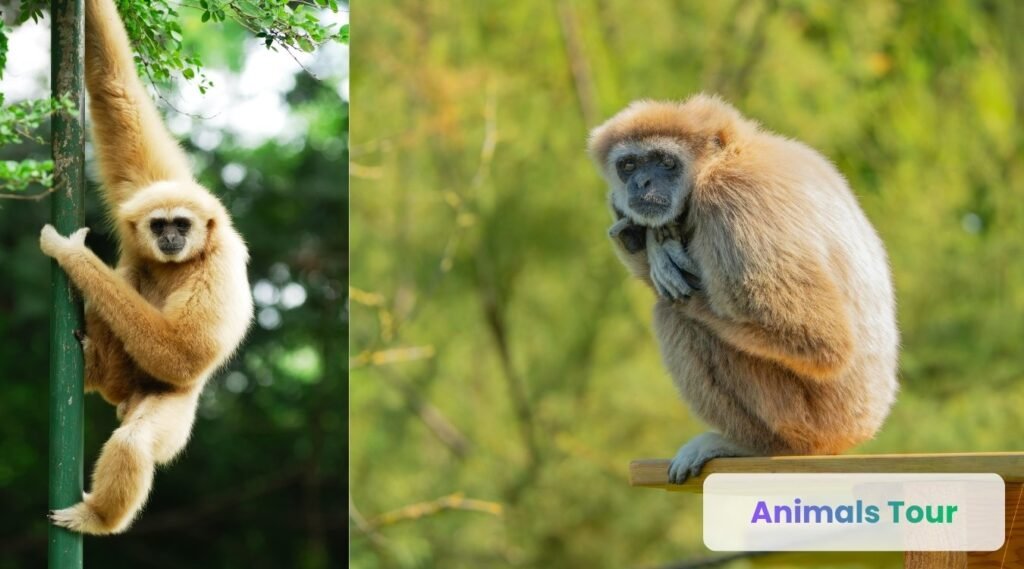
There are around 20 known gibbon species, spread across countries including China, India, Indonesia, and Thailand. The Hainan gibbon, found only on China’s Hainan Island, is considered one of the rarest primates in the world, with fewer than 40 individuals remaining. Their dependence on continuous forest canopy makes habitat fragmentation particularly damaging for them.
Slow Loris
Scientific Name: Nycticebus (genus; multiple species)
Class: Mammalia
Diet: Omnivore (tree gum, fruit, insects, small animals, and occasionally eggs)
The slow loris is a small, nocturnal arboreal animal found across South and Southeast Asia. It moves quietly through the trees at night, feeding on insects, small birds, eggs, and tree gum. Its large eyes are adapted for low-light conditions, giving it good vision in the dark forest canopy.
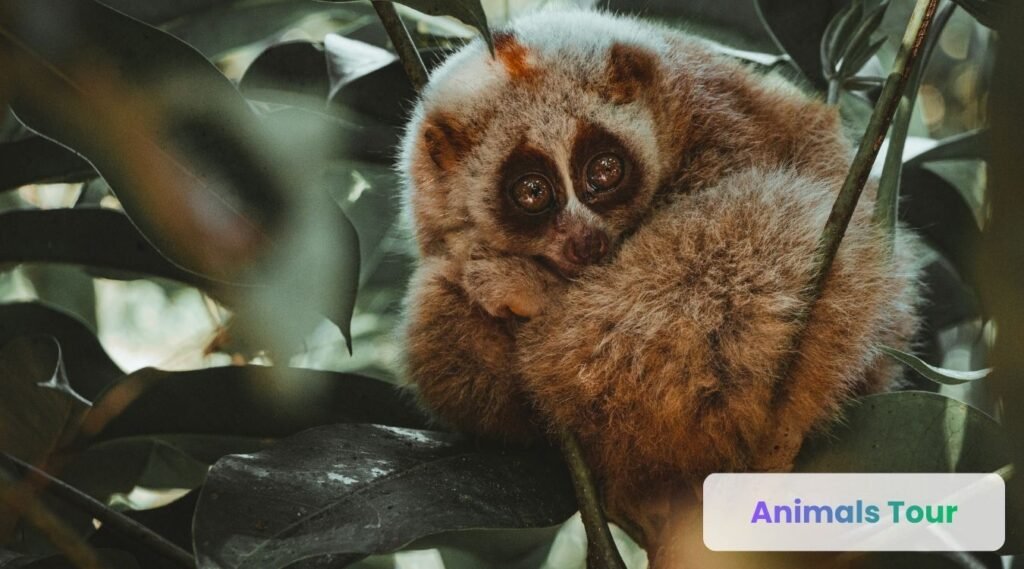
One thing that sets it apart is that it is the only known venomous primate. It produces a toxin from a gland near its elbow, which mixes with saliva to create a venomous bite, used mainly for defense. Despite this, slow lorises are heavily targeted by the illegal pet trade, which has pushed several species to the brink.
Spider Monkey
Scientific Name: Ateles (genus; multiple species)
Class: Mammalia
Diet: Omnivore (mainly fruits, also leaves, flowers, and small insects)
Spider monkeys get their name from the way they look when hanging from branches, with long limbs and a prehensile tail that spreads out like a spider. They are found in the tropical forests of Central and South America and spend almost all their time in the upper canopy, rarely coming down to the forest floor.
They are highly social and play a key ecological role as seed dispersers. They eat large amounts of fruit and travel widely, dropping seeds across the forest as they go. Loss of forest cover affects them badly since they need large, connected stretches of forest to survive.
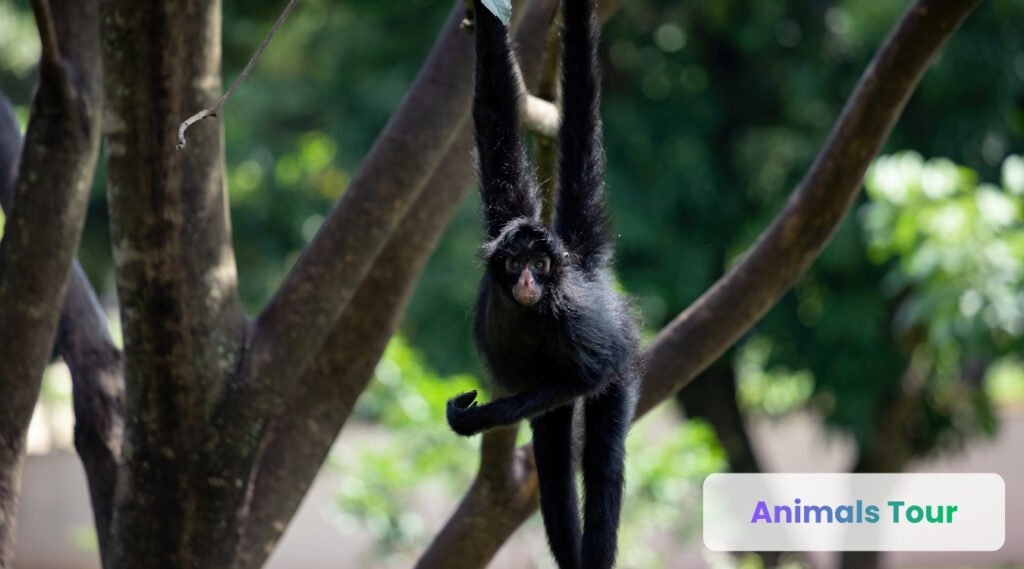
Spider monkeys have one of the slowest reproductive rates among primates, producing just one offspring every two to four years. This low birth rate makes it difficult for populations to recover after declines. Among arboreal animals, spider monkeys are particularly vulnerable because they depend on connected tree cover for food, shelter, and movement. Several species are now listed as endangered or critically endangered.
Tree Kangaroo
Scientific Name: Dendrolagus (genus; multiple species)
Class: Mammalia
Diet: Herbivore (mainly leaves, fruits, flowers, and bark)
Tree kangaroos are found in the rainforests of Papua New Guinea and northeastern Australia. Unlike their ground-dwelling relatives, tree kangaroos have shorter legs, stronger forelimbs, and longer tails for balance. These adaptations allow them to move through trees with more ease. They can jump down from heights of up to 60 feet without injury.
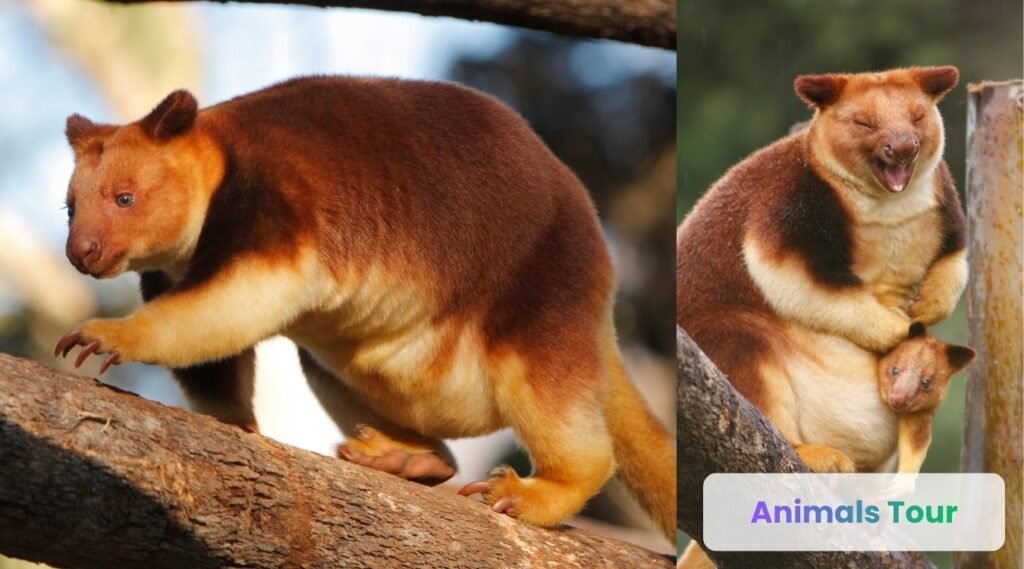
They feed on leaves, bark, and fruit found in the forest canopy. Several species are threatened due to hunting and habitat destruction. Among arboreal animals, they stand out as a rare example of a lineage that evolved for the ground and gradually returned to life in the trees over time.
Colobus Monkey
Scientific Name: Colobus (genus; multiple species)
Class: Mammalia
Diet: Herbivore
Colobus monkeys are found across sub-Saharan Africa, living almost entirely in the treetops of tropical and montane forests. They are leaf specialists, their complex stomachs can digest leaves that other primates cannot. This means they do not need to travel far for food, so they tend to stay within a defined home range in the canopy.
They lack thumbs, which is unusual among primates, but this actually helps them swing and grip branches more efficiently. Their striking black-and-white coloration makes them one of the more visually distinctive tree-dwelling animals in Africa. They live in groups and use loud calls to maintain spacing from rival groups.
Kinkajou
Scientific Name: Potos flavus
Class: Mammalia
Diet: Omnivore
The kinkajou is a small, honey-loving mammal found in the tropical forests of Central and South America. Related to raccoons, it has a prehensile tail and flexible ankles that can rotate 180 degrees, both of which are adaptations commonly seen in arboreal animals. It is entirely nocturnal and rarely seen during the day.
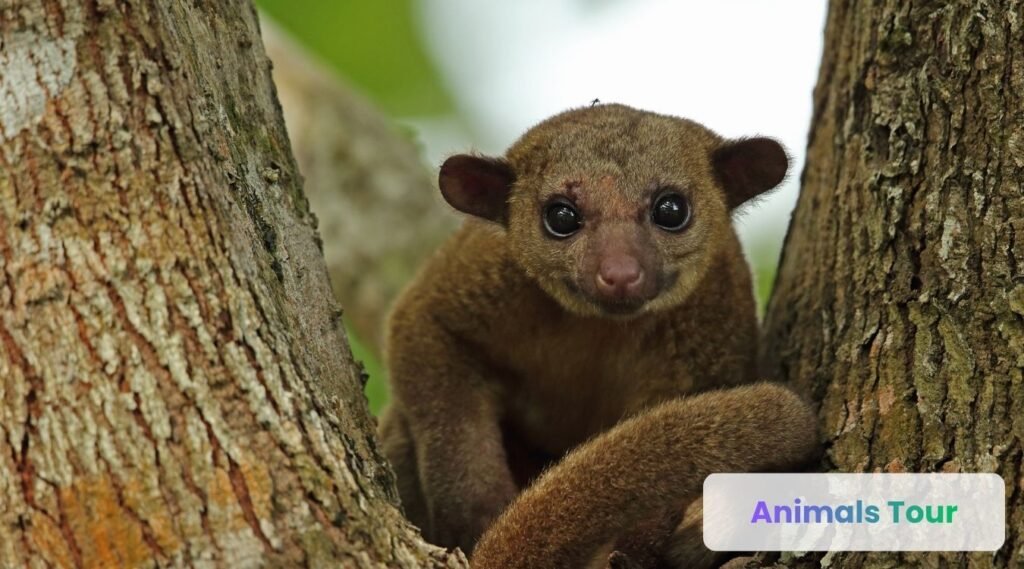
Its long tongue is used to extract nectar from flowers, which makes it an important pollinator in its ecosystem. It also feeds on fruit and occasionally insects. The kinkajou is one of those tree animals that most people have never heard of, yet it plays a quiet but meaningful role in forest health.
Squirrel
Scientific Name: Sciuridae (family; includes tree squirrels, ground squirrels, and flying squirrels)
Class: Mammalia
Diet: Omnivore
Squirrels are among the most widely distributed tree animals in the world, found across North America, Europe, Asia, and Africa. They thrive in temperate forests, tropical woodlands, and even urban parks, where they build nests called dreys in hollow trunks and branch forks. Their success across such varied habitats makes them one of the most adaptable arboreal animals in nature.
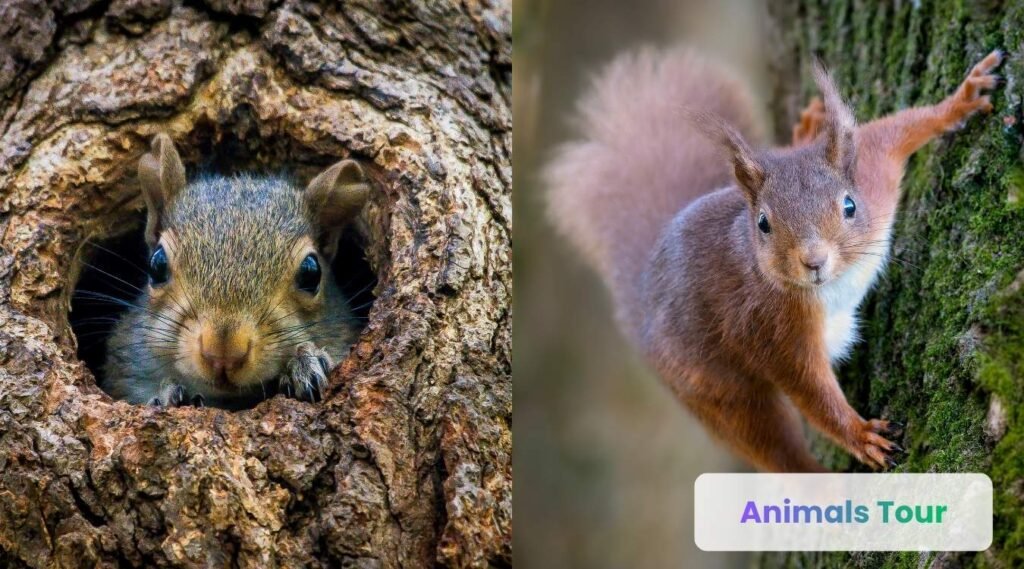
They are well known for caching food, burying nuts and seeds in the ground and returning to them later. Forgotten caches often germinate and grow into new trees, making squirrels important agents of forest regeneration. Their agility in the canopy is made possible by sharp claws and excellent spatial memory.
Dormouse
Scientific Name: Gliridae (family; includes multiple genera and species)
Class: Mammalia
Diet: Omnivore
The dormouse is a small, nocturnal rodent found mostly across Europe and parts of Asia and Africa. It spends a good part of its life in trees and dense hedgerows, feeding on berries, nuts, flowers, and insects. One of its most notable traits is hibernation; some species sleep for up to seven months of the year.
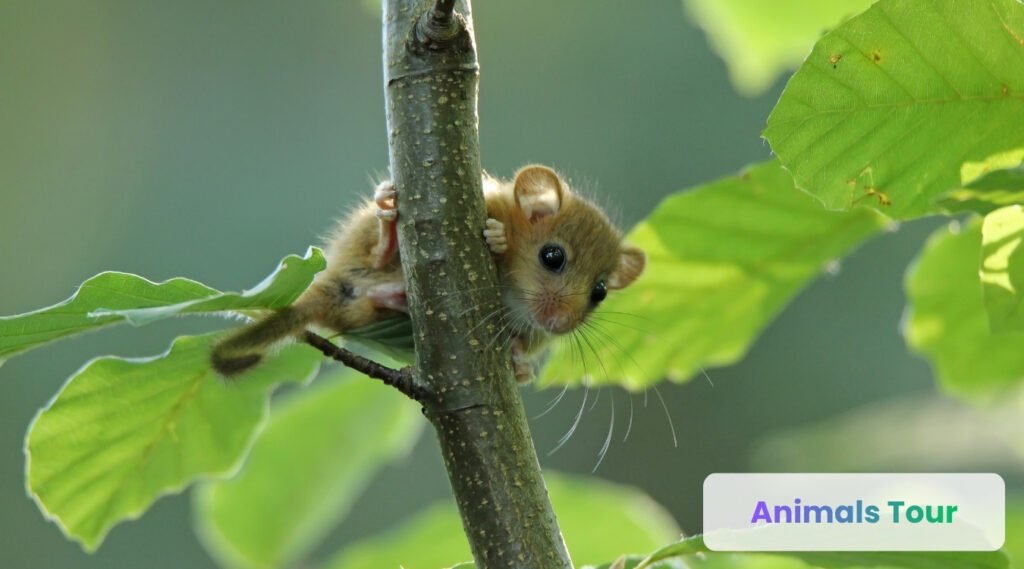
During the warmer months, dormice are active climbers, building small nests of woven grass and bark in shrubs and trees. They are considered a species of concern in many parts of Europe due to habitat loss. Their presence in a woodland is often taken as a sign of a healthy, well-structured ecosystem.
Clouded Leopard
Scientific Name: Neofelis nebulosa
Class: Mammalia
Diet: Carnivore (mainly birds, monkeys, deer, and small mammals)
The clouded leopard is a medium-sized wild cat found in the forests of Southeast Asia and the eastern Himalayas. It is one of the best tree climbing cats in the world, able to climb down trunks headfirst and even hang upside down from branches using its large paws and flexible ankles. Its long tail helps it balance while moving through the canopy.
It is an ambush predator that uses the trees to stalk prey from above. Few arboreal animals combine stealth and climbing ability as effectively as the clouded leopard. Its cloud-shaped coat markings provide excellent camouflage in dappled forest light, helping it remain hidden from prey.
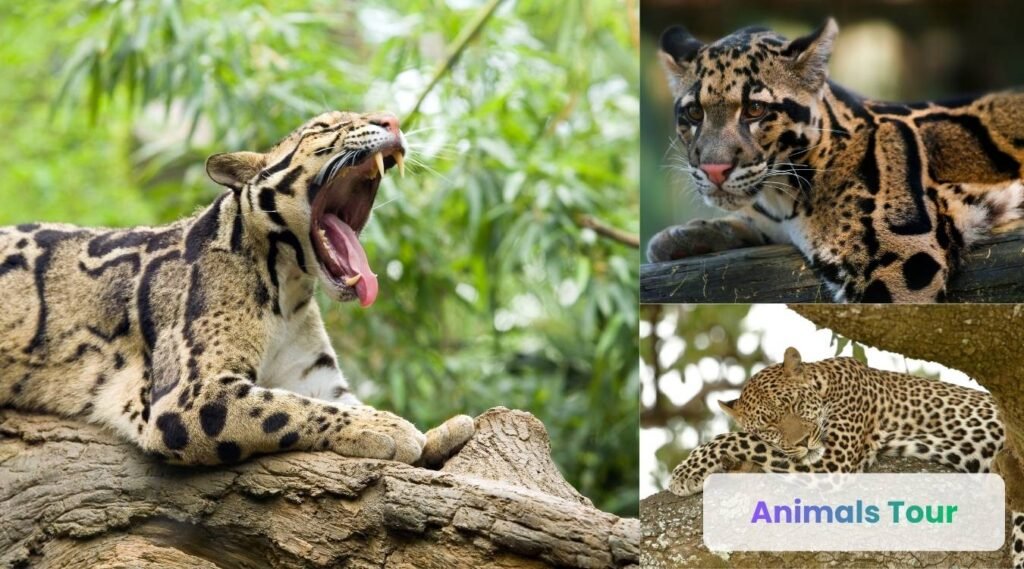
It also has the largest canine teeth relative to body size of any living cat, a feature more commonly associated with ancient saber toothed cats. Scientists now recognize two species: the mainland clouded leopard and the Sunda clouded leopard, which is found on Borneo and Sumatra. Both are threatened by deforestation and poaching.
Margay
Scientific Name: Leopardus wiedii
Class: Mammalia
Diet: Carnivore
The margay is a small wild cat native to the forests of Central and South America. It is highly adapted for life in the trees, with ankles that can rotate 180 degrees and the ability to hang from a branch using just one foot. Because of these adaptations, it is often considered the most arboreal of all wild cats. It hunts birds, lizards, and small mammals in the forest canopy, usually at night.
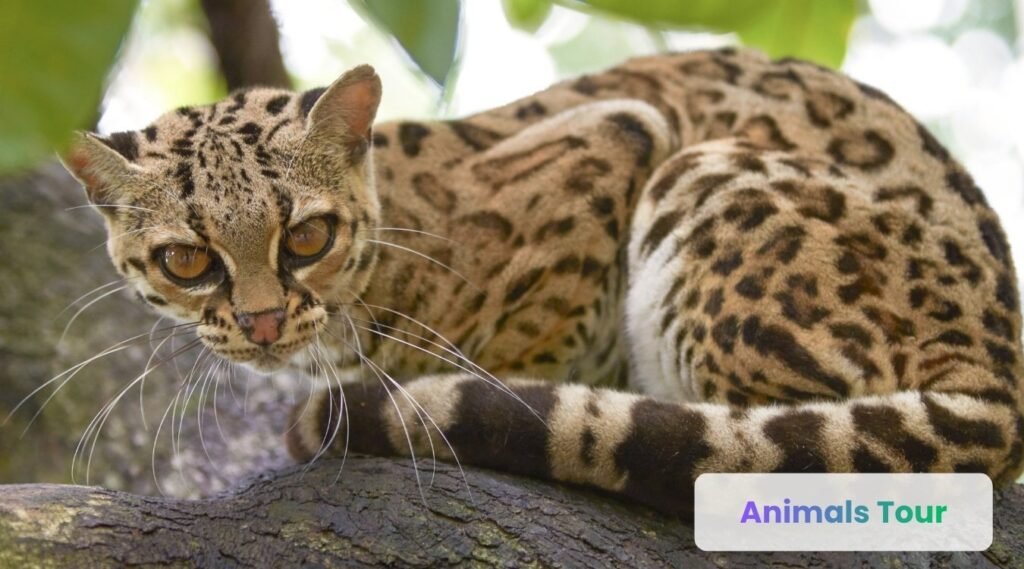
Unlike most cats, the margay spends most of its life in trees and rarely comes down to the ground. It has even been observed mimicking the calls of prey animals to lure them closer, a hunting behavior rarely seen in wild cats. Deforestation remains its biggest threat.
Tree Porcupine
Scientific Name: Coendou (genus; includes multiple species of New World porcupines)
Class: Mammalia
Diet: Herbivore
Tree porcupines are found across the forests of North, Central, and South America. Unlike African porcupines that are largely ground-dwelling, tree porcupines spend much of their time in the canopy. They have prehensile tails and specialized feet for gripping bark. Their quills serve as defense against predators that share the canopy.
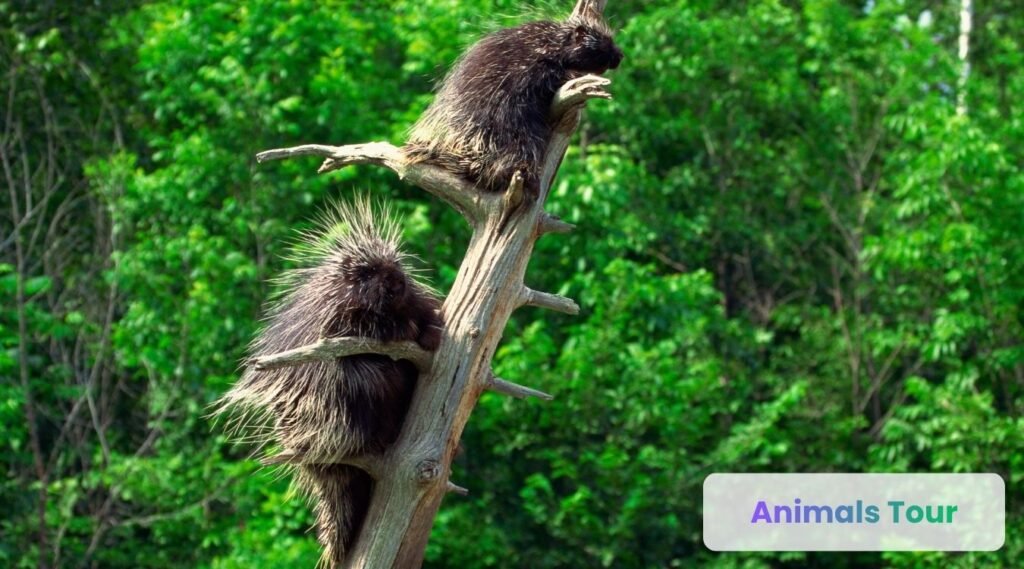
They are herbivores, feeding on leaves, bark, fruit, and flowers. They tend to be solitary and nocturnal, spending days sleeping in the cover of dense branches. Despite their intimidating appearance, they are not aggressive and will only use their quills when directly threatened.
Green Tree Python
Scientific Name: Morelia viridis
Class: Reptilia
Diet: Carnivore
The green tree python is a non venomous snake found in the rainforests of New Guinea, parts of Indonesia, and northeastern Australia. Its bright green color, often marked with white or yellow patterns, provides excellent camouflage among leaves and branches. It rests coiled over branches in a distinctive saddle shaped position with its head at the center, allowing it to strike quickly at passing prey.
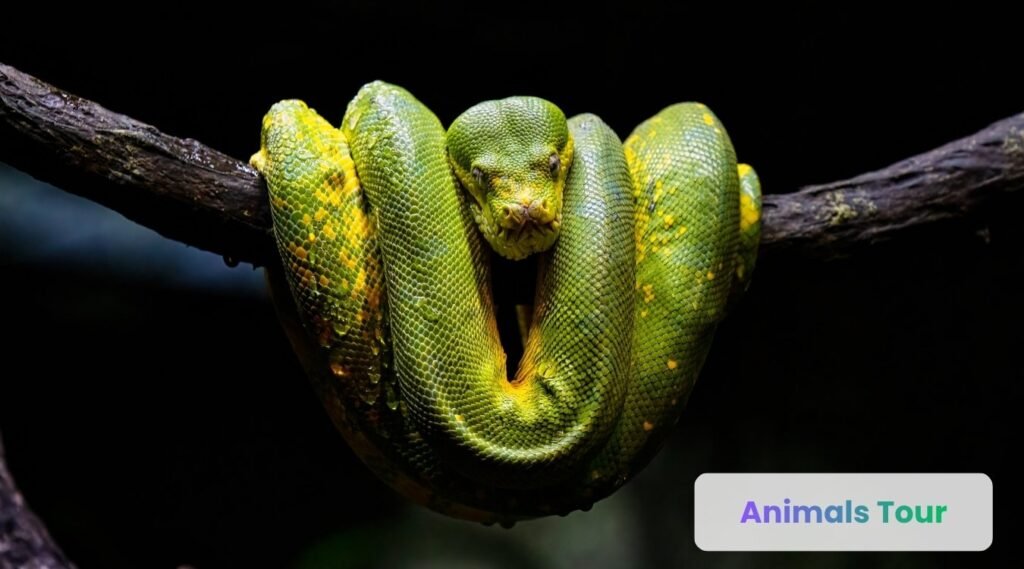
It is a nocturnal hunter that feeds mainly on small mammals and lizards. Juveniles are usually yellow or red before changing to green as they mature. The green tree python spends nearly its entire life in the trees, where it hunts, rests, and reproduces, rarely descending to the ground.
Orangutan
Scientific Name: Pongo (genus; includes Pongo pygmaeus, Pongo abelii, and Pongo tapanuliensis)
Class: Mammalia
Diet: Omnivore
Orangutans are native to the rainforests of Borneo and Sumatra and are the largest arboreal animals in the world. They spend most of their lives in the trees, building a fresh sleeping nest each night from branches and leaves. With an arm span of up to seven feet, they move through the canopy by swinging and reaching between branches.
Highly intelligent, orangutans have been observed using tools in the wild, such as sticks to extract insects or leaves as makeshift umbrellas in the rain. They are critically endangered, primarily due to palm oil plantations destroying their forest habitat. Their slow reproductive rate, with females giving birth roughly every seven to eight years, makes population recovery extremely slow.
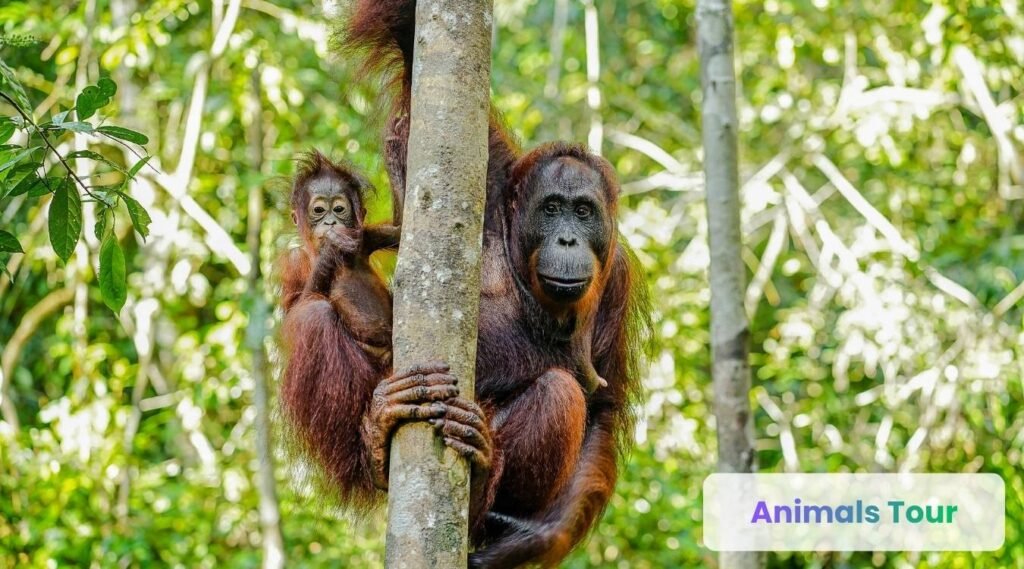
Unlike gorillas and chimpanzees, orangutans are mostly solitary outside of mother-offspring pairs. Adult males develop prominent cheek pads called flanges and produce long calls that can carry over a kilometer through the forest. Two species are currently recognized – the Bornean and Sumatran orangutans – while a third, the Tapanuli orangutan, was identified in 2017 and is already considered the most endangered great ape on Earth.
Green Iguana
Scientific Name: Iguana iguana
Class: Reptilia
Diet: Herbivore
Green iguanas are large lizards found across Central and South America, as well as some Caribbean islands. Despite their size, they are capable climbers and spend most of their time in the tree canopy near water sources. When threatened, they will drop from branches into the water below and swim to safety.
They are herbivores, feeding on leaves, flowers, and fruit from the canopy. Males develop a crest of spines along their back and a large dewlap under the chin, used in displays during mating season. Green iguanas are also common in the exotic pet trade, which has led to feral populations in parts of the southern United States.
Binturong
Scientific Name: Arctictis binturong
Class: Mammalia
Diet: Omnivore
The binturong, also known as the bearcat, is found in the forests of South and Southeast Asia. Despite its nickname, it is neither a bear nor a cat but a member of the civet family. It has a prehensile tail, making it one of only two carnivores in the world with this adaptation. The tail helps it grip branches and move confidently through the canopy.
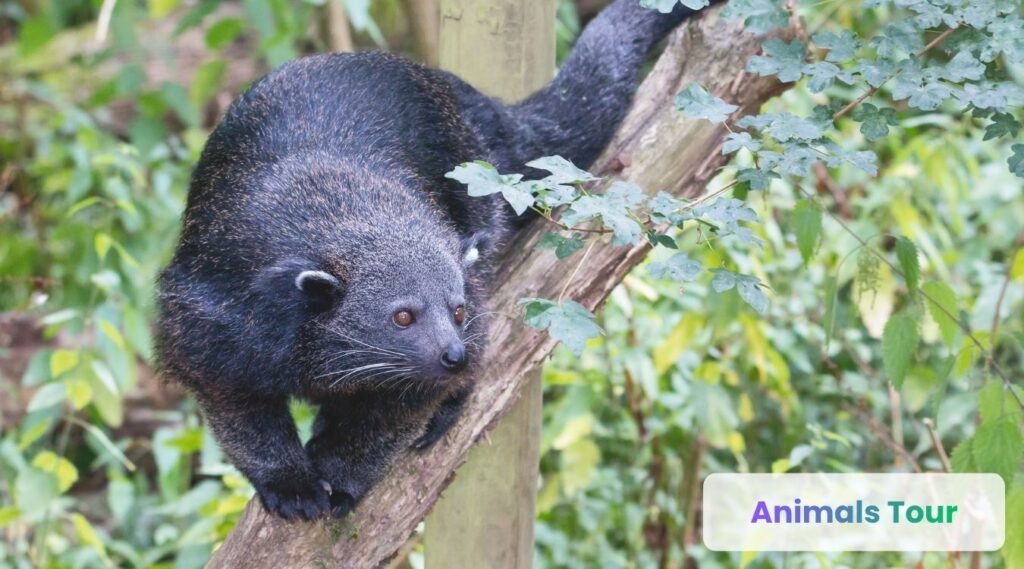
Binturongs feed on fruit, small animals, eggs, and fish. Their scent gland secretions are often compared to the smell of buttered popcorn, helping them recognize one another and mark territory. They also play an important role in seed dispersal, especially for fig trees, helping maintain healthy forest ecosystems.
Flying Squirrel
Scientific Name: Pteromyini (tribe; includes multiple genera and species)
Class: Mammalia
Diet: Omnivore
Flying squirrels do not actually fly, they glide. A membrane called the patagium stretches from their wrists to their ankles, allowing them to glide between trees over distances of up to 300 feet. They are found across North America, Europe, and Asia, usually in forests with a dense canopy.
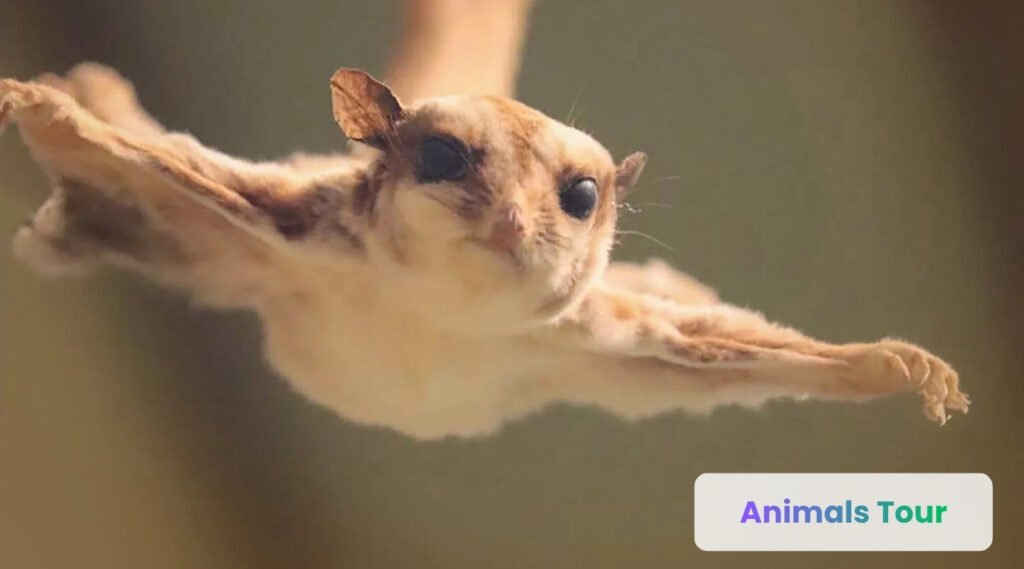
Flying squirrels are nocturnal and feed on nuts, seeds, fruit, fungi, and insects. Their gliding ability helps them travel quickly through the trees and avoid predators without coming down to the forest floor. Some species remain active year round in colder climates, sharing nests in tree hollows to conserve heat during winter.
Red-Eyed Tree Frog
Scientific Name: Agalychnis callidryas
Class: Amphibia
Diet: Carnivore
The red-eyed tree frog is native to the rainforests of Central America and parts of northern South America. Its bright green body, blue and yellow striped sides, and orange feet make it one of the most recognizable tree dwelling animals. Its red eyes are believed to startle predators just long enough for it to escape, a defense known as startle coloration.
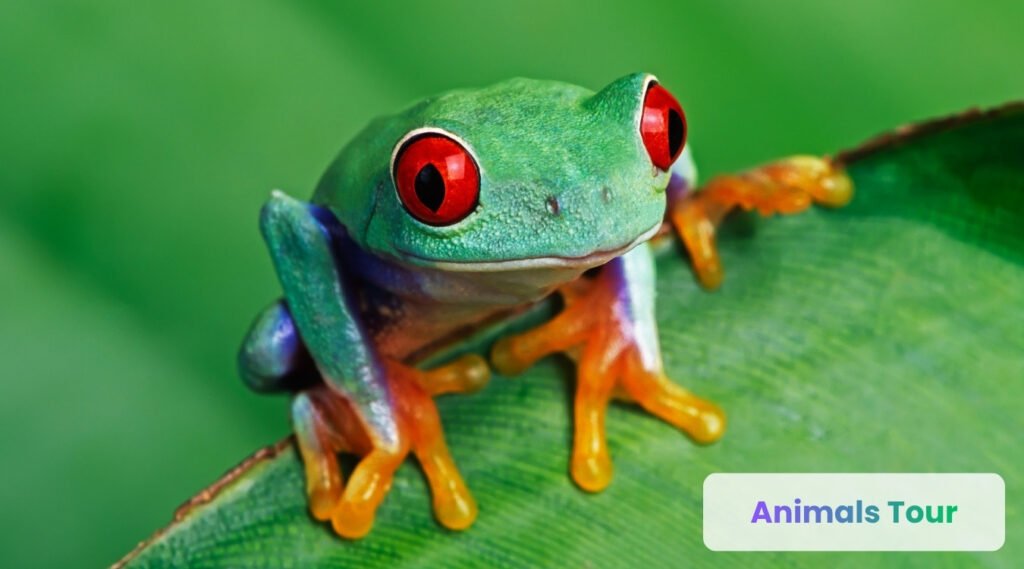
It is nocturnal and spends the day resting motionless on leaves with its bright colors mostly hidden. At night, it becomes active and hunts insects in the canopy. Despite its striking appearance, the red eyed tree frog is not poisonous. It lays its eggs on leaves hanging over water so that newly hatched tadpoles fall directly into the water below.
Aye-Aye
Scientific Name: Daubentonia madagascariensis
Class: Mammalia
Diet: Omnivore (mainly insect larvae, nuts, fruits, and occasionally small animals)
The aye-aye is a nocturnal primate found only in Madagascar. It is the world’s largest nocturnal primate and has one of the strangest appearances of any mammal, with large bat like ears, constantly growing incisor teeth, and an unusually long middle finger used to tap on wood and pull insects from beneath bark. This gives it a role similar to a woodpecker in Madagascar’s forests.
The aye aye is endangered, mainly due to habitat destruction and local superstition. In some Malagasy traditions, it is considered a bad omen, leading to deliberate killing. It is a fully arboreal animal that nests high in the forest canopy and rarely comes down to the ground.
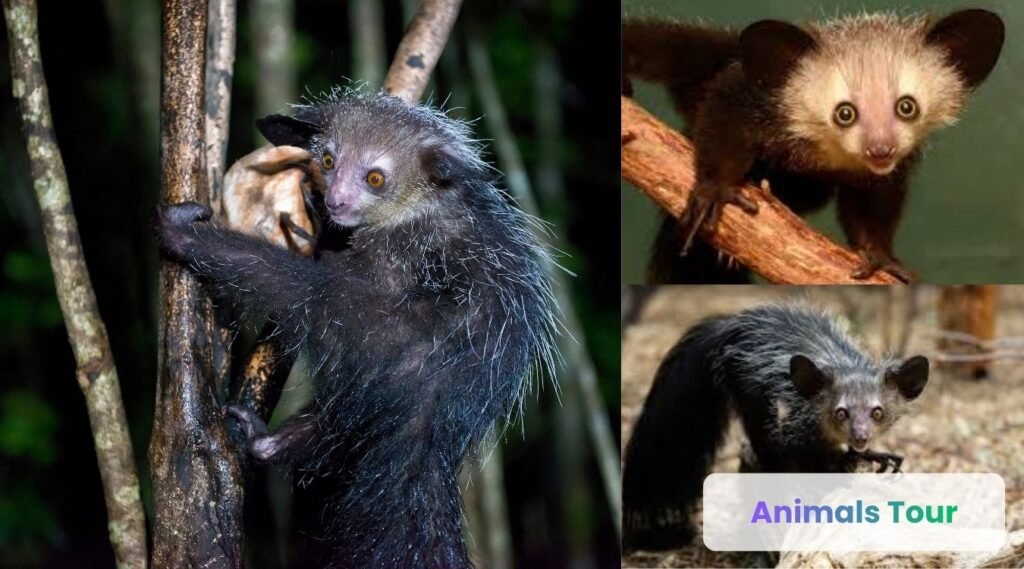
Aye ayes build large ball shaped nests from leaves and branches high in the trees, often maintaining several nests within their range. They locate grubs by tapping on bark with their elongated fingers and listening for hollow sounds beneath the surface. This feeding method is unique among primates and helps the aye-aye occupy a highly specialized ecological niche.
Tree Frog
Scientific Name: Hylidae (family; includes multiple genera and species)
Class: Amphibia
Diet: Carnivore
Tree frogs are found on every continent except Antarctica, with the greatest diversity in tropical regions. They are known for their adhesive toe pads, which allow them to cling to leaves, smooth bark, and even glass. Different species have adapted to a wide range of habitats, from dry woodland edges to dense rainforest canopies.
Most tree frogs are nocturnal insect hunters. Their tree-dwelling lifestyle makes them one of the best arboreal animals examples found in tropical forests. Some can change color to blend into their surroundings, while others rely on camouflage patterns for protection. They are highly sensitive to environmental changes, making them important bioindicators. A decline in tree frog populations often points to larger ecological problems such as pollution, climate change, or habitat loss.
Emerald Tree Boa
Scientific Name: Corallus caninus
Class: Reptilia
Diet: Carnivore
The emerald tree boa is a non venomous constrictor found in the rainforests of South America. Its bright green coloring with white zigzag patterns closely resembles the green tree python of Southeast Asia, even though the two species are not closely related. This is a classic example of convergent evolution, where unrelated animals develop similar traits in response to similar environmental conditions.
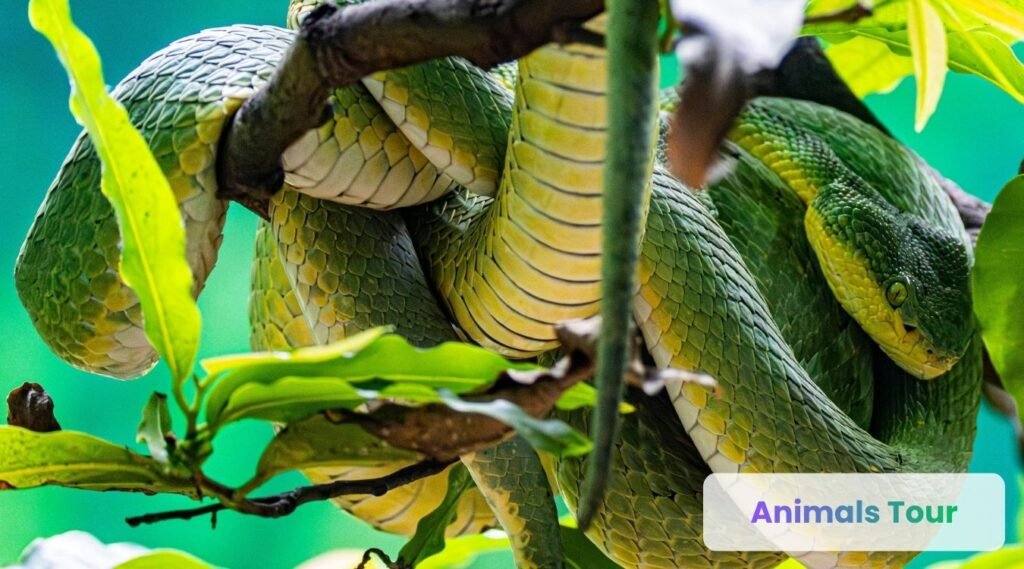
It spends most of its time coiled over branches and hunts mainly at night, using heat sensing pits along its lips to detect warm blooded prey in the dark. Its long front teeth help it catch birds and small mammals in the canopy while maintaining a secure grip on branches. Like many arboreal animals, the emerald tree boa depends heavily on intact forest habitat for survival.
Chameleon
Scientific Name: Chamaeleonidae (family; includes multiple genera and species)
Class: Reptilia
Diet: Carnivore
Chameleons are found mainly in Africa and Madagascar, with some species also present in southern Europe and Asia. They are highly adapted for life in the trees, with zygodactyl feet that grip branches like tongs, a prehensile tail that acts as an extra anchor, and eyes that move independently, giving them nearly 360 degree vision. Their tongue can extend up to twice their body length to catch insects.
Although many arboreal animals rely on speed or strength to survive, chameleons depend on camouflage, patience, and precise movements. Their ability to change color is often misunderstood-it is used not only for camouflage but also for communication, including signaling mood, attracting mates, and regulating body temperature. Most chameleons are solitary and territorial, and many species are now threatened by habitat loss and the illegal wildlife trade
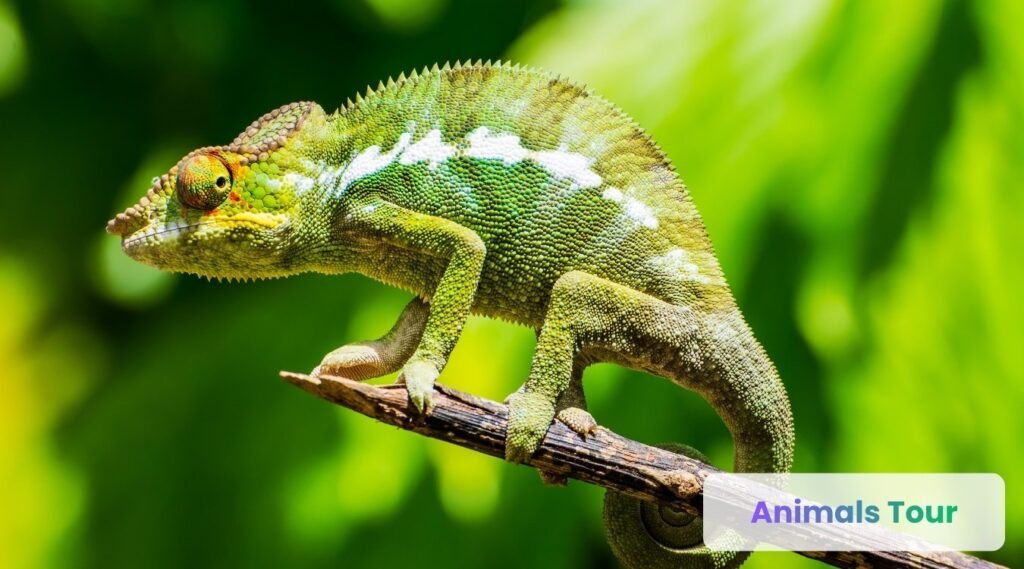
There are over 200 known species of chameleon, with nearly half found in Madagascar. The smallest, Brookesia micra, measures just over an inch and lives among leaf litter on the forest floor, while the largest, the Parson’s chameleon, can reach nearly 70 cm. Despite their diversity, most species share the same core arboreal adaptations that make them well suited to life in trees.
Green Tree Monitor
Scientific Name: Varanus prasinus
Class: Reptilia
Diet: Carnivore (mainly insects, small birds, eggs, and small vertebrates)
The green tree monitor, also known as the emerald tree monitor, is a lizard native to the rainforests of New Guinea and nearby islands. It is a slender, agile lizard with a prehensile tail and long, sharp claws that allow it to move confidently through the canopy. Its blue-green coloring gives it camouflage among the leaves.
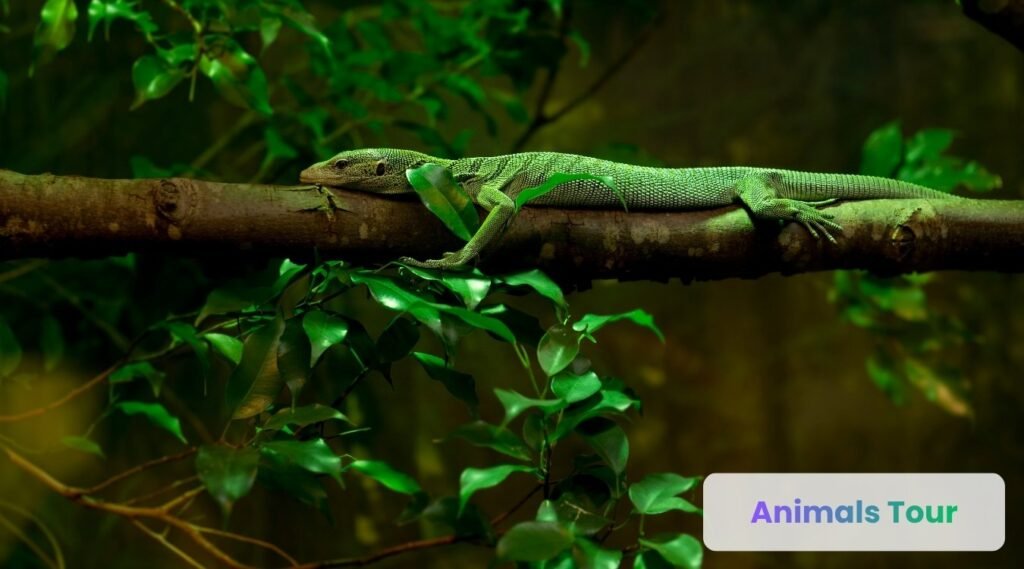
It feeds on insects, small crustaceans, and occasionally small vertebrates. Unlike many monitor lizards that are primarily ground-dwellers, the green tree monitor has evolved strongly toward an arboreal lifestyle, spending most of its time in the trees. It is a popular species in herpetology circles but faces pressure from habitat destruction across its range.
Conclusion
Arboreal animals in the world represent a large part of the world’s biodiversity, and their survival is closely linked to the health of global forests. From the slow-moving sloth to the fast-moving gibbon, each tree dwelling animal plays a specific role as predator, pollinator, seed disperser, or prey.
Frequently Asked Questions (FAQs)
What is the biggest arboreal animal?
The orangutan is the largest arboreal animal in the world, with adult males weighing up to 120 kg (265 lbs).
What are arboreal animals?
Arboreal animals are animals that live in trees and spend most or all of their lives in the forest canopy rather than on the ground.
Are all monkeys arboreal animals?
Most monkeys are arboreal or semi-arboreal, but some species like baboons and macaques spend significant time on the ground.
Which arboreal animal is the slowest?
The sloth is the slowest, moving at an average speed of about 0.15 mph through the canopy.
Give 10 examples of arboreal animals?
Some common examples of arboreal animals include howler monkeys, spider monkeys, kinkajous, squirrels, clouded leopards, chameleons, tree frogs, sloths, koalas, and orangutans.