Top 13 Small Monkey Breeds In The World (With Images)
Small monkeys may be tiny sized, but their personalities are anything. These charming creatures are among nature’s cutest, yet they face various threats in the wild. In this article, we’ll introduce you to the Top 13 Small Monkey Breeds in the World, complete with delightful images and fascinating facts. By exploring these breeds, you’ll gain insight into their unique adaptations and the importance of their conservation.
List of Small Monkey Breeds:
Here’s the list of small monkey breeds in the world:
| Number of Monkeys | Smallest Monkey Breeds |
| 1 | Common Marmoset |
| 2 | Squirrel Monkey |
| 3 | Talapoin Monkey |
| 4 | Graells’s Tamarin |
| 5 | Pygmy Marmoset |
| 6 | Tarsiers |
| 7 | Golden Lion Tamarin |
| 8 | Night Monkey |
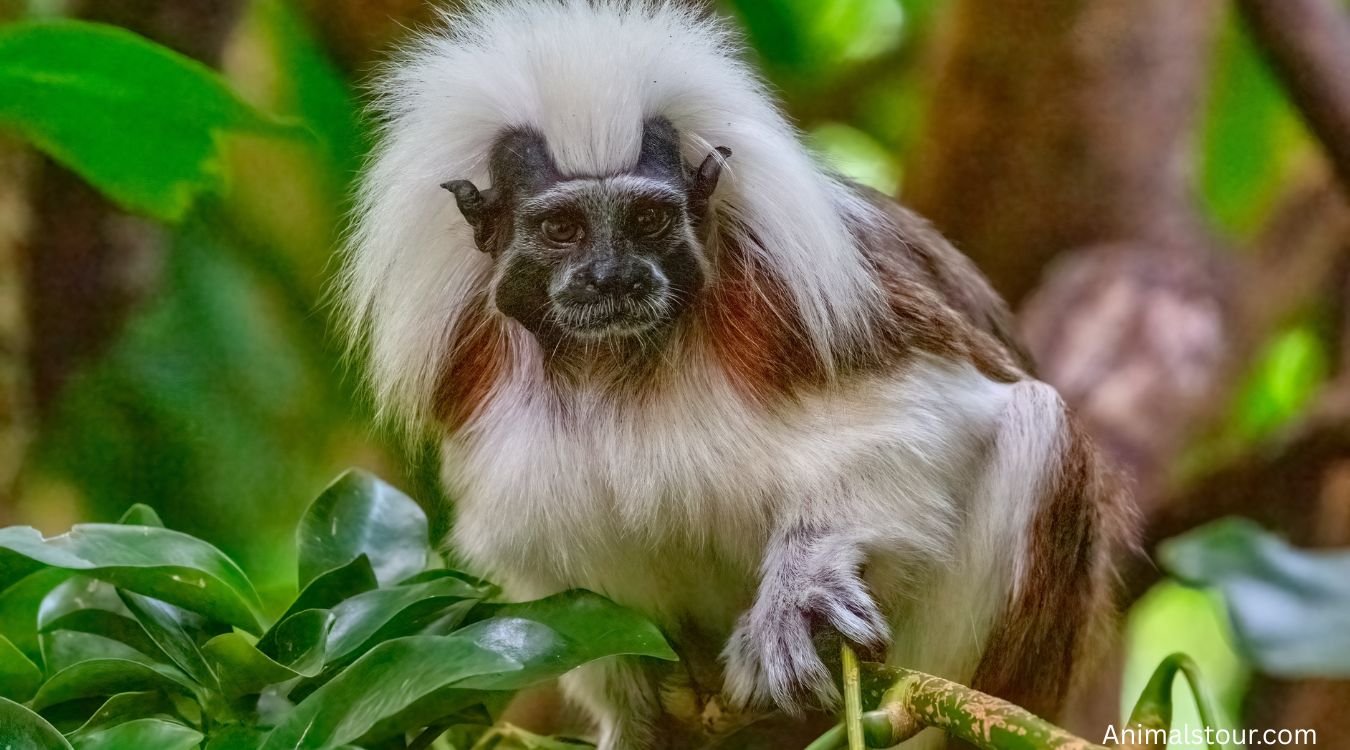
| 9 | Cotton‑Top Tamarin |
| 10 | Silvery Marmoset |
| 11 | Red-handed Tamarin |
| 12 | Dusky Titi |
| 13 | Capuchin Monkey |
1. Common Marmoset
Scientific name: Callithrix jacchus
Size: 18–23 cm body length; tail 28–35 cm
Weight: 250–350 g
The Common Marmoset is one of the most amazing small monkey breeds. With its striking features, golden-brown fur and a distinct black stripe along its face, it captures the imagination of both researchers and casual observers alike.
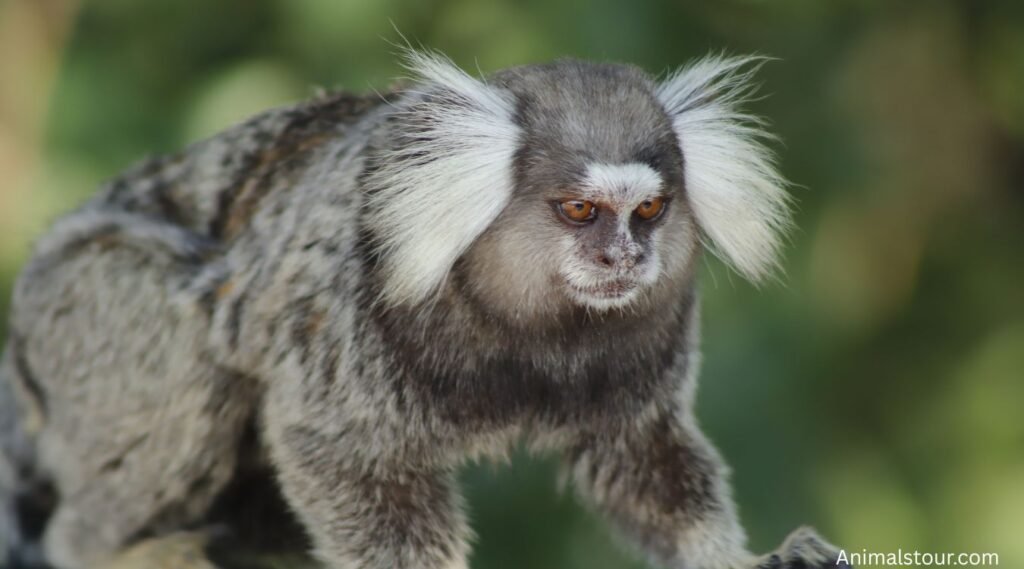
These tiny primates typically weigh around 10 ounces and measure just over a foot in length, making them easily one of the most diminutive species of monkeys. Yet, don’t let their size fool you; their social structures and communication methods are incredibly complex.
Often found in tight-knit family groups, Common Marmosets display remarkable cooperative behaviors, such as infant care and food sharing. These mini marvels give insight into evolutionary adaptations, particularly in how they forage for insects and tree sap.
2. Squirrel Monkey
Scientific name: Saimiri sciureus
Size: 25–35 cm body length; tail 35–42 cm
Weight: 500–1,100 g
Squirrel monkeys are among the cutest small monkey breeds in the world, endearing themselves to many with their expressive faces and playful antics. Characterized by their distinctive yellow or orange fur and large, round eyes, these little monkey species thrive in the lush canopies of Central and South America. Their social nature and high energy make them fascinating to observe as they leap and scamper through trees, often in groups that can include up to 50 individuals, showcasing the vibrant dynamics of small monkey types in their natural habitat.
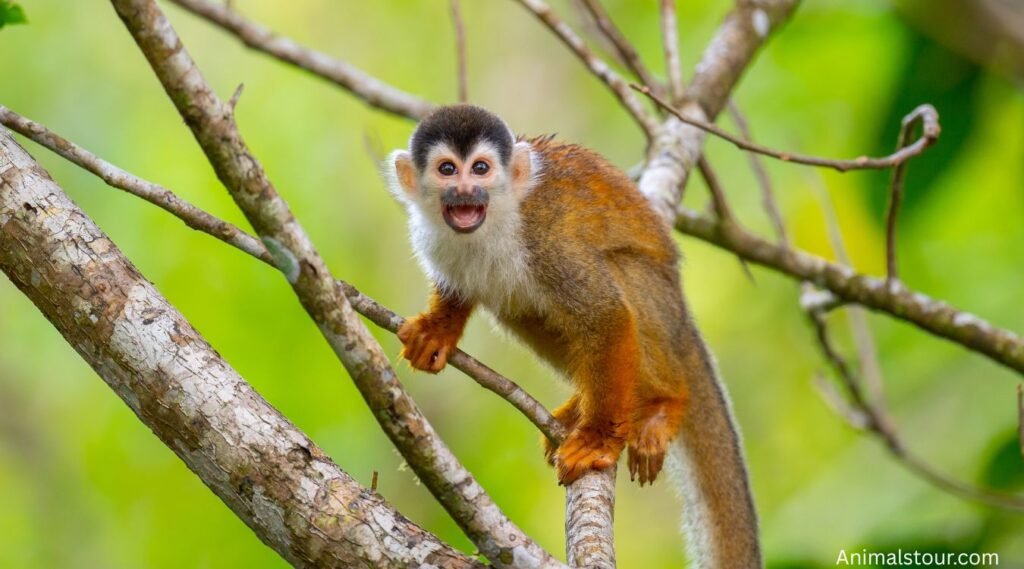
What sets squirrel monkeys apart from other small monkey species is their remarkable intelligence and agility. These little creatures use a mix of vocal sounds and body language to communicate, displaying a complexity that is often underestimated in small monkeys. Their diet primarily consists of fruits, insects, and small animals, reflecting their adaptive nature in various environments. It’s not just their appearance that captivates; their social structures and behaviors offer rich insights into primate behavior, revealing just how interconnected these small creatures are within their ecosystems.
3. Talapoin Monkey
Scientific name: Miopithecus talapoin
Size: 32–45 cm body length
The Talapoin monkey, one of the lesser-known small monkey breeds, exemplifies the unique adaptations of primates in their native environments. Native to the dense forests of Central Africa, these monkeys are distinguished by their striking appearance. They are characterized by their short, stocky bodies and vibrant fur. Living in small troops, the Talapoin exhibits a complex social structure that revolves around vocal communication, often employing an array of chirps and whistles to convey messages within the group.

What sets the Talapoin apart in the realm of small monkey breeds is their remarkable foraging strategy. Unlike many primates that rely heavily on fruits, Talapoins predominantly eat insects and small invertebrates, This dietary preference allows them to thrive in environments where other food sources may be scarce, thus providing insights into evolutionary survival tactics.
4. Graells’s Tamarin
Scientific name: Leontocebus graellsi
Size: 20–28 cm body length; tail around 30–42 cm
Weight: 300–500 g
Graells’s Tamarin, a member of the small monkey breeds, is not just a feast for the eyes but also a treasure trove of ecological significance. Native to the cloud forests of the eastern Andes, this tiny primate thrives in high-altitude habitats, where it plays a crucial role in seed dispersal. Its striking golden-brown fur and expressive face are not just visually captivating, they symbolize the rich tapestry of life in these elevated environments that are increasingly threatened by deforestation and climate change.

Living in family groups, these tamarins exhibit fascinating cooperative behaviors. They engage in grooming, foraging, and protective strategies that enhance their survival. This communal lifestyle not only strengthens their bonds but also highlights the adaptive strategies of small monkey breeds in coping with environmental pressures.
5. Pygmy Marmoset
Scientific name: Cebuella pygmaea
The pygmy marmoset, the tiniest of all monkey breeds, weighs in at a mere four to five ounces, roughly the weight of a mouse. Native to the lush canopies of the Amazon rainforests, these miniature primates are remarkable not just for their size but for their complex social structures. Living in family groups, they communicate through a variety of vocalizations that can be heard echoing through the trees. This social aspect fosters close bonds, often seen through their playful interactions, which are essential for their emotional well-being and development.
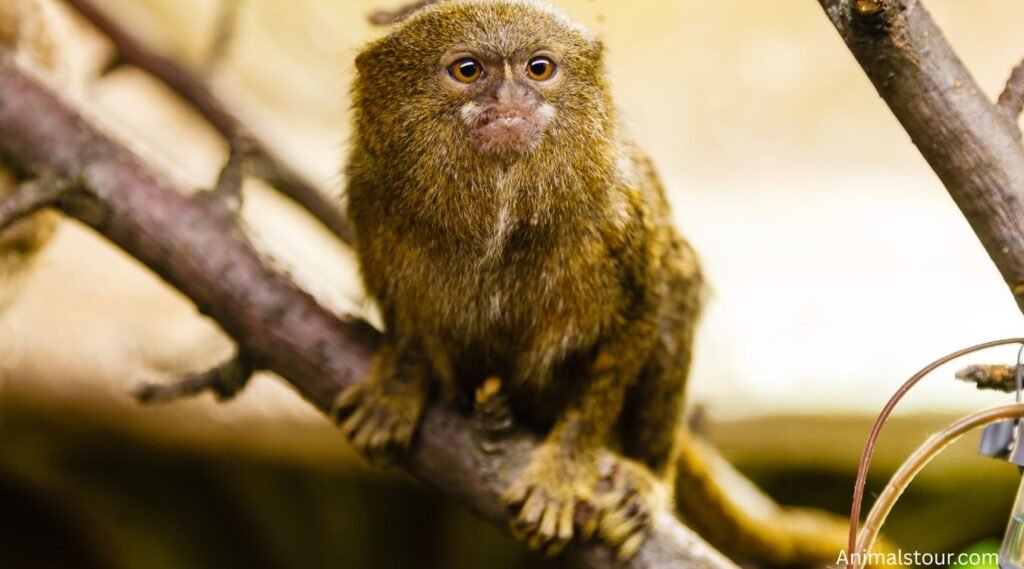
Their sharp claws and specialized teeth allow them to deftly extract insects and sap from trees. Their vibrant fur serves as natural camouflage amidst the foliage, a vital survival trait in the predator-rich Amazon.
6. Tarsiers
Size: 9–16 cm body length; tail 20–25 cm
Weight: 80–160 g
Tarsiers is one of the most unique small monkey breeds. With their enormous eyes, each nearly the size of their brain. Unlike typical monkeys, tarsiers are entirely carnivorous, feasting on insects and small vertebrates, which highlights their unique niche in the primate family. Their powerful grasp allows them to leap and cling to branches with incredible precision, making them acrobatic marvels of the treetops.
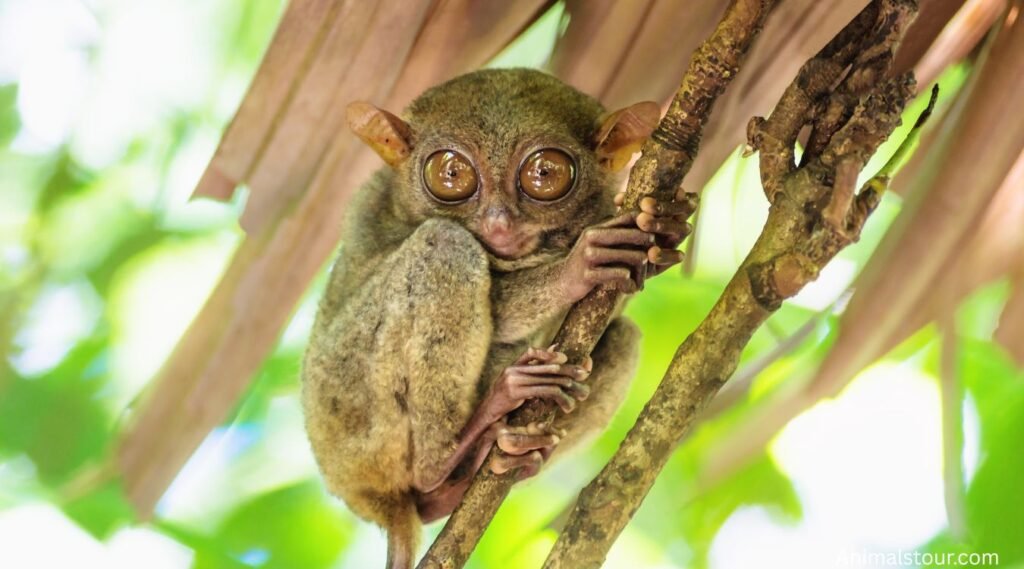
These tiny primates have an intriguing social structure as well, often living in small family units that emphasize strong bonds and cooperative hunting practices. This aspect of their behavior challenges the stereotype of solitary small monkey breeds. Tarsiers are equipped with a distinct communication system that includes a range of vocalizations.
7. Golden Lion Tamarin
Scientific name: Leontopithecus rosalia
Size: 20–34 cm body; tail 32–40 cm
The Golden Lion Tamarin is one of the most striking small monkey breeds. They are found exclusively in the Atlantic coastal forests of Brazil. This diminutive primate thrives in tightly-knit family units. These social bonds are crucial for survival, as they work together to forage and communicate through a complex system of vocalizations. The tamarin’s distinctive golden fur not only adds to its charm but also serves as a camouflage among the sun-dappled treetops, showcasing nature’s flair for both form and function.

8. Night Monkey
Scientific name: Genus Aotus
Size: 24–37 cm body length
Weight: 700–1,200 g
The Night Monkey stands out as one of the most intriguing small monkey breeds. Unlike most primates, these nocturnal creatures possess large eyes that shine brightly in low light, a perfect adaptation for life under the cover of darkness. Their unique ability to navigate the nighttime landscape not only helps them forage for insects and fruits but also keeps them safe from predators. Observing their graceful leaps and landings among the canopy can evoke the imagery of acrobats performing under the moonlit canopy of the rainforest.

A lesser-known aspect of Night Monkeys is their strong social bonds, which are particularly compelling among small monkey breeds. Living in tight-knit family units, they exhibit complex communication through vocalizations and body language, enhancing their interactions and cooperative behaviors.
9. Cotton‑Top Tamarin
Scientific name: Saguinus oedipus
Size: 20–26 cm body; tail 33–41 cm
Weight: 410–450 g
The Cotton-Top Tamarin is one of the most enchanting small monkey breeds. It captivates with its striking appearance and playful nature. With an iconic tuft of white hair that resembles a crown, this tiny primate stands out for its looks. Living in tightly-knit family groups, Cotton-Top Tamarins exhibit a unique form of communication that includes a variety of vocalizations and even nuanced body language, reflecting their rich emotional lives.
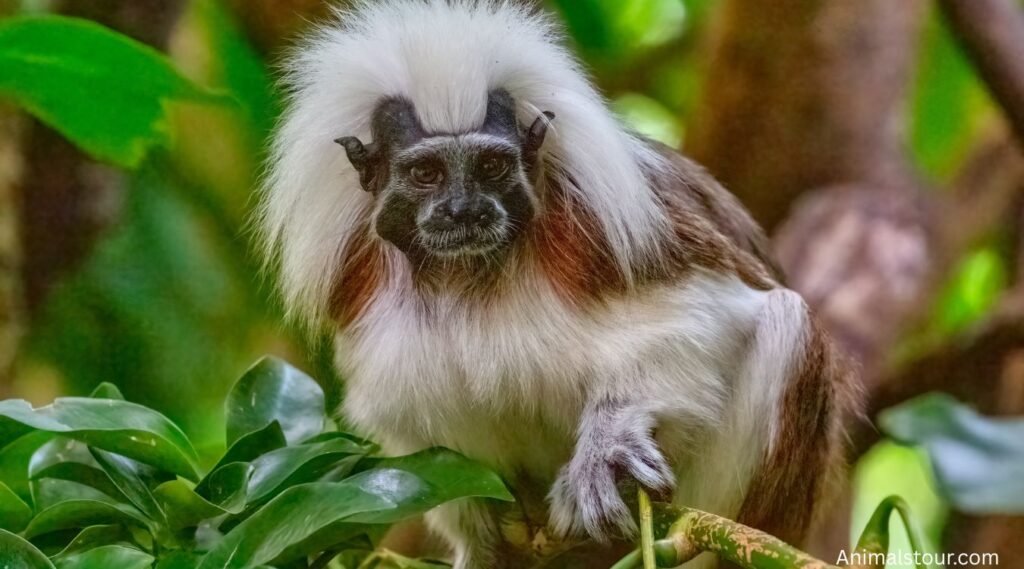
In their native Colombian habitat, these monkeys play a crucial role in their ecosystem as seed dispersers, ensuring the health and proliferation of the rainforest. These monkeys are very friendly and playful. However, threats like habitat loss and the illegal pet trade have led to alarming declines in their populations.
10. Silvery Marmoset
Scientific name: Mico argentatus
Size: 18–25 cm body; tail 30–36 cm
Weight: 300–400 g
The silvery marmoset, a gem among small monkey breeds, stands out due to its striking fur, which shimmers like sunlight on water. Found primarily in the Brazilian Atlantic Forest, this tiny primate weighs only about half a pound. Silvery marmosets live in family groups, communicating through a variety of high-pitched calls that resonate through the lush canopy.

What sets these small monkeys apart is their intricate social structure and cooperative breeding behavior. Often, a few dominant females in the group will give birth, and others assist in caring for the young, highlighting a captivating symbiosis that fosters community. This collective effort helps safeguard their survival in increasingly fragmented habitats, presenting a poignant reminder of the importance of family and kinship in the face of environmental challenges.
11. Red handed Tamarin
Scientific name: Saguinus midas
Size: 20–28 cm body; tail 31–44 cm
Weight: 400–550 g
The Red-handed Tamarin is a striking example among small monkey breeds. Native to the tropical forests of South America, tiny monkeys are often overlooked when discussing biodiversity, yet their social structures are complex and fascinating. Living in groups, they exhibit remarkable levels of cooperation and communication, which not only strengthens their social bonds but also enhances foraging efficiency.
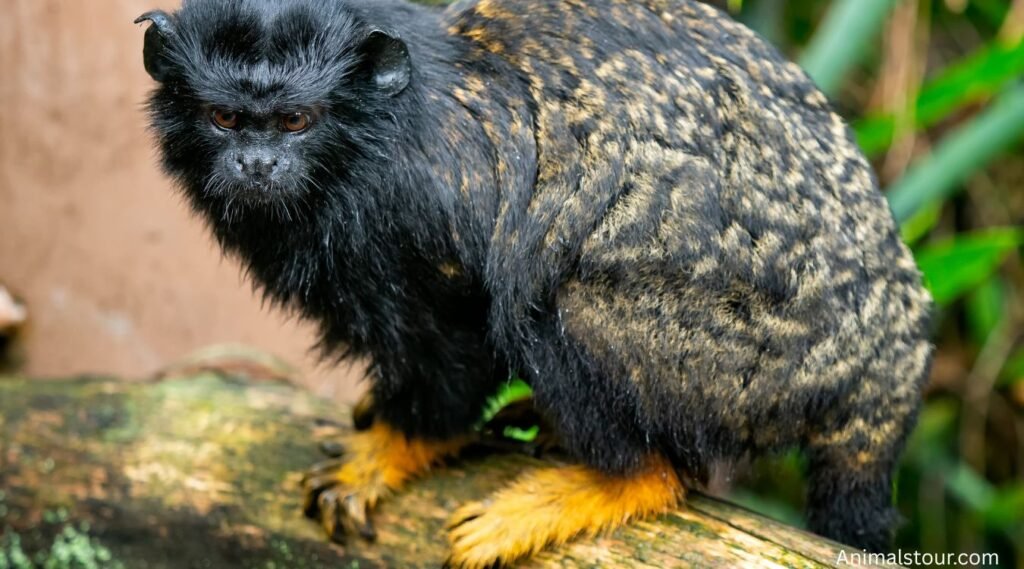
What sets the Red-handed Tamarin apart from other small monkey breeds is their distinctive appearance: their fur features a deep reddish tint on the hands, feet, and tail, contrasting sharply with a lighter body. This unique coloration is not just for show; it plays a role in thermoregulation and camouflage among the dense foliage of their habitat. These little primates are not just adorable; they are essential for their ecosystem, tasked with seed dispersal that promotes forest health.
12. Dusky Titi
Scientific name: Callicebus moloch
Size: 28–39 cm body
Weight: 800–1,200 g
The Dusky Titi, known for its striking blend of muted browns and grays, is a small monkey breeds. Found primarily in the dense forests of South America, particularly around the Amazon Basin. These monkeys are known for their strong, monogamous bonds. Observing a pair frolicking or grooming each other reveals a deeper layer of their social dynamics, highlighting how emotional connections enhance their survival in the wild.
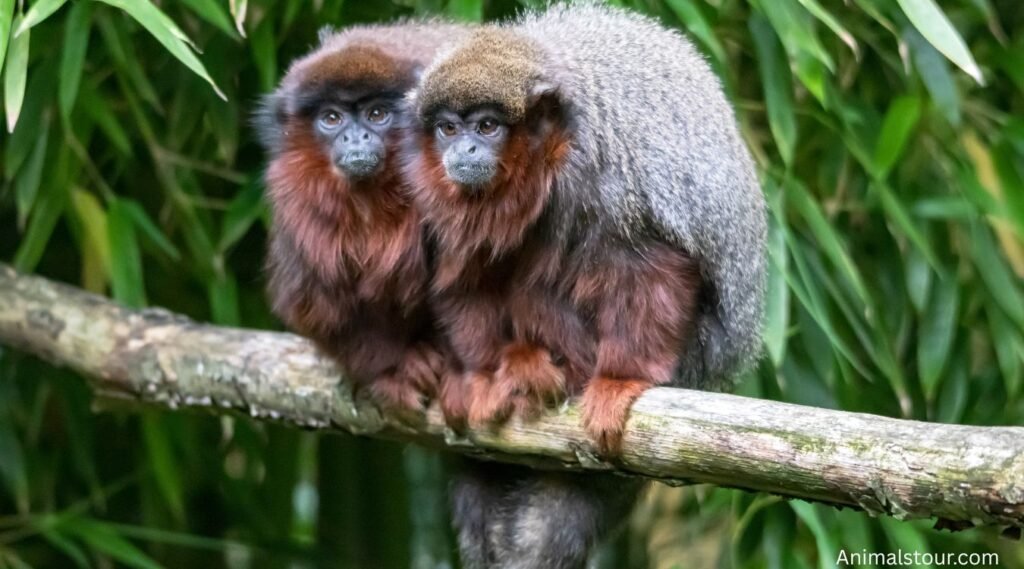
The Dusky Titi’s diet offers an intriguing glimpse into their role in forest ecosystems. They consume a variety of fruits, seeds, and leaves, which makes them essential seed dispersers. This not only aids in the propagation of plant species but also maintains the health of their natural habitat.
13. Capuchin Monkey
Size: 30–56 cm body; tail 30–55 cm
Weight: 1.3–4.8 kg
Capuchin monkeys, among the most intelligent of small monkey breeds, have gained popularity not only as captivating pets but also as stars in films and television. Their striking faces, characterized by expressive eyes and playful antics, engage audiences in ways that highlight their remarkable cognitive abilities. These small primates are known for their ability to solve puzzles and use tools, often showcasing their cleverness during foraging. In a natural setting, they exhibit a complex social structure that underscores their need for interaction and mental stimulation.
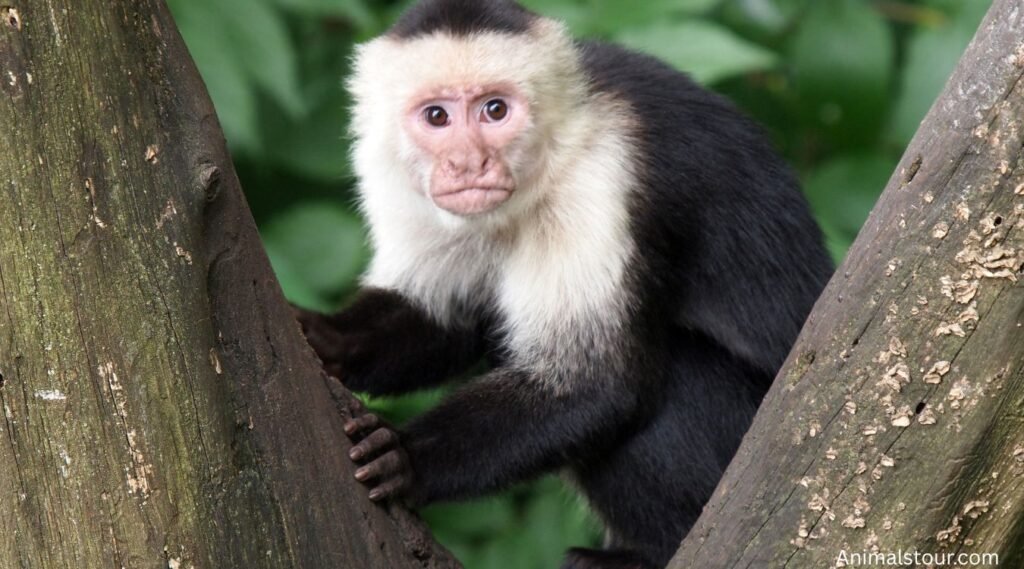
Beyond their charm, Capuchins are often used in animal-assisted therapy, highlighting their empathetic nature. This unique role showcases a lesser-known aspect of these small monkey breeds, demonstrating how their deep social bonds extend beyond their species, fostering connections with humans. Potential pet owners should be aware of their high-energy requirements and social needs, which demand an experienced handler.
Final Thoughts
In conclusion, the world of small monkey breeds is as diverse as it is fascinating. Each of the 13 breeds we explored showcases unique traits, temperaments, and care requirements that make them special companions. Whether you’re drawn to the playful marmosets or the charming tamarins, these small primates can bring joy and energy into your life. Remember, adopting a monkey is a significant commitment that requires careful consideration and ample research. We encourage you to explore more about these wonderful creatures and consider the responsibilities of monkey ownership.
FAQs
What is the smallest breed of monkey?
The smallest breed of monkey is the pygmy marmoset. These tiny monkeys typically weigh around 3.5 ounces and measure about 5 to 6 inches long, excluding their tails, which can be nearly twice their body length. Found in the rain forests of South America, particularly in the Amazon basin, they thrive in dense foliage.
What is the best small monkey as a pet?
When considering a tiny monkey as a pet, a popular choice is the Capuchin monkey. These monkeys are intelligent, social, and can form strong bonds with their owners. However, they require a lot of attention and mental stimulation, so be prepared for the commitment. You’ll need to provide a spacious environment and various toys to keep them engaged.