Discover Top 20 Animals with Flippers ( with Images )
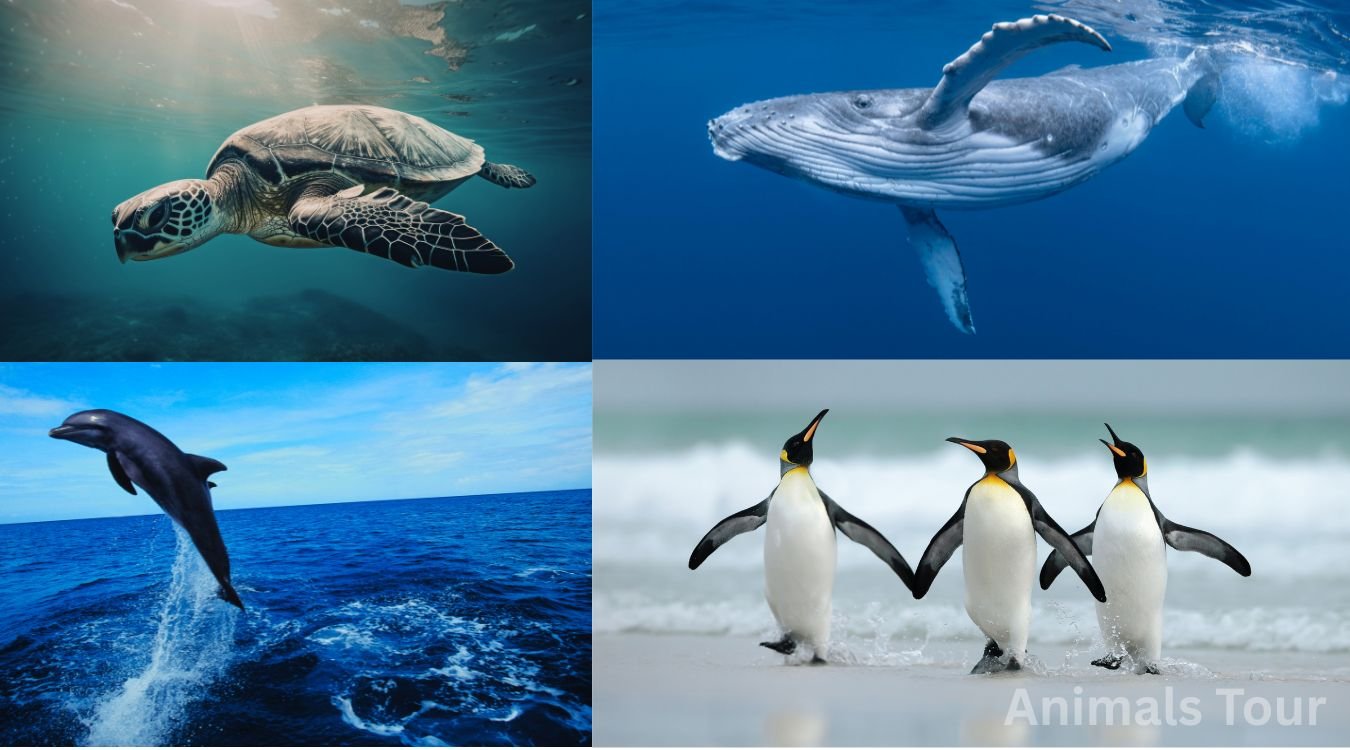
Animals with flippers are specially adapted for life in the water. From seals and dolphins to sea turtles and penguins, these flippered animals use their strong limbs to swim, steer, and hunt efficiently. Found in oceans, rivers, and coastal regions worldwide, each species plays an important role in aquatic ecosystems.
List of the top 20 Animals with Flippers
Here is a list of 20 animals with flippers that will be discussed in detail.
- Bottlenose Dolphin
- Harbor Seal
- Orca
- Blue Whale
- Leatherback Sea Turtle
- Leopard Seal
- California Sea Lion
- Humpback Whale
- Walrus
- Green Sea Turtle
- Manatee
- Emperor Penguin
- Dugong
- Dall’s Porpoise
- King Penguin
- Elephant Seal
- Kemp’s Ridley Sea Turtle
- Galapagos Penguin
- Monk Seal
- Sea Otter
Bottlenose Dolphin
Scientific Name: Tursiops truncatus
Class: Mammalia
Diet: Carnivore
Bottlenose Dolphin, with its acrobatic leaps and playful nature, is a highly intelligent flippered mammal known for problem-solving, self-recognition, and cooperative hunting. Their flippers are the best example of evolutionary design, helping these marine mammals maintain agility and control in the water. Unlike the rigid structure of a human hand, their flippers contain flexible bones that allow smooth steering and precise maneuvering as dolphins glide through the sea.
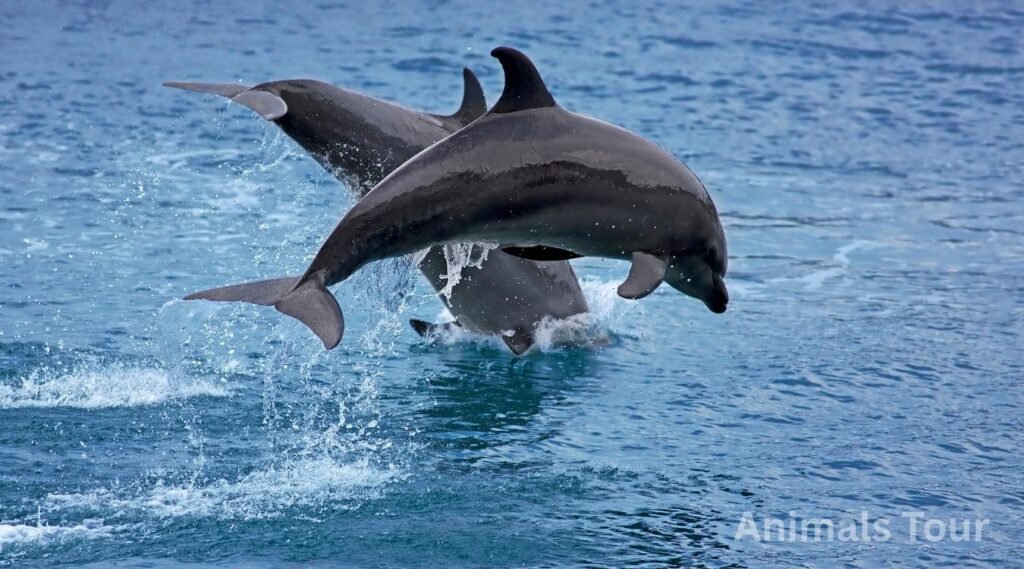
Beyond locomotion, these flippers also contribute to balance, stability, and subtle social signals within dolphin groups. The smooth skin covering the flippers helps reduce drag, improving hydrodynamic efficiency as bottlenose dolphins swim at impressive speeds.
While hunting, dolphins often work together to herd fish into tight groups, using coordinated movements and swift turns powered by their streamlined bodies and flippers. This blend of intelligence, teamwork, and physical adaptation highlights how perfectly these dolphins are designed for life in the ocean.
Harbor Seals
Scientific Name: Phoca vitulina
Class: Mammalia
Diet: Carnivore
Harbor Seals, known for their playful demeanor and curious nature, are a delightful sight along coastal waters. Their sleek gray bodies, whiskered faces, and large expressive eyes are charming, but it’s their flippers that truly stand out. Expertly adapted for life in water, harbor seal flippers combine hydrodynamic design with strong muscles and webbing, allowing graceful gliding, quick turns, and bursts of speed. These adaptations make harbor seals highly agile hunters and showcase their remarkable versatility in marine environments.
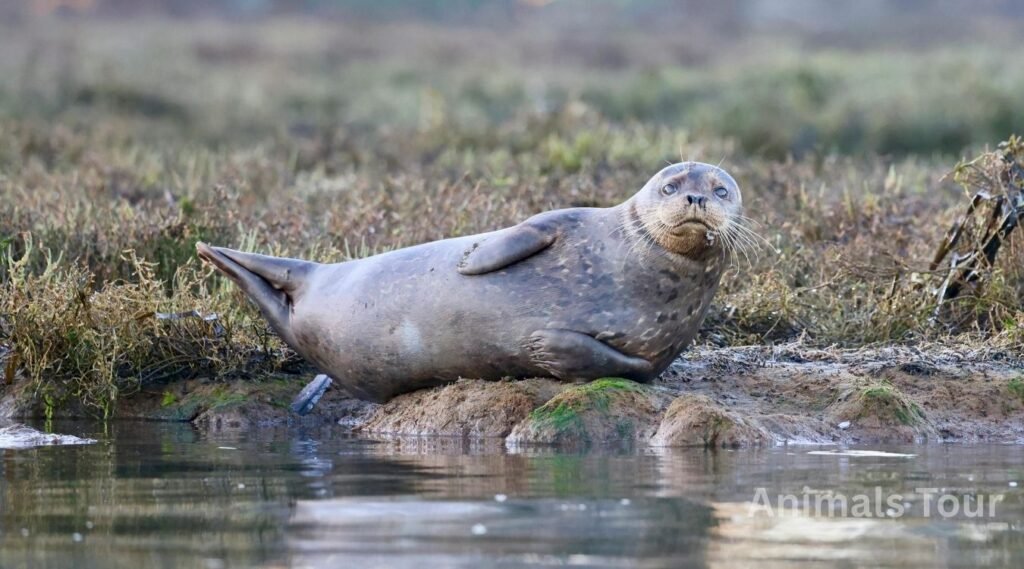
The role of flippers extends into social interaction as well. Harbor seals often use their flippers in playful displays, engaging in synchronized swimming and acrobatic jumps that suggest a complex social structure within their groups.
Moreover, researchers have found that flippers play a key role in thermoregulation, helping these seals manage body heat in frigid ocean waters. Understanding these multifunctional appendages reveals not just a tool for survival but also a crucial element of seal culture and communication.
Orca
Scientific Name: Orcinus orca
Class: Mammalia
Diet: Carnivore
Orcas, commonly known as killer whales, are among the most attractive flippered mammals in the ocean. Their sleek, streamlined bodies and powerful pectoral flippers allow them to move through the water with remarkable speed and agility. These flippers help orcas steer, stabilize their bodies, and perform sharp turns while chasing prey, making them highly efficient hunters in marine ecosystems.
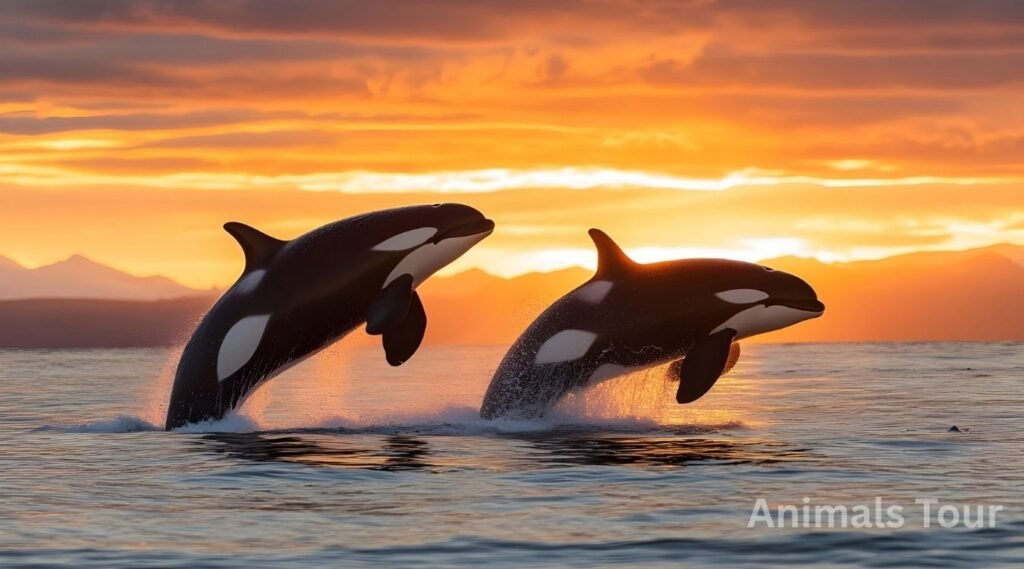
Orcas are extremely social animals that live in close-knit family groups called pods. Within these groups, behaviors such as flipper slapping on the water and synchronized swimming help strengthen bonds between members. These coordinated actions also assist in cooperative hunting, where pod members work together to catch prey.
Blue Whales
Scientific Name: Balaenoptera musculus
Class: Mammalia
Diet: Carnivore
Blue Whale flippers, though modest in proportion to their enormous bodies, are the adaptations that play a key role in the whale’s movement. Reaching up to about 10 feet in length, these elongated and streamlined flippers help guide and stabilize the world’s largest animal as it glides gracefully through vast marine waters. Their design allows blue whales to maneuver efficiently and maintain balance during swimming and deep dives, especially while performing their signature lunge-feeding behavior on dense swarms of krill.
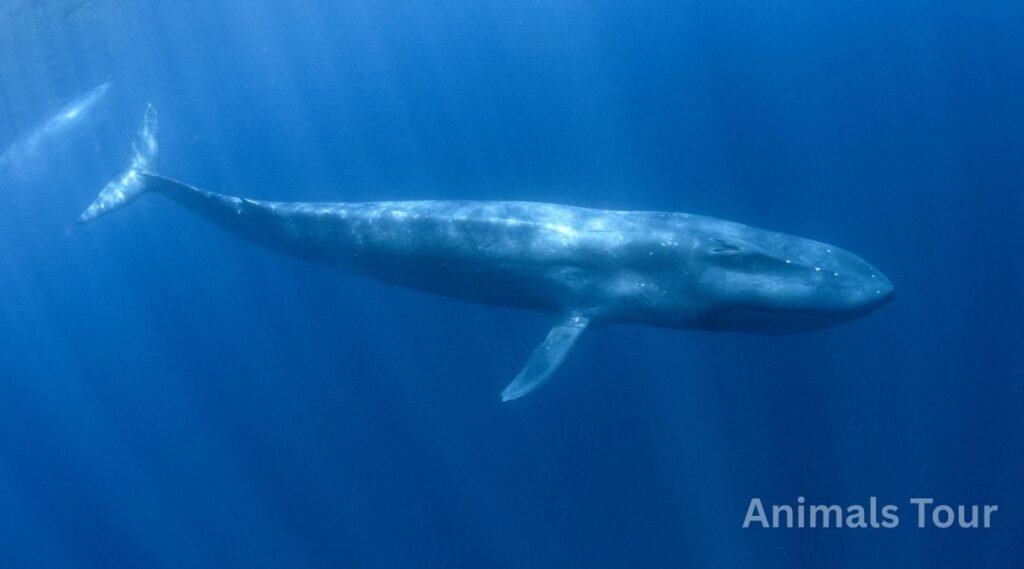
The flippers also assist in controlling direction and stability as these giants navigate shifting ocean currents and feeding grounds. While blue whales are generally more solitary than many other marine mammals, their smooth, coordinated movements reveal how perfectly these flippered animals are adapted for life in the open ocean. Observing these majestic creatures highlights how evolution has shaped their bodies for survival.
Leatherback Sea Turtle
Scientific Name: Dermochelys coriacea
Class: Reptilia
Diet: Carnivore
The Leatherback Sea Turtle is an oceanic marvel, famous for its leathery shell and enormous size, reaching up to 6.5 feet. Unlike hard-shelled turtles, its flexible body and flippers allow it to dive over 4,000 feet and travel long distances in pursuit of jellyfish, demonstrating remarkable adaptations for life in the open ocean.
Leatherback flippers are among the most distinctive in the world of flippered animals. Their streamlined, leathery design enables smooth gliding and precise maneuvering, while working in harmony with the turtle’s large body to maximize swimming efficiency. These powerful appendages also help the turtle navigate deep waters and maintain stability during long migrations.
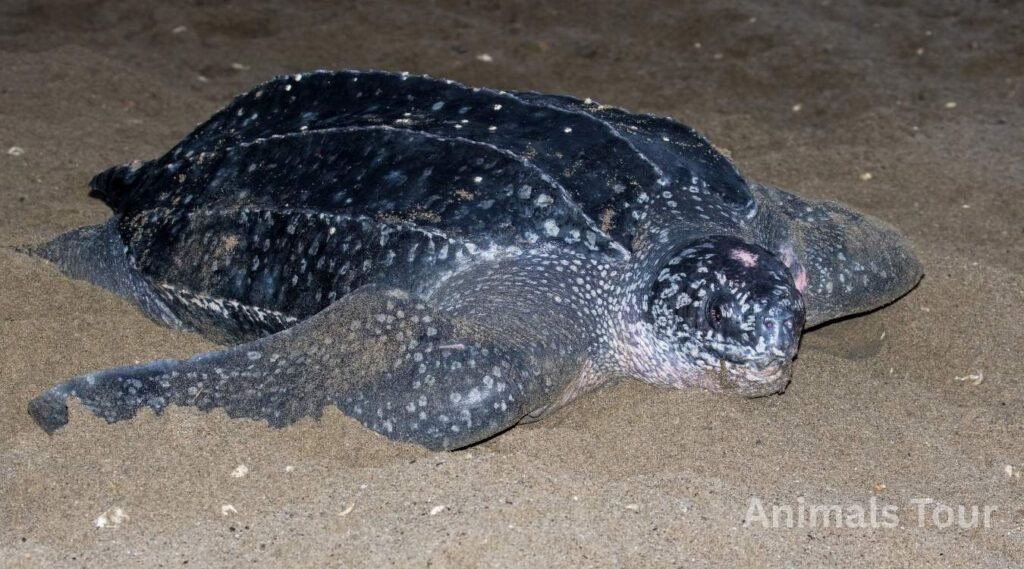
Beyond movement, leatherbacks showcase resilience through temperature regulation, allowing them to explore colder waters than most sea turtles. However, they face serious threats, including plastic pollution and climate change, which endanger both their food sources and nesting sites. Conservation efforts, such as beach monitoring and reducing bycatch, are crucial to protect these majestic ocean wanderers.
Leopard Seal
Scientific Name: Hydrurga leptonyx
Class: Mammalia
Diet: Carnivore
The Leopard Seal, with its striking spotted coat and powerful build, is one of Antarctica’s most formidable marine mammals. Its robust flippers allow it to glide effortlessly through icy waters, giving it the speed and control needed to chase agile prey such as penguins and fish, while navigating around ice floes with ease.
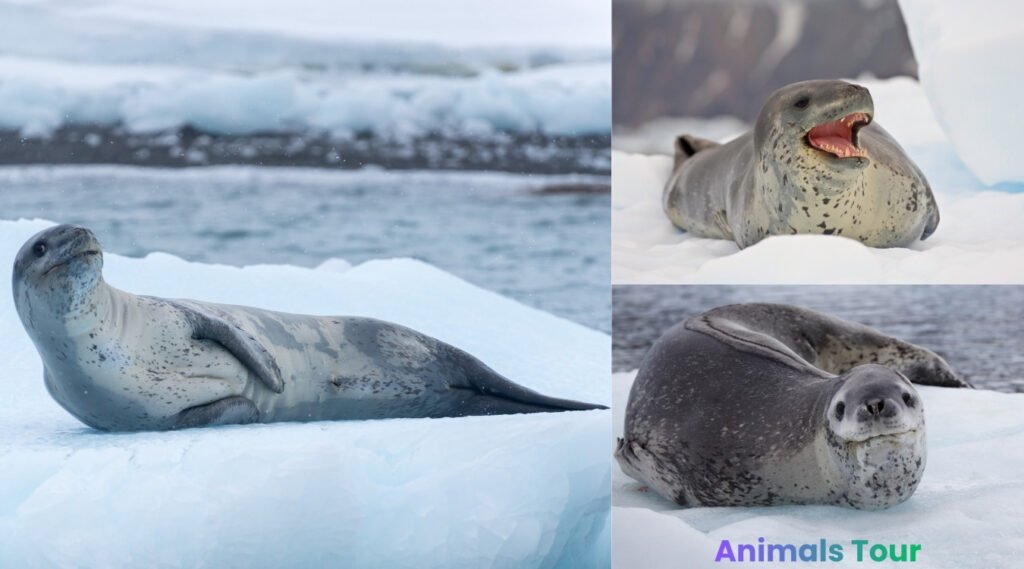
Leopard seal flippers are both strong and flexible, enabling precise turns, rapid bursts of speed, and careful positioning during hunts. This adaptability, combined with the seal’s keen intelligence and curiosity, allows it to thrive in a challenging and ever-changing environment, demonstrating a remarkable blend of strength and agility.
Beyond their functional role, these flippers highlight the elegance of evolution in action. Observing a leopard seal maneuver through the Antarctic waters illustrates how every aspect of its body—from flippers to powerful jaws—is designed for survival, mastery, and dominance in one of the planet’s most extreme ecosystems.
California Sea Lion
Scientific Name: Zalophus californianus
Class: Mammalia
Diet: Carnivore
California Sea Lions are playful and highly agile marine mammals, admired for their acrobatic skills and unique flippers. Their long, flexible front flippers allow agile movements in water, enabling them to reach speeds of up to 25 miles per hour while navigating waves and obstacles with ease. On land, these flippers function like limbs, allowing sea lions to “walk” across rocky shores and sandy beaches, a versatility enhanced by their rotating hind flippers. This dual functionality makes them highly adaptable hunters and efficient movers both in water and on land.
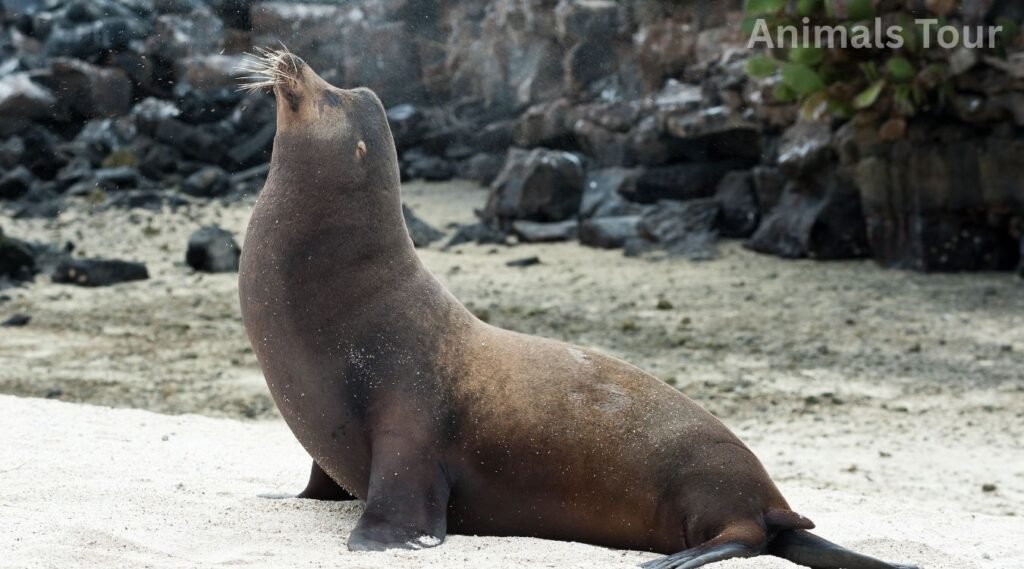
California sea lions also exhibit interesting social behaviors. Their flippers contribute to balance and precise movements during play, hunting, and interactions within their groups. These pinnipeds communicate using a variety of barks, growls, and grunts, which help establish social hierarchies and strengthen group cohesion.
California sea lions are resilient travelers, capable of diving to significant depths and covering long distances in search of fish, squid, and other prey. Their adaptability to changing coastal environments highlights the importance of protecting their habitats, ensuring these dynamic and intelligent creatures continue to thrive along the rocky shores of the West Coast.
Humpback Whales
Scientific Name: Megaptera novaeangliae
Class: Mammalia
Diet: Carnivore
Humpback Whales are often recognized for their immense size and stunning acrobatics, but their long flippers add an extra layer of attraction. Stretching up to 15 feet, these pectoral fins are not just visually striking; they are essential for navigation, maneuverability, and intricate swimming patterns. They allow humpbacks to perform breathtaking breaches and coordinate complex bubble-net feeding, showcasing both power and precision.
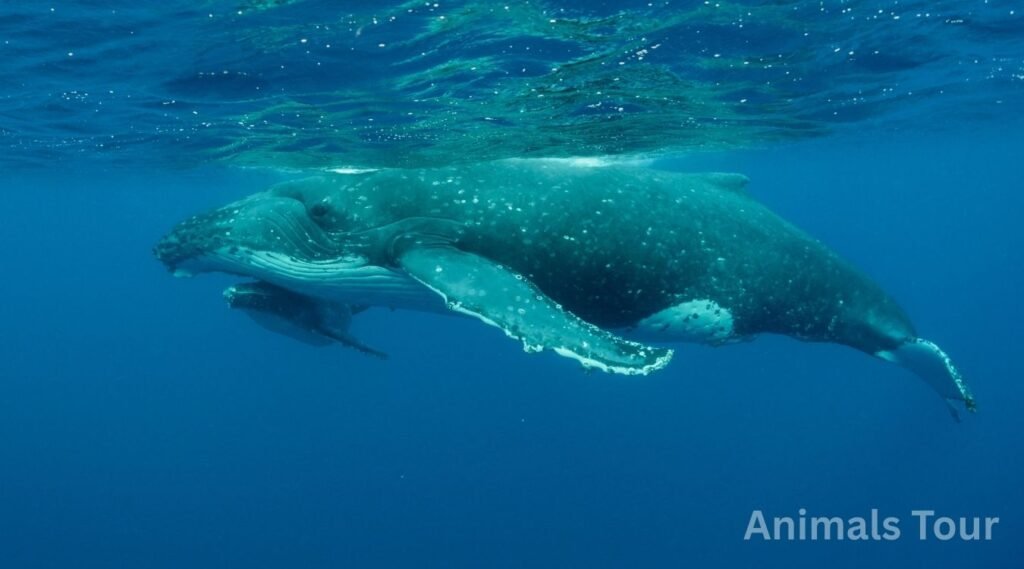
The flexible structure of humpback flippers reflects an evolutionary adaptation, combining strength and grace to enhance survival in the open ocean. The unique anatomy of these flippered mammals allows refined movements that balance power with precision. It enables these giants to navigate, hunt, and interact dynamically with their environment, showcasing both the beauty and ingenuity of marine evolution.
Walrus
Scientific Name: Odobenus rosmarus
Class: Mammalia
Diet: Carnivore
Walrus flippers serve as great adaptations that showcase the creature’s unique lifestyle. Unlike the streamlined flippers of dolphins or the more graceful appendages of seals, walrus flippers are robust and powerful, designed for both swimming and hauling their hefty bodies onto ice.
While other animals with flippers rely on speed and agility, walruses utilize their flippers for stability and maneuverability in their icy habitats. This shows a blend of strength, versatility, and, along with their small ears, distinctive Arctic adaptations.
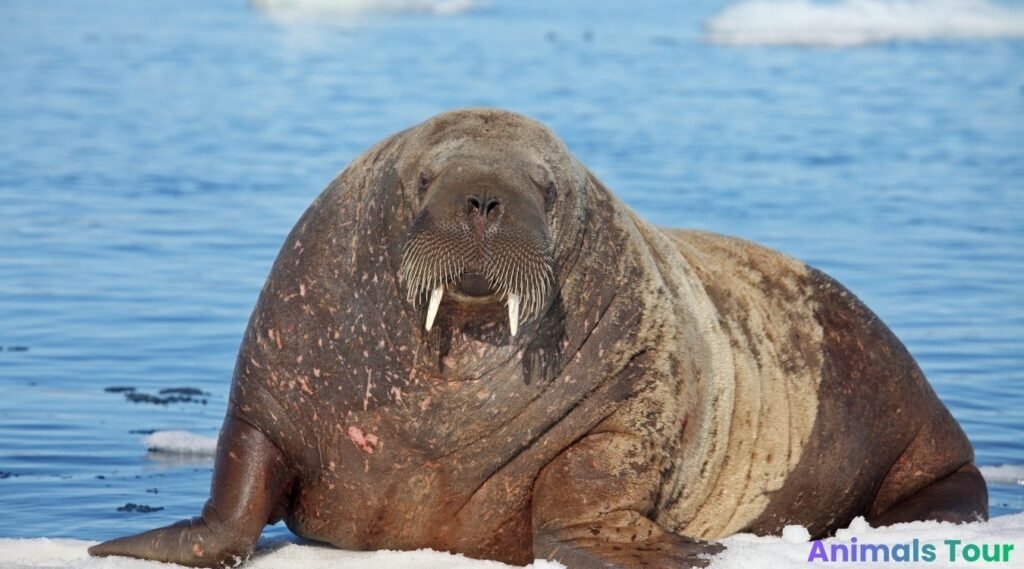
These flippers also play a significant role in social interactions among walruses. During breeding season, males often use their flippers to engage in playful sparring, showcasing dominance and fitness. This social behavior highlights a lesser-known aspect of their lives-beyond survival, walruses exhibit complex relationships and communication styles. Their flippers, equipped with sensitive skin and strong musculature, not only facilitate movement but also enhance their ability to interact with one another in the harsh Arctic environment.
Green Sea Turtle
Scientific Name: Chelonia mydas
Class: Reptilia
Diet: Herbivore
The Green Sea Turtle, an oceanic reptile having long lifespan, showcases extraordinary adaptations that allow it to thrive in vast marine environments. Its sleek, paddle-shaped, wing-like flippers propel it efficiently through currents, making swimming graceful and allowing it to navigate oceans while foraging for seagrass and algae.
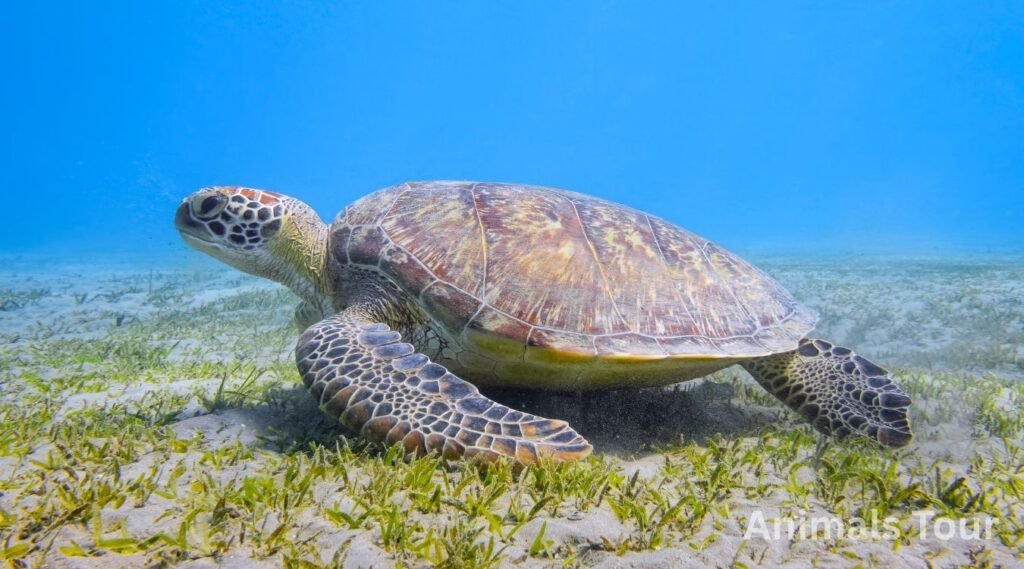
These versatile flippers also aid in stability, maneuverability, and energy-efficient swimming over long distances. During mating, males use their flippers to grasp females, highlighting how these appendages support survival and reproduction. As primarily herbivores, green sea turtles play a crucial role in maintaining healthy underwater ecosystems; by trimming seagrass, they stimulate new growth that benefits a variety of other marine species.
Manatee
Scientific Name: Trichechus manatus
Class: Mammalia
Diet: Herbivore
Manatees, often called the “sea cow,” have broad, paddle-like flippers perfectly adapted for navigating rivers, estuaries, and coastal waters. These flippers allow manatees to move gracefully through murky waters, steer through seagrass beds, and move skillfully along underwater landscapes. Notably, the bones in their flippers resemble those in human hands, reflecting an evolutionary link between terrestrial and marine mammals.
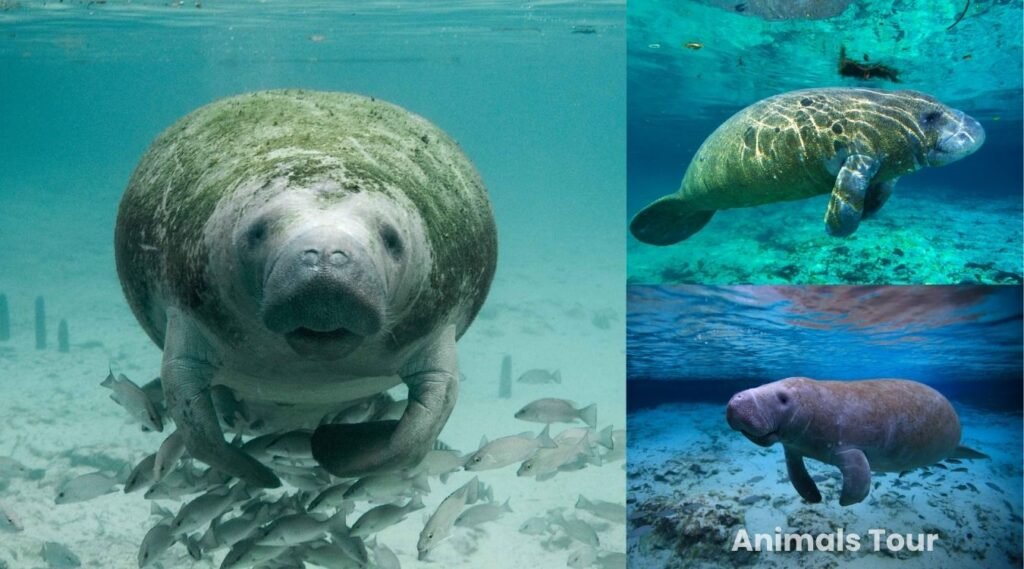
Manatees are herbivorous, feeding primarily on seagrass, algae, and other aquatic plants. By grazing, they play a vital role in maintaining healthy aquatic ecosystems, promoting plant growth and supporting biodiversity. Their flippers also assist in social interactions, gentle nudges, and stabilizing their bodies during movement, highlighting the versatility and importance of these appendages in the manatee’s daily life.
Emperor Penguin
Scientific Name: Aptenodytes forsteri
Class: Aves
Diet: Carnivore
Emperor Penguins are the largest of all penguin species (1.2 meter height), renowned for their striking black-and-white plumage and the ability to survive in the harsh Antarctic environment. Their strong, streamlined flippers function like paddles, allowing them to swim efficiently through icy waters and dive to impressive depths in pursuit of fish, squid, and krill. They can swim at speeds up to 9 km/h and dive to depths over 500 meters while hunting fish, squid, and krill.
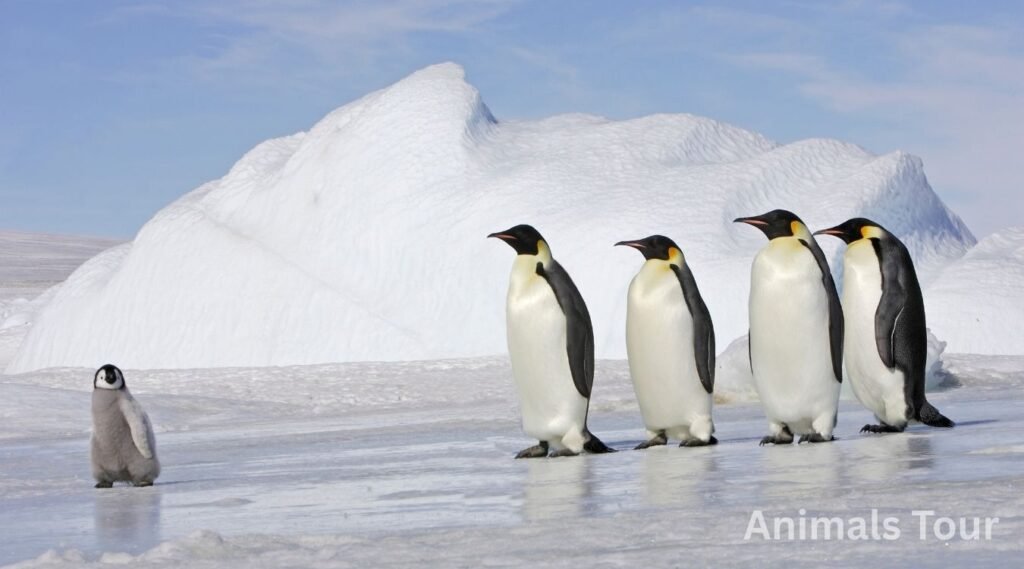
Beyond swimming, emperor penguin flippers help maintain balance and stability on ice when moving across colonies or huddling together during extreme winter conditions. Combined with their dense, insulated bodies, these flippers play a critical role in survival, enabling emperor penguins to thrive in one of the planet’s most challenging habitats.
Dugong
Scientific Name: Dugong dugon
Class: Mammalia
Diet: Herbivore
Dugong flippers are a unique adaptation that hints the lifestyle of these gentle marine mammals. Dugong flippers are streamlined and paddle-like, allowing them to gracefully navigate the underwater seagrass meadows they call home. These flippers offer a peaceful gliding motion, perfect for a herbivore whose primary diet consists of soft seagrasses. This slow, methodical way of swimming conserves energy and provides a strategic advantage in avoiding predators.
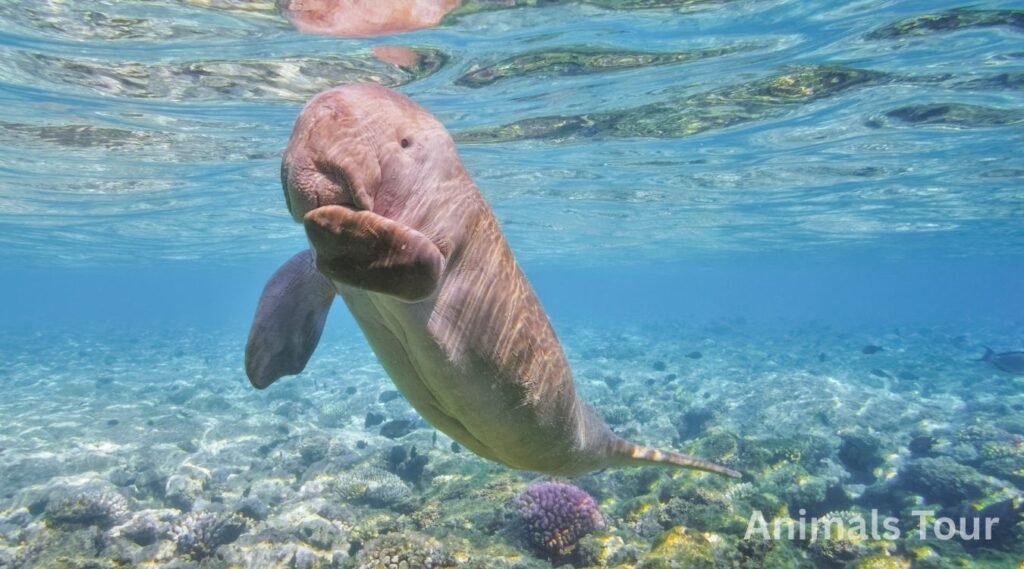
As dugongs roam through their seagrass habitats, their flippers play a key role in their foraging techniques. They use them to uproot and graze on grass. With each graceful movement, dugongs contribute to the health of seagrass beds, promoting biodiversity and supporting countless other marine species. As their populations are decreasing due to habitat loss and hunting , conservation efforts have become important. Supporting dugong habitats can foster not just their survival but also the overall biodiversity of marine environments.
Dall’s Porpoise
Dall’s Porpoise
Scientific Name: Phocoenoides dalli
Class: Mammalia
Diet: Carnivore
Dall’s porpoise, “torpedo of the sea,” is a sleek flippered mammal that combines speed with grace in its aquatic environment. Unlike their dolphin cousins, it possesses shorter, stubbier flippers that supports rapid acceleration. These adaptations allow them to reach impressive speeds of up to 55 km/h, making them one of the fastest marine mammals. This velocity aids in hunting and evading predators in their often turbulent, cold-water habitats.
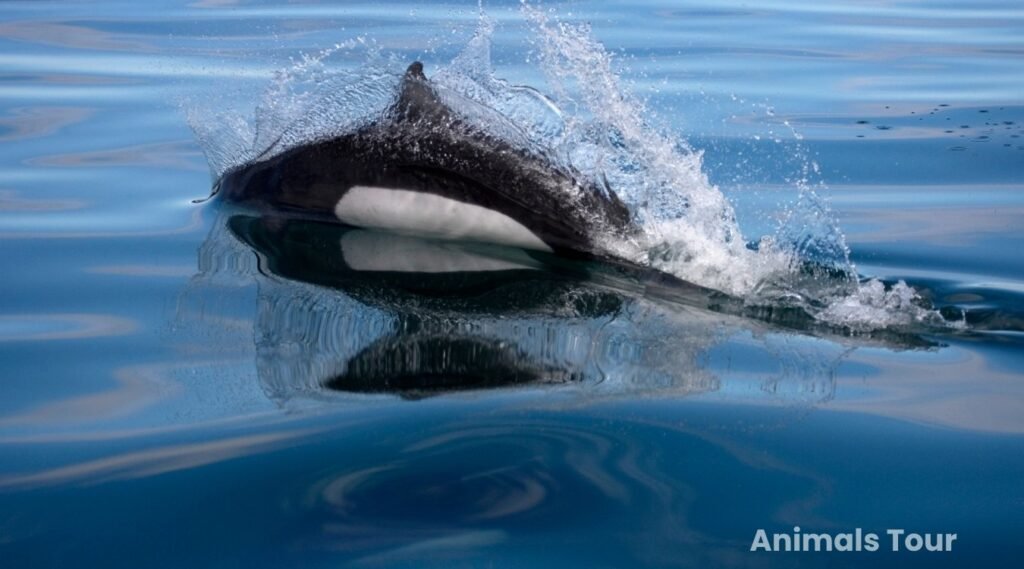
Their flippers show a dual purpose. Their unique shape contributes to hydrodynamics, allowing for swift directional changes while also functioning as stabilizing forces during jumps and dives. Dall’s Porpoise thrive in small pods, often forming strong bonds with one another, which aids in cooperative hunting strategies and social interactions.
King Penguin
Scientific Name: Aptenodytes patagonicus
Class: Aves
Diet: Carnivore
King Penguins are the second-largest penguin species, growing up to 90 cm in height and weighing between 11–16 kg (24–35 lbs). They are known for striking orange markings on the neck and head, as well as their endurance in sub-Antarctic climates. With streamlined bodies and strong, paddle-like flippers, king penguins can swim at speeds up to 10 km/h, allowing them to hunt fish, squid, and other marine prey efficiently.
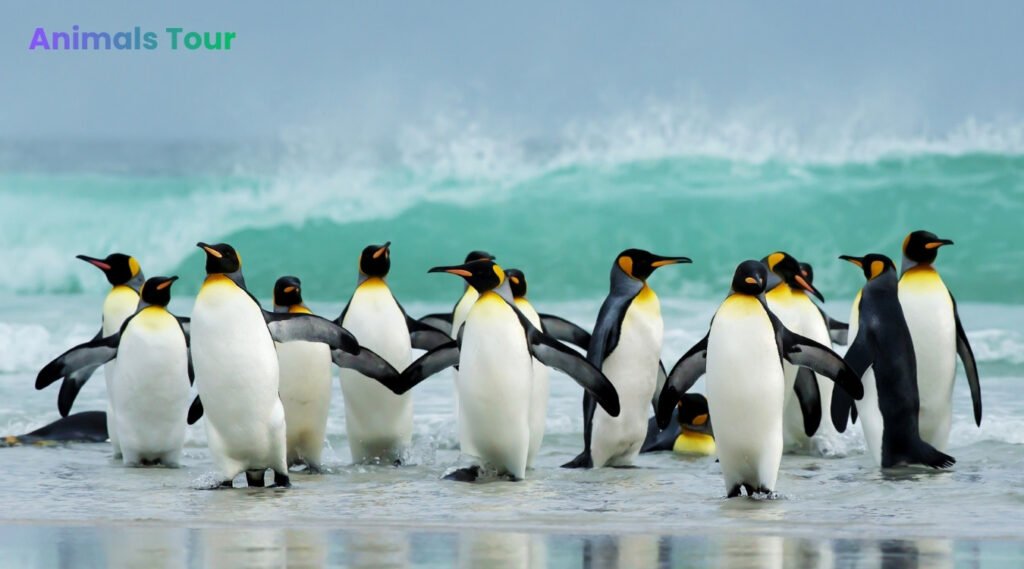
Their flippers also play a vital role on land, providing balance and stability while walking across rocky shorelines or standing during long periods of huddling. Combined with their swimming efficiency and social behaviors, these flippers are essential for survival, enabling king penguins to thrive in harsh coastal environments while covering long distances during foraging trips.
Elephant Seal
Scientific Name: Mirounga
Class: Mammalia
Diet: Carnivore
Elephant seals are powerful marine mammals with flippers having massive bodies. Their flippers, much more than mere limbs, play a crucial role in their movements through the water.
These powerful yet streamlined flippers allow for agile swimming, enabling these massive animals to dive deep and traverse vast ocean territories in search of food and mates. This efficiency is essential, given their significant weight; male elephant seals can tip the scales at over 4,500 pounds.
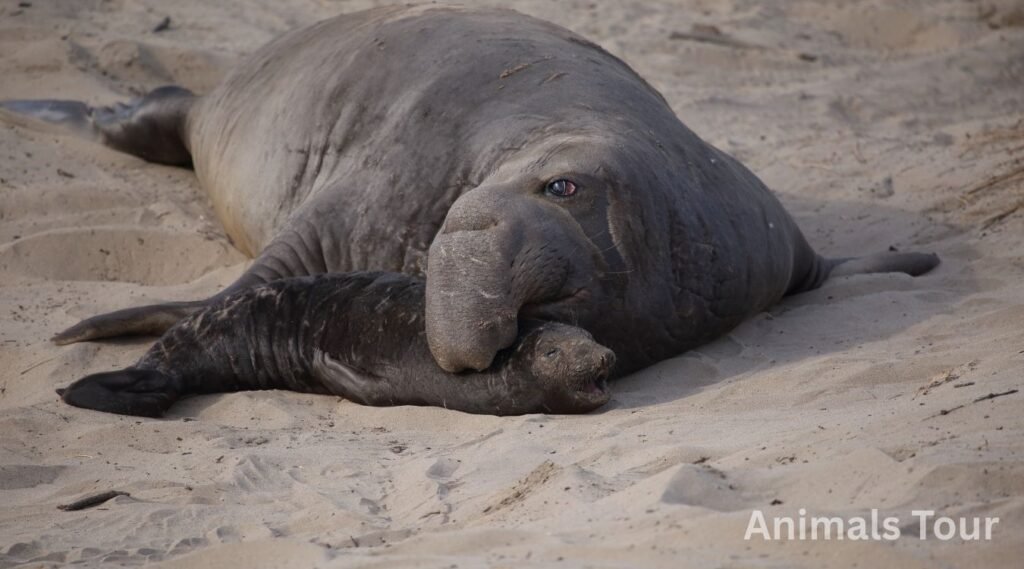
Elephant seals are also among the deepest-diving marine mammals, capable of plunging more than 1,500 meters while hunting fish and squid. During breeding season, their large flippers help them maneuver across sandy beaches and icy shores, revealing how these powerful appendages support both life in the ocean and movement on land.
Kemp’s Ridley sea turtle
Scientific Name: Lepidochelys kempii
Class: Reptilia
Diet: Carnivore
Kemp’s Ridley sea turtle, the smallest and one of the rarest sea turtles, is known for its unique nesting behavior and well-adapted flippers that help it navigate coastal waters with efficiency. Their flippers are uniquely adapted for agility rather than speed. This agility allows them to navigate through complex underwater terrains filled with obstacles, such as coral reefs and floating vegetation. With their distinctive heart-shaped carapace and wing-like limbs, these turtles can deftly maneuver as they hunt for their favorite prey.
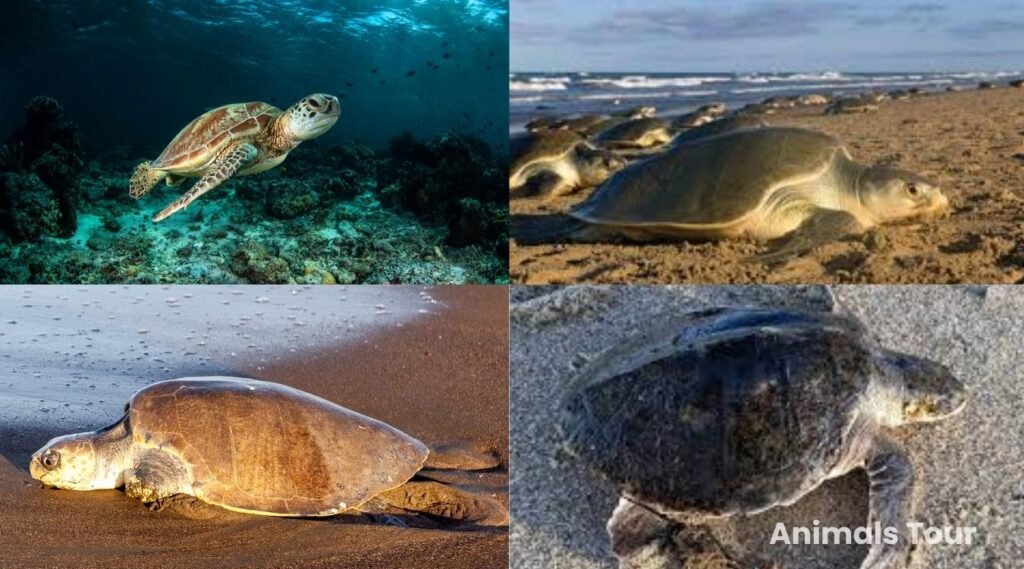
Kemp’s Ridley flippers serve multiple purposes beyond propulsion. They act as powerful paddles when diving deep for food, and also help in basking on sun-soaked shores. These are the only sea turtle species that exhibit mass nesting, known as arribadas, where thousands gather on beaches to nest simultaneously. Their well-designed flippers are instrumental in digging nests that keep their eggs safe from predators. This collective behavior enhances the chances of survival and highlights the importance of social interactions among animals.
Galapagos Penguin
Scientific Name: Spheniscus mendiculus
Class: Aves
Diet: Carnivore
Flippers in Galapagos Penguins are very important for their survival in both marine and terrestrial environments. These specialized appendages allow the penguins to navigate the turbulent waters of the Pacific Ocean with agility. This enhances their ability to hunt for fish and avoid predators. Their flippers are not just for swimming; they also assist in steering through strong currents, enabling the birds to reach food-rich areas efficiently.
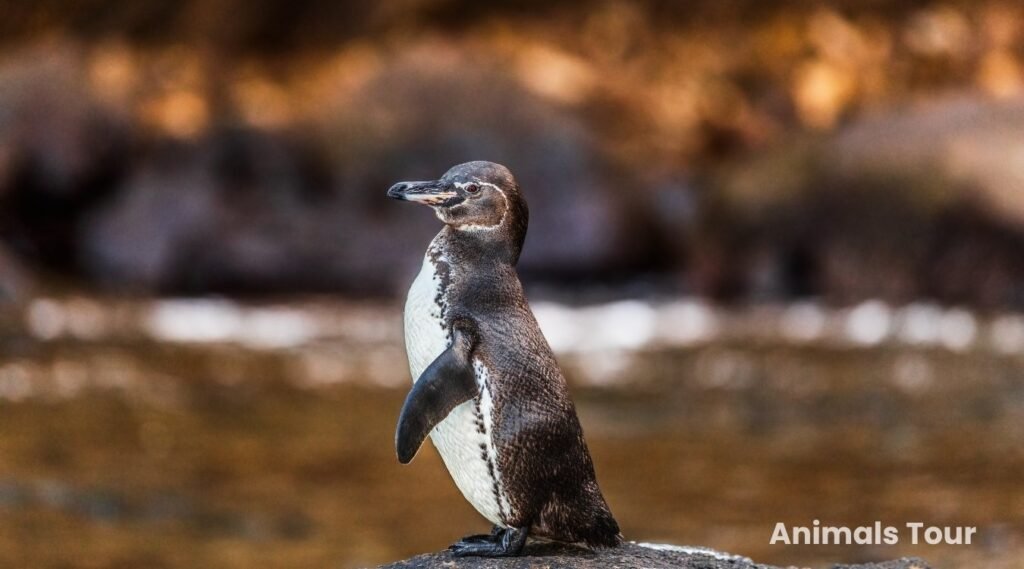
The structure of their flippers also contributes to thermoregulation and social interaction. In the warm waters of the Galapagos, flippers help dissipate heat while offering buoyancy during swimming. During mating season, the way they use their flippers can signal readiness to mate, contributing to their reproductive success.
Monk Seal
Scientific Name: Monachus monachus (Mediterranean) / Neomonachus schauinslandi (Hawaiian)
Class: Mammalia
Diet: Carnivore
Monk Seal, with its rounded body and large, expressive eyes, shows several adaptations that help it survive in the ocean. Among these features are its strong flippers that allow it to move through the water with grace and control. These broad, paddle-like flippers enable efficient swimming, helping monk seals navigate the water with agility while hunting. They also provide the propulsion and maneuverability needed for deep dives and long-distance travel in search of food.
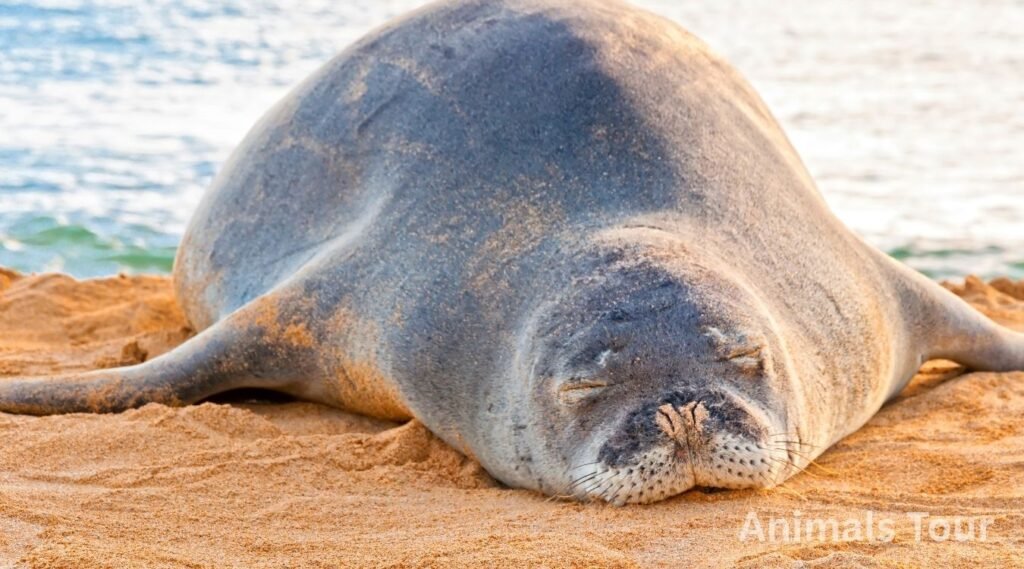
Flippers also help regulate body temperature. When monk seals haul out onto rocky shores to rest or give birth, their flippers help dissipate excess heat, crucial for maintaining body temperature in varying climates. During rest, monk seals can use their flippers to anchor themselves on rocky shores or sandy beaches, helping them stay stable and avoid drifting away.
Sea Otters
Scientific Name: Enhydra lutris
Class: Mammalia
Diet: Carnivore
Sea Otters, often referred to as the “fluff balls” of the ocean, are known for their playful nature and their uniquely adapted flippers. Unlike most marine mammals, these enchanting creatures possess flexible forelimbs that function more like hands than traditional flippers. This adaptation allows them to deftly manipulate tools, such as stones, which they use to crack open shellfish, which is an impressive display of intelligence in the animal kingdom.
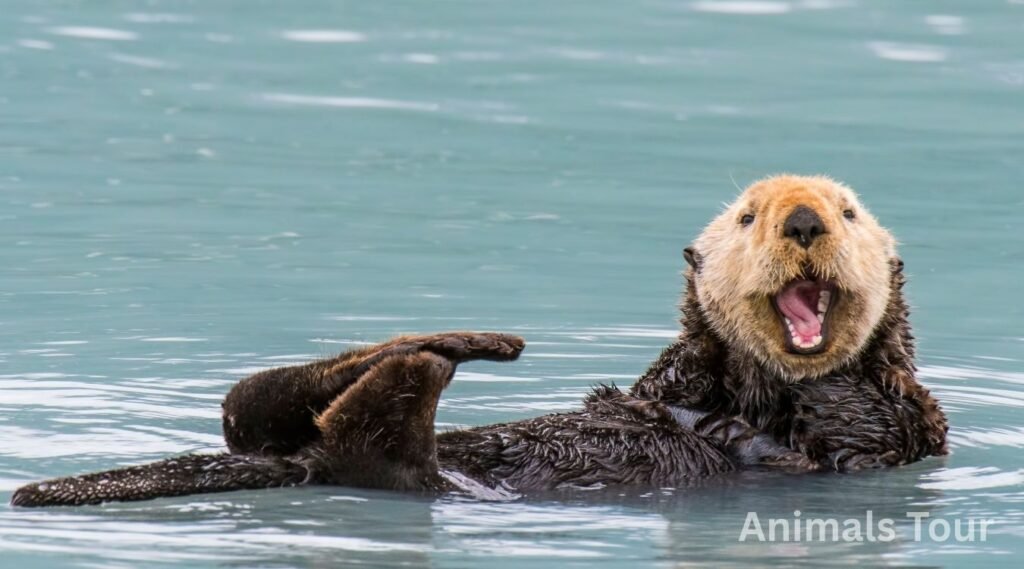
Their thick fur provides insulation in frigid waters. With up to a million hair follicles per square inch, sea otters maintain body warmth while floating in ice-cold seas. This fur needs constant grooming to remain waterproof. Ultimately, it is their unique flippers combined with their precious fur that allows sea otters to thrive in diverse habitats, making them vital players in marine ecosystems.
Conclusion
Exploring the top 20 animals with flippers reveals just how well evolution has equipped these creatures for life in water. Their varying shapes, sizes, and behaviors highlight the adaptability of life in different aquatic ecosystems. As we go deeper into their lives, we not only discover the beauty of nature but also the urgent need for conservation efforts. Protecting these animals ensures that future generations can also enjoy their unique wonders.
FAQs
What are flippers?
Flippers are broad, flat limb-like structures used by some aquatic animals, including certain fish, for propulsion and steering in water.
Which animals have flippers?
Common animals with flippers include seals, sea lions, dolphins, penguins, and whales
What bird is primarily known for having flippers?
The penguin is the most well-known bird that has flippers, which they use for swimming.
Can birds with flippers fly?
No, penguins and most birds with flipper-like structures are flightless and have evolved for aquatic life.
How do flippered animals stay warm in cold waters?
Many flippered animals have a layer of blubber or feathers that insulate them against cold temperatures.
Can flippers be found in animals besides mammals and birds?
Yes, some reptiles like sea turtles also have flippers, which aid in their aquatic lifestyle.