
20 Amazing Animals With Big Ears In Natural World
Big ears are one of the most fascinating features in the animal kingdom. Many animals with big ears use them to hear sounds from far away, stay cool in hot climates, and detect predators before danger gets too close. From desert foxes to giant elephants, these big ear animals have evolved unique ear shapes that help them survive in different habitats around the world.
In this guide to the 20 amazing animals with long ears, you will discover how each animal with big ears uses its ears for hunting, communication, protection, and survival. These incredible animals with ears are not only interesting to look at, but they also show how nature creates perfect adaptations for life in harsh environments.
20 Amazing Animals With Big Ears and Long Ears
| No. | Animal Name |
| 1 | African Elephant |
| 2 | Fennec Fox |
| 3 | Black‑tailed Jackrabbit |
| 4 | Bat‑eared Fox |
| 5 | Kangaroo Rat |
| 6 | Red Kangaroo |
| 7 | Serval |
| 8 | Asian Elephant |
| 9 | Meerkat |
| 10 | Caracal |
| 11 | Desert Hedgehog |
| 12 | Pallid Bat |
| 13 | Hare (various species) |
| 14 | Oryx |
| 15 | African Wild Dog |
| 16 | Jerboa |
| 17 | Long‑eared Owl |
| 18 | Bobcat |
| 19 | Coyote |
| 20 | Greater Bilby |
Detailed Over View At Animals With Big Ears
1. African Elephant
Scientific Name: Loxodonta africana
Class: Mammalia
Diet: Herbivore
African elephants have the largest ears of any animal on Earth. They found in sections of sub-Saharan Africa. It is found in grasslands, forests and around water. Their ears can grow up to six feet wide. African elephants are among the most famous animals with big ears because their giant ears help them cool down in the extreme African heat. Blood flows through the ears and releases heat into the air.
African elephants use their ears to communicate with other elephants. They flap their ears when they feel excited or threatened. Other elephants can understand these ear movements very well. It is like their own special sign language.
Their big ears also give them excellent hearing ability. They can hear sounds from very far distances. Elephants can even hear sounds that humans cannot detect. Their ears are truly one of nature’s greatest tools.
Habitat map (in words): Located in Central and East Africa, from open savannas to forest edges.
Fun Fact: African elephant ears are shaped just like the continent of Africa itself.
2. Fennec Fox
Scientific Name: Vulpes zerda
Class: Mammalia
Diet: Omnivore
The fennec fox has the biggest ears compared to its body size. The fennec fox is one of the cutest big eared animals found in desert regions of North Africa. Their ears can grow up to six inches long. That is almost as long as their entire face.
Fennec foxes use their big ears to hunt at night. They can hear insects and small animals moving under the sand. Their hearing is so sharp that nothing can hide from them easily. They dig quickly and catch their prey with great speed.
Their large ears also work like a natural air conditioner. Heat from their body escapes through the thin ear skin. This keeps them cool even in extreme desert temperatures. They are perfectly built for desert life.
Habitat map (in words):Sahara Desert and scattered dry areas in North Africa.
Fun Fact: Fennec foxes are the smallest wild dog species in the entire world.
3. Black-tailed Jackrabbit
Scientific Name: Lepus californicus
Class: Mammalia
Diet: Herbivore

The black-tailed jackrabbit is found in the west of North America. They are found in deserts, grass lands and open fields. They have very long and narrow ears. They can hear danger coming from a long distance away. This helps them escape from predators very quickly.
Their ears are filled with tiny blood vessels near the surface. When the jackrabbit gets too hot, blood flows through the ears. The heat then escapes into the cool air outside. This is a very smart natural cooling system.
Jackrabbits are not actually rabbits but are true hares. Among all animals with long ears, jackrabbits are known for their speed, sharp hearing, and ability to survive in dry open landscapes.
Habitat map (in words): Southwestern United States into Mexico across deserts, grass lands and open fields.
Fun Fact: Black-tailed jackrabbits can run at speeds of up to 40 miles per hour.
4. Bat-eared Fox
Scientific Name: Otocyon megalotis
Class: Mammalia
Diet: Insectivore
The bat-eared fox gets its name from its very large ears. These ears look almost exactly like the wings of a bat. Bat-eared foxes are found in eastern and southern Africa. They live in the open grasslands and savannas. Their ears are one of their most important survival tools.
They use their big ears to listen for insects underground. Termites and beetles are their favorite foods to eat. They can hear the tiny sounds of bugs moving beneath the soil. Then they dig quickly to catch their meal.
Bat-eared foxes also use their ears to stay safe from danger. They can hear a predator approaching from far away. The whole family then runs to safety together. Their ears truly save their lives every single day.
Habitat map (in words): Eastern and southern African grasslands and open savanna.
Fun Fact: Bat-eared foxes can move each ear independently in different directions at the same time.
5. Kangaroo Rat
Scientific Name: Dipodomys (genus)
Class: Mammalia
Diet: Herbivore/Granivore
The kangaroo rat has large rounded ears on its small head. These ears help it hear owls and snakes in the dark. It lives in dry desert areas of North America. It is mostly active during the cool nighttime hours.
Their ears are specially designed to detect low sounds. This helps them hear the quiet movement of predators nearby. The moment they sense danger, they jump away very fast. They can leap up to nine feet in a single bound.
Kangaroo rats do not need to drink water to survive. They get all their moisture from the seeds they eat. Their big ears help them find food safely at night. They are amazing little survivors of the desert world.
Habitat map (in words): Deserts and dry plains in the southwestern United States and Mexico. Fun Fact: Kangaroo rats thump their back feet on the ground to warn other rats of danger nearby.
6. Red Kangaroo
Scientific Name: Macropus rufus
Class: Mammalia
Diet: Herbivore
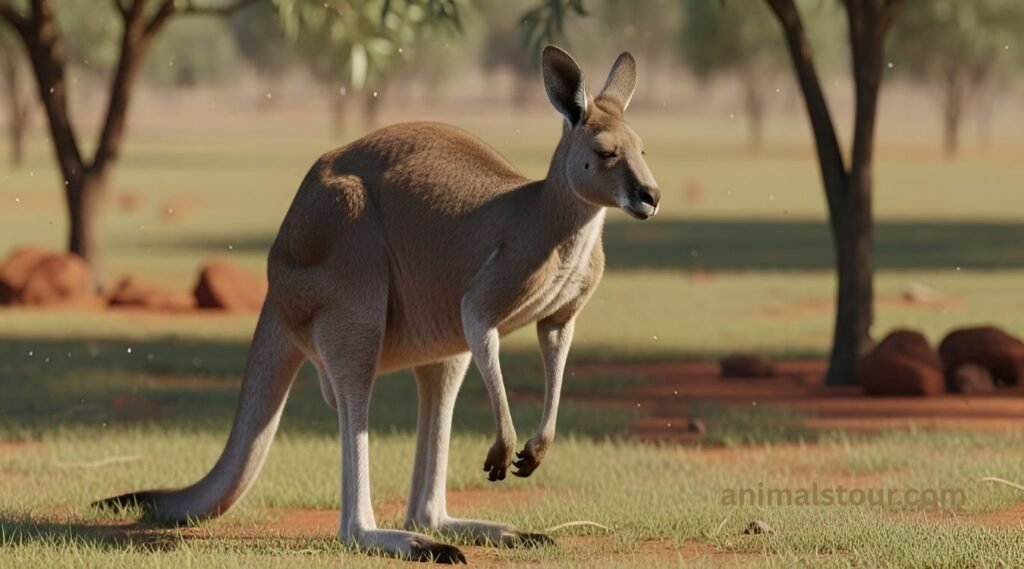
The red kangaroo has large upright ears that move independently. They can rotate each ear in a different direction easily. This lets them listen for sounds coming from all around them. It is like having two separate radars on their head.
Red kangaroos live in the semi dry parts of Australia. They travel in groups called mobs for safety and company. Their ears help the whole group stay alert together. One kangaroo can warn the others about nearby danger.
These kangaroos are the largest marsupials on Earth. Males can grow taller than six feet in height. Their powerful legs help them leap great distances with ease. Their big ears match their big and powerful bodies perfectly.
Habitat map (in words): Central and western Australia, mostly dry plains and deserts.
Fun Fact: Red kangaroos can leap over 25 feet in a single jump when they are moving fast.
7. Serval
Scientific Name: Leptailurus serval
Class: Mammalia
Diet: Carnivore
The serval is a wild cat with very tall and oval-shaped ears. Their ears are the largest of any cat relative to head size. They live in the tall grasslands wetlands, and savannas of Africa. Their ears help them hunt with incredible precision and accuracy.
The serval is a perfect example of an animal with big ears that relies heavily on sound to hunt successfully. Their ears also help them detect underground animals easily. They can hear moles and rats digging beneath the soil. Then they dig or strike with their sharp claws very quickly. Their ears make them one of Africa’s best hunters.
Habitat map (in words): Sub-Saharan Africa, from savannas to wetlands.
Fun Fact: Servals have the highest hunting success rate of any wild cat in Africa, catching prey about 50% of the time.
8. Asian Elephant
Scientific Name: Elephas maximus
Class: Mammalia
Diet: Herbivore
The Asian elephant inhabits South and Southeast Asian ecosystems. Asian elephants have smaller ears than their African cousins. But their ears are still very large and impressive to see. Their ears have a shape that looks like the country of India. They use their ears for cooling and for communication.
Asian elephants live in the forests and grasslands of Asia. They live in close family groups led by older females. Their ears help them hear the calls of family members nearby. They can even communicate using very low sounds humans cannot hear.
These elephants are very intelligent and emotional animals. They show care and love for each other every day. Their big ears can show their mood to other elephants. When they spread their ears wide, it often means they feel threatened.
Habitat map (in words): India, Sri Lanka, Thailand, Malaysia, and Indonesia’s forests and grasslands.
Fun Fact: Asian elephants can recognize themselves in a mirror, showing they have self-awareness just like humans.
9. Meerkat
Scientific Name: Suricata suricatta
Class: Mammalia
Diet: Omnivore
Meerkats have small but very powerful and sensitive ears. They can close their ears when they dig underground tunnels. This keeps dirt from getting inside their ear canals. Their ears open right back up when they return above ground.
Meerkats live in the dry Kalahari Desert of southern Africa. They live in large family groups called gangs or mobs. One meerkat always stands guard while others look for food. Their sharp ears help them detect eagles and other predators fast.
When a meerkat spots danger, it makes a loud barking sound. The whole group runs to the nearest underground tunnel immediately. Their quick hearing and fast reactions keep them alive. They are small but incredibly smart and alert animals.
Habitat map (in words): Kalahari Desert, Namibia, Botswana and South Africa.
Fun Fact: Meerkats are immune to certain snake and scorpion venom that would harm most other animals.
10. Caracal
Scientific Name: Caracal caracal
Class: Mammalia
Diet: Carnivore
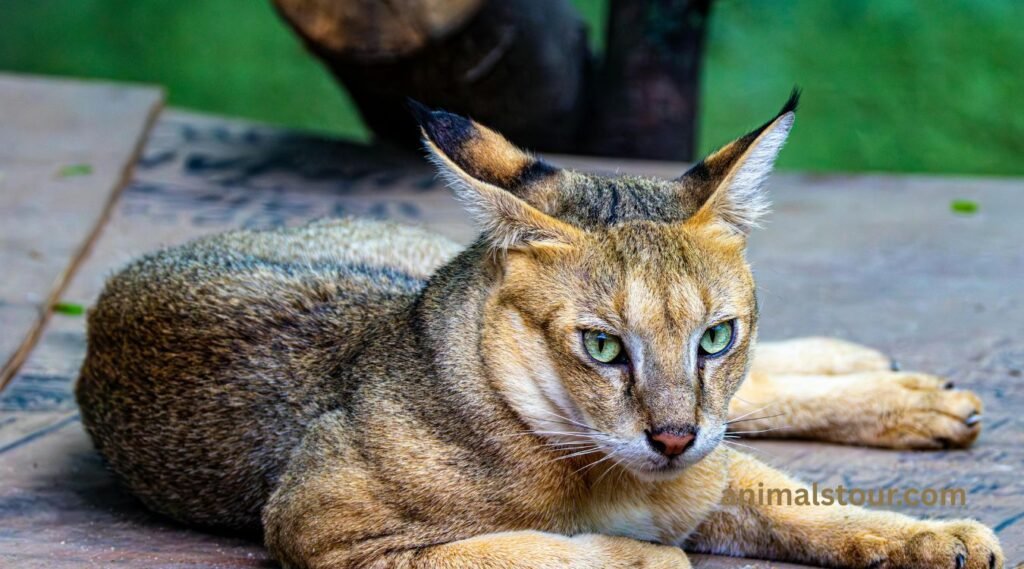
The caracal is a wild cat with very long black ear tufts. These tall tufts sit on top of their already large ears. Scientists believe the tufts help with communication between caracals. Their ears can rotate to track moving sounds very precisely.
Caracals are powerful hunters found across Africa Middle East and Central Asia. They are famous for leaping high into the air to catch birds. Their sharp ears help them target fast-moving prey with ease. They rarely miss when they decide to make their move.
These wild cats are mostly solitary and hunt alone at night. Their big ears give them a huge advantage in the darkness. They can locate prey by sound before they even see it. This makes them one of the most skilled nocturnal hunters.
Habitat map (in words): Africa south of the Sahara, Middle East, and parts of Central Asia.
Fun Fact: Caracals can leap up to ten feet into the air to catch birds in mid-flight.
11. Desert Hedgehog
Scientific Name: Paraechinus aethiopicus
Class: Mammalia
Diet: Insectivore
The desert hedgehog has noticeably large ears for its small body. Their ears help them hear insects moving in the dark desert night. They are covered in sharp spines that protect them from predators. When scared, they roll into a tight spiny ball instantly.
Desert hedgehogs live in the hot dry deserts of the Middle East. They are very small animals that weigh very little. Their big ears help them find beetles and other bugs to eat. They are mostly active during cooler nighttime hours only.
Their large ears also help release body heat in hot weather. This keeps their small bodies from overheating under the desert sun. They are very well adapted to their harsh environment. Their ears are a key reason they survive so well in the desert.
Habitat map (in words): North African region and hot dry deserts of the Middle East.
Fun Fact: Desert hedgehogs can travel up to seven miles in a single night while searching for food.
12. Pallid Bat
Scientific Name: Antrozous pallidus
Class: Mammalia
Diet: Insectivore
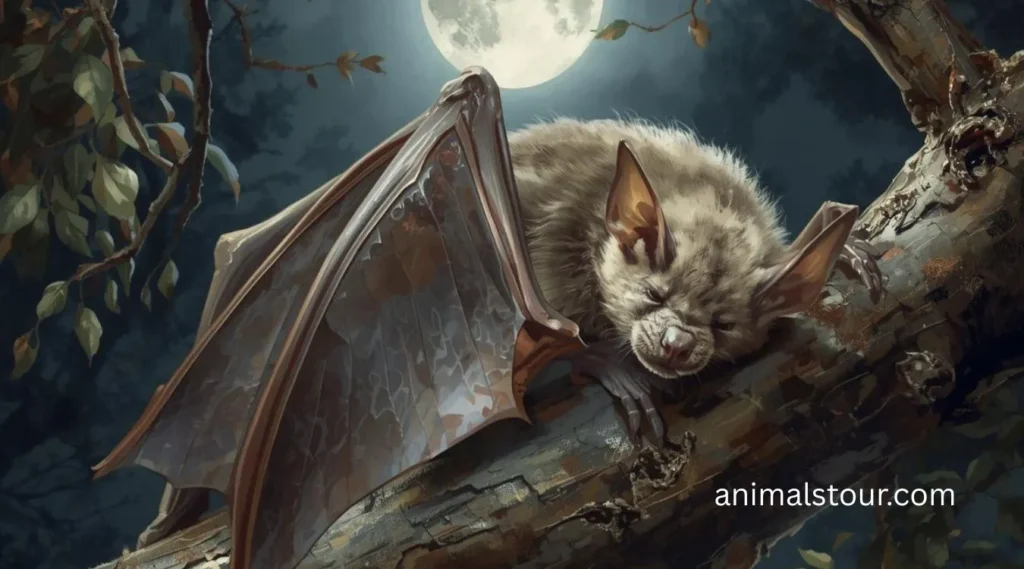
The pallid bat has enormous ears that look oversized on its body. Their ears are almost half the length of their entire body. They use these large ears to listen for prey on the ground. Unlike most bats, they hunt by listening rather than echolocation alone.
Pallid bats live in dry areas of western North America. They eat scorpions, beetles, and grasshoppers found on the ground. Their big ears help them hear these creatures walking in the dark. They swoop down silently and grab their prey with great skill.
These bats are also immune to scorpion stings on their face. This makes them fearless hunters of one of nature’s most dangerous creatures. Their excellent hearing guides them directly to their target. Their big ears truly make them unique among all bat species.
Habitat map (in words): western North America, and parts of Central America, usually deserts, grasslands, and open forests.
Fun Fact: Pallid bats are immune to the venom of the scorpions they regularly hunt and eat.
13. Hare (Various Species)
Scientific Name: Lepus (genus)
Class: Mammalia
Diet: Herbivore
Hares are well known for having very long upright ears. Their ears are much longer than those of regular rabbits. Different species of hares live on almost every continent on Earth. All of them rely on their big ears for survival every day.
Hares are classic animals with long ears because their tall ears help them detect predators from great distances. Their ears pick up the sounds of approaching predators from far away. When they hear danger, they sprint away at incredible speeds. Some hares can run over 45 miles per hour to escape. Their ears give them the early warning they need to survive.
Hares also use their ears to regulate their body temperature. Blood flowing through the ears releases excess heat into the air. This is very helpful during warm weather in open fields. Their ears are both a warning system and a cooling system.
Habitat map (in words): Open fields, deserts, and meadows across multiple continents.
Fun Fact: A group of hares is called a drove, and baby hares are born with their eyes already open.
14. Oryx
Scientific Name: Oryx gazella (example: gemsbok)
Class: Mammalia
Diet: Herbivore
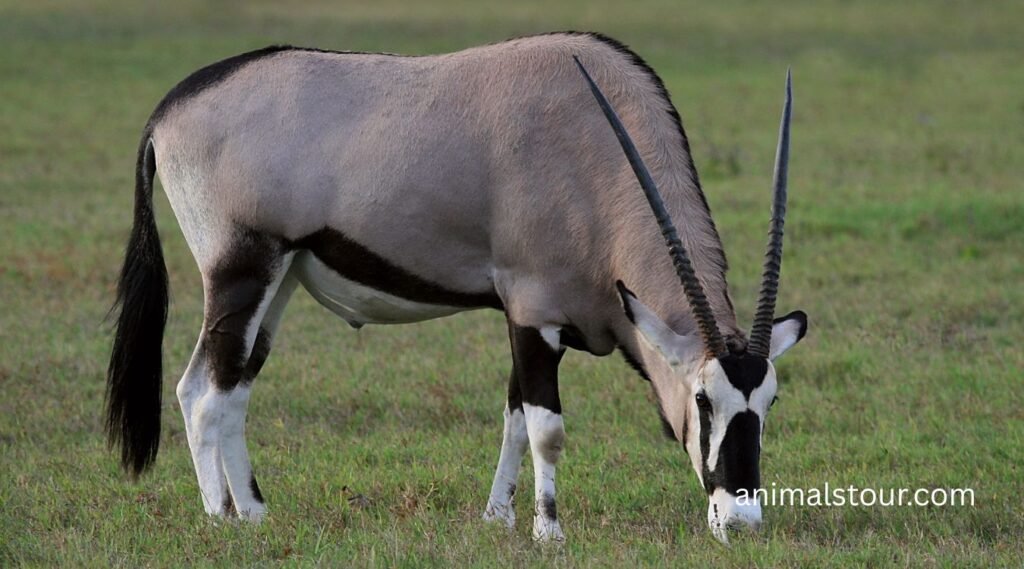
The oryx has long pointed ears that stand up straight and tall. Their ears help them hear predators across wide open desert lands. They live in arid regions of Africa. Their bodies are built perfectly for extreme survival conditions.
Oryx can survive in very high temperatures without drinking water often. They get most of their moisture from the plants they eat. Their big ears help them stay aware of lions and other threats. Being alert at all times is key to their survival.
These animals have long sharp horns that they use for defense. They will stand and fight a predator if they cannot escape. Their ears give them enough warning to choose fight or flight. They are truly tough and impressive desert animals.
Habitat map (in words): Deserts and driest places of southern and eastern Africa.
Fun Fact: Oryx can lower their body temperature to avoid sweating and save precious water in the desert heat.
15. African Wild Dog
Scientific Name: Lycaon pictus
Class: Mammalia
Diet: Carnivore
African wild dogs have very large and rounded ears on their head. Their ears are one of their most recognizable and striking features. They live in the open savannas and woodlands of sub-Saharan Africa. They are one of the most successful hunters on the continent.
Their big ears help the whole pack stay in contact during hunts. They make soft calls that other dogs can hear from a distance. This teamwork and communication makes them very effective hunters. They have a hunting success rate of nearly 80 percent.
African wild dogs are sadly one of Africa’s most endangered animals. Habitat loss and disease have reduced their numbers greatly. Each dog in the pack helps care for the young pups. Their big ears and strong social bonds keep the pack safe together.
Habitat map (in words): Savannas, woodlands, and semi-deserts in sub-Saharan Africa.
Fun Fact: African wild dogs vote on group decisions by sneezing, and the side with the most sneezes wins.
16. Jerboa
Scientific Name: Jaculus (genus)
Class: Mammalia
Diet: Herbivore/Insectivore
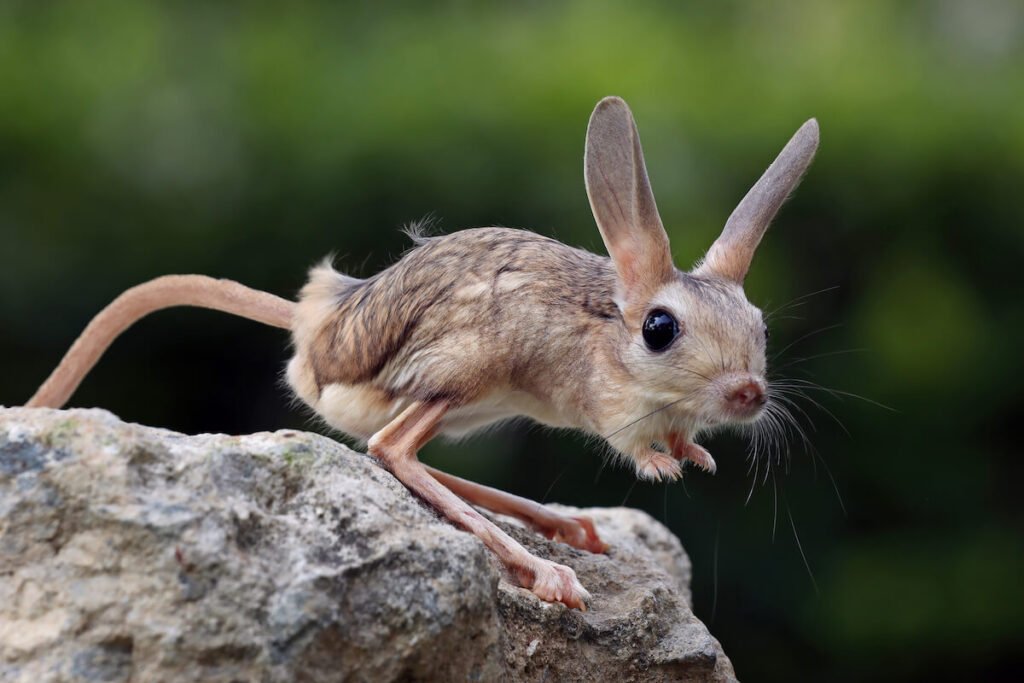
The jerboa is a tiny rodent with extremely large ears on its head. Its ears are almost as long as its entire body length. It lives in the deserts of Asia and North Africa. It hops around on its long back legs just like a kangaroo.
Their large ears are excellent for detecting predators at night. Owls and snakes are their biggest threats in the dark desert. Their ears pick up even the smallest and quietest sounds nearby. This gives them just enough time to leap away to safety.
Jerboas can jump very high and far when they need to escape. Their long tail helps them balance during each powerful leap. Their big ears and jumping ability make them very hard to catch. They are small animals with incredible survival instincts.
Habitat map (in words): Deserts and semi-dry regions of North Africa, the Middle East and Central Asia.
Fun Fact: Jerboas can jump up to ten feet in a single leap despite being only a few inches tall.
17. Long-eared Owl
Scientific Name: Asio otus
Class: Aves
Diet: Carnivore
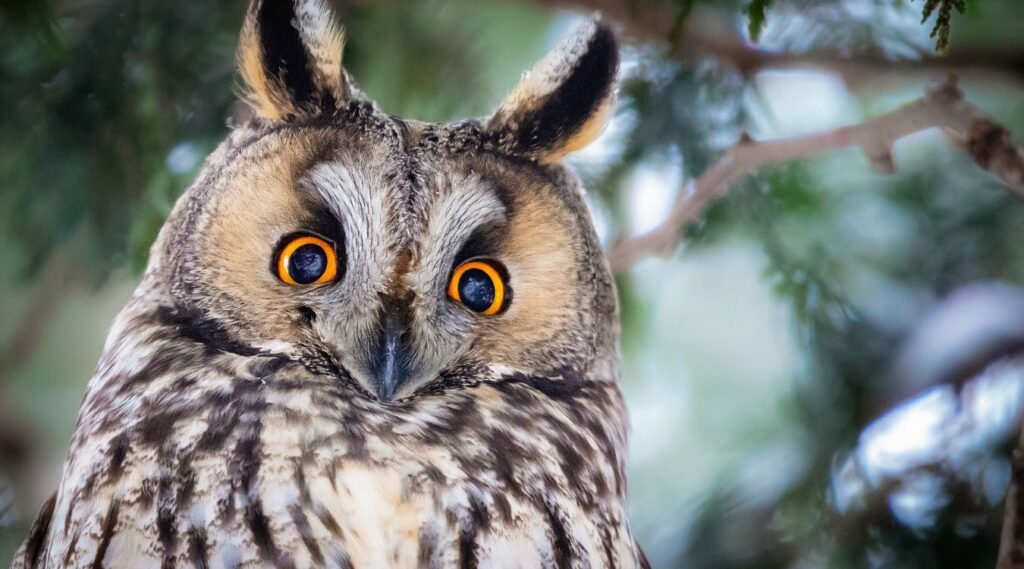
The long-eared owl has impressive ear tufts on top of its head. They are found in Europe, Asia and North America. These tufts are not actually ears but they look just like them. Their real ears are hidden on the sides of their round heads. These hidden ears are large and very powerful for detecting sound.
Long-eared owls can locate prey in total darkness by sound alone. They hunt mice and voles hiding under leaves or snow. Their ears work together like a precision sound-locating system. They can pinpoint the exact location of a mouse from above.
These owls are very quiet and secretive birds of the night. They roost in dense trees during the daytime hours. Their ear tufts help them blend into tree branches while resting. They are patient and silent hunters of the dark night sky.
Habitat map (in words): Forest edges, open woodlands, and grasslands across the Northern Hemisphere.
Fun Fact: Long-eared owls have one ear slightly higher than the other to help them judge sound direction perfectly.
18. Bobcat
Scientific Name: Lynx rufus
Class: Mammalia
Diet: Carnivore
The bobcat has medium-sized ears with small black tufts on top. These tufts help improve their hearing in the wild. Bobcats live across North America in many different habitats. They are very adaptable and skilled hunters in any environment.
Their ears help them locate rabbits and squirrels hiding nearby. They move slowly and quietly before making their final pounce. Their sharp hearing helps them hunt successfully in low light. They are active mostly at dawn and dusk each day.
Bobcats are solitary animals that live and hunt alone. They mark large territories and defend them from other bobcats. Their excellent ears help them detect intruders on their land. They are shy but very powerful predators of the wild.
Habitat map (in words): Across North America from southern Canada to Mexico, in forests, swamps and deserts.
Fun Fact: Bobcats can leap up to ten feet to catch their prey in a single powerful pounce.
19. Coyote
Scientific Name: Canis latrans
Class: Mammalia
Diet: Omnivore/Carnivore
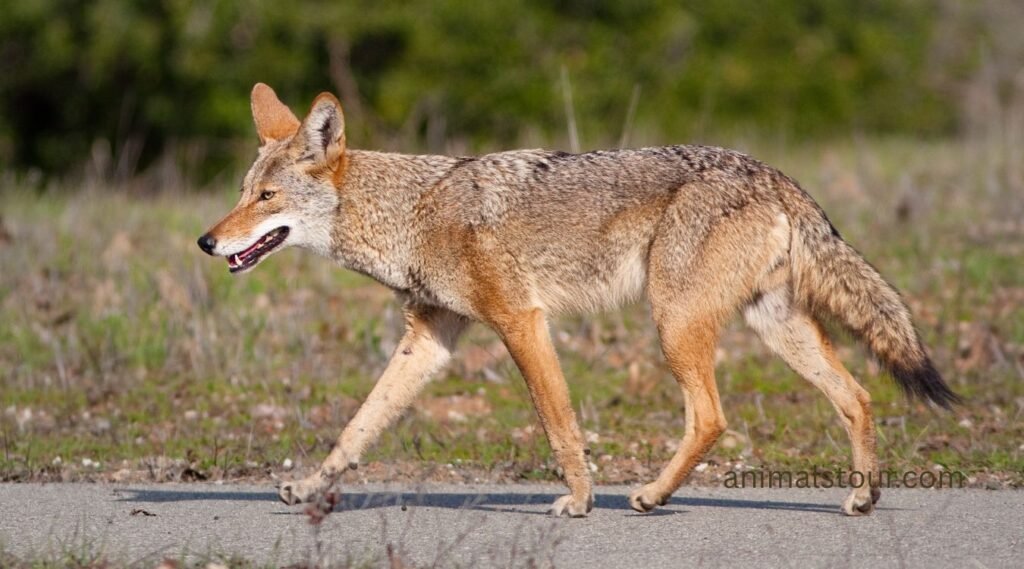
Coyotes have large pointed ears that always stand up straight. Their ears are always moving and scanning for sounds around them. They live across North America and Central America in forests, deserts, and even cities. They are one of the most adaptable wild animals in the world.
Their big ears help them hear mice and rabbits under the snow. They also help them detect the approach of other predators. Coyotes are very clever and use all their senses to survive. Their hearing is one of their greatest and most important strengths.
Coyotes communicate with each other using howls and yips at night. Their big ears help them hear their pack members from far away. They hunt alone and also in small family groups depending on prey. Their ears help them stay connected and survive together.
Habitat map (in words): Across North and Central America, from forests to cities.
Fun Fact: Coyotes can hear a mouse moving under two feet of snow and dive headfirst to catch it.
20. Greater Bilby
Scientific Name: Macrotis lagotis
Class: Mammalia
Diet: Omnivore
The greater bilby has very long rabbit-like ears on its small body. Their ears are thin and almost see-through in bright light. They live in the dry desert regions of Australia. They are one of Australia’s most beloved and iconic native animals.
Their large ears give them excellent hearing in the dark night. They use this hearing to find seeds, insects, and plant bulbs to eat. Their ears also help them detect dingoes and other predators nearby. Being able to hear danger early keeps them alive each night.
The bilby digs deep burrows to rest in during the hot daytime. Their big ears fold down flat when they are resting underground. They spiral their burrows downward to keep them cool inside. They are gentle and fascinating little animals of the Australian desert.
Habitat map (in words): Dry and semi-dry deserts of central and western Australia.
Fun Fact: In Australia, chocolate bilbies are sold at Easter time to raise awareness about saving this endangered species.
Final words
These remarkable animals with ears show how important hearing and temperature control are for survival in nature. Many big eared animals depend on their ears every day for hunting, communication, and protection. These 20 animals with big ears prove that nature creates amazing adaptations for survival.
Every animal with big ears uses its ears differently, whether for hearing danger, finding food, staying cool, or communicating with others. From deserts to forests and grasslands, these animals with long ears continue to thrive in some of the harshest environments on Earth. The incredible diversity of these big eared animals also highlights the beauty of wildlife around the world. Protecting the habitats of these unique animals with ears is important for maintaining biodiversity and preserving nature for future generations.
FAQS:
Why do some animals have big ears?
Big ears help animals with big ears hear better, detect predators, and regulate body temperature in hot environments.
Can big ears help animals survive?
Yes, many big eared animals rely on their large ears for survival because they improve hearing and help avoid danger.
Do animals with long ears live in specific habitats?
Many animals with long ears live in deserts, grasslands, and open habitats where strong hearing is very important.
Are bigger ears better for all animals?
Not always. Different animals with ears have ear sizes adapted to their own environments and survival needs.