Top 25 Amazing Animals With Blue Eyes
Blue eyes are rare in nature, and not many animals have them. Some animals are born with blue eyes, some get them from special genes, and some only have blue eyes for a short time when they are babies. This list looks at 25 animals with blue eyes, from pets like dogs and cats to wild animals like foxes, snakes, and even tiny crabs.
List of Top 25 Animals With Blue Eyes
Here is the list of the top 25 animals with blue eyes.
- 1.Siberian Husky
- 2. White Tiger
- 3. Piebald Camel
- 4. Siamese Cat
- 5. Australian Shepherd
- 6. Arctic Foxes
- 7. Alaskan Klee Kai
- 8. Blue-Eyed Leucistic Ball Python
- 9. Northern Gannet
- 10. Blue-Eyed Anglehead Lizard
- 11. Wild Horses
- 12. Blue-Eyed Larval Crab
- 13. Blue-Eyed Black Lemur
- 14. Yellow-Rumped Caciques
- 15. African Bush Viper
- 16. Turkish Angora
- 17. Blue-Eyed Hermit
- 18. Blue-Eyed Shag
- 19. Blue-Eyed White Tree Frog
- 20. Rabbits
- 21. Blue-Eyed Cuscus
- 22. Leopard
- 23. Dalmatian
- 24. Weimaraner
- 25. Mountain Lion
Siberian Husky
Scientific Name: Canis lupus familiaris
Class: Mammalia
Diet: Omnivore (commercial dog food, meat, vegetables, and grains)
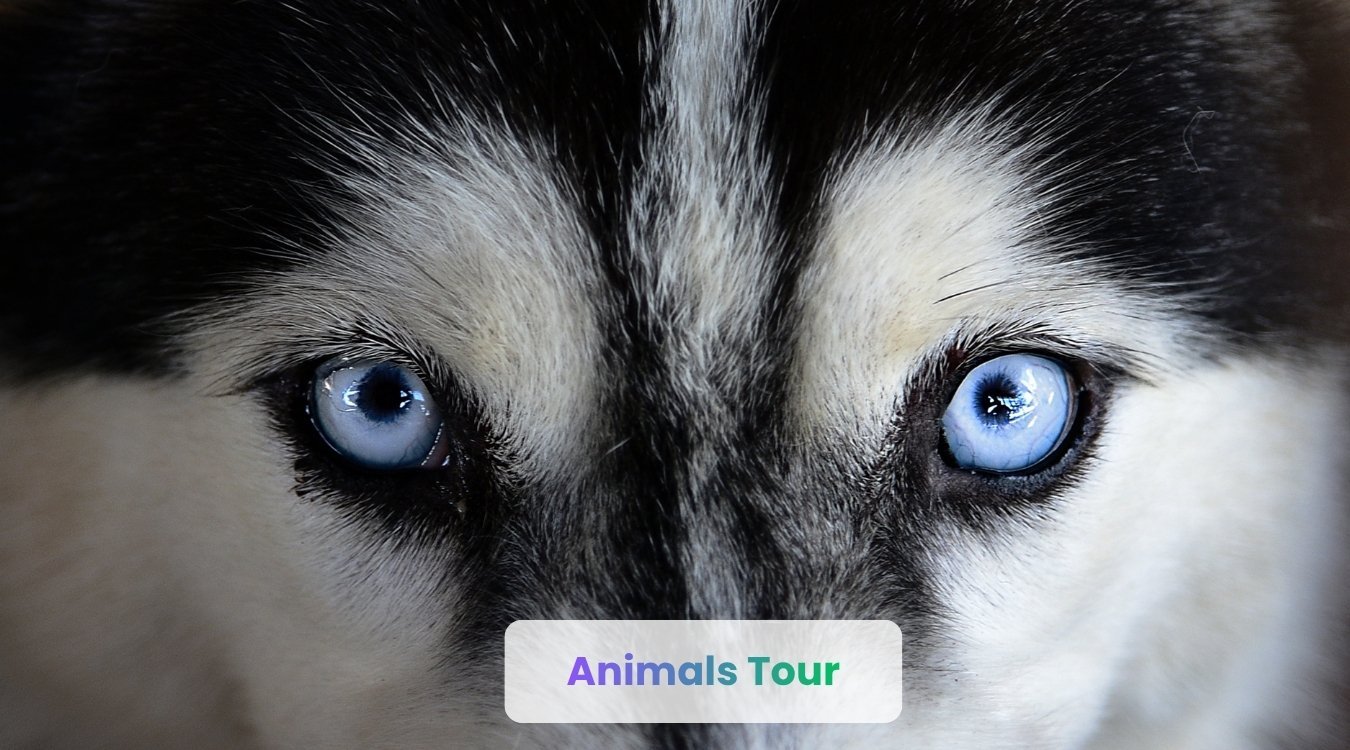
The Siberian Husky is one of the best-known animals with blue eyes, and for good reason. Their icy blue eyes come from a gene that removes some color from the iris, the colored ring around the pupil. Scientists have linked this gene to a small change near another gene called ALX4, and it does not make the dog sick, blind, or weak in any way. It simply changes how the eye looks.
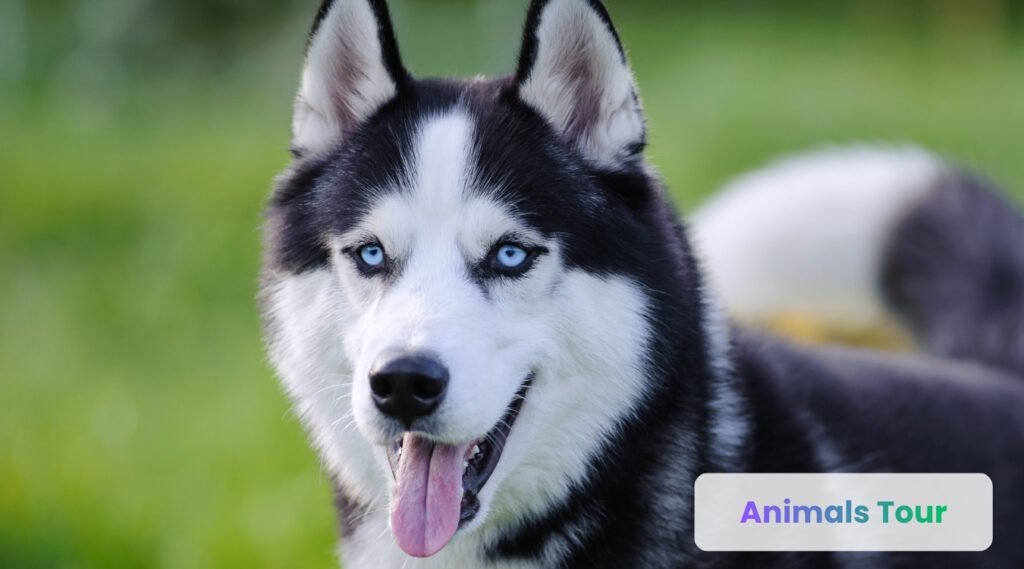
Huskies can have two blue eyes, one blue eye and one brown eye, or even a mix of both colors swirled together in a single eye. This mixed pattern is called heterochromia, and it happens more often in huskies than in most other dog breeds. Major dog clubs accept any eye color for this breed, which is one reason people so often picture huskies first when someone asks what animals have blue eyes.
White Tiger
Scientific Name: Panthera tigris tigris
Class: Mammalia
Diet: Carnivore (deer, wild boar, and other large mammals)
White tigers are not albino, even though many people think they are. Instead, they carry a special gene that removes most of the orange color from their fur while leaving their black stripes untouched. This same gene often gives them pale, glassy blue eyes too, which adds to their unusual and almost ghost-like appearance.
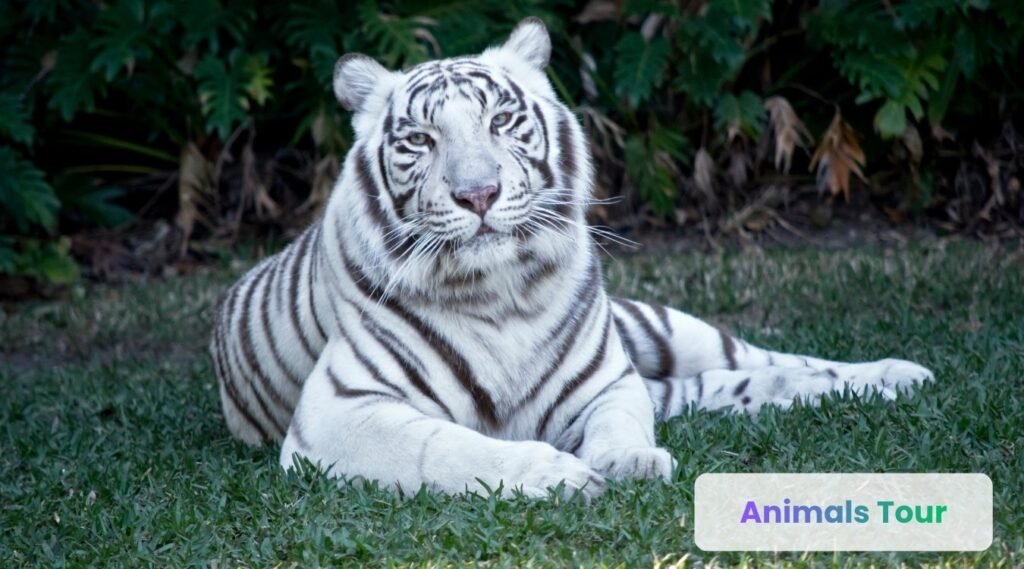
Almost every white tiger alive today came from a small group of tigers that were bred in zoos specifically to keep this rare color combination going. Wild white tigers are extremely rare, and some experts believe there have been very few confirmed sightings in the wild over the last several decades. Still, their white fur, black stripes, and pale blue eyes have made them one of the most recognized and photographed big cats on the planet.
Piebald Camel
Scientific Name: Camelus dromedarius (most piebald camels are dromedaries)
Class: Mammalia
Diet: Herbivore (grasses, leaves, shrubs, and desert plants)
A piebald camel has large white patches scattered across its normal brown coat, a pattern caused by a gene that blocks color from reaching certain parts of its skin and fur during development. In some camels, this same gene also blocks color from reaching the eyes, which leaves the camel with light blue or icy-toned eyes instead of the deep brown eyes most camels have.
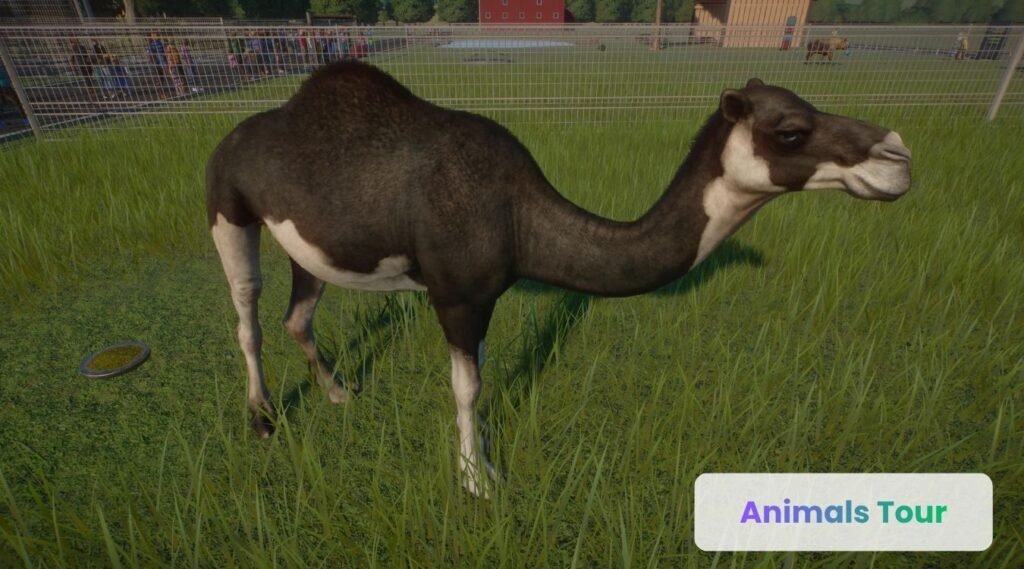
This kind of camel is uncommon, and in places like the Middle East and South Asia, where camels are often raised, traded, and shown at festivals, a piebald camel with blue eyes tends to stand out from the herd. Because blue eyes look so unexpected on a desert animal built for sun, sand, and heat, these camels often draw extra attention and even higher prices among breeders.
Siamese Cat
Scientific Name: Felis catus
Class: Mammalia
Diet: Carnivore (meat-based diet, including small animals and commercial cat food)
The Siamese cat is another classic answer whenever someone asks about animals with blue eyes, and its blue eyes are tied directly to its coat pattern. The same gene that gives Siamese cats their pale body and darker “points” on the face, ears, tail, and paws also affects color inside the eye. This gene is sensitive to temperature, which explains why the darker fur usually appears on the cooler parts of the cat’s body, like the ears and tail tip.
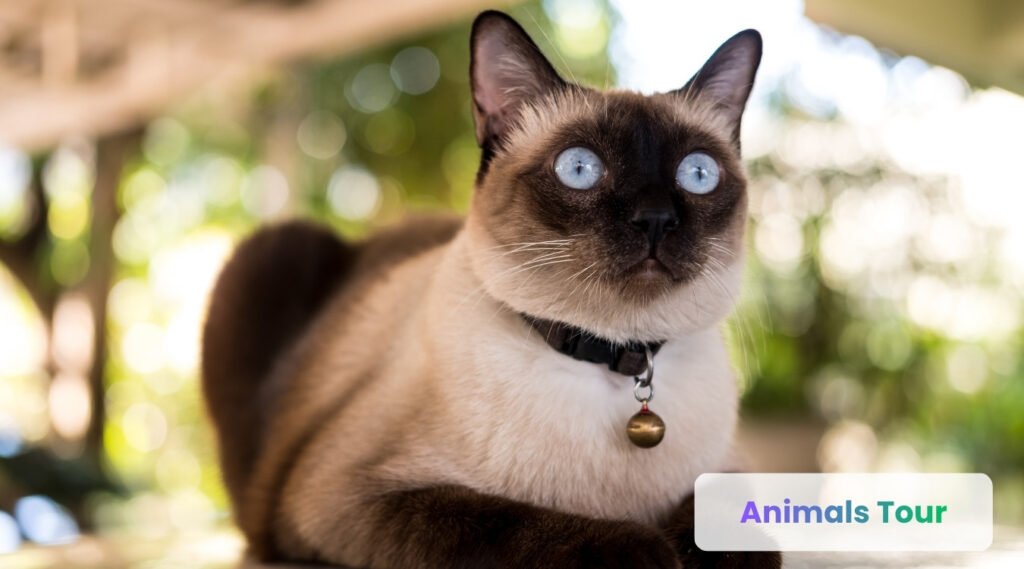
Because this gene reduces pigment in the eye as well as the fur, Siamese cats almost always end up with bright, vivid blue eyes rather than green or gold. A few other cat breeds with similar dark “points,” such as the Himalayan, share this same genetic background, which is why they often have the same striking blue-eyed look.
Australian Shepherd
Scientific Name: Canis lupus familiaris
Class: Mammalia
Diet: Omnivore (meat, vegetables, grains, and commercial dog food)
Australian Shepherds frequently have blue eyes because of their merle coat pattern, a pattern that randomly lightens patches of fur across the body. This same lightening effect can reach into the eyes, which is why one Aussie might have two blue eyes, while another has one blue eye and one brown eye, or even a single eye that is split between two colors.
Breeders have to be careful with this trait, though, since breeding two merle dogs together raises the risk of vision and hearing problems in the puppies, a condition sometimes called double merle. A dog with only one copy of the merle gene does not carry this same risk. Because of this, most blue-eyed Australian Shepherds you meet at the park are completely healthy, active, and ready to work.
Arctic Foxes
Scientific Name: Vulpes lagopus
Class: Mammalia
Diet: Omnivore (lemmings, birds, fish, insects, berries, and carrion)
Healthy adult Arctic foxes usually have golden or amber eyes, not blue ones, so true blue eyes in this species are considered unusual. Every so often, a fox is born with blue eyes because of a rare recessive gene, and young pups can sometimes look like they have lighter eyes for a short period before their eye color fully settles.
A blue-eyed Arctic fox stands out dramatically against its thick, snow-white winter coat, which is part of why wildlife photographers get excited whenever they manage to spot one. Since Arctic foxes are already famous for changing coat color with the seasons, from white in winter to brownish-grey in summer, a rare blue-eyed individual adds one more unusual detail to an already remarkable animal.
Alaskan Klee Kai
Scientific Name: Canis lupus familiaris
Class: Mammalia
Diet: Omnivore (meat, vegetables, grains, and commercial dog food)
The Alaskan Klee Kai is a small companion dog that looks like a miniature husky or wolf, first developed in Alaska during the 1970s by breeders who wanted a smaller version of the Alaskan Husky. Like its larger relatives, the breed frequently carries the gene linked to blue eyes, and many breeders actively select for bright blue, green, or mismatched eyes when planning litters.
Because the breed is still fairly new and is not yet recognized by every major kennel club around the world, its eye color has become one of its biggest selling points alongside its compact size and fox-like face. For many fans, the combination of a small, alert body and intense blue eyes is exactly what makes this breed so appealing.
Blue-Eyed Leucistic Ball Python
Scientific Name: Python regius
Class: Reptilia
Diet: Carnivore (mainly rodents such as mice and rats)
The Blue-Eyed Leucistic, usually shortened to BEL, is a color morph of the ball python created by combining several specific recessive genes. The result is a snake with skin that is almost completely white, paired with clear, pale blue eyes. Unlike albino snakes, which typically have pink or red eyes because they lack pigment almost everywhere, BEL pythons keep this striking blue eye color thanks to the particular genetic combination involved.
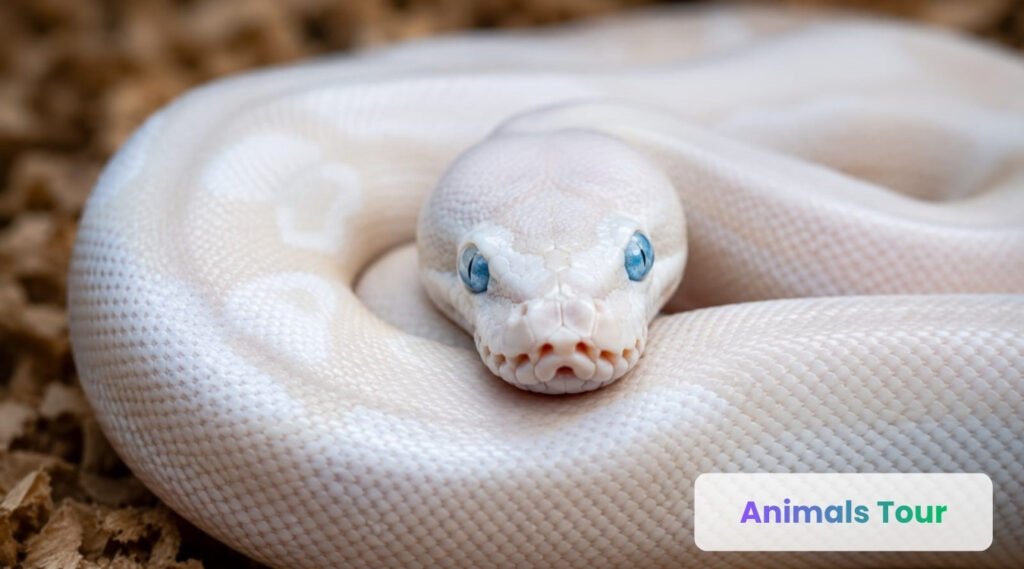
This morph has become especially popular among reptile keepers because of the sharp contrast between the snow-white body and the glowing blue eyes. Breeders have worked out several different gene combinations over the years that all lead to this same general look, and it is worth remembering that this trait exists only in captive-bred snakes, not in wild ball python populations.
Northern Gannet
Scientific Name: Morus bassanus
Class: Aves
Diet: Carnivore (mainly fish such as mackerel, herring, and sand eels)
The Northern Gannet is a large seabird of the North Atlantic, famous for folding its wings and plunging headfirst into the ocean at incredible speed to catch fish below the surface. Around each eye sits a ring of cobalt-blue bare skin, and the iris itself is a pale, icy blue-grey, which gives the bird a sharp, masked expression that is easy to notice up close or in photographs.
This combination of blue eye ring and black facial markings is one of the clearest ways to tell adult gannets apart from other large white seabirds nesting along the same coastlines. Young gannets, on the other hand, look completely different, with mostly brown feathers that slowly turn white over several years as the birds mature into adults with this fully developed blue-eyed look.
Blue-Eyed Anglehead Lizard
Scientific Name: Gonocephalus liogaster
Class: Reptilia
Diet: Insectivore (insects, spiders, and other small invertebrates)
The Blue-Eyed Anglehead Lizard lives in the forests of Southeast Asia and is named directly for its pale blue iris, which stands out sharply against its mottled brown and green camouflage skin. Like many forest-dwelling lizards, it depends on staying still and blending into bark or leaf litter, so the blue eye is often the easiest clue that gives the animal’s location away to a careful observer.
Because this species is not as widely studied or kept as a pet compared to more common reptiles, detailed information about how many exist in the wild is still limited. Even so, its unmistakable eye color has made it a recognizable and memorable species among reptile enthusiasts and field researchers working in Southeast Asian rainforests.
Wild Horses
Scientific Name: Equus ferus
Class: Mammalia
Diet: Herbivore (grasses, herbs, leaves, and shrubs)
Most wild and domestic horses have dark brown eyes, but a smaller number carry genes connected to cream, champagne, or pearl dilution, or simply have a large amount of white on the face, and any of these can cause one or both eyes to appear blue. This happens because the same lack of pigment that lightens the face can sometimes spread into the eye as well.
Blue eyes do not affect a horse’s vision or overall health in any meaningful way, despite an old and inaccurate myth claiming that blue-eyed horses see poorly or behave more nervously than others.
Breeds and bloodlines known for heavy white facial markings, including certain Quarter Horses, Paint horses, and some wild mustang populations, are the ones most likely to show this trait, which is just one more example of how animals having blue eyes can come down to simple genetics rather than anything unusual happening internally.
Blue-Eyed Larval Crab
Scientific Name: Varies by species (crab larvae belong to the infraorder Brachyura)
Class: Malacostraca
Diet: Omnivore (plankton, algae, and tiny marine organisms)
Many crab species pass through an early life stage called the zoea before developing into the familiar crab shape most people picture, and during this stage their tiny compound eyes can appear strikingly blue under a microscope. This blue color comes from the way light scatters and reflects off the developing structure of the eye, rather than from any traditional pigment.
Because crab larvae are extremely small, often just a few millimeters long and drifting freely in ocean plankton, this brief blue-eyed phase is mostly observed by marine biologists studying crab development rather than by casual beachgoers. It lasts only a matter of days to a few weeks before the larva molts again on its way toward becoming a recognizable adult crab.
Blue-Eyed Black Lemur
Scientific Name: Eulemur flavifrons
Class: Mammalia
Diet: Omnivore (fruits, leaves, flowers, nectar, and insects)
The blue-eyed black lemur, also known as Sclater’s lemur, lives only in a small region of northwestern Madagascar and is one of the very few primates besides humans known to consistently have blue eyes. The color can range from a bright sky blue to a softer grey-blue, and remarkably, both males and females share this same eye color even though males are solid black and females are reddish-brown.
This shared blue eye color is one of the easiest ways to separate this species from the closely related black lemur, whose eyes are typically orange-red. Unfortunately, the blue-eyed black lemur is critically endangered, largely because deforestation has destroyed much of its already limited habitat. Because of this, the species has become a priority for conservation breeding programs at zoos and research centers around the world.
Yellow-Rumped Caciques
Scientific Name: Cacicus cela
Class: Aves
Diet: Omnivore (fruits, insects, nectar, and small vertebrates)
Yellow-rumped caciques are loud, highly social birds found across Central and South America, well known for building large colonies of woven, hanging nests crowded together in a single tree. Adult birds have a pale, almost icy blue iris that contrasts sharply against their glossy black body and bright yellow rump and wing patches, giving them an alert, eye-catching appearance even from a distance.
Most people notice the bold yellow markings first, since they are easier to spot from far away, but a closer look almost always reveals the bird’s striking blue eyes as well. Combined with their loud, varied calls and busy communal nesting colonies, yellow-rumped caciques are hard to miss across much of their tropical range.
African Bush Viper
Scientific Name: Atheris squamigera
Class: Reptilia
Diet: Carnivore (small mammals, birds, frogs, and lizards)
African bush vipers come in a wide range of body colors, including green, yellow, orange, grey, and blue, and individual snakes can even shift in color somewhat as they grow older. Their large, forward-set eyes, equipped with thin, cat-like vertical pupils, can take on pale, almost icy tones in certain color variants, which only adds to the snake’s already unusual, almost dragon-like look created by its rough, keeled scales.
This venomous species lives in the forests of West and Central Africa, where it hunts mainly at night, ambushing small rodents, birds, and lizards from coiled, motionless positions. Because of their dramatic and unpredictable coloring, African bush vipers are popular within the exotic reptile trade, though their venom means they are absolutely not suitable for casual or inexperienced handlers.
Turkish Angora
Scientific Name: Felis catus
Class: Mammalia
Diet: Carnivore (meat-based diet, including small animals and commercial cat food)
The Turkish Angora is an old cat breed that originated in central Turkey, prized for centuries for its long, silky coat and, in many individual cats, vivid blue eyes. Pure white Turkish Angoras can have blue eyes, gold eyes, or one of each in a condition known as odd-eyed, and all of these variations trace back to the same gene that produces their solid white coat by suppressing other colors.
Blue-eyed white cats from this breed, along with several similar breeds, have a slightly higher chance of being deaf in the ear located on the same side as the blue eye, a link tied to how the white gene affects both pigment cells and the development of the inner ear. This does not happen to every blue-eyed Turkish Angora, but it remains an important and well-known consideration for breeders and new owners alike.
Blue-Eyed Hermit (Crab)
Scientific Name: Varies by species (family Paguroidea)
Class: Malacostraca
Diet: Omnivore (algae, decaying matter, small invertebrates, and plant material)
The blue-eyed hermit crab earns its name from the pale blue coloring visible in its eyes, which stands out clearly against its more muted shell and leg coloring. Like other hermit crabs, it does not grow its own hard shell at all. Instead, it borrows empty shells left behind by sea snails, switching to a larger shell whenever it grows too big for its current one.
These small crabs live in coastal and intertidal marine environments, where divers and marine life enthusiasts often use the bright blue eyes as a quick way to tell this species apart from other, similar-looking hermit crabs nearby. Beyond their eye color, their day-to-day life follows the same basic hermit crab pattern of scavenging for food and competing with neighbors over the best available shells.
Blue-Eyed Shag
Scientific Name: Leucocarbo spp. (blue-eyed shags are a group of closely related species)
Class: Aves
Diet: Carnivore (mainly fish, crustaceans, and cephalopods)
The Blue-Eyed Shag is actually a group name covering several closely related cormorant species found across the colder regions of the Southern Hemisphere, including Antarctica, the Falkland Islands, and South Georgia. Despite the name, it is technically not the eye itself that turns blue, but rather a ring of bare, blue-colored skin surrounding the eye, often paired with a bright orange or yellow growth just above the bill.
This blue eye ring becomes especially vivid during breeding season, making these birds easy to identify among the wider mix of Antarctic and sub-Antarctic seabirds. The Antarctic Shag, one specific member of this larger group, holds the distinction of being the only cormorant species that lives in Antarctica itself, nesting along ice-free coastal cliffs and diving for fish in the cold surrounding waters.
Blue-Eyed White Tree Frog
Scientific Name: Litoria caerulea
Class: Amphibia
Diet: Carnivore (insects, spiders, and other small invertebrates)
The Blue-Eyed White Tree Frog is a color variant most often associated with the Australian White’s tree frog, where breeders have deliberately selected individuals with pale or white skin paired with clear blue eyes, rather than the species’ usual golden or bronze iris. This particular combination shows up far more often in captive-bred frogs than it does in the wild population, since it depends heavily on careful, selective breeding over many generations.
White’s tree frogs are already a popular pet thanks to their calm, easygoing temperament and round, almost permanently smiling face, and the blue-eyed white variety adds an extra layer of visual appeal that many amphibian keepers find irresistible. Like other tree frogs, they rely on sticky toe pads to climb smooth surfaces, and they spend much of their time simply resting on broad leaves or the glass walls of their enclosure.
Rabbits
Scientific Name: Oryctolagus cuniculus (domestic and European rabbit)
Class: Mammalia
Diet: Herbivore (grasses, hay, leaves, and vegetables)
Most pet and wild rabbits have brown or dark eyes, but certain coat-color genetics, particularly the blue-eyed white gene found in breeds like the Vienna and some Rex rabbits, can produce rabbits with solid white fur and clear, bright blue eyes. This is different from albino rabbits, which have red or pink eyes because of a complete absence of pigment, since blue-eyed white rabbits still have some pigment activity happening elsewhere in their body, just not within the iris or coat.
White rabbits are popular both in showing and as pets specifically because of this distinctive eye-and-coat combination, and the trait is well documented within official rabbit breed standards. The blue color itself comes from light scattering inside an iris that has very little pigment, the same basic principle behind blue eyes in several other animals on this list, proving once again that animals with blue eyes often share surprisingly similar genetic stories.
Blue-Eyed Cuscus
Scientific Name: Phalanger matabiru
Class: Mammalia
Diet: Herbivore (leaves, fruits, flowers, and young shoots)
The blue-eyed cuscus is a marsupial found only on two small Indonesian islands, Ternate and Tidore, and it is named directly for its pale blue eyes, a genuinely rare trait among cuscus species, most of which have orange, red, or brown eyes instead. A closely related species, the blue-eyed spotted cuscus of Biak Island, also carries this same striking blue-green eye color, and it is currently listed as critically endangered.
Cuscuses are slow-moving, tree-dwelling animals that spend nearly their entire lives in the forest canopy, feeding mostly on leaves and fruit while moving carefully from branch to branch. Because both blue-eyed cuscus species are restricted to such small island ranges, habitat loss and hunting put them at real and ongoing risk, and recent surveys of some populations have struggled to confirm whether any wild individuals remain at all.
Leopard
Scientific Name: Panthera pardus
Class: Mammalia
Diet: Carnivore (deer, antelope, wild pigs, monkeys, and other animals)
Leopards typically have amber, gold, or light brown eyes, but blue eyes can occasionally appear in cubs during their first few weeks of life, much like many other big cat species, before the eyes gradually mature into their permanent adult color. True blue eyes in a fully grown adult leopard are extremely rare and are usually linked to an unusual pigment condition rather than being a normal part of the species’ natural variation.
Because blue eyes are not a standard trait for this species, any confirmed sighting of a blue-eyed adult leopard tends to draw significant attention from wildlife photographers and researchers alike. Overall, leopards remain far better known for their rosette-spotted coat and exceptional climbing ability than for any consistent or expected eye color.
Dalmatian
Scientific Name: Canis lupus familiaris
Class: Mammalia
Diet: Omnivore (meat, vegetables, grains, and commercial dog food)
Dalmatians can have blue eyes, brown eyes, or one of each, and this trait is tied directly to the same piebald gene responsible for their iconic spotted black-and-white coat. Unfortunately, blue eyes in Dalmatians are statistically linked to a higher risk of deafness, since the extreme piebald pattern can also disrupt pigment cells involved in the development of the inner ear.
Studies on the breed have repeatedly found that Dalmatians with blue eyes are more likely to be deaf in one or both ears compared to brown-eyed individuals, which is exactly why responsible breeders routinely test puppies’ hearing regardless of their eye color. Despite this added risk, blue-eyed Dalmatians remain a recognized and fully accepted variation within the breed, loved by owners for their striking, contrasting eyes.
Weimaraner
Scientific Name: Canis lupus familiaris
Class: Mammalia
Diet: Omnivore (meat, vegetables, grains, and commercial dog food)
Weimaraners are known for their sleek, silver-grey coats, and puppies are typically born with strikingly bright blue eyes that gradually shift toward light amber, grey, or blue-grey as the dogs grow into adulthood. This slow change happens because pigment in the iris continues developing for some time after birth, somewhat similar to the way a human baby’s eye color can shift during its first year of life.
While most adult Weimaraners eventually settle into amber or grey-blue tones rather than staying truly blue, the breed’s pale, light-colored eyes, regardless of the exact final shade, are still considered one of its defining features, right alongside its short coat and lean, athletic build. Breed standards generally accept this entire range of light eye colors as correct and typical for the breed.
Mountain Lion
Scientific Name: Puma concolor
Class: Mammalia
Diet: Carnivore (deer, elk, rabbits, and other mammals)
Mountain lion kittens, also called cougar or puma kittens, are born with blue eyes, a trait shared by many big cat species around the world, and this blue color is simply an early, immature stage of eye development rather than a lasting feature. As the kittens continue to grow, usually within their first several months of life, their eyes gradually shift toward the amber or light brown color seen in fully grown adults.
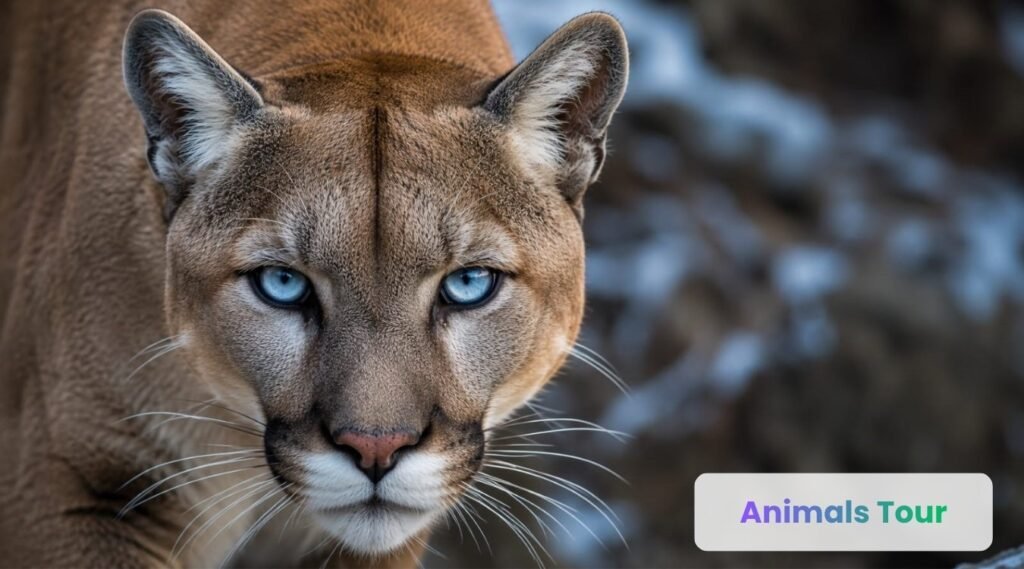
This temporary blue-eyed phase is well documented by wildlife researchers and is just one of several traits, including spotted coats, that mountain lion kittens lose naturally as they mature. Adult mountain lions with genuinely blue eyes are not considered a recognized variation of the species, which sets them apart from some of the other animals with blue eyes featured earlier in this list.
Conclusion
From dogs and cats to seabirds, snakes, and tiny ocean crabs, animals with blue eyes show up in many different parts of the animal world for many different reasons. Sometimes it is a special gene, sometimes it is a missing pigment, and sometimes it only happens for a short time when the animal is very young. No matter the reason, blue eyed animals always seem to catch people’s attention, which is exactly why so many of them end up loved by pet owners, photographers, and animal fans everywhere.
FAQs
What animals have blue eyes?
Several animals can have blue eyes, including Siberian huskies and other dog breeds, certain cat breeds (like Siamese), horses with specific coat patterns, some sheep breeds, certain birds (like blue jays, which have blue irises in some cases), and humans. Blue eyes typically result from a lack of melanin in the iris.
Do bears ever have blue eyes?
Adult bears have brown eyes. Bear cubs are sometimes born with blue or bluish-gray eyes, but these darken to brown within the first few months of life.
What dog breeds commonly have blue eyes?
Siberian Huskies, Australian Shepherds, Border Collies, and Weimaraners are known for blue eyes.