Top 20 Animals With Long Neck: A Wildlife Guide (With Pictures)
Did you know that the giraffe, with its towering neck, is not the only animal that defies gravity in the animal kingdom? From the elegant swan to the curious llama, numerous creatures showcase unique adaptations that extend their necks for survival and functionality. In this article, we’ll explore the top 20 animals with long necks, examining their fascinating traits and how these features benefit them in their natural habitats. Get ready to discover a world of elongated elegance that might just surprise you.
List of Animals with long neck:
Here’s the list of animals having long neck:
| No. | Common Name | Scientific Name |
| 1 | Giraffe | Giraffa camelopardalis |
| 2 | Swan | Cygnus olor |
| 3 | Camel | Camelus dromedarius |
| 4 | Okapi | Okapia johnstoni |
| 5 | Llama | Lama glama |
| 6 | Alpaca | Vicugna pacos |
| 7 | Emu | Dromaius novaehollandiae |
| 8 | Ostrich | Struthio camelus |
| 9 | Heron | Ardea cinerea |
| 10 | Flamingo | Phoenicopterus roseus |
| 11 | Turkey | Meleagris gallopavo |
| 12 | Black-necked Stork | Ephippiorhynchus asiaticus |
| 13 | Mute Swan | Cygnus olor |
| 14 | Black Stork | Ciconia nigra |
| 15 | Horse | Equus ferus caballus |
| 16 | Zebra | Equus quagga |
| 17 | Peacock | Pavo cristatus |
| 18 | Turkey Vulture | Cathartes aura |
| 19 | Anhinga | Anhinga anhinga |
| 20 | Great Blue Heron | Ardea herodias |
Giraffe
Scientific name: Giraffa camelopardalis
Class: Mammalia
Diet: Herbivore
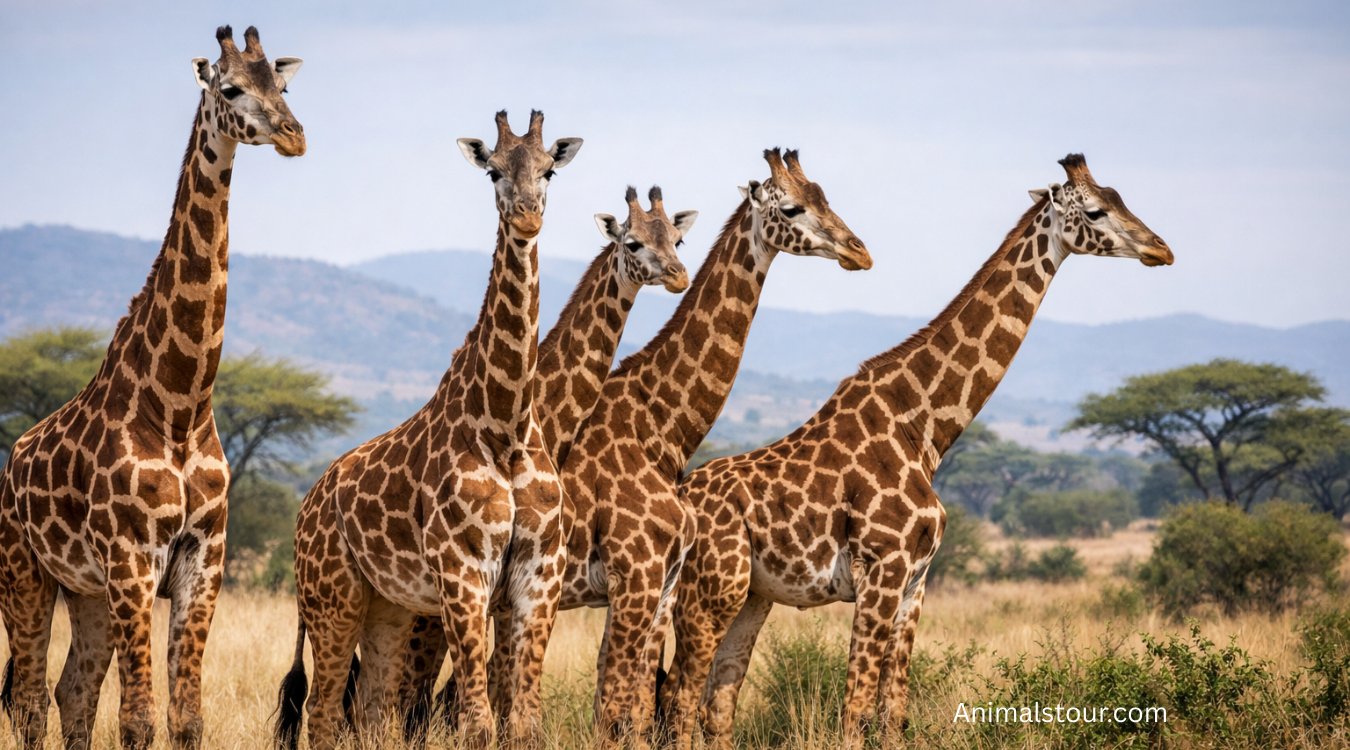
Giraffes are not just the tallest land animals; they’re also fascinating social creatures that defy conventional animal behavior. Their long necks, a signature feature, serve not only for reaching high foliage but also play a crucial role in their social interactions. This elongated neck, extending up to six feet, allows giraffes to reach the tender leaves and high branches of acacia trees, giving them access to food sources often beyond the reach of other grazing animals.
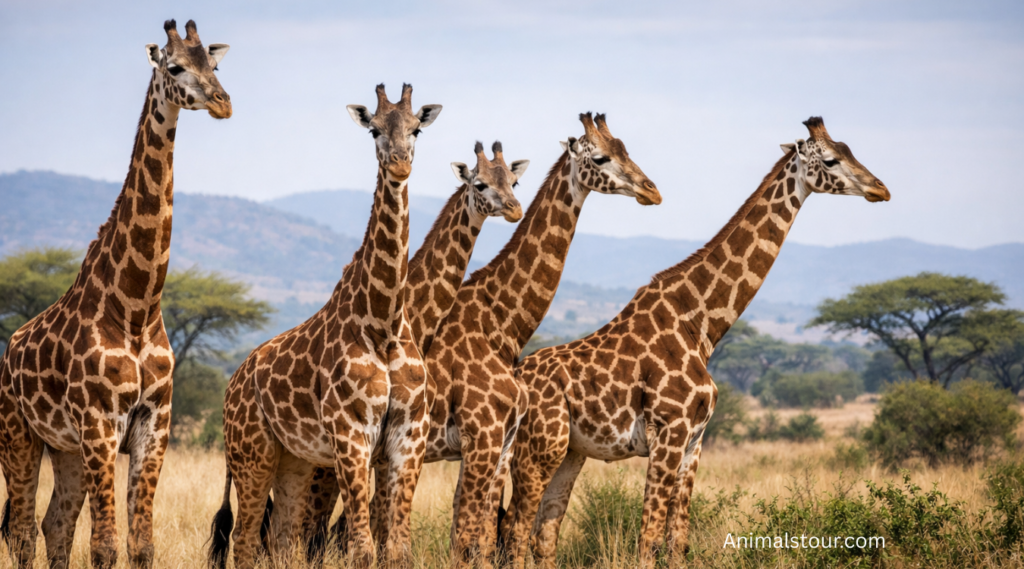
These gentle giants engage in “necking,” a unique behavior where males swing their necks to establish dominance. This physical display is both a form of combat and a way to communicate strength, showcasing a blend of grace and power that challenges our perceptions of elegance in the animal kingdom.
Giraffes are not just the tallest land animals; they’re also fascinating social creatures that defy conventional animal behavior. Their long necks, a signature feature, serve not only for reaching high foliage but also play a crucial role in their social interactions.
Interesting fact: They have adapted to go without water for several days, deriving moisture primarily from the succulent leaves they eat.
Swan
Scientific name: Cygnus olor
Class: Aves
Diet: Omnivore (plants, small aquatic life)
Swans with their longest neck are found gracefully gliding across serene lakes, their elegance captivating anyone fortunate enough to witness their beauty. These majestic birds are not just symbols of grace; they also play a crucial role in their ecosystems.
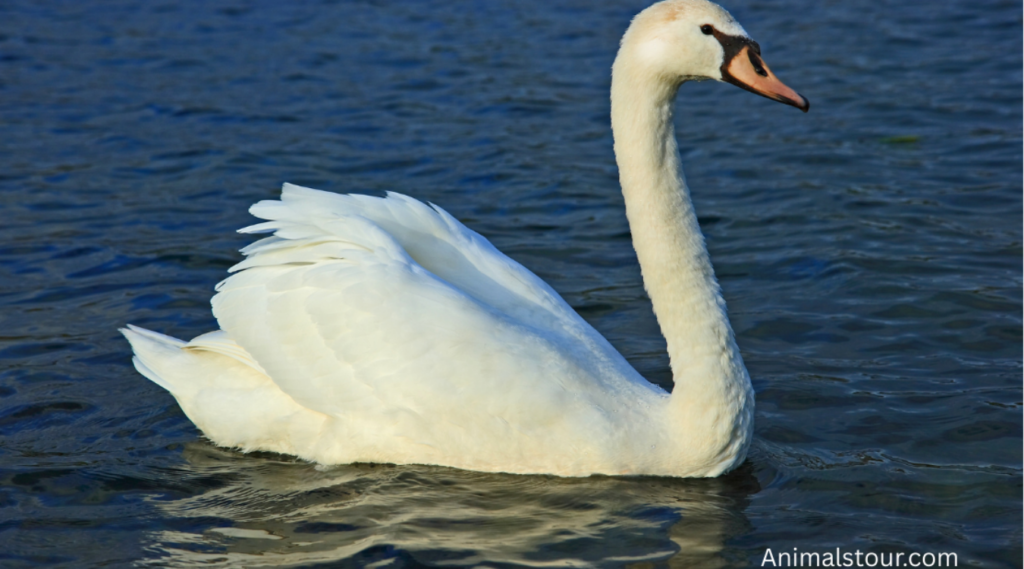
As they feed on aquatic vegetation, insects, and small fish, swans help maintain the health of lakes by controlling plant overgrowth and providing a natural method of pest management. Moreover, swans are surprisingly fierce guardians of their territory. During breeding season, they become protective and bold, capable of defending their nests from threats with striking displays of strength.
Interesting fact: Swans can travel hundreds of miles in migration.
Camel
Scientific name: Camelus dromedarius
Class: Mammalia
Diet: Herbivore
The camel’s long neck is a remarkable adaptation, perfectly sculpted by the harsh desert environment. This unique feature not only allows them to reach high branches to eat tough plants but also provides a broader field of vision to spot potential threats. In the vastness of the desert, where resources are scarce, the ability to graze on foliage that is out of reach for most animals gives camels a distinct advantage.
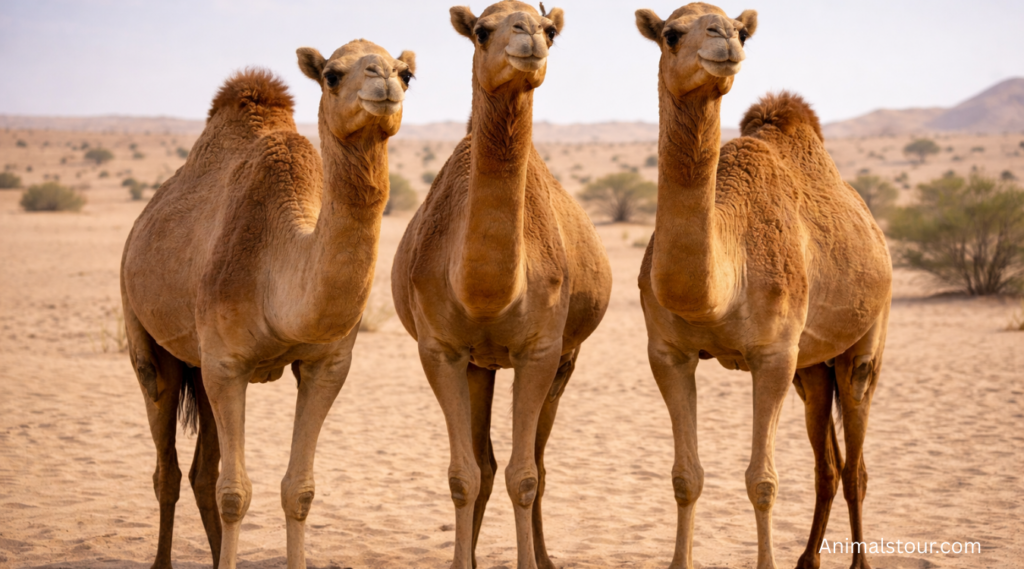
Moreover, when moving in caravans across the arid landscape, camels leverage their elongated necks to navigate through narrow paths and rocky terrains.
Interesting fact: A camel can drink over 100 liters of water in one session.
Okapi
Scientific name: Okapia johnstoni
Class: Mammalia
Diet: Herbivore
The okapi, often dubbed the “forest giraffe,” is a remarkable example of nature’s adaptability, showcasing a long neck that serves more than just aesthetics.
These forest mammals, native to the verdant landscapes of the Congo, possess a unique ability to eat from higher foliage, utilizing their prehensile tongues to expertly pluck leaves from branches. This clever adaptation allows them to thrive in the dense understory, where competition for food is fierce.
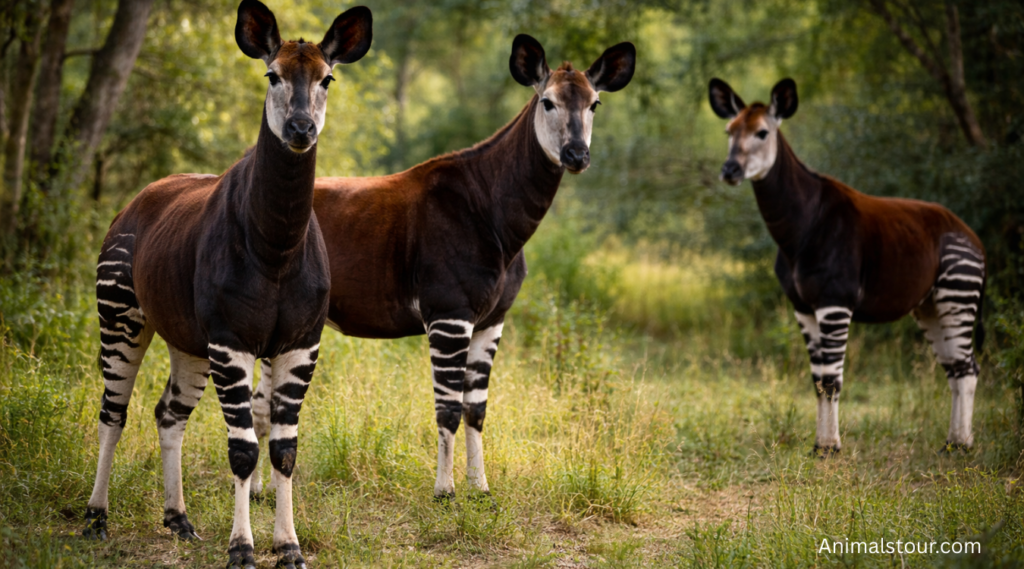
With large ears that can swivel independently, they are attuned to the subtle shifts within their environment, alerting them to potential threats like predators. This combination of their long neck and acute hearing not only enhances their foraging techniques but also plays a critical role in their survival within the complex tapestry of the rainforest.
Interesting fact: Okapi tongues are so long they clean their eyes and ears.
Llama
Scientific name: Lama glama
Class: Mammalia
Diet: Herbivore
Imagine a llama with a neck so long that it almost seems to reach the clouds. This quirky creature not only stands out visually but also symbolizes a unique blend of elegance and playfulness. With its extended neck, it can nibble on leaves high up in trees, showcasing a surprising adaptability, reminding us of nature’s wonderful quirks. Picture it gracefully interacting with its environment, using that long neck to reach the tastiest morsels while keeping an eye on the bustling world below.

This unusual feature could spark conversations about evolution and adaptation, hinting at how animals tweak their physical attributes to thrive in varying terrains.
Interesting fact: Llamas can learn names and respond to them.
Alpaca
Scientific name: Vicugna pacos
Class: Mammalia
Diet: Herbivore
Alpacas are fascinating creatures that easily charm anyone who encounters them. With their long necks and expressive faces, these fluffy animals seem almost like living teddy bears. But beyond their adorable appearance, alpacas possess intriguing features that set them apart in the animal kingdom.

Their basic features — a compact body, large brown eyes, and a gentle demeanor — make them ideal for both companionship and farming.
When it comes to diet, alpacas are relatively low-maintenance, primarily thriving on a diet of grass and hay. They have a unique digestive system that allows them to extract maximum nutrients from their food, making them efficient grazers..
Interesting fact: Alpaca fleece has no lanolin and is safe for people with allergies.
Emu
Scientific name: Dromaius novaehollandiae
Class: Aves
Diet: Omnivore
The emu is a flightless bird native to Australia. With a height that can reach over six feet, its long neck and leg structure allow it to traverse vast distances in search of food. Unlike many birds, emus have three-toed feet, a unique feature that grants them speed and agility on the ground.
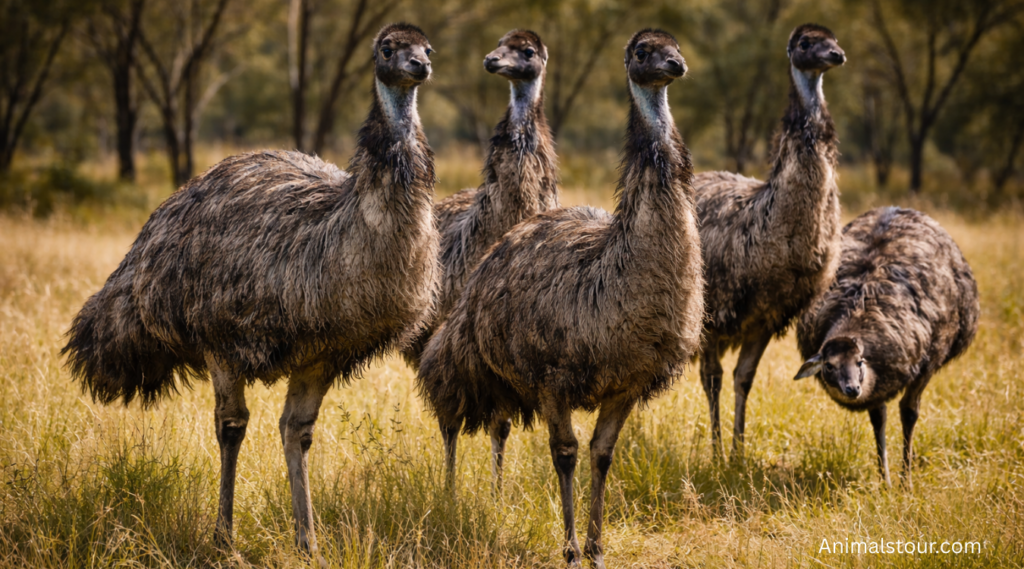
Their ability to run at speeds of up to 30 miles per hour is not just impressive but crucial for evading predators in their natural habitat.
Beyond their physical attributes, emus are fascinating for their social behavior. These birds often form small groups and exhibit a range of vocalizations, from booming calls to soft grunts, that underscore their complex communication skills.
Interesting fact: Male emus raise the chicks alone for months.
Ostrich
Scientific name: Struthio camelus
Class: Aves
Diet: Omnivore
Ostriches with their longest neck are the world’s largest flightless birds. These remarkable creatures can reach heights of up to nine feet and run at speeds exceeding 40 miles per hour, Their powerful legs, designed for swift locomotion, often elicit a mix of awe and respect; it’s fascinating to think that those same legs deliver a kick strong enough to fend off predators like lions and hyenas.
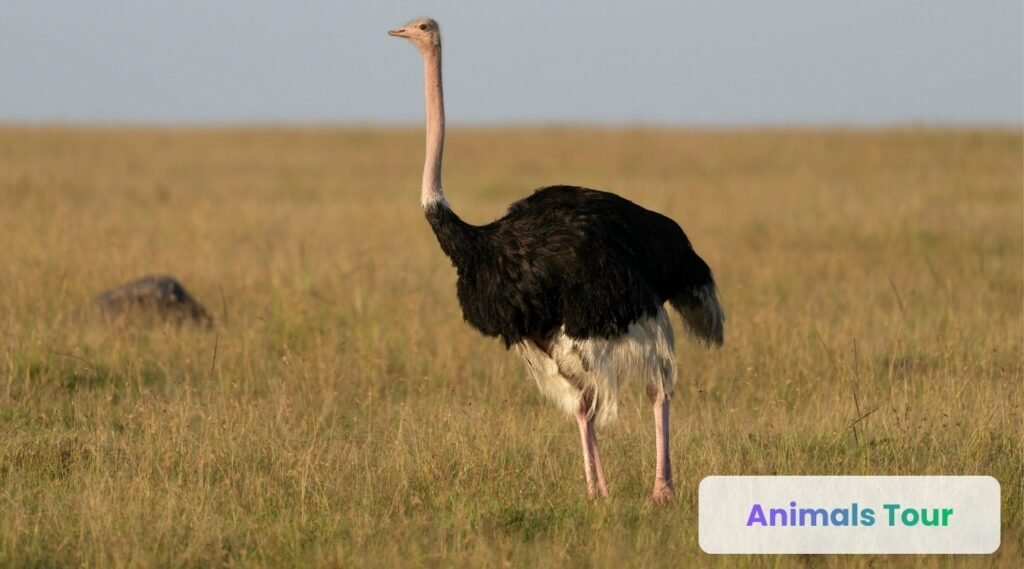
In stark contrast to their large size, their brains are surprisingly small, yet this hasn’t hindered their survival instincts or intricate social maneuvers, inviting reflections on the nature of intelligence across species. Interestingly, they rely on their keen eyesight as a primary defense mechanism, capable of spotting danger from several miles away.
Interesting fact: Ostrich eyes are larger than their brains.Male emus raise the chicks alone for months.
Heron
Scientific name: Ardea cinerea
Class: Aves
Diet: Carnivore
The heron, with its long neck, is a master of patience and precision in the wetlands. These elegant birds often stand still for long periods, their sharp beaks poised to snatch fish or frogs from the water. But it’s not just their hunting skills that captivate observers; it’s the way their long neck allows them to maneuver through various environments, from marshes to shallow rivers.
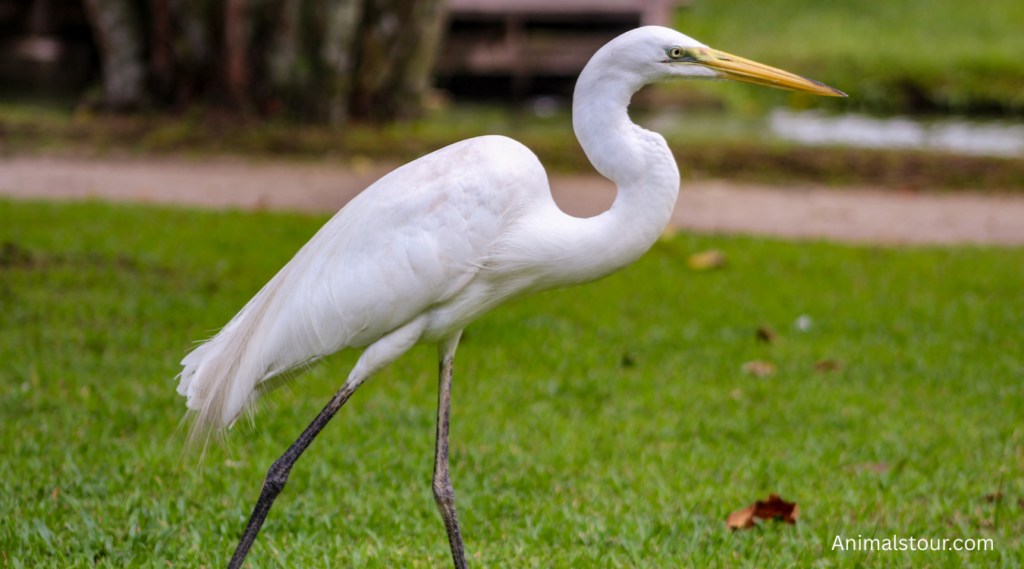
Their long necks also serve a unique social function during courtship. This interplay of grace and strength is a reminder of the intricate behaviors that define avian life. Each movement, every elegant stretch of their long neck, invites us to appreciate the nuances of nature’s design and the delicate balance within ecosystems where these birds play a vital role.
Interesting fact: A heron’s strike is faster than a blink.
Flamingo
Scientific name: Phoenicopterus roseus
Class: Aves
Diet: Omnivore
Flamingos, with their striking, long necks and vibrant pink plumage, are often seen standing gracefully in shallow waters, Their necks play a crucial role in their unique feeding habits. Flamingos filter-feed on algae, brine flies, and tiny crustaceans while wading through mud and water.
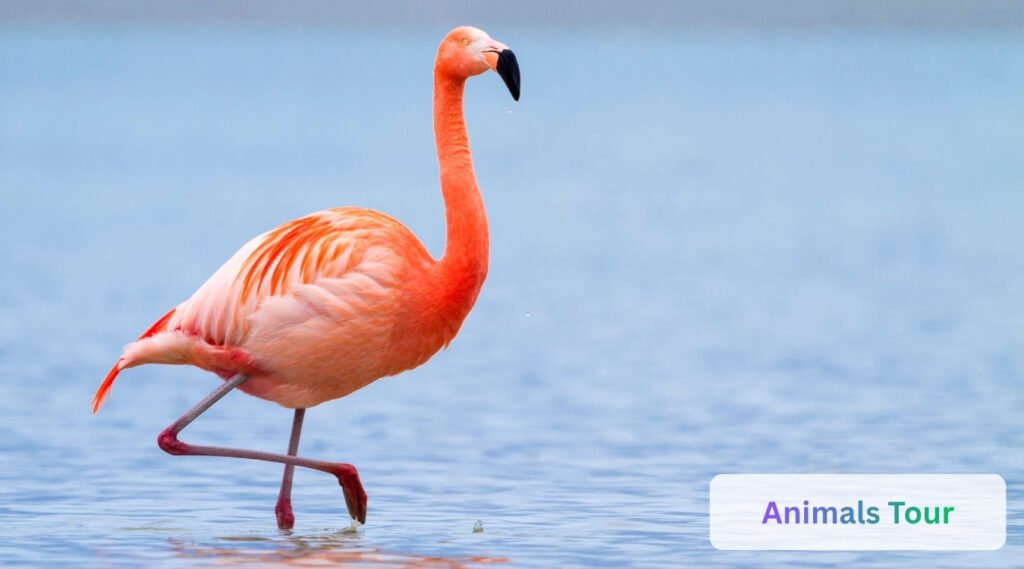
Beyond their beauty, flamingos also symbolize resilience in their natural habitats. Found in diverse ecosystems ranging from tropical lagoons to salt flats, these birds thrive in environments that might seem inhospitable at first glance.
Their long necks allow them to reach into deeper water, giving them access to food sources unavailable to many other shorebirds. Thus, in observing flamingos, one cannot help but appreciate not just their aesthetic appeal but also the intricate interplay of form and function that sustains them in the wild.
Interesting fact: Flamingos get their pink color from food.
Turkey
Scientific name: Meleagris gallopavo
Class: Aves
Diet: Omnivore
The turkeys are long necked birds. These birds possess an extraordinary ability to see far and wide, helping them evade predators and locate food with impressive efficiency. This unique feature not only aids in survival but plays a pivotal role in their social dynamics.
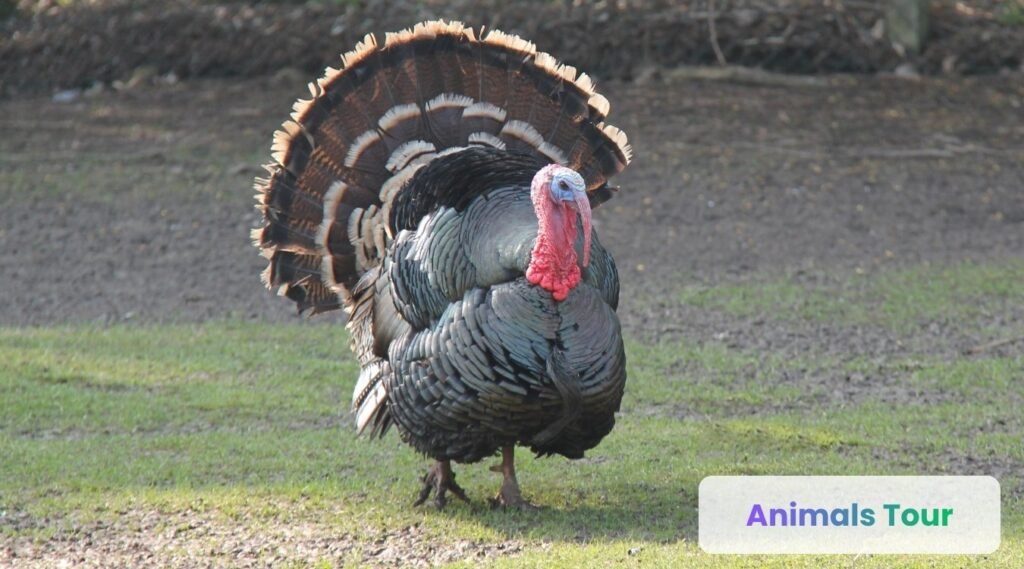
Turkeys are omnivorous, and their necks allow them to reach into nooks and crannies for seeds, fruits, and insects that might otherwise be out of reach for other birds. Turkeys are social creatures that thrive in the dynamics of flocks, creating intricate social structures akin to those of many bird species. At night the turkeys roam in trees.
Interesting fact: A turkey can run faster than a human.
Black-necked Stork
Scientific name: Ephippiorhynchus asiaticus
Class: Aves
Diet: Carnivore
The Black-necked Stork is a fascinating inhabitant of wetlands across South Asia and Australia. Unlike many of its wading counterparts, this magnificent bird boasts a unique contrast of black and white feathers, along with an unmistakable long, pink bill.
Observing the stork in its natural habitat reveals not just a hunter but a masterful fisherman, deftly catching fish and crustaceans with a swift thrust of its bill. Watching it wade through shallow waters, one can appreciate its combination of elegance and purpose, embodying a delicate balance between beauty and survival.
Beyond their physical allure, Black-necked Storks engage in complex courtship displays that encapsulate the essence of their social behavior. These storks often partake in an intricate dance, involving synchronized movements and vocalizations, as part of their ritualistic mating process.
Interesting fact: The Black-necked Stork is one of the largest storks in the world, with some adults reaching over 5 feet tall.
Mute Swan
Scientific name: Cygnus olor
Class: Aves
Diet: Herbivore
The mute swan, with its elegant neck, often conjures images of serene water bodies, but these seemingly serene creatures possess a complex social structure that belies their graceful appearance.
Contrary to what their name suggests, mute swans are not entirely voiceless; rather, they communicate through an array of hisses, whistles, and grunts. This vocalization plays a crucial role in their hierarchical displays, especially during courtship and territorial disputes.
Interestingly, mute swans are fiercely protective of their young, known as cygnets, and exhibit an impressive parenting partnership. Both parents share the responsibility of guarding their brood.
Interesting fact: Mute swans are called “mute” but they still hiss loudly.
Black Stork
Scientific name: Ciconia nigra
Class: Aves
Diet: Carnivore
Black storks are timid/long-necked birds. With its sleek plumage and striking appearance, serves as more than just a visual spectacle; it embodies resilience in changing ecosystems.
Unlike its more sociable relative, the White Stork, the Black Stork tends to thrive in solitary or smaller family groups.This solitary nature suggests a bird that prefers to connect deeply with its surroundings.
The Black Stork’s seasonal journey is traveling thousands of miles from breeding grounds in Europe to wintering areas in Africa.
Interesting fact: Black storks avoid cities and human noise.
Horse
Scientific name: Equus ferus caballus
Class: Mammalia
Diet: Herbivore
The horse, with its graceful long neck and powerful physique, embodies a unique blend of elegance and strength. A horse’s long neck allows for a wide range of motion, enabling them to graze on lush grasses and remain vigilant of their surroundings.
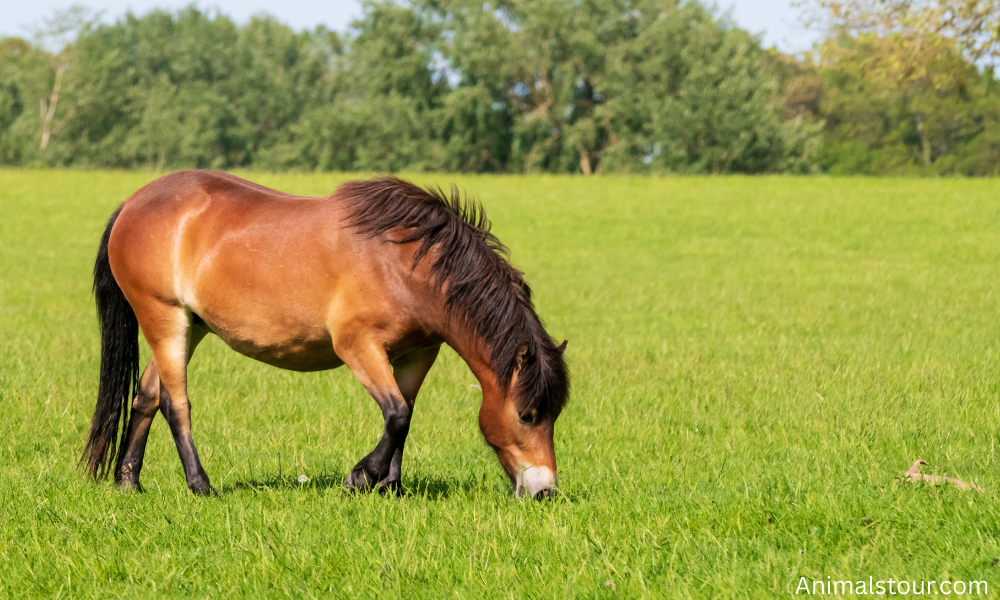
This adaptability is crucial for survival in the wild, as they need to spot potential predators while munching on their favorite snacks.
Moreover, the long neck serves as a pivotal tool for social interactions within herds.
Horses communicate a great deal through body language, and the position of their neck can signal everything from submission to aggression. A raised neck can demonstrate alertness and curiosity, while a lowered neck often indicates relaxation and peace.
Interesting fact: Horses can sleep standing due to leg locking joints.
Zebra
Scientific name: Equus quagga
Class: Mammalia
Diet: Herbivore
Zebras, often celebrated for their striking black-and-white stripes, possess a captivating social structure that mirrors their unique appearance. While the long necks of giraffes often steal the spotlight in discussions of animal adaptations, zebras exemplify how teamwork can thrive without such physical extremes.
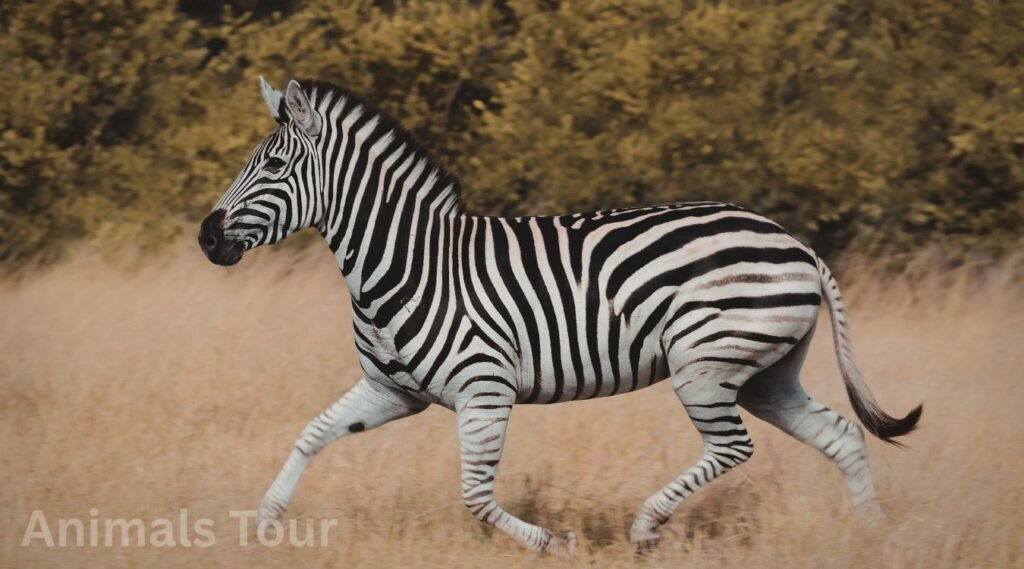
By standing close together, they confuse threats with their dazzling patterns, creating an optical illusion that can befuddle even the sharpest eyes.
Moreover, zebras are not just visually stunning; they are also intelligent and resourceful animals. When they graze, their keen sense of awareness allows them to detect danger far beyond their immediate surroundings.
Interesting fact: Every zebra has a unique stripe pattern.
Peacock
Scientific name: Pavo cristatus
Class: Aves
Diet: Omnivore
Peacocks, often celebrated for their dazzling feathers, are more than mere symbols of beauty; they embody a complex cultural significance across various societies.
Peacocks have long necks that add to their majestic appearance, making them stand out in any environment. This unique feature isn’t just for looks; it plays a crucial role in their social behavior. When peacocks display their colorful feathers, their long necks help them show off even more, catching the attention of potential mates and rivals alike.
Interestingly, the length of their necks also aids in foraging. By stretching their necks, peacocks can reach for tasty grass seeds, berries, and insects that are higher up or tucked away in foliage. This adaptability in feeding helps them thrive in various habitats, from forests to grasslands. It’s like nature’s way of giving them a built-in tool to survive while looking absolutely stunning!
Interesting fact: Peacocks can fly short distances despite long tails.
Turkey Vulture
Scientific name: Cathartes aura
Class: Aves
Diet: Carnivore
The neck of turkey vultures is long and most of its wings are wide.Turkey vultures are nature’s cleanup crew, soaring gracefully across North American skies, often seen gliding with their wings held in a slight V shape. Unlike their more glamorous relatives, these birds have a reputation that might cause some to cringe.
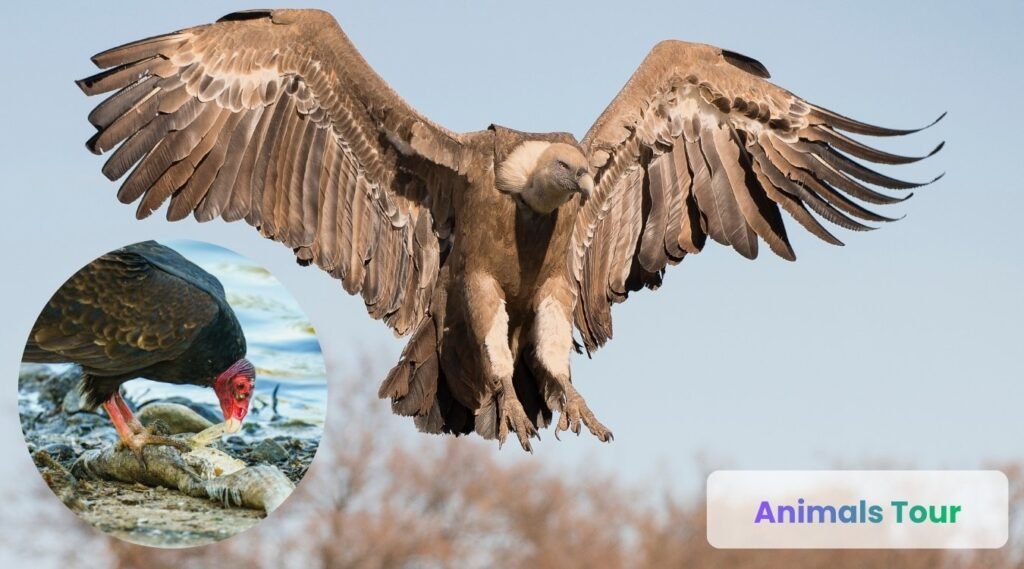
Their incredible sense of smell allows them to locate carrion more effectively than many other scavengers, ensuring that they can find food even when it’s not visible.
What’s fascinating is how turkey vultures communicate through a series of hisses, grunts, and squeaks, especially when they’re gathered in groups. Watching them circle high above can feel like witnessing a dance in the sky, as they effortlessly ride thermal updrafts, conserving energy during their long flights.
Interesting fact: Turkey vultures can smell food hidden under trees.
Anhinga
Scientific name: Anhinga anhinga
Class: Aves
Diet: Carnivore
The Anhinga, often called the “snakebird,” is truly a fascinating sight. With its long neck and sharp beak, it glides through water like a fish catching your eye. These birds are exceptional divers, plunging underwater to catch fish, and can hold their breath for an impressive amount of time.
What sets them apart, though, is their unique way of drying off. After a swim, they spread their wings wide, soaking up the sun’s rays and looking almost like they’re showing off!
They thrive in warm, wet areas, often found in swamps and marshes, where they expertly navigate through thick vegetation. Their sleek, dark feathers help them blend into the shadows, making them stealthy hunters.
Interesting fact: Anhinga are called “snake birds” for their neck shape.
Great Blue Heron
Scientific name: Ardea herodias
Class: Aves
Diet: Carnivore
The Great Blue Heron, with its striking blue-gray feathers and long legs, is a true symbol of grace in the wild.
These birds are often seen standing still by the water’s edge, it waits patiently for fish to swim by. They can reach heights of up to four and a half feet, making them one of the tallest species of herons. Their wingspan can stretch over six feet, transforming them into impressive flyers as they glide silently above lakes and rivers.
Interesting fact: Great blue herons can swallow large fish whole.
Conclusions:
To sum it up, long-necked animals are truly fascinating creatures. Their special features help them find food, stay safe, and connect with others in their groups. These animals not only showcase the wonders of nature but also teach us about the importance of protecting their habitats. Let’s appreciate these amazing animals and work together to ensure they continue to thrive in the wild!
You can also read about Animals with flat tails and benefits of this feature
FAQs:
Do long-necked animals tend to be fast?
Many are. Long necks are combined with speed to flee predators among ostriches, zebras, and horses.
Do long necked animals live in cold places?
Some can. Swans, storks, llamas inhabit cold climates and employ some body adaptations to keep them warm.
Are the long necks useful to help animals?
Yes. Long necks enhance access to food sources, perception of dangers and hunting success which enhances survival.
Do long necks belong to mammals only?
No. Long necks are also used by birds like swans, herons and ostriches to feed and be aware.
What is the longest bodied animal?
The giraffe has the longest neck of the living animals and has only seven neck bones as compared to most mammals.
Why do there exist animals with long necks?
Long necks enable animals to access higher food, observe predators at an early stage, feed underwater, or increase their balance during movement.
What do we have with long-necked animals?
The long-necked animals are species which have developed a long neck to access food, scan danger or better hunt in their habitat.