Discover the Top 23 Animals with Flat Tails
Here you will explore various animals with flat tails and learn why this unique feature matters. Flat tails play a key role in maintaining balance, better movement and their survival in the natural environment.
List of Animals with Flat Tails
Here is the list of animals having flat tails.
- 1-Beaver
- 2-Playtapus
- 3-Crocodile
- 4-American Alligator
- 5-Muskrat
- 6-Flat-tailed Gecko
- 7-Capybara
- 8-Tasmanian Devil
- 9-Wood Duck
- 10-Sea Otter
- 11-Spiny Softshell Turtle
- 12-Bison
- 13-Otter Civet
- 14-Common Muscovy Duck
- 15-Nutria (Coypu)
- 16-Green Iguana
- 17-Common Bearded Dragon
- 18-Ring-Tailed Lemur
- 19-Red-Eared Slider
- 20-Black-Capped Capuchin
- 21-Fishing Cat
- 22-Sturgeon
- 23-River Dolphin
Beaver
Scientific Name: Castor canadensis
Class: Mammalia
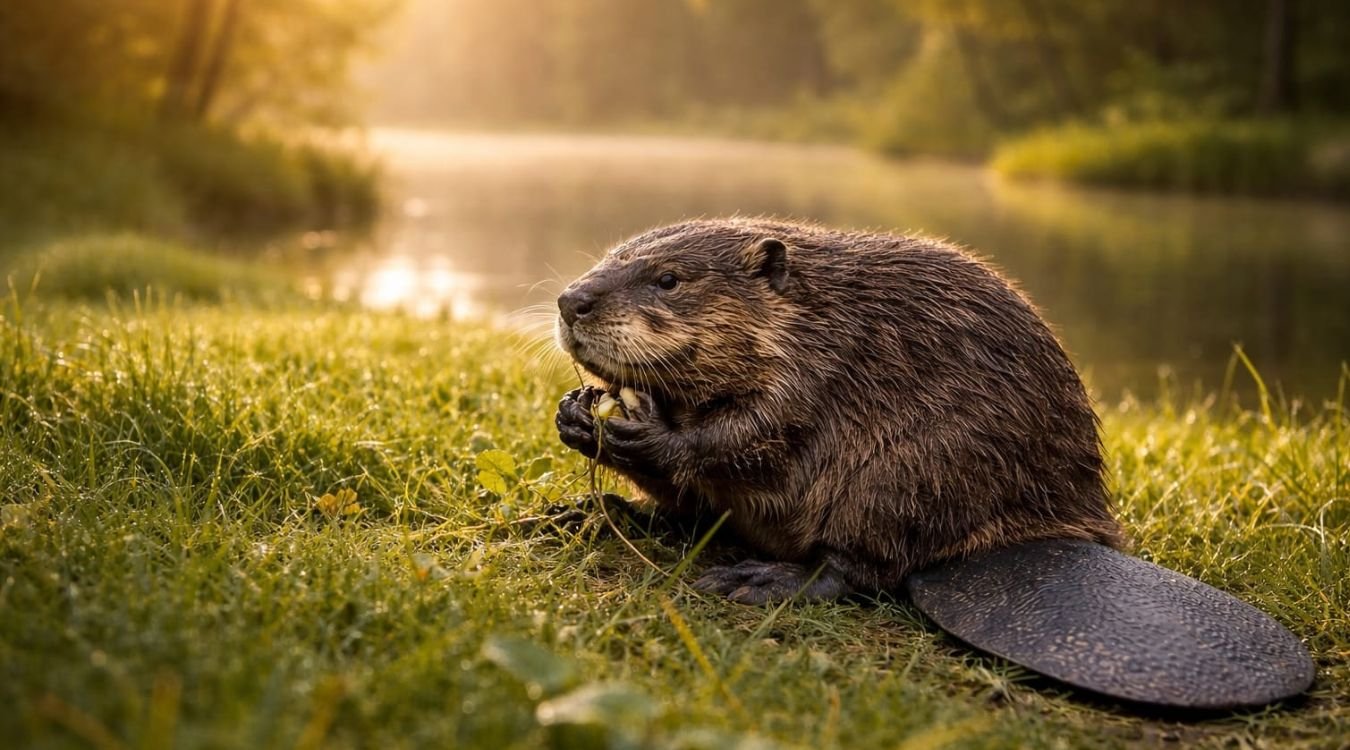
Beavers are semi-aquatic rodents that live near rivers, streams, and ponds. They have flat and wide tails like a paddle. This helps beavers swim efficiently and steer through water. On land, it acts as a balancing tool, especially when they are carrying sticks or building their dams.
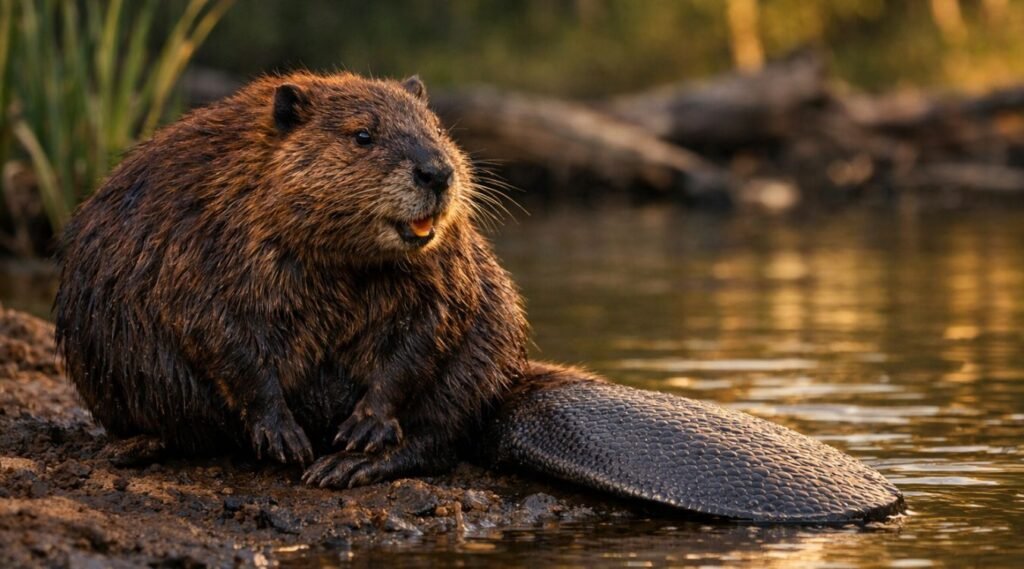
Beavers are social animals. They build lodges with underwater entrances to stay safe. Their flat tails are helpful in swimming well, and they can stay underwater for up to 15 minutes. Moreover when they sense danger, they slap their flat tails on the water to alert other beavers nearby. This loud splash is a signal to stay alert and move to safety.
Platypus
Scientific Name: Ornithorhynchus Anatinus
Class: Mammalia
The platypus is one of the most unique and iconic Australian animals that live in rivers and streams. It has a broad, flat tail that plays an important role in its daily survival.
The tail works like a natural paddle, which helps the platypus glide through water and change direction easily.
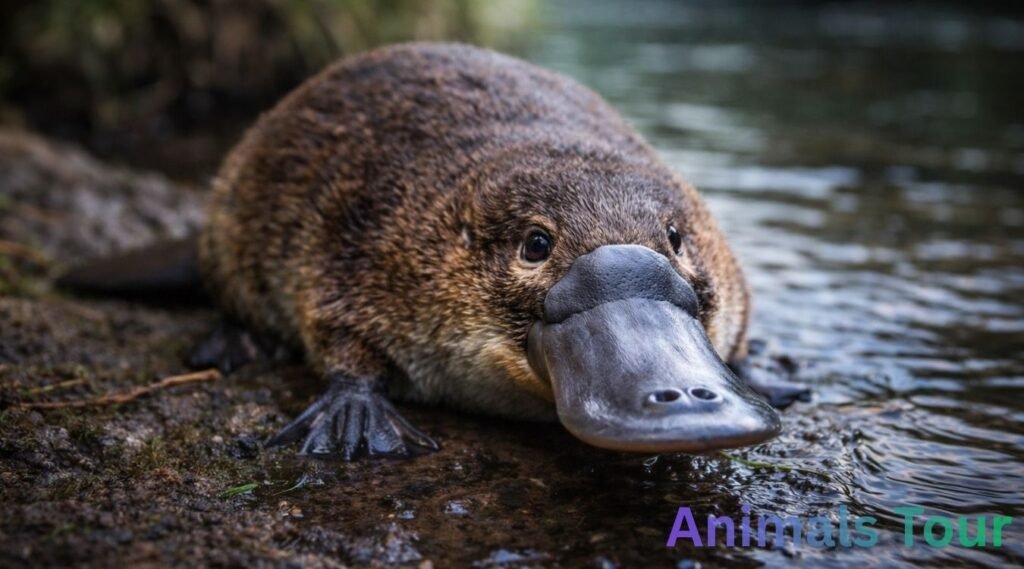
Platypuses eat insects, larvae, small shellfish, and tiny crustaceans, which they find using their sensitive bills. Their flat tail stores fat, providing energy during winter when food is short.
On the land, the tail helps the platypus stay balanced and dig burrows along riverbanks. It can even be used to carry small food items, making it a versatile and essential part of the platypus’s body.
Crocodile
Scientific Name: Crocodylus niloticus
Class: Reptilia
Crocodiles are large reptiles which are present in coastal areas of warm regions of the world. They have strong muscular tails that are laterally flattened. Their flat tails move side to side, allowing crocodiles to swim quickly and silently in water. They can push their heavy bodies forward with a single sweep of the tail or change their direction.
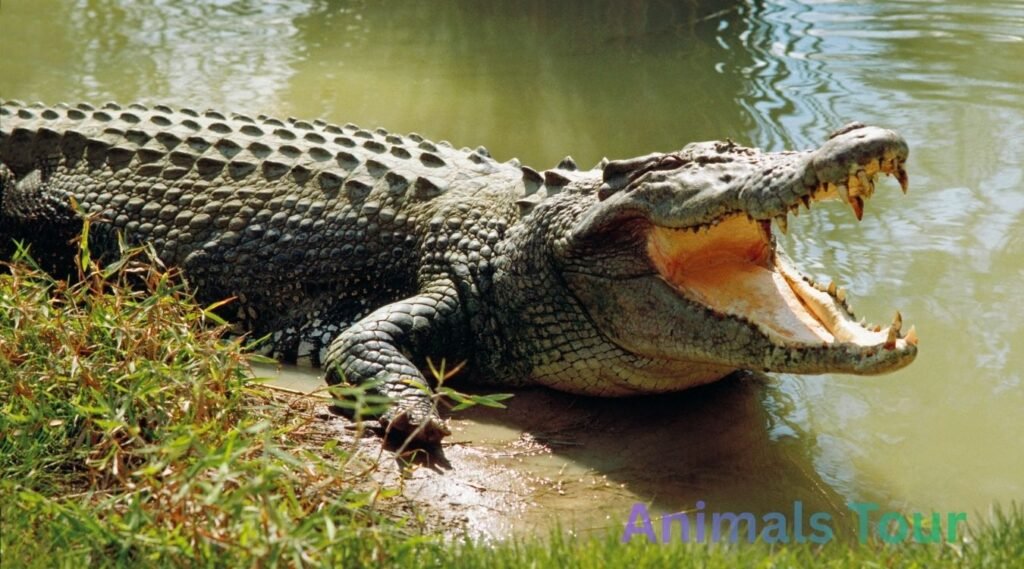
Their tails also work like a powerful weapon. Crocodiles can swing their tails to push away threats, knock down prey, or defend themselves. That makes them excellent hunters, especially when they hide below the surface and suddenly attack their prey.
These tails are also vital for young Crocodiles since it helps them to escape their predators. Adult crocodiles use their tails to splash water, which can scare enemies or attract their opposite sex. On land, their tails give support to their heavy bodies and keep them balanced while moving.
American Alligator
Scientific Name: Alligator mississippiensis
Class: Reptilia
American alligators are the animals with flat tail features that are perfectly suited for life in water. They live in the southeastern United States, mainly in Florida and Louisiana, and are commonly found in rivers, lakes, marshes and ponds. Although they move slowly on land, their bodies are built for swimming, using webbed feet and flat tails.
An alligator’s tail is long, wide, and very strong, making up nearly half of its body length. This flat tail provides the power needed for swimming, helping the alligator move fast, turn smoothly, and stay underwater for long periods. Adult males usually grow 10 to 15 feet long and can weigh between 500 and 600 pounds, while females are smaller in size.
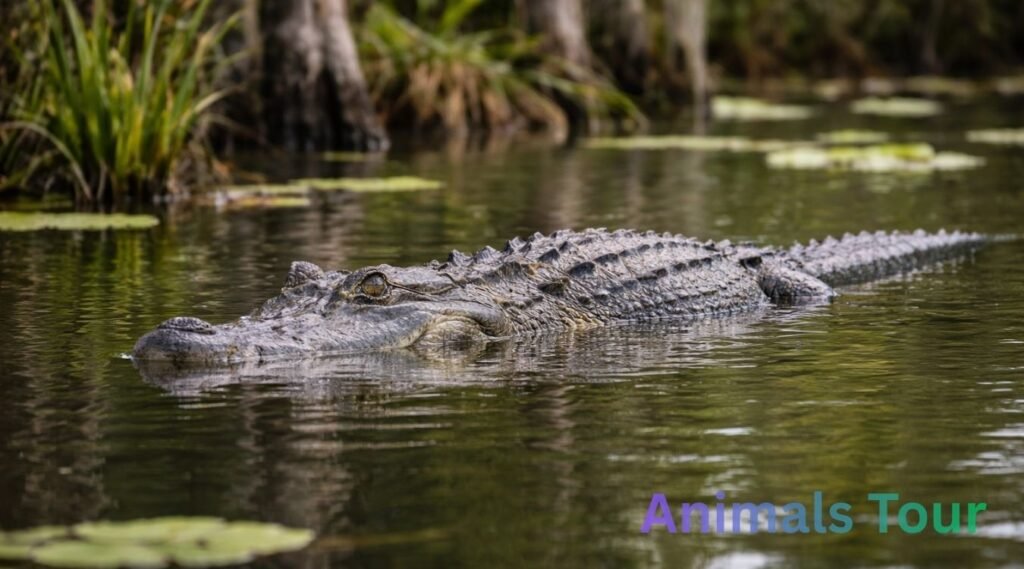
Among animals with a flat tail, the American alligator is also known for its strong parental care. Female alligators build nests on land and guard their eggs carefully. When the babies hatch, the mother gently carries them to the water using her mouth. The mother protects them for up to two years, until they are strong enough to survive on their own.
Muskrat
Scientific Name: Ondatra zibethicus
Class: Mammalia
Muskrats are small animals with flat tail that help them live in ponds, marshes, lakes, and slow-moving streams. Although they look similar to beavers, muskrats are much smaller and do not build dams.
Their flat tail plays important roles in a muskrat’s life. It helps push the body through water, supports balance, and stores fat for cold seasons. When danger is near, muskrats slap their tails on the water to warn others. By using this they can stay underwater for several minutes without coming up for air.
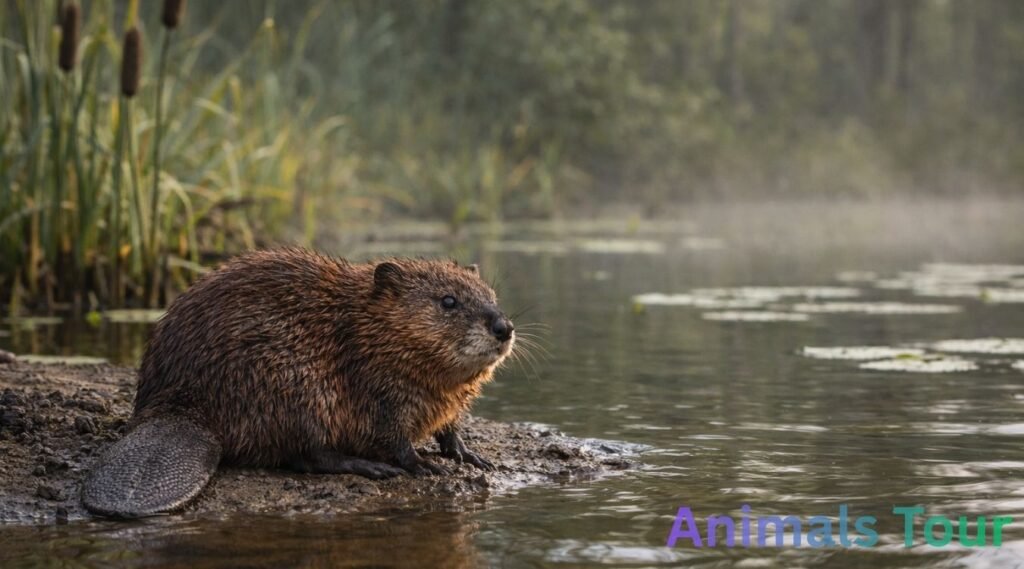
Muskrats build lodges made of mud and plants near water and often live in family groups. They are mostly active at night and feed on aquatic plants, roots, pond vegetation, and small animals like mussels, frogs, and fish.
Flat-Tailed Gecko
Scientific Name: Uroplatus fimbriatus
Class: Reptilia
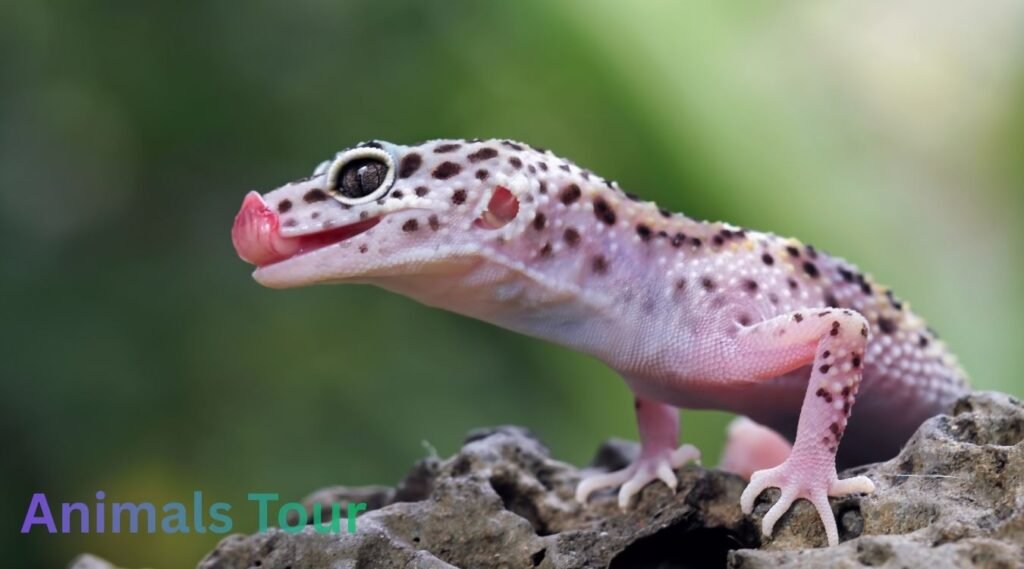
The flat-tailed gecko is a small reptile with a distinctive flat tail that helps it to survive in its natural environment. Its broad, flattened tail allows it to balance easily on trees and rocks and aids in climbing and moving quickly.
This tail also helps the gecko blend in with its surroundings, acting as a camouflage against predators. If the gecko is attacked, it can detach its tail to distract predators. The flat tail also stores fat, providing energy when food is scarce. Flat-tailed geckos live in forests, rocky areas, and dry shrublands, and they are mostly nocturnal. They feed on insects and other small invertebrates.
Capybara
Scientific Name: Hydrochoerus hydrochaeris
Class: Mammalia
Capybaras are the largest rodents on Earth and are well-known animals with flat tail adaptations. Their tails are very short, low, and slightly flattened, but they play an important role in body balance, especially in water. Capybaras are excellent swimmers and often stay in water to escape predators, using their flat tail to remain stable while swimming, floating, or moving through shallow wetlands.
The flat tail helps capybara change direction quickly when moving away from threats such as jaguars, pumas, caimans, and birds of prey. It also works as a behavior signal—resting low when the animal is calm and moving slightly when it senses danger. Young capybaras learn how to swim and keep balance by using their tails, making it an important part of their early development.
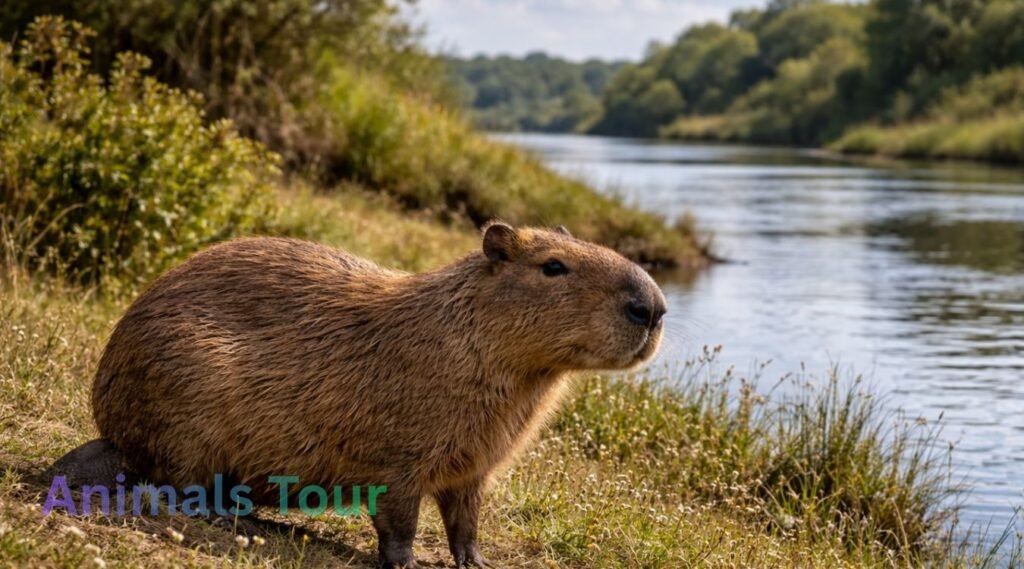
Capybaras also live in family groups near rivers, lakes, marshes, and flooded grasslands of South America. They mainly feed on grasses, aquatic plants, and fruits. Along with partially webbed feet, the flat tail helps them move easily in water, making capybaras one of the best-adapted semi-aquatic rodents in the animal world.
Tasmanian Devil
Scientific Name: Sarcophilus harrisii
Class: Mammalia
The Tasmanian devil is a stocky carnivorous marsupial found only in Tasmania, Australia. It has a strong body, a large head with powerful jaws, and a thick, flat, bushy tail that is about half the length of its body. This flat tail plays an important role in the devil’s balance and survival, especially while walking, running, or feeding.
The flat tail helps the Tasmanian devil stay stable when moving quickly or tearing apart food. It also stores fat, which provides energy during times when food is scarce. This stored fat can help the animal survive for days without eating. Young devils use their tails for support while walking or climbing, and adults rely on the tail to maintain balance during sudden movements.
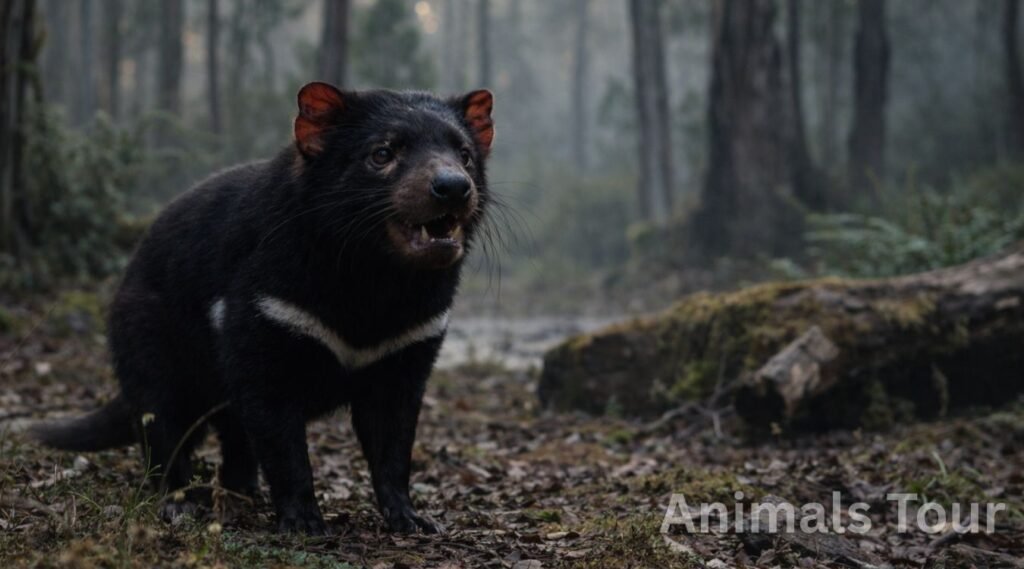
Tasmanian devils are mostly nocturnal and spend the day resting in dens or hollow logs. They feed on small animals, birds, insects, and carrion, acting as both hunters and scavengers. Devils communicate using growls, screams, and tail movements, especially when competing for food. Among animals with flat tail features, the Tasmanian devil is a strong example of how a solid, fat-storing tail supports balance, communication, and survival.
9-Wood Duck
Scientific Name: Aix sponsa
Class: Aves
The wood ducks are colorful water birds with a flat tail, mostly found near rivers, lakes, ponds, and wetlands of North America. Their long, slightly flattened tail plays an important role in swimming and flying. While moving across water, the flat tail works like a rudder, helping the duck steer, slow down, and stay balanced during takeoff and landing.
As one of the agile animals with flat tail adaptations, wood ducks use their tails to control direction and speed while swimming or diving. The tail spreads slightly to help with braking on water, especially when stopping suddenly. Wood ducks eat seeds, aquatic plants, insects, and small fish. They live in tree cavities near water, and after leaving the nest, ducklings quickly begin swimming. Their flat tails help young ducks balance and move efficiently.
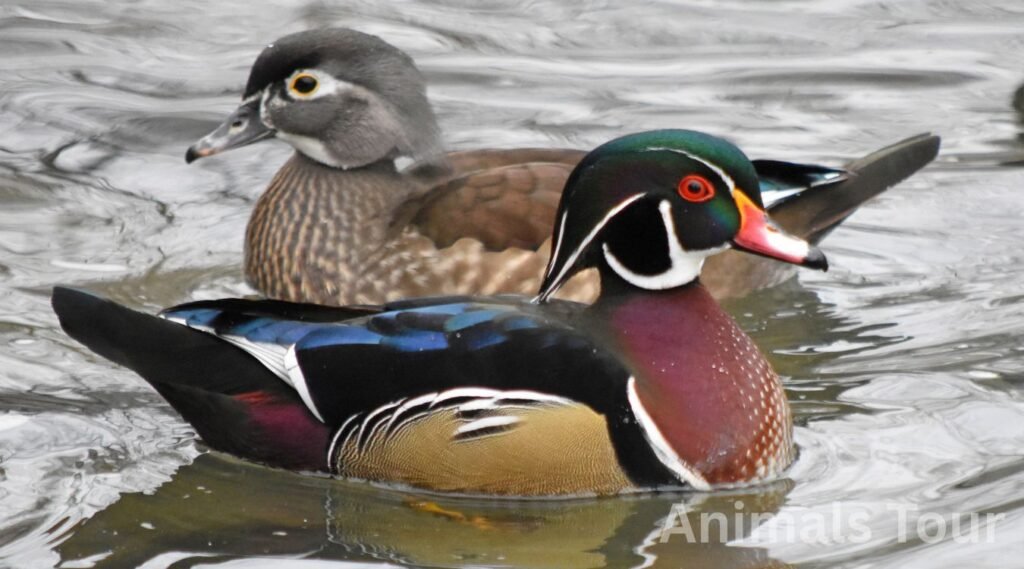
The flat tails are also useful for communication and control. Tail movements are used during courtship and as warning signals, while swimming the tail helps manage speed, direction, and quick stops. Along with webbed feet, the flat tail makes the wood duck a fast and agile swimmer.
Sea Otter
Scientific Name: Enhydra lutris
Class: Mammalia
Sea otters are one of the unique marine mammals having flat tails.They are the only fully aquatic otter species and live along the Pacific coasts of North America and Asia. A sea otter’s wide, flat, and muscular tail helps it swim, steer, and remain balanced while floating on its back.
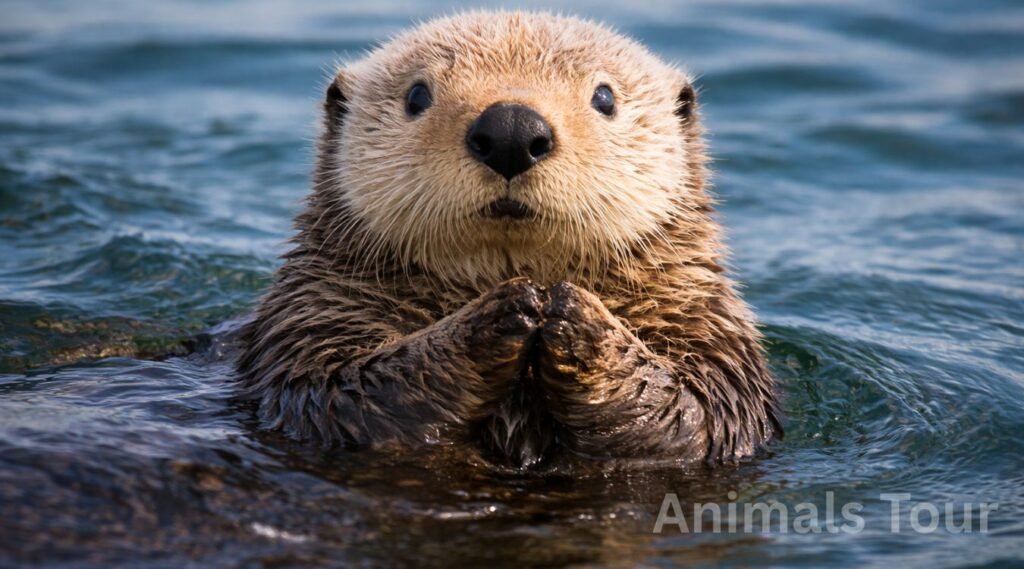
Unlike other marine mammals, sea otters have no blubber, so they depend on the densest fur in the animal world to stay warm. They groom their fur often to keep it waterproof, while their flat tail supports stability as they rest, sleep, or anchor themselves in kelp beds.
The flat tail also plays a key role in feeding and survival. Sea otters dive to the seafloor to hunt crabs, mussels, sea urchins, squid, and fish, then return to the surface to eat. While floating, the flat tail helps them maintain position and balance as they use rocks on their chest to break open hard shells. Mothers give birth in the water and care for their pups while floating, with the tail helping keep both mother and young steady.
Spiny Softshell Turtle
Scientific Name: Apalone spinifera
Class: Reptilia
The spiny softshell turtle is a flat-tailed animal that glides effortlessly through rivers, lakes, and streams across North America. The tail is short, flat, and flexible, which helps in swimming smoothly and moving easily underwater. The flat tail works like a steering tool, helping the turtle chase food and escape danger. It feeds on insects, crustaceans, and aquatic plants and often hides by burying itself in sand or mud. Gentle tail movement stirs the sand, helping the turtle stay camouflaged.
On land, their tail supports balance and nesting. Females use it while clearing sand to lay eggs, and young turtles depend on it for quick movement and protection from predators. They are mostly solitary but can sometimes be seen relaxing near humans during the day.
Bison
Scientific Name: Bison bison
Class: Mammalia
Bison are large herbivore animals with short, wide tails that are flat at the bottom. These flat tails play an important role in balance and survival, especially when running across the grasslands, plains, and prairies of North America. Their speed can reach up to 35 miles per hour, and the tail acts like a rudder, helping them stay stable and avoid falling down.
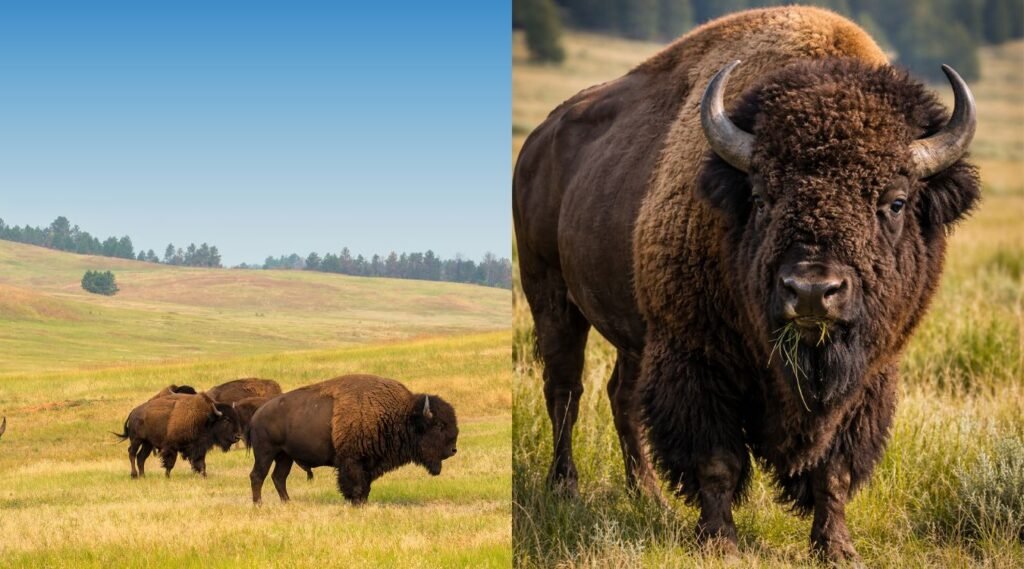
This flat tail is also used to swat away insects and protect sensitive parts of the body when lying down. Bison feed on grasses, herbs, and shrub roots. Among these social animals, tail movements also serve as signals of dominance, vigilance, or communication with other members of the herd. Calves depend on their mothers for safety, and their flat tails also help them stay balanced while running alongside the herd.
Otter Civet
Scientific Name: Cynogale bennettii
Class: Mammalia
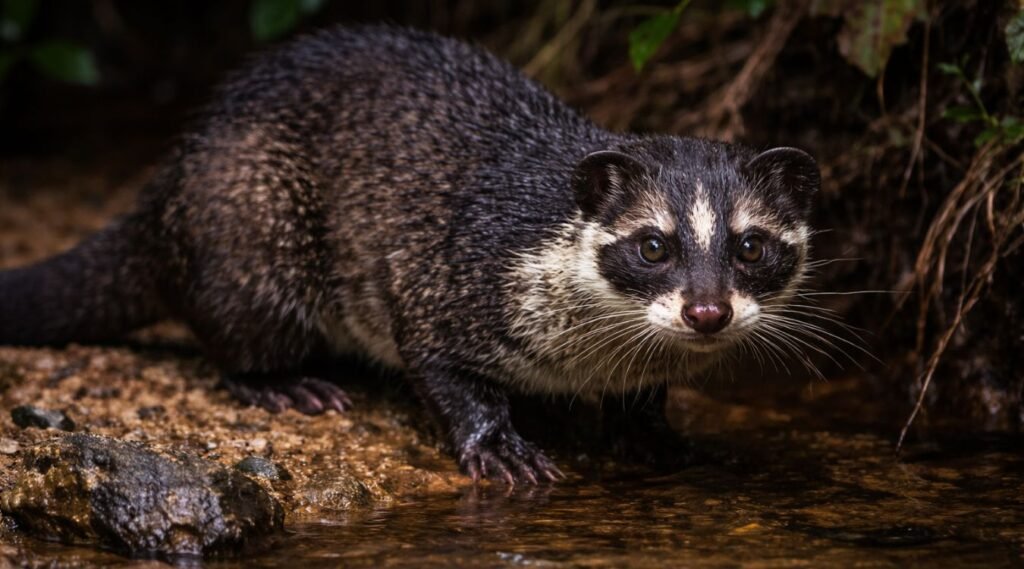
The otter civet is a small, semi-aquatic mammal found in fresh rivers and streams of Southeast Asia and is known for its long, wide, flat tail. This tail is strong and versatile which helps the civet swim efficiently, steer while chasing others and maintain balance on slippery rocks. The flat tail along with webbed feet, makes otter civets excellent hunters in their watery habitats.
Otter civets can remain submerged for several minutes, using their tails as natural rudders to control direction and speed. These flat tails are also helpful in communication and social behavior. When raised, it can signal alertness, curiosity, or aggression, while juveniles use it to learn swimming techniques under the guidance of their mother.
Common Muscovy Duck
Scientific Name: Cairina moschata
Class: Aves
The Muscovy duck is a water bird having a flat, wide tail that is important in swimming and movement. Native to Central and South America, it lives around rivers, ponds, wetlands, and slow-moving waters. The flat tail helps the duck steer, balance, and control direction while swimming, allowing smooth movement and quick turns in water.
The tail also supports the Muscovy duck’s movement on land, helping it keep balance while turning or walking over uneven surfaces. These ducks eat insects, seeds, plants, and small fish, and they use tail motions to signal alertness or display behavior. Ducklings quickly learn to swim by following adults and using their tails for control. In many areas, Muscovy ducks live close to humans and are partly domesticated, with their strong, flat tails helping them stay agile in and around water.
Nutria (Coypu)
Scientific Name: Myocastor coypus
Class: Mammalia
Nutria, also called coypu, are water-loving rodents that originally come from South America. They live in wetlands, marshes, rivers, and lakes. Their flat, scaly tails help them swim, steer, and move easily in water. The tail works like a paddle and also helps them climb muddy riverbanks without slipping.
The flat tail is important for balance and warmth. Nutria use it to stay steady while walking on soft mud or while swimming fast.They may curl their bodies around the tail to keep warm in colder water. Young nutria learn how to swim and climb by using their tails, and adults also use them to dig underwater burrows and escape danger.
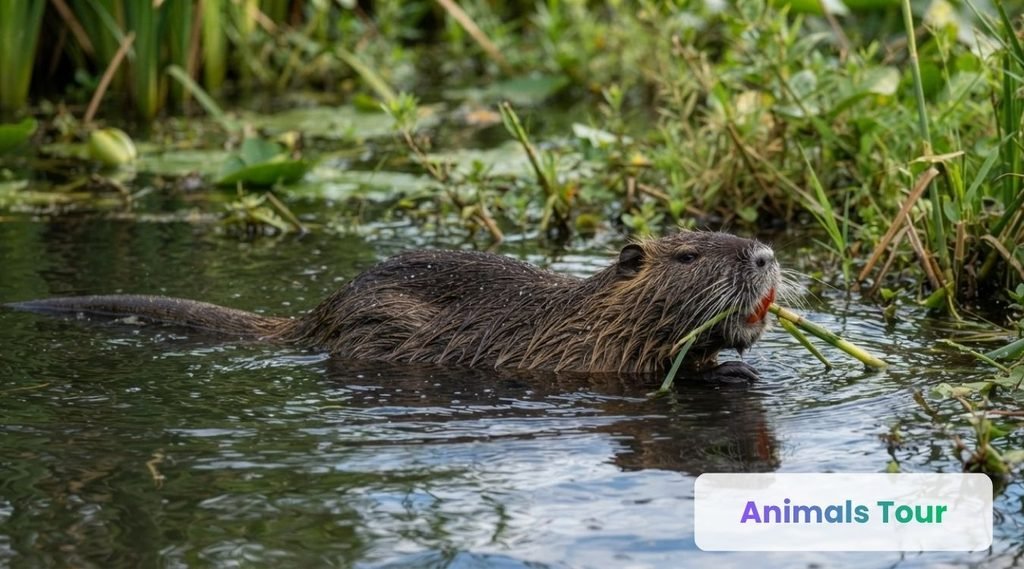
Nutria eat aquatic plants, roots, and crops and spend most of their time near water. They are usually active at night and live in burrows near rivers and marshes. In some places, nutria are considered invasive because they damage wetlands.
Green Iguana
Scientific Name: Iguana iguana
Class: Reptilia
Green iguanas are large reptiles and have long, flat tails, which are essential to their daily life. These tails help them keep balance while climbing trees and allow them to swim efficiently in rivers and ponds. It is also used as a defensive whip, which helps iguanas protect themselves from predators.
Green iguanas are mostly tree-dwelling animals with flat tails, which spend most of their time in branches where their flat tail helps with stability and control. They often enter water to escape danger, using their flat tails to swim away quickly. As a last defense, a green iguana can detach its tail to escape, and the tail later regrows, making it one of their most important survival tools
The flat tail has additional functions beyond movement. It can store fat, providing energy if food is limited. Iguanas feed mainly on leaves, fruits, and flowers.Tail movements are also part of communication, signaling alertness or submission, and young iguanas use their tails to practice swimming and climbing by following adults.
Common Bearded Dragon
Scientific Name: Pogona vitticeps
Class: Reptilia
Bearded dragons are reptiles native to Australia, and their flat, sturdy tails are very important for their survival. The tail helps them stay stable on rough surfaces like rocks, tree bark, and dry ground. When they walk or climb, the flat tail acts as a counterbalance, making movement safer and more controlled in their harsh, uneven habitat.
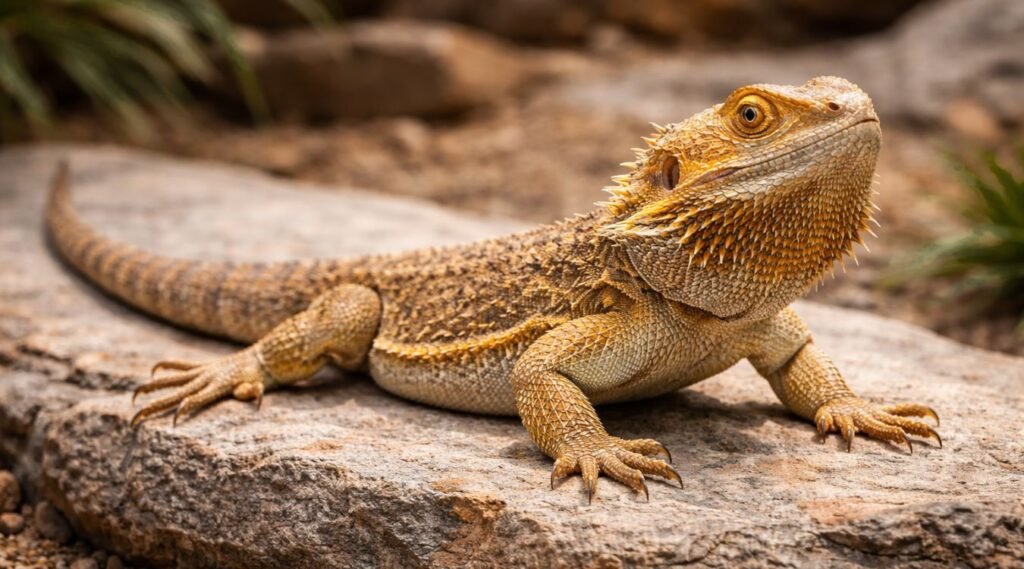
These lizards eat a mixed diet of insects, small animals, fruits, and plants. The tail is also part of their communication system—gentle tail movements can signal submission or social behavior, especially among juveniles learning how to interact, climb, and hunt. While bearded dragons are mostly ground-dwelling, their flat tails help them keep balance while basking or escaping danger.
The tail also serves as an energy reserve, storing fat that can be used during food shortages. It helps with temperature control as well, supporting the body during long basking periods in the sun. When threatened, a bearded dragon may lash its tail and change posture to appear larger, using the flat tail as part of its defense and display.
Ring-Tailed Lemur
Scientific Name: Lemur catta
Class: Mammalia
The ring-tailed lemurs are native only to Madagascar. Their long, banded tail is slightly flattened and works as a natural balancing tool, especially when the lemur runs on the ground or jumps between trees. Unlike gripping tails, this flat tail helps control body movement and keeps the lemur stable during fast or sudden motion.
The flat tail also plays a key role in communication and social behavior. Ring-tailed lemurs lift their tails high so other group members can easily follow them through forests and open areas. During territorial displays, they rub scent glands on the tail and wave it toward rivals, using the tail as a visible warning signal without direct fighting. Ring-tailed lemurs are both ground-dwelling and tree-climbing animals, and their flat tails support upright sitting, sunbathing, and group coordination.
Red-Eared Slider
Scientific Name: Trachemys scripta elegans
Class: Reptilia
Red-eared sliders are flat-tailed turtles that live in freshwater ponds and lakes across North America. Their flat tail works like a rudder, helping them swim smoothly, turn quickly, and stay balanced in water. This feature is especially useful when they move through dense aquatic plants or escape predators.
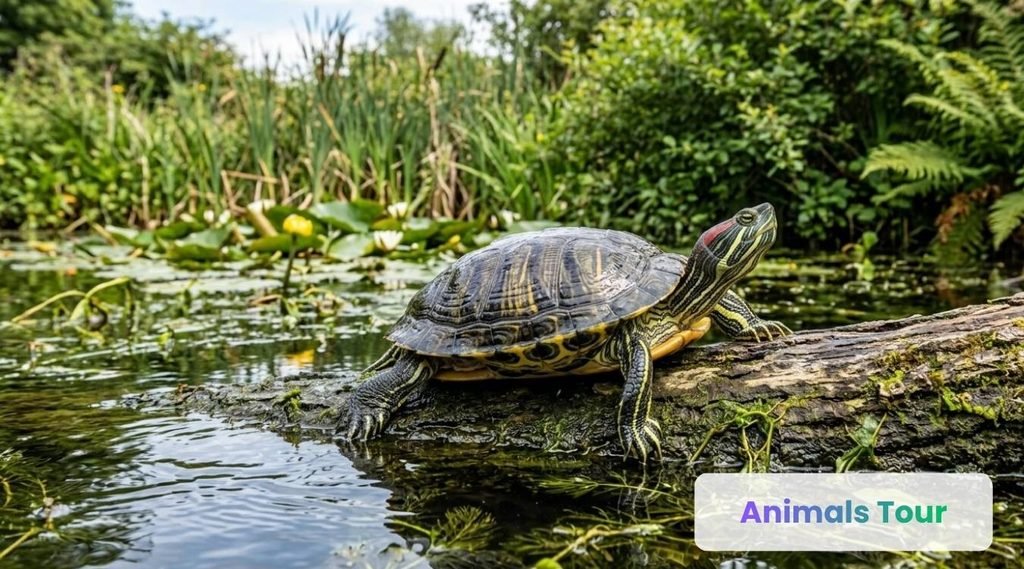
They eat plants, insects, algae, and small fish, and their tail supports stability while feeding, basking on logs or rocks, and even during mating. It also supports balance during movement in water and on uneven surfaces. Along with their webbed feet, the flat tail makes red-eared sliders fast and confident swimmers.
Black-Capped Capuchin
Scientific Name: Cebus capucinus
Class: Mammalia
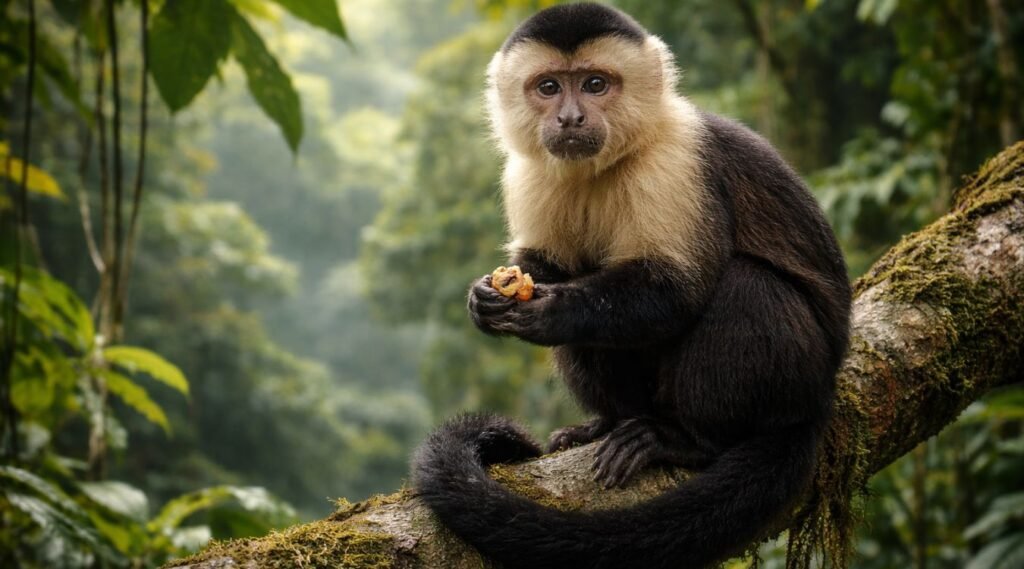
The black-capped capuchin is a smart monkey from Central and South America. Its prehensile, flat tail helps it balance on branches, hang from trees, and move quickly through the forest. Young capuchins use their tails to learn climbing and foraging, while adults can even carry small items with their tails while using their hands.
Capuchins are social animals, living in groups and using their tails to communicate moods, alertness, or submission during play and grooming. They eat fruits, nuts, insects, small animals, eggs, and lizards, and the tail keeps them stable while feeding or moving. The flat tail also supports survival, helping capuchins reach food, avoid predators, and stay steady while climbing.
Fishing Cat
Scientific Name:Prionailurus viverrinus
Class: Mammalia
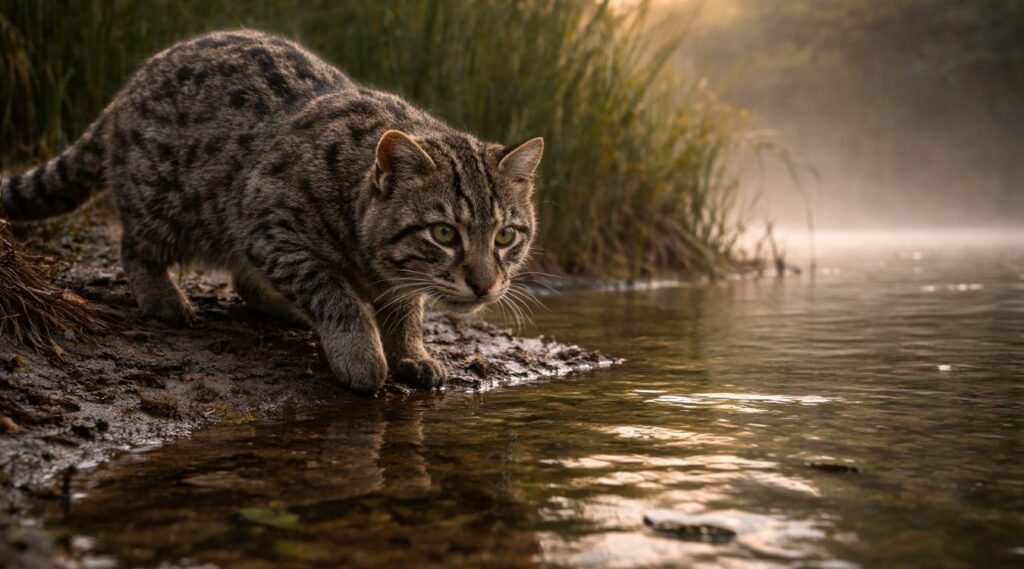
The fishing cat is a rare wild cat that lives near swamps, rivers, and mangrove forests in parts of Asia. Unlike most cats, it is comfortable in water. Its broad, slightly flat tail helps keep the body steady while moving through shallow water or slippery ground, making water hunting easier.
This cat mainly eats fish, frogs, and other small aquatic animals. When it swims or waits quietly at the water’s edge, the tail helps with balance and control, preventing sudden slips. The fishing cat is active mostly at night and lives alone, relying on its strong body and well-adapted tail to survive in wet environments.
Sturgeon
Scientific name: Acipenser sturio (European sturgeon) Acipenser transmontanus (White sturgeon) Acipenser oxyrinchus (Atlantic sturgeon) Class: Actinopterygii
The sturgeon is an ancient fish known for its long body and broad, sideways-flattened tail. While the tail is not completely flat, its wide shape gives the sturgeon strong forward movement and helps it stay steady in rivers and coastal waters where currents can be strong.
This tail is especially useful when the sturgeon swims close to the riverbed in search of food. It allows smooth turns, slow cruising, and sudden bursts of speed when needed. Because of this tail structure, sturgeons can travel long distances and survive in both freshwater and saltwater environments.
River Dolphin
Scientific name: Ganges River Dolphin – Platanista gangetica
Amazon River Dolphin (Pink Dolphin) – Inia geoffrensis
Class: Mammalia
River dolphins are freshwater mammals found in large rivers such as the Ganges, Indus, and Amazon. They have broad, flat tail flukes that move up and down to push the body through water. This flat tail provides strong propulsion and helps the dolphin stay stable in flowing rivers.
In winding rivers filled with mud and hidden obstacles, the flat tail helps the dolphin change direction with ease. Since river water often has poor visibility, the tail helps them adjust direction smoothly while searching for fish and avoiding obstacles like rocks and submerged branches.
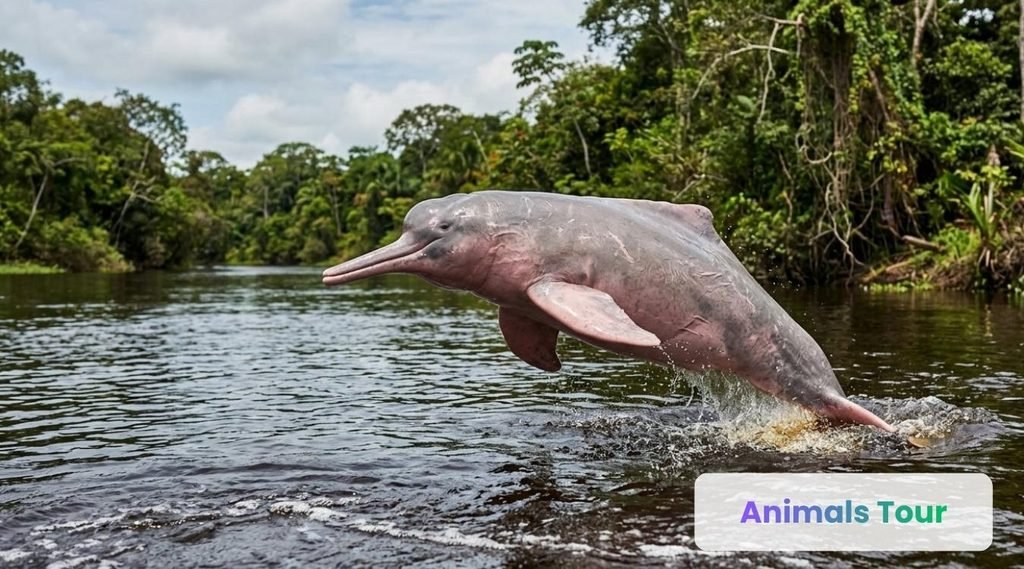
Young river dolphins depend on their flat tails to learn balance and proper swimming techniques. As they grow, the tail becomes essential for traveling long distances and adapting to seasonal changes in water flow.
Conclusion
Flat tails of various animals illustrate the incredible versatility and functionality that nature offers. From the agile swimming of otters to the effective balance provided to tree-dwelling roaches, these tails are not merely appendages but vital tools for survival. Their adaptive nature highlights the ongoing evolutionary process that allows species to meet the challenges of their environments.
FAQs
1-Why do some animals have flat tails?
Flat tails aid in balance, propulsion, and steering in aquatic environments, helping animals navigate their habitats more efficiently.
2-How do flat tails help in swimming?
The broad surface area of flat tails allows for better thrust and maneuverability in water, making swimming more effective.
3-Can flat tails regenerate if damaged?
In some species, like certain fish, tails can regenerate, although this is not common in mammals or reptiles, where damage may lead to permanent loss.
4-Are there any terrestrial animals with flat tails?
While less common, some terrestrial animals, like certain species of rodents, have flatter tails to aid with balance while climbing or navigating their habitats.