Top 15 Animals With No Eyes: Blind But Brilliant
Imagine a world where some animals don’t rely on sight at all. In this article, we are diving into the top 15 animals with no eyes, focusing on how they navigate their surroundings without this sense. Learning about these blind creatures gives us a glimpse into nature’s creativity and adaptability. You’ll discover how blind animals survive and why they are essential to their habitats, offering a new perspective on what life can look like without sight.
List of the Top 15 Animals With No Eyes
- Texas Blind Salamander
- Star-Nosed Mole
- Caecilian
- Freshwater Hydra
- Sea Sponge
- Widemouth Blindcat
- Kauaʻi Cave Wolf Spider
- Blind Cave Crayfish
- Olm
- Mexican Tetra (Blind Cave Fish)
- Sea Lily
- Blind Snake
- Earthworm
- Sinopoda scurion (Cave Spider)
- Blind Cave Shrimp

Texas Blind Salamander
Scientific Name: Eurycea rathbuni
Class: Amphibia
Diet: Small aquatic invertebrates, including shrimp, insects, and other tiny crustaceans.
The Texas Blind Salamander lives in the underground waters of the Edwards Aquifer near San Marcos, Texas. It has a pale, almost transparent body, external red gills, and no functional eyes. Since it spends its entire life beneath the surface, it never encounters sunlight.
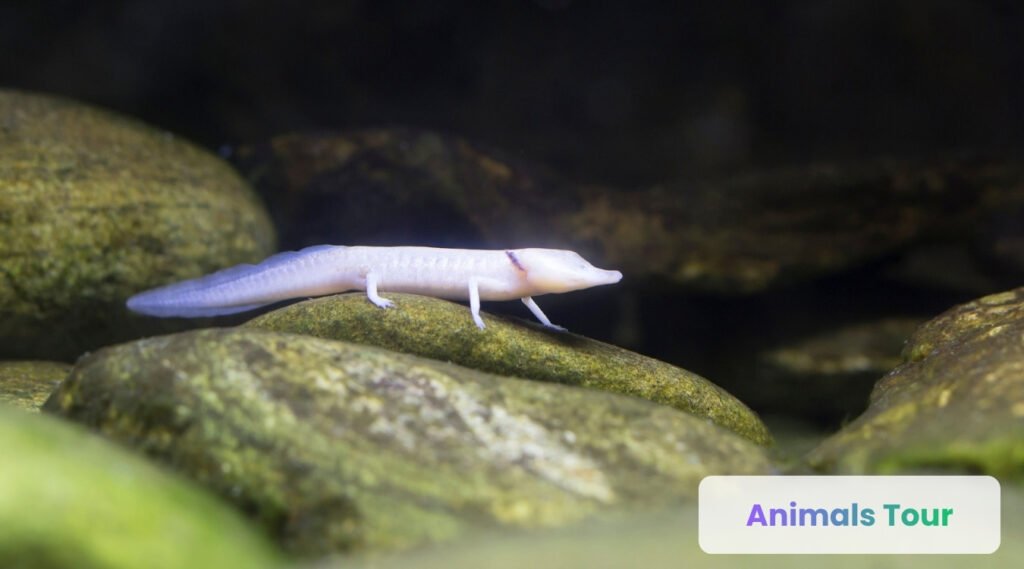
Living in complete darkness has made eyesight unnecessary. Instead of relying on vision, the salamander uses sensory receptors on its skin to detect movement and changes in water pressure. These adaptations help it locate small prey such as shrimp and aquatic insects.
The species has a very limited distribution, which makes it especially vulnerable to environmental changes. Pollution, drought, and declining groundwater quality can all affect its habitat. As a result, the Texas Blind Salamander is classified as endangered.
Star-Nosed Mole
Scientific Name: Condylura cristata
Class: Mammalia
Diet: Earthworms, insects, aquatic invertebrates, and other small animals
The star-nosed mole has very small eyes and poor eyesight, so it depends far more on touch than vision. Its most distinctive feature is the star-shaped structure at the tip of its nose, which consists of 22 fleshy appendages covered with sensory receptors.
This mole lives in wetlands, marshes, and moist soils across eastern North America. It spends much of its time digging tunnels and searching for food underground. Its diet mainly includes worms, insects, and other small invertebrates.
The sensitive nose allows the mole to quickly identify food and navigate its surroundings, even in dark conditions. Because it relies so heavily on touch, eyesight plays only a minor role in its daily life.
Caecilian
Scientific Name: Gymnophiona (order containing all caecilian species)
Class: Amphibia
Diet: Earthworms, insects, termites, and other small invertebrates.
Caecilians are long, limbless amphibians found in tropical regions of South America, Africa, and Asia. Although they resemble worms or snakes, they are more closely related to frogs and salamanders. Most species spend their lives burrowing through soil, which is why they are rarely seen.

Many caecilians have tiny, reduced eyes covered by skin or bone, while some species appear to be animals without eyes. Since they live in dark underground environments or murky water, vision provides little benefit and has become less important over time.
Instead, they rely on smell and a pair of sensory tentacles located between the eyes and nostrils. These organs help them detect chemical signals from prey such as earthworms, insects, and other small invertebrates. Depending on the species, caecilians may lay eggs or give birth to live young, and some can grow to more than a meter in length.
Freshwater Hydra
Scientific Name: Hydra spp.
Class: Hydrozoa
Diet: Small aquatic organisms, including water fleas, insect larvae, and tiny crustaceans.
The freshwater hydra is a small aquatic animal that lives in ponds, lakes, and slow-moving streams around the world. It usually attaches itself to underwater plants, rocks, or other surfaces, extending its tentacles into the water to catch passing prey.
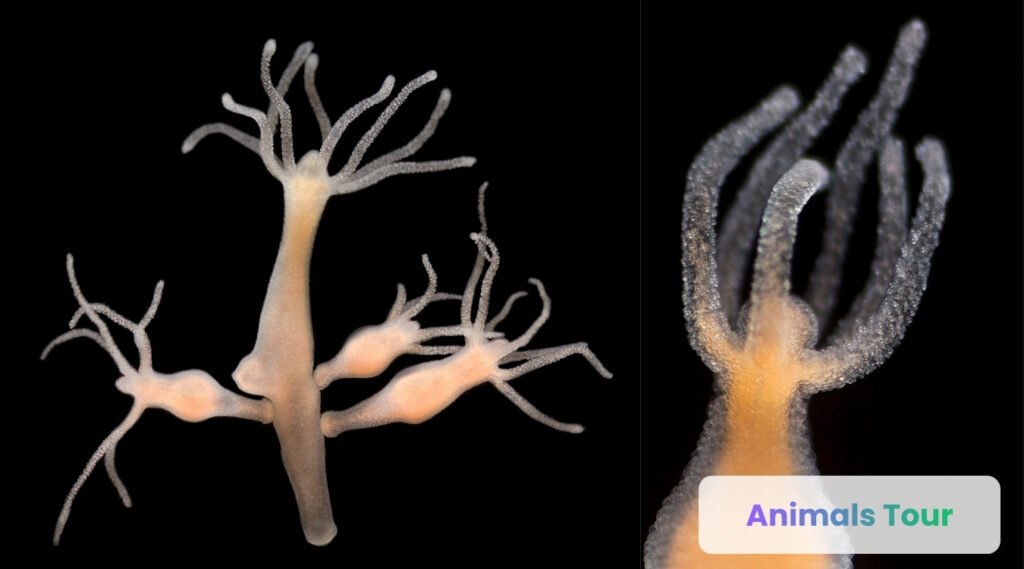
Hydras have no eyes or brain. As an animal with no eyes, it responds to light, touch, and chemical signals using a simple network of nerve cells spread throughout its body. This basic nervous system allows it to react quickly to changes in its surroundings.
When tiny aquatic organisms such as water fleas come into contact with its tentacles, the hydra releases microscopic stinging cells that immobilize the prey. After feeding, it can regenerate damaged or lost body parts, making it a useful organism for studying growth and tissue repair.
Sea Sponge
Scientific Name: Porifera (phylum containing all sponge species)
Class: Demospongiae (most common class of sea sponges)
Diet: Bacteria, plankton, microscopic algae, and organic particles filtered from water.
Sea sponges are among the oldest and simplest animals on Earth. They live attached to rocks, coral reefs, and other hard surfaces in oceans around the world, from shallow coastal waters to the deep sea. As animals with no eyes, they also lack a brain, heart, and other complex organs.
Instead of searching for food, sea sponges feed by filtering water. Thousands of tiny pores on their bodies draw water inside, where specialized cells remove bacteria, microscopic algae, and other organic particles. The cleaned water is then released back into the surrounding environment.
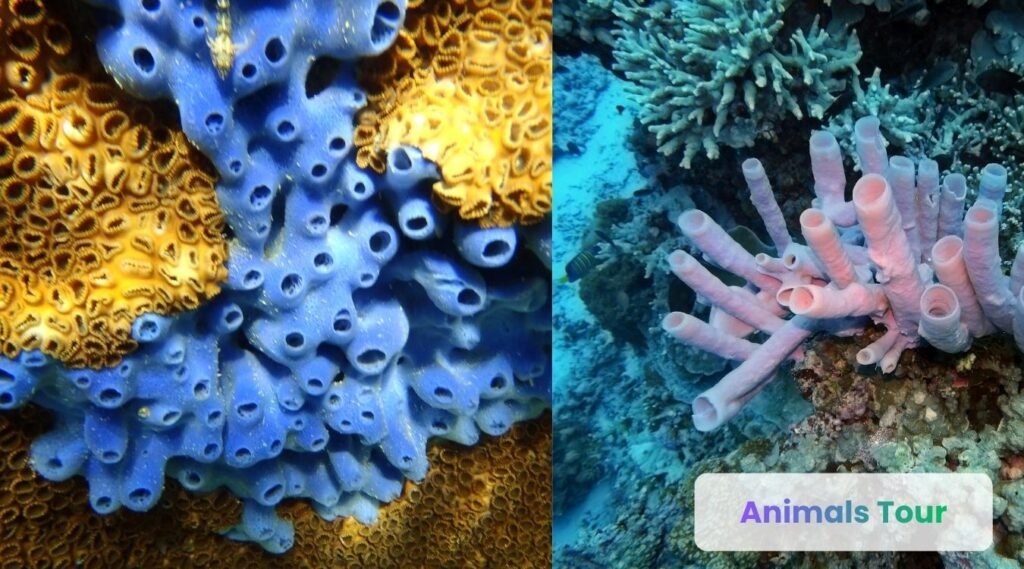
More than 8,500 species of sea sponges have been identified. They come in many shapes, sizes, and colors, ranging from small encrusting forms to large vase-shaped structures. Fossil evidence suggests that sponges have existed for over 600 million years, making them one of the earliest animal groups known to science.
Widemouth Blindcat
Scientific Name: Satan eurystomus
Class: Actinopterygii
Diet: Small aquatic invertebrates, including shrimp, insect larvae, and other tiny crustaceans.
The widemouth blindcat is a rare freshwater catfish that lives deep within the Edwards Aquifer in Texas. It inhabits underground waters hundreds of meters below the surface, where there is no sunlight and oxygen levels are relatively low. This species is found nowhere else in the world.
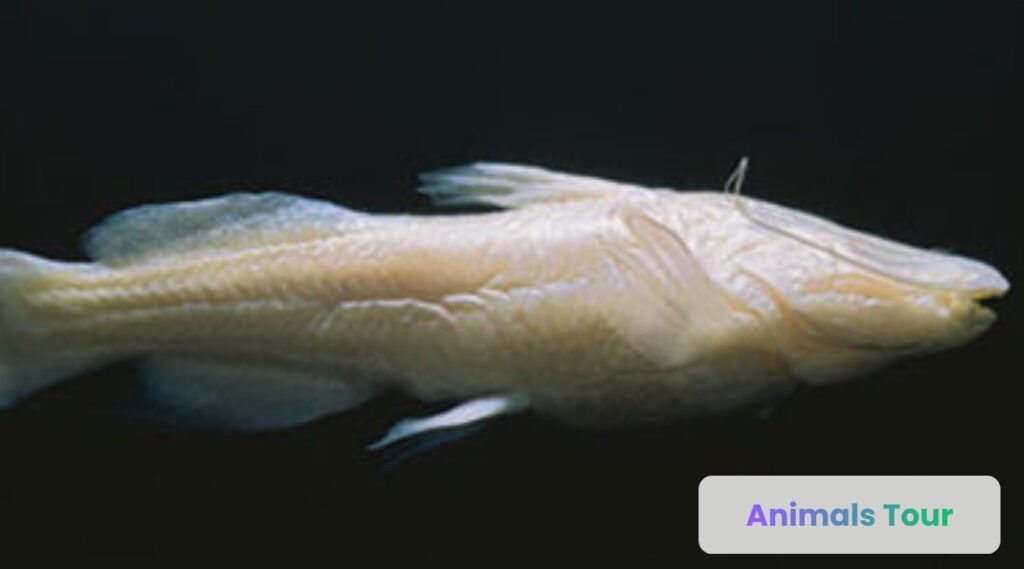
Like many animals that are blind, the widemouth blindcat has adapted to life in permanent darkness. It grows to about 5 inches (13 cm) long and has a broad, flattened head with thick lips. Its body lacks pigmentation, giving it a pale white or pink appearance, and it has no visible eyes.
To navigate its environment, the fish relies on a highly developed lateral line system that detects vibrations and water movements. It feeds on small aquatic invertebrates, including shrimp and insect larvae. Because its entire population is restricted to a single underground aquifer system, the species is considered endangered.
Kaua’i Cave Wolf Spider
Scientific Name: Adelocosa anops
Class: Arachnida
Diet: Small cave-dwelling invertebrates, including insects and amphipods.
The Kaua’i cave wolf spider is found only in a small number of lava tube caves on the Hawaiian island of Kaua’i. It is one of the rarest spiders in the world and has been listed as endangered in the United States since 2000. Unlike most wolf spiders, which rely heavily on vision, this species has no eyes.
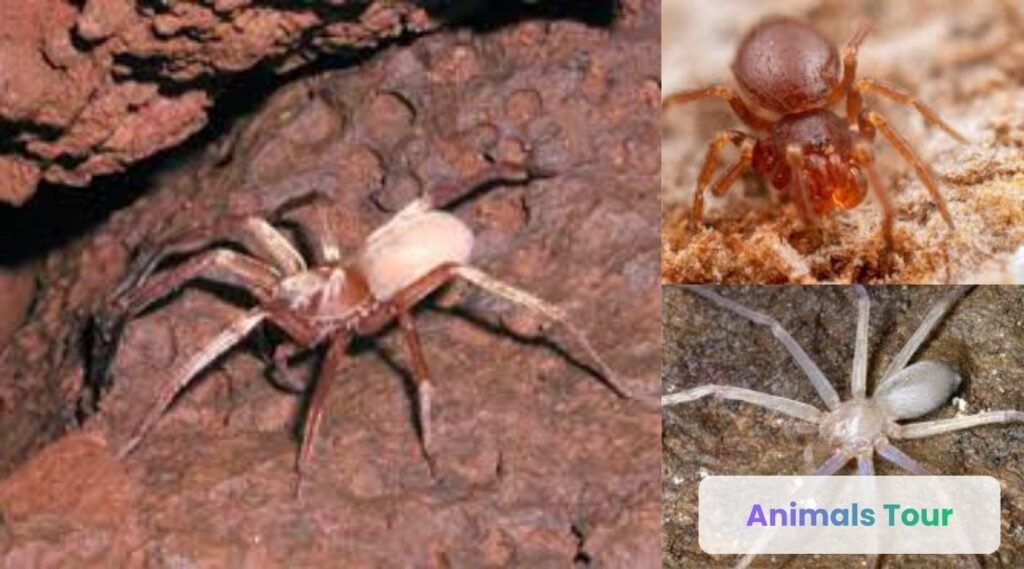
This animal with no eyes evolved in isolated caves where sunlight never reaches. Over many generations, eyesight became unnecessary and was lost. The spider’s scientific name, Adelocosa anops, reflects this trait, as *anops* means “without eyes.”
Instead of sight, it depends on sensitive hairs on its legs and body to detect air currents and vibrations. These adaptations help it locate prey and move through its dark habitat. It mainly feeds on small cave-dwelling invertebrates, including the endangered Kaua’i cave amphipod.
Blind Cave Crayfish
Blind Cave Crayfish
Scientific Name: Orconectes australis (one of the best-known blind cave crayfish species)
Class: Malacostraca
Diet: Decaying organic matter, small invertebrates, plant debris, and microorganisms.
Blind cave crayfish resemble pale, ghostly versions of the crayfish found in rivers and streams. They are almost completely colorless, with no visible eyes or eye pigment. In total darkness, producing eyes or pigmentation offers no benefit, so these traits disappeared over generations.
They live in underground cave systems across the United States, especially in Kentucky, Tennessee, Missouri, and Arkansas. Like many animals that are blind, they rely on long antennae to sense chemical cues and water movements, which help them navigate and find food.
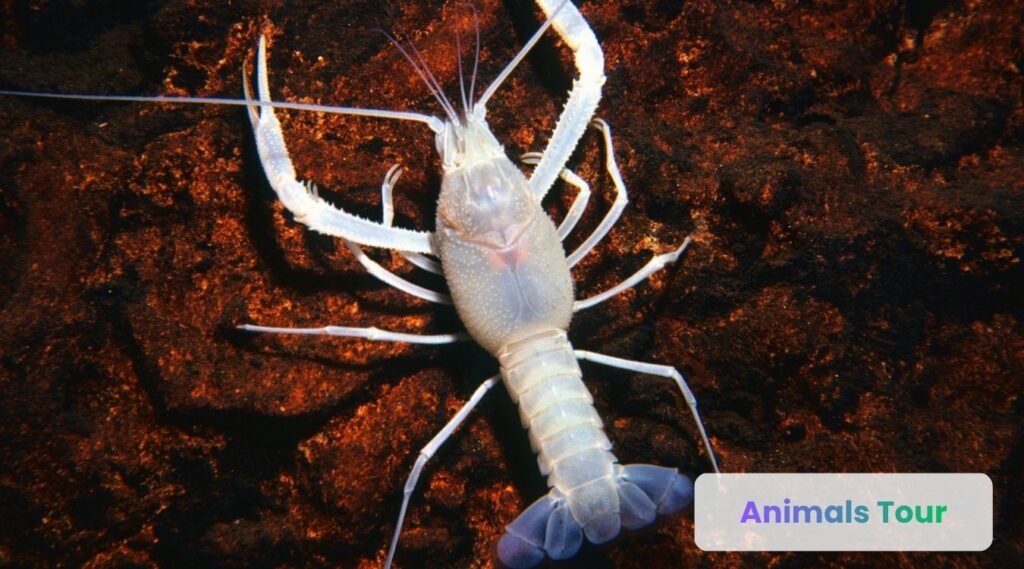
Blind cave crayfish feed on organic matter, decaying plants, small invertebrates, and other material found in cave waters. Some species can live for decades, with individuals estimated to reach up to 75 years. They are also used by scientists as indicators of groundwater health, because they are sensitive to pollution and changes in water chemistry.
Olm
Scientific Name: Proteus anguinus
Class: Amphibia
Diet: Small aquatic invertebrates, including insects, crustaceans, snails, and worms.
The olm is a fully aquatic salamander found in the underground cave rivers and pools of southeastern Europe, mainly in Slovenia and Croatia. It has a slender, pale body with four small legs and bright red, feathery external gills that remain throughout its life.
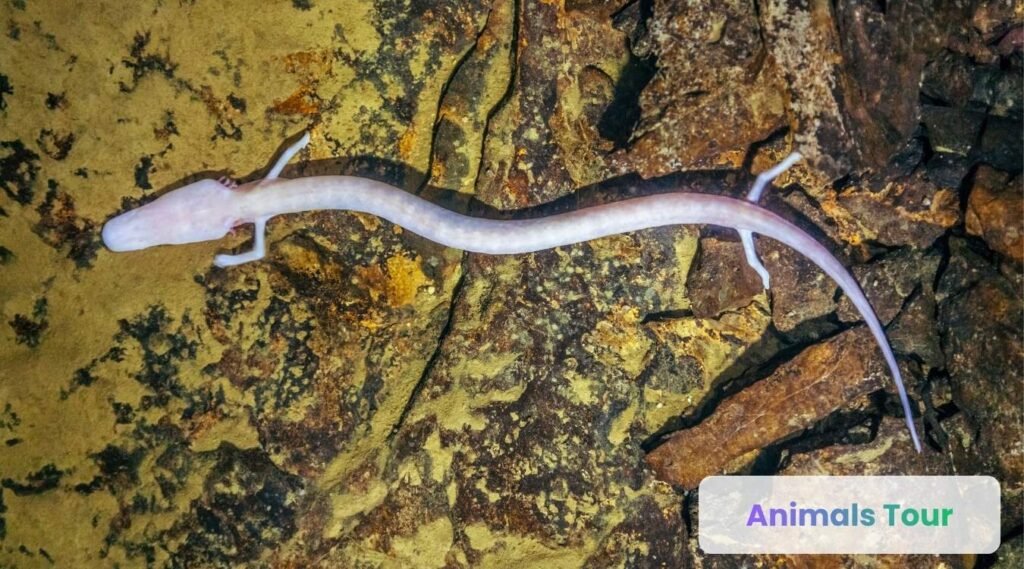
Olms are born with eyes, but these stop developing as they mature and are eventually covered by skin. As a result, they are effectively animals without eyes. Living in complete darkness, vision provides no advantage.
Instead, the olm uses smell, hearing, and the ability to detect weak electric fields in water to locate prey. It feeds on small cave-dwelling invertebrates and can survive for long periods without food. The olm is also one of the longest-living amphibians, with some individuals documented to live over 100 years.
Mexican Tetra
The Mexican tetra, also known as the blind cave fish, is a small freshwater fish found in rivers in northeastern Mexico and parts of southern Texas. This species exists in two forms: a surface-dwelling form with normal eyes and pigmentation, and a cave-dwelling form that is an animal with no eyes and pale or white in color. Both belong to the same species.
The cave-dwelling population lost its eyes over thousands of years while living in complete darkness. In such environments, eyesight provides no benefit, and maintaining eyes requires extra energy. In low-food conditions, reducing unnecessary features can improve survival.
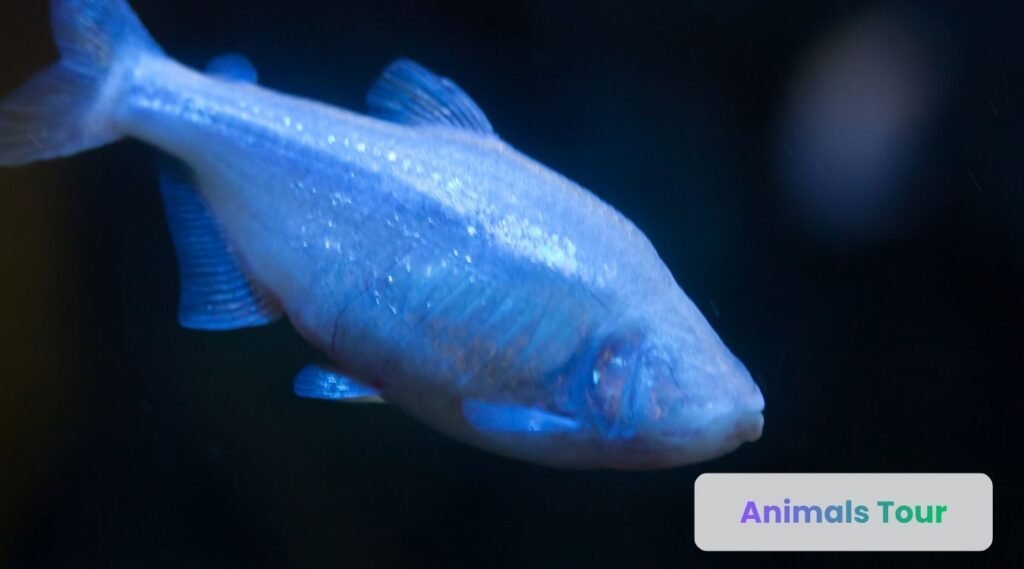
To adapt, the cave form developed stronger non-visual senses. It has more taste buds than surface fish and a more sensitive lateral line system that detects movement and pressure changes in water. These adaptations help it navigate and find food in total darkness.
Sea Lily
Scientific Name: Crinoidea (class containing all sea lilies)
Class: Crinoidea
Diet: Plankton, microscopic organisms, and organic particles filtered from seawater.
Sea lilies are marine animals that often look like plants. They are attached to the seafloor by a stalk and have feathery arms that extend into the water to capture food particles. Most species remain fixed in one place throughout their lives.
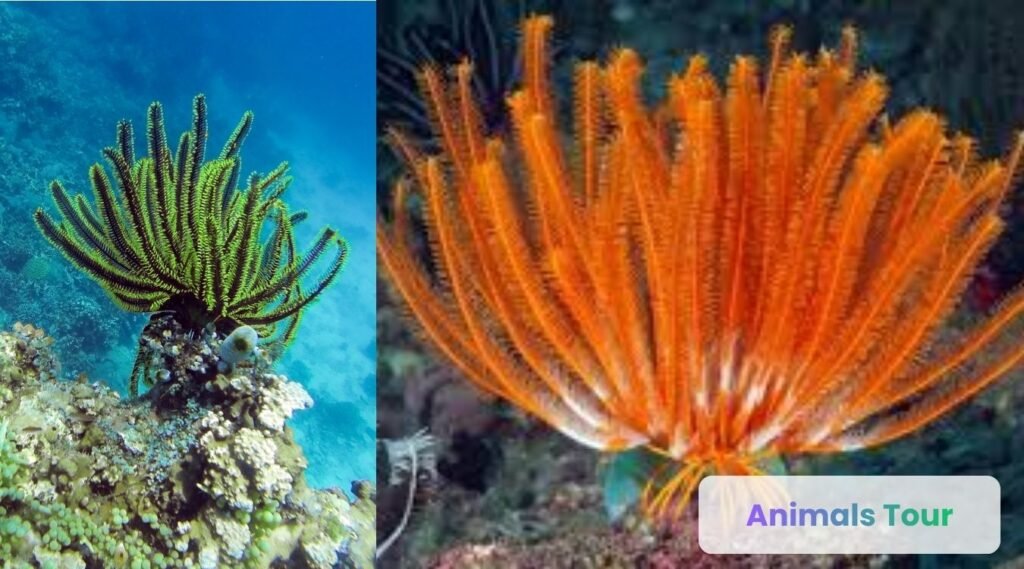
They belong to the crinoid group, one of the oldest animal groups still living today, with fossils dating back over 480 million years. Most modern species live in deep-sea environments where light is minimal or absent.
Sea lilies have no eyes or brain and are considered among animals without eyes that rely entirely on water currents for feeding. Their arms filter plankton and organic particles from passing water, making active movement or vision unnecessary for survival.
Blind Snake
Scientific Name: Typhlopidae (family containing blind snake species)
Class: Reptilia
Diet: Ant eggs, termite eggs, larvae, pupae, and other small insects.
Blind snakes belong to the family Typhlopidae and are found in tropical regions across Africa, Asia, Australia, and the Americas. They are small, thin, and resemble earthworms, making them easy to overlook. Although harmless, they spend most of their lives burrowing through soil and leaf litter in search of ants and termites.
These snakes do technically have eyes, but they are reduced to tiny spots covered by scales and cannot form images. For all practical purposes, they are blind animals. Living underground for thousands of years has made eyesight unnecessary.
Blind snakes feed primarily on the eggs, larvae, and pupae of ants and termites. One species, the Brahminy blind snake, reproduces through parthenogenesis, allowing females to produce offspring without males. Some individuals are widely distributed because they are transported accidentally in potted plants.
Earthworm
Scientific Name: Lumbricina (suborder containing most earthworm species)
Class: Clitellata
Diet: Decaying plant material, organic matter, fungi, bacteria, and soil microorganisms.
Earthworms have no eyes, ears, or nose, and lack a defined head like most animals. They are found in soil across nearly every continent and are one of the most common underground animals.
Instead of eyes, they have light-sensitive cells spread across their bodies that detect light and dark but cannot form images. Because of this, earthworms are considered animals that are blind. They stay underground during the day and come to the surface mainly at night or after rain.
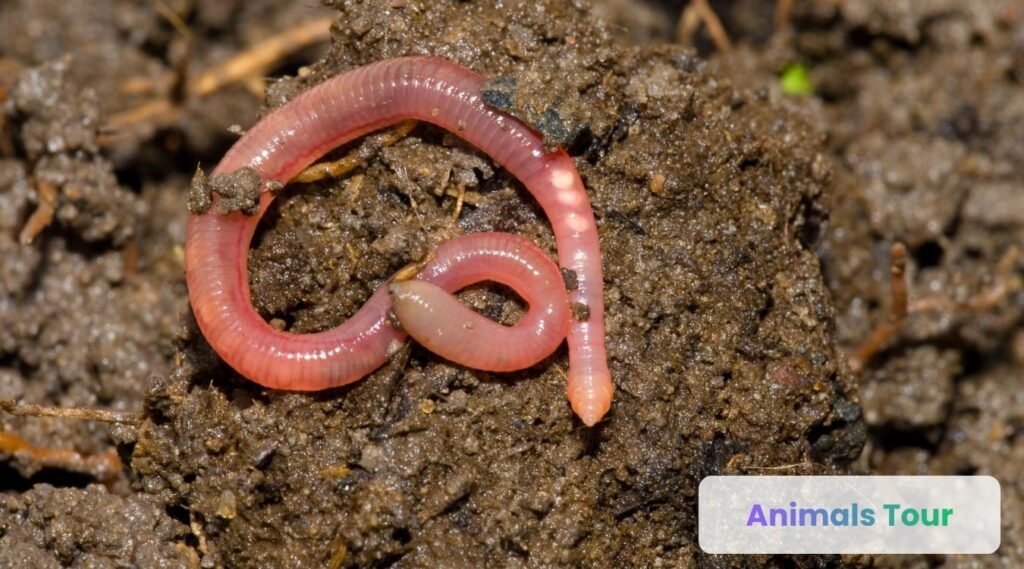
Earthworms move by contracting and stretching their bodies in waves and feed by consuming soil rich in organic matter. As they burrow and feed, they improve soil aeration, drainage, and nutrient mixing, making them valuable for plant growth and soil health.
Sinopoda scurion (Cave Spider)
Scientific Name: Sinopoda scurion
Class: Arachnida
Diet: Small cave-dwelling invertebrates, including insects and other arthropods.
Sinopoda scurion is a large cave-dwelling spider first discovered in 2012 in the Xe Bang Fai cave system in Laos. This cave is one of the largest river cave systems in Asia, with completely dark internal passages where sunlight does not reach. The species was identified by researchers from the Senckenberg Research Institute in Germany during a survey of cave life.
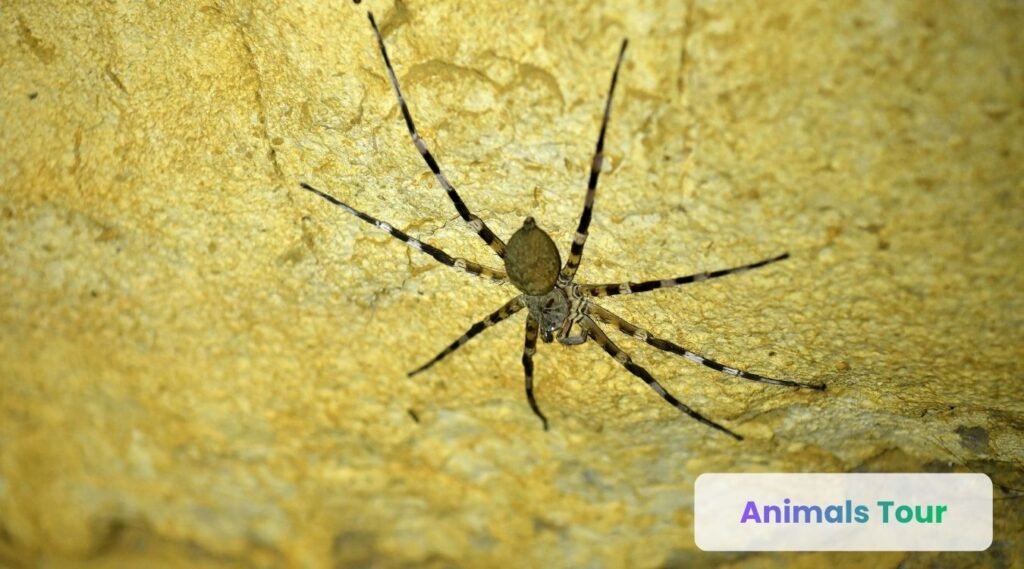
Unlike most huntsman spiders, which have eight well-developed eyes and rely on vision to hunt, this species has no eyes at all. It is the first known huntsman spider that is completely eyeless. This is an example of an animal without eyes adapted to permanent darkness, where vision provides no survival advantage.
Instead of sight, it depends on highly sensitive hairs on its legs and body to detect vibrations and movement in the air and on surfaces. It actively hunts other small cave invertebrates by moving through its environment rather than building webs.
Blind Cave Shrimp
Scientific Name: Palaemonias ganteri (one well-known blind cave shrimp species)
Class: Malacostraca
Diet: Organic debris, bacteria, fungi, algae, and other microscopic food particles found in cave waters.
Blind cave shrimp are small crustaceans found in underground cave waters across North America, Europe, and other regions. They are usually pale or transparent, with no eyes or eye pigment, as they live in complete darkness.
As animals with no eyes, they rely on long antennae and sensory hairs to detect touch, movement, and chemical signals in the water. This helps them locate food sources such as bacteria, fungi, and organic matter carried into caves through groundwater.

These shrimp play an important role in underground ecosystems and are often used as indicators of water quality. Because they are highly sensitive to changes in temperature, pollution, and water chemistry, their presence helps scientists monitor the health of cave aquifer systems.
Conclusion
The list of animals with no eyes is a reminder of how diverse life can be. These blind animals have interesting adaptations to help them find food and avoid danger. For example, they might use sound or touch to explore their world, proving that vision isn’t everything. Each of these creatures reminds us that life can go on in many different ways. Keep exploring the animal kingdom, and you might discover even more incredible adaptations!
FAQs
Which insect does not have eyes?
Cave beetles are the most well-known eyeless insects, having lost their eyes over thousands of years of living in total darkness.
Does a snake have eyes?
Yes. Snakes have eyes but no eyelids. A transparent scale called a brille covers each eye instead.
Which animals do not have eyes?
Cave fish, star-nosed moles, sea urchins, sponges, jellyfish, clams, oysters, starfish, cave crayfish, cave salamanders, hydras, and sea cucumbers are among the animals that have no eyes.
Most are either cave dwellers or deep-sea creatures where permanent darkness makes eyes unnecessary over time.
How many animals have no eyes?
Hundreds of species are eyeless, mostly cave-dwelling or deep-sea creatures where eyes serve no purpose.