Discover Top 13 Animals with Trunks (Images Included)
This article covers 13 animals with trunks or trunk like snouts and explains how these unique features help them survive in the wild. It explores how a trunk animal uses its snout for feeding, sensing, communication, and adapting to different environments.
List of Animals with Trunks
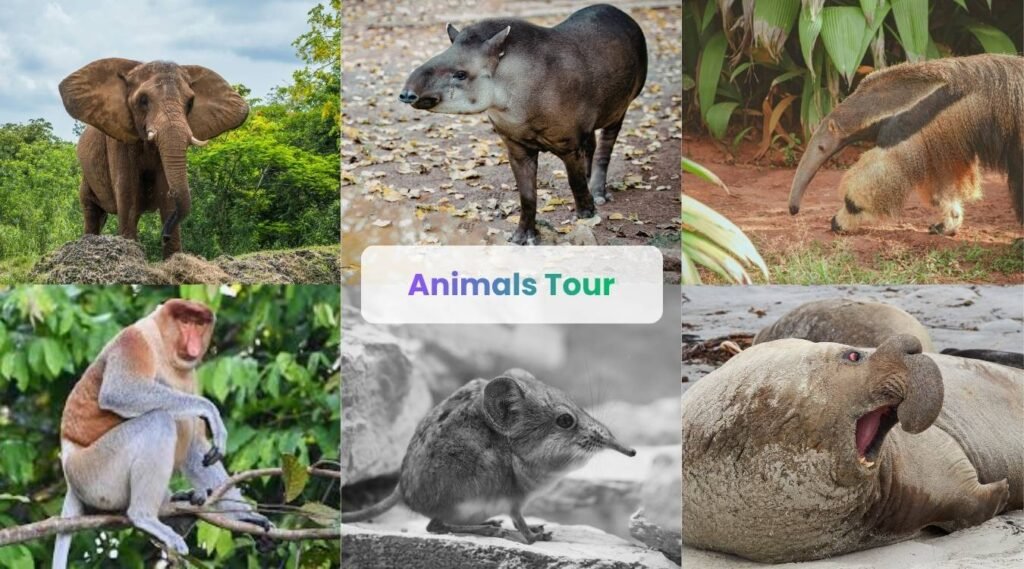
When most people think of which animal has a trunk, the elephant comes to mind immediately. But there are many other animals that have trunks, or elongated snout structures that function in similar ways. Here is a quick look at top 13 animals with trunks we will be covering in this article.
- Elephant
- Elephant Shrew
- Giant Anteater
- Elephant Seal
- Proboscis Monkey
- Aardvark
- Saiga Antelope
- Wild Boar
- Tapir
- Sawfish
- Star-nosed Mole
- Elephant Fish
- Elephant Weevil
Now we will discuss each trunk animal in detail.
Elephant
Scientific Name: Loxodonta africana (African elephant), Elephas maximus (Asian elephant)
Class: Mammalia
Diet: Herbivore
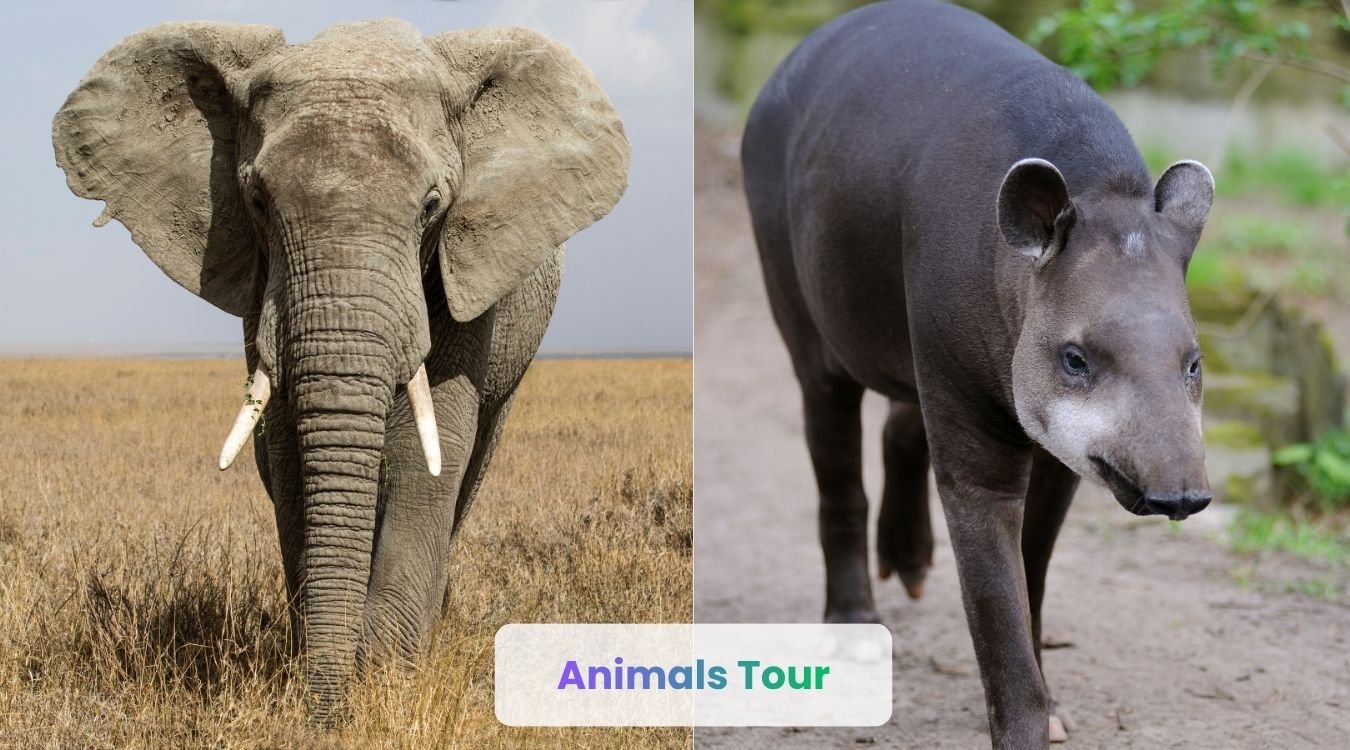
The elephant is the most well-known of all animals with trunks. Its trunk is a fusion of the nose and upper lip and can grow over 6 feet long. It contains around 40,000 muscles, making it incredibly flexible and strong. There are two main species, the African elephant and the Asian elephant, and both rely on their trunks in almost every aspect of daily life. African elephants tend to have larger ears and a more rounded head, while Asian elephants are slightly smaller, but both species share the same remarkable trunk structure.
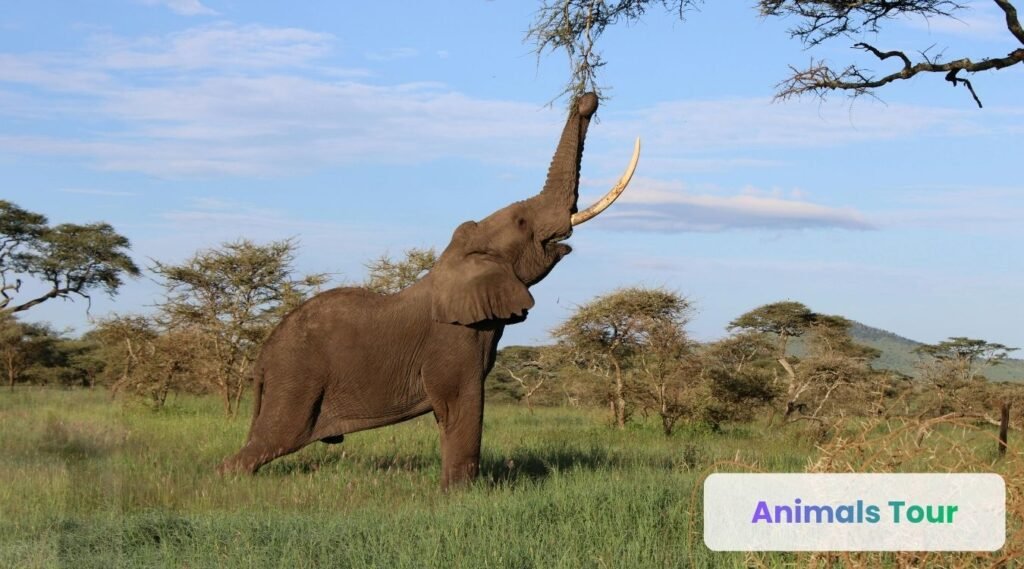
Elephants use their trunks to breathe, drink water, pick up food, and communicate with each other. They can suck up to 14 litres of water at a time and spray it into their mouths to drink, or over their bodies to cool down.
The trunk is also used for social bonding. Elephants will touch trunks as a form of greeting, and mothers use them to guide and comfort their young. Beyond that, a trunk is strong enough to lift heavy logs yet gentle enough to pick up a single blade of grass. It is, without question, the most versatile natural appendage of any long trunk animal on this list.
Elephant Shrew
Scientific Name: Macroscelides spp. / Elephantulus spp. (varies by species)
Class: Mammalia
Diet: Insectivore
Despite sharing a name with the elephant, the elephant shrew is neither an elephant nor a shrew. It is a small, fast moving mammal with a long, flexible snout that closely resembles a miniature trunk. This trunk like snout is used to probe soil and leaf litter in search of insects, which make up most of its diet.
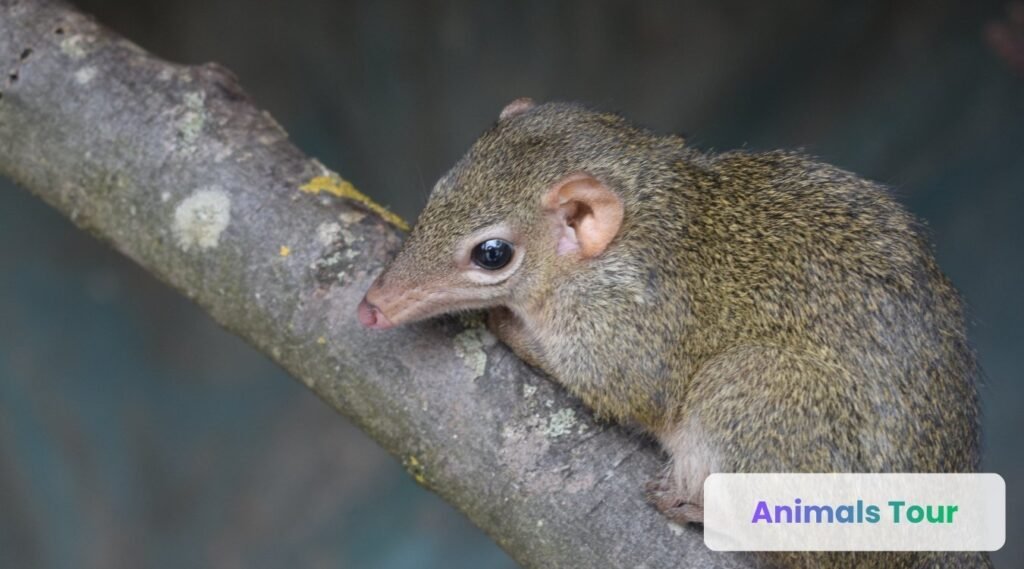
Elephant shrews, also known as sengis, belong to a completely separate order of mammals called Macroscelidea. They are surprisingly more closely related to elephants than their name suggests, which is why they share the reference. Found across Africa, they are among the fastest small mammals relative to their size, using quick bursts of speed and agility to escape predators.
Giant Anteater
Scientific Name: Myrmecophaga tridactyla
Class: Mammalia
Diet: Insectivore (ants and termites)
The giant anteater has one of the most unusual heads in the animal kingdom. Its long, narrow snout functions much like a trunk, allowing it to break into termite mounds and ant nests with ease. The snout houses a tongue that can extend over 60 centimetres and flick in and out up to 150 times per minute. The giant anteater has no teeth, so it relies entirely on this elongated snout and tongue combination to gather food.
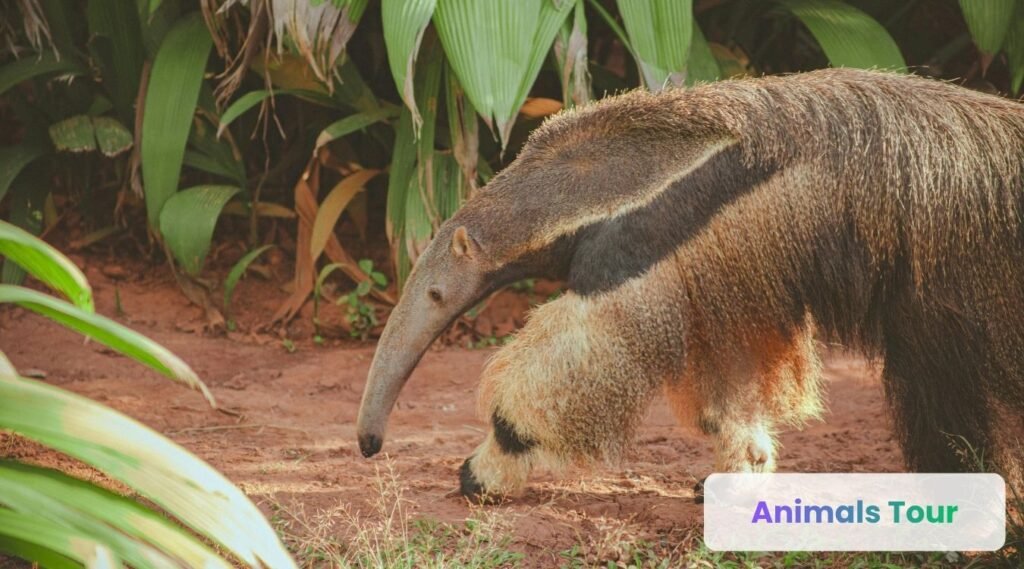
Found in Central and South America, it is one of the most recognizable animals with trunks-like snout, and its feeding technique is highly specialized. It can consume tens of thousands of insects in a single day, using its strong claws to open nests before feeding. Its long snout, powerful forelimbs, and rapid tongue movement make it one of the most efficient insect-eating mammals in the wild.
Elephant Seal
Scientific Name: Mirounga angustirostris (northern) / Mirounga leonina (southern)
Class: Mammalia
Diet: Carnivore
The elephant seal gets its name from two things, its large size and the bulging, inflatable snout seen in adult males. This trunk-like nose is not used for picking up food or drinking like a true trunk. Instead, male elephant seals use it to amplify their roars during the breeding season, helping them establish dominance and attract females. The larger the snout, the more impressive the call.
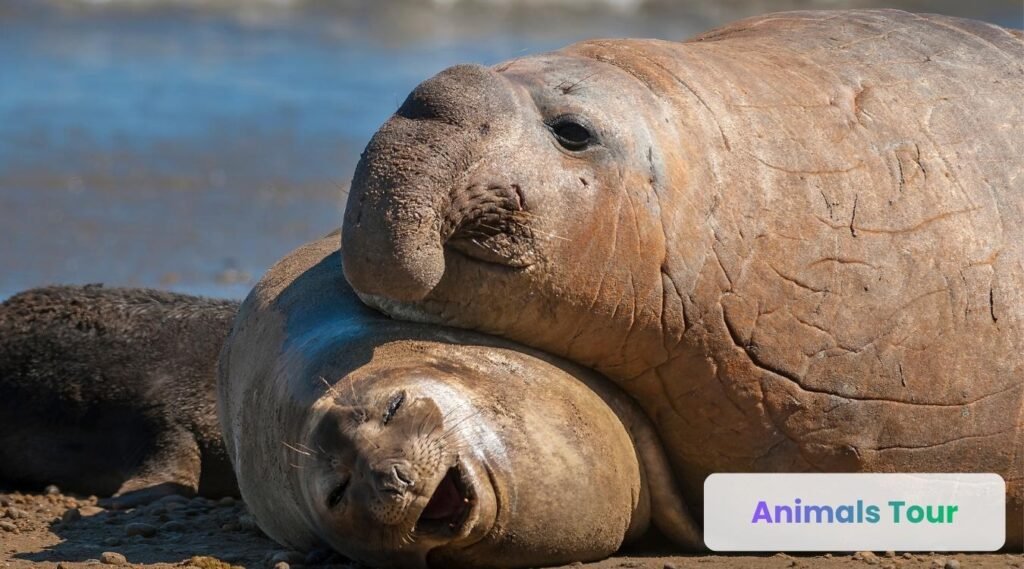
Female elephant seals do not develop this enlarged nose. Found in both the northern Pacific and the waters around Antarctica, elephant seals are among the largest seals in the world, with males sometimes exceeding 2,000 kilograms.
Proboscis Monkey
Scientific Name: Nasalis larvatus
Class: Mammalia
Diet: Omnivore (mainly leaves, fruits, and seeds)
The proboscis monkey, found in the rainforests of Borneo, is one of the most unusual-looking animals with a trunk-like feature, though it is actually an enlarged, pendulous nose that hangs over the mouth. In adult males, this nose can grow long and fleshy, giving them a very distinctive appearance. Like the elephant seal, it plays a role in communication by amplifying calls and helping establish dominance within the group.
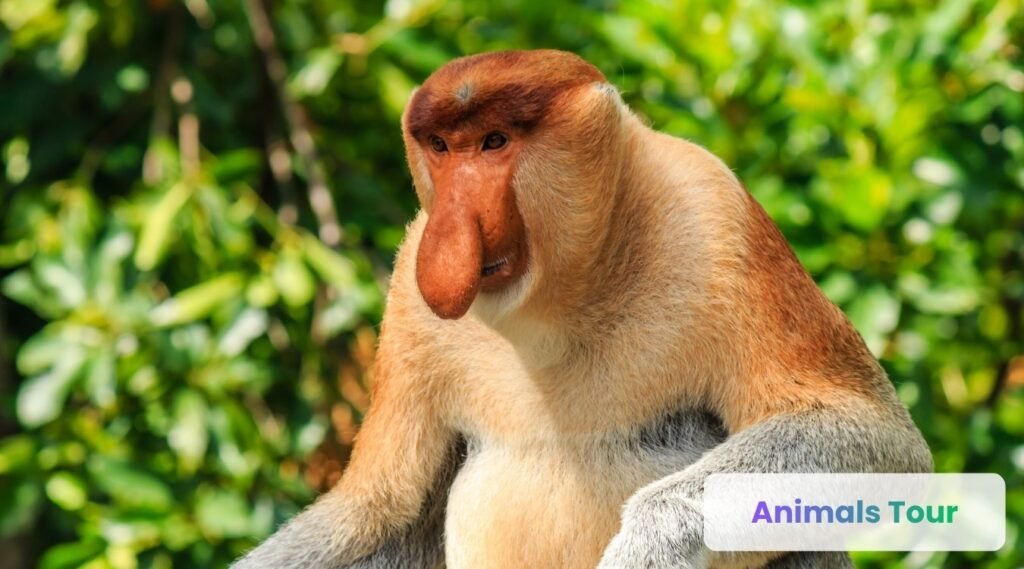
Females and young proboscis monkeys have much smaller, upturned noses. This species is also a strong swimmer, often crossing rivers with ease, which is rare among primates. It typically lives in mangrove forests and along riverbanks, where its unique adaptations help it thrive.
Aardvark
Scientific Name: Orycteropus afer
Class: Mammalia
Diet: Insectivore (mainly ants and termites)
The aardvark is a nocturnal animal native to sub-Saharan Africa. It has a long, pig-like snout that it uses to sniff out underground termite mounds and ant colonies. Once it locates a nest, it uses its powerful claws to dig in, then inserts its long, sticky tongue to collect insects. The aardvark’s snout is not as flexible as a true trunk, but it is highly sensitive and functions in a very similar way for foraging.
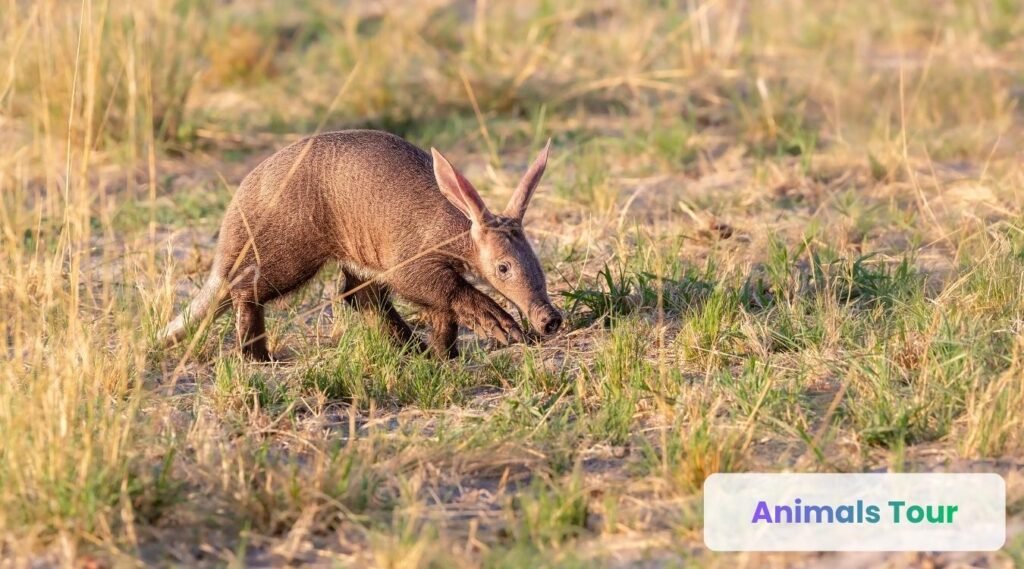
The name aardvark comes from Afrikaans and means earth pig, which gives a fair description of what this animal looks and behaves like. It is one of the lesser-known animals with trunk-like snouts but plays an important role in its ecosystem by controlling insect populations.
Saiga Antelope
Scientific Name: Saiga tatarica
Class: Mammalia
Diet: Herbivore (grasses and other steppe vegetation)
The saiga antelope of the Central Asian steppes has one of the most unusual noses of any hoofed animal. Its large, bulbous, downward-facing snout looks almost trunk-like and serves an important purpose. In summer, it helps filter out dust kicked up by the herd, while in winter it warms and moistens the cold air before it reaches the lungs.
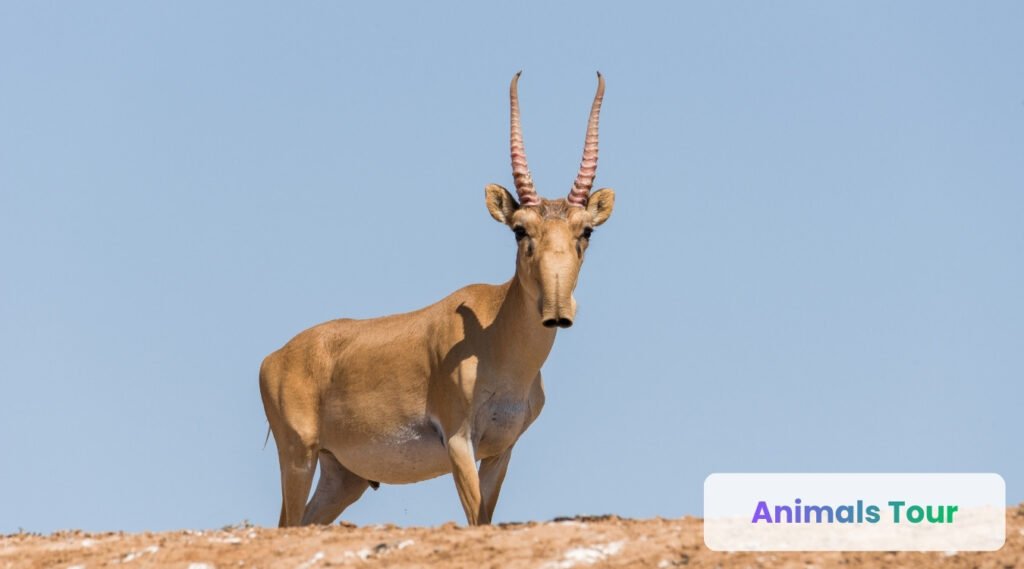
This flexible, inflated snout is unique among antelopes and makes the saiga one of the most distinctive animals with trunk-like noses. Unfortunately, the saiga is critically endangered, with populations declining sharply in recent decades due to poaching, disease, and habitat pressures.
Wild Boar
Scientific Name: Sus scrofa
Class: Mammalia
Diet: Omnivore
The wild boar has a tough, muscular, disc-shaped snout that is sometimes described as trunk-like due to its mobility and sensitivity. While it does not extend or flex like a true trunk, it is packed with nerve endings that make it highly effective at detecting and digging up food buried in soil. Wild boars use this snout to root through the ground for roots, tubers, insects, and small animals.
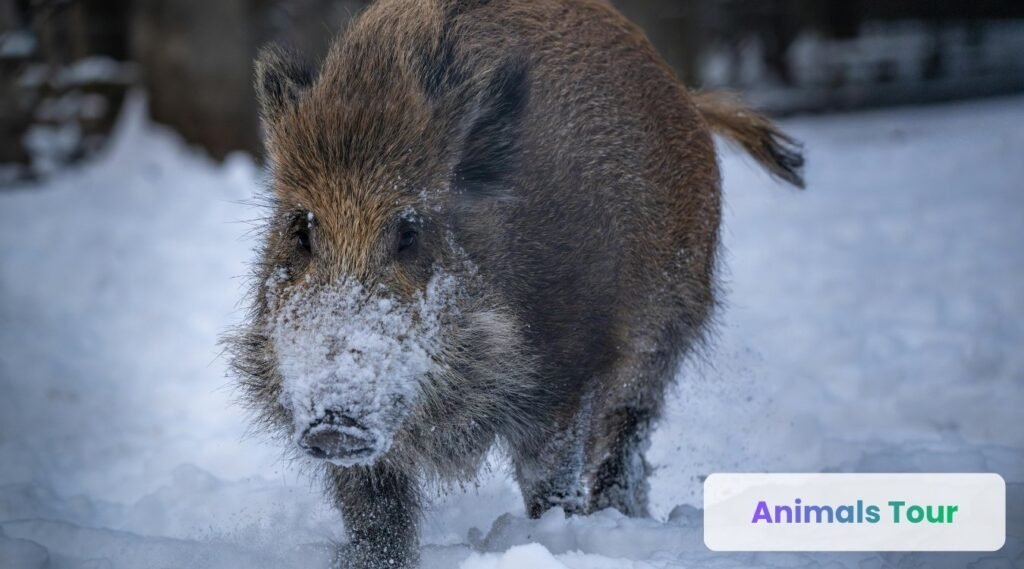
Found across Europe, Asia, and parts of Africa, the wild boar is a highly adaptable species that thrives in a wide range of habitats. Its snout is reinforced with a strong cartilage plate, allowing it to push through compact soil and even move small rocks with ease. This makes it one of the most efficient natural digging tools in the animal kingdom
Tapir
Scientific Name: Tapirus spp.
Class: Mammalia
Diet: Herbivore (leaves, fruits, shoots, and aquatic plants)
The tapir is one of the clearest examples of a trunk animal outside the elephant family. Its short, flexible, prehensile snout functions as a true trunk, allowing it to grasp leaves, pull branches, and even act as a snorkel when swimming underwater. Several species live in South America and Southeast Asia, and all share this distinctive trunk-like nose, though its length and flexibility vary slightly between species.
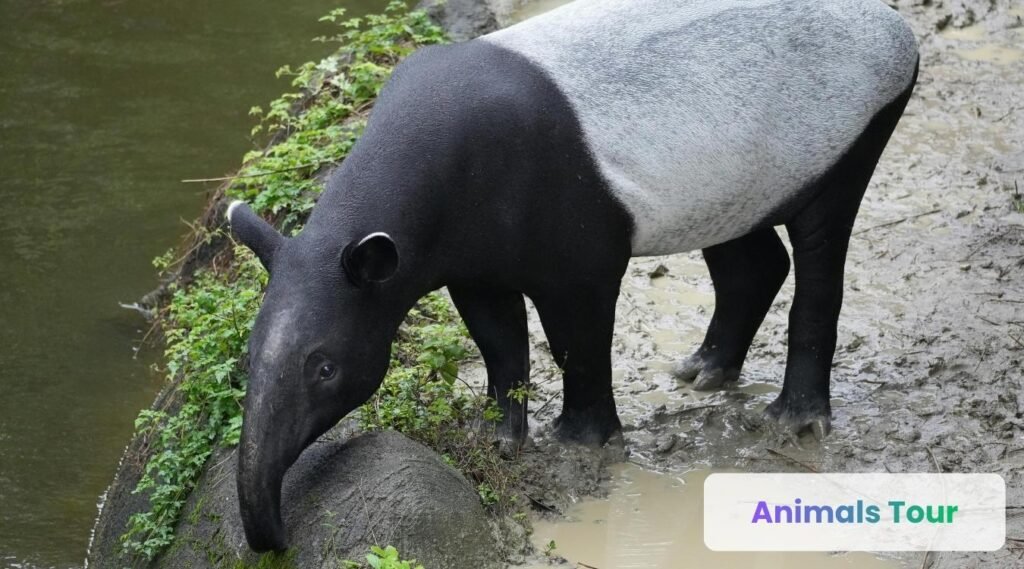
Tapirs are ancient mammals, with a body shape that has changed very little over millions of years. They play an important role in their ecosystems as seed dispersers, swallowing fruits whole and spreading seeds through their droppings across the forest. Mostly active at night, they are shy animals that rely on dense vegetation and water for safety.
Sawfish
Scientific Name: Pristidae (family; includes species like Pristis pristis)
Class: Chondrichthyes (cartilaginous fish)
Diet: Carnivore (fish, crustaceans, and small bottom-dwelling animals)
The sawfish is different from every other trunk animal on this list. Instead of a soft, fleshy trunk, it has a long, flat rostrum lined with tooth-like projections extending from its face. This structure acts as a powerful sensory tool, packed with electroreceptors that allow the sawfish to detect prey hidden in the sand on the ocean floor. It can also use the rostrum to slash through schools of fish or pin prey against the seabed.
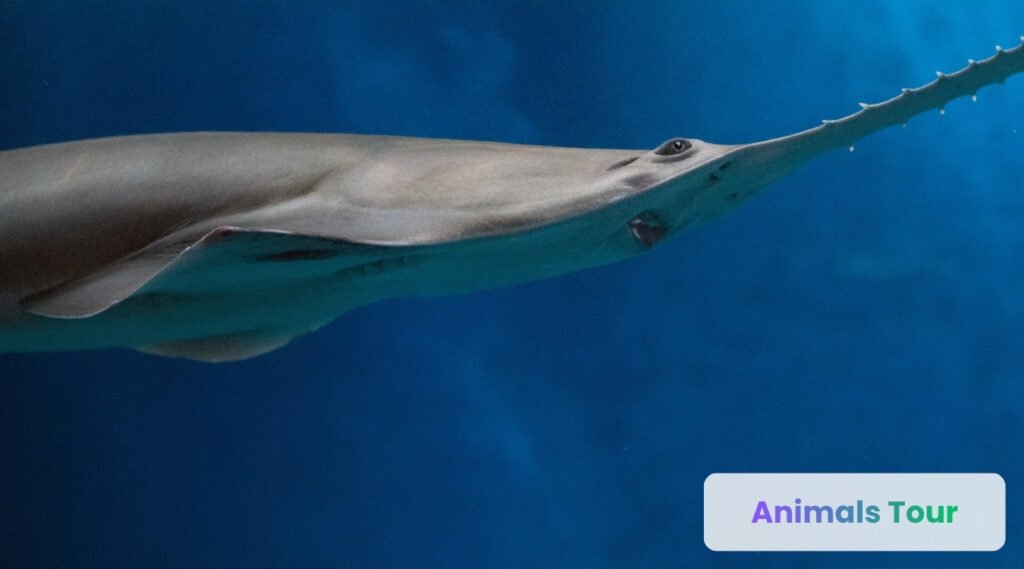
Although it is not a true trunk, this elongated appendage serves a similar purpose in sensing and feeding. Sawfish are found in warm coastal waters and estuaries, where they rely on this unique adaptation to hunt effectively. Sadly, all species of sawfish are now critically endangered, mainly due to habitat loss and accidental capture in fishing gear.
Star-nosed Mole
Scientific Name: Condylura cristata
Class: Mammalia
Diet: Insectivore (insects, worms, small aquatic invertebrates)
The star-nosed mole has one of the most unusual noses in the animal world. Its snout is surrounded by 22 soft, finger-like appendages arranged in a star shape. While not a true trunk, this structure acts as an extremely sensitive touch organ, packed with over 25,000 tiny receptors called Eimer’s organs. Because it lives in dark, wet tunnels, the mole relies on touch instead of sight to find its way and locate food.
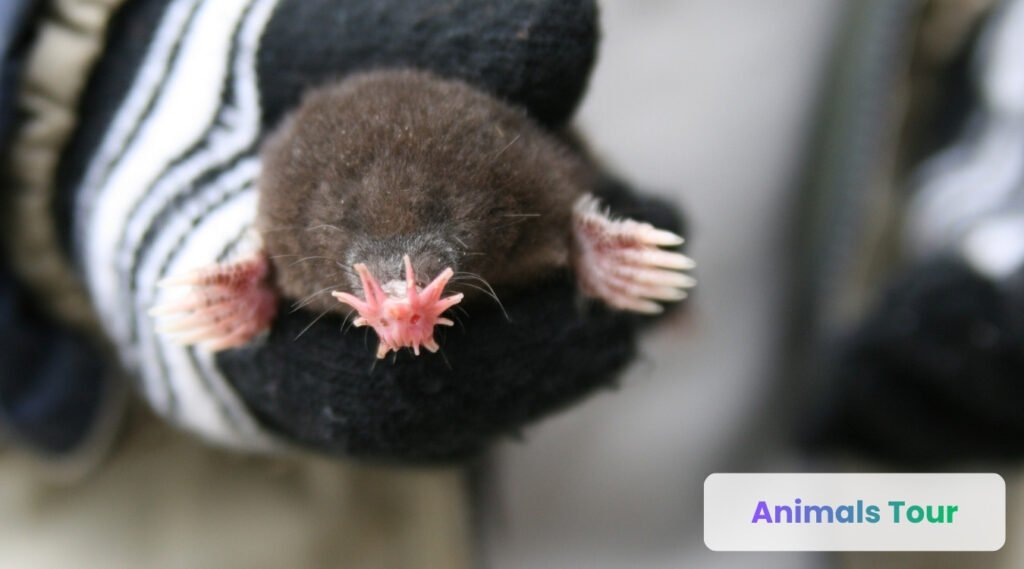
This unique nose allows the mole to detect and eat prey with incredible speed, often in just 120 milliseconds. The central appendages help it closely examine food before eating. Found in wet areas of North America, it is also a skilled swimmer and hunts underwater, making it one of the most specialize animals with a trunk-like nose.
Elephant Fish
Scientific Name: Callorhinchus milii
Class: Chondrichthyes (cartilaginous fish)
Diet: Carnivorous-feeds on small invertebrates like clams, crustaceans, and worms found in sand or mud on the seafloor
The elephant fish is a cartilaginous fish found mainly in the coastal waters of New Zealand and southern Australia. Its trunk-like feature is actually an elongated, downward-curving snout that gives the species its name. As a trunk animal, it relies on this snout to detect prey hidden in sand or mud along the seafloor, using electrosensory receptors similar to those found in sharks and rays.
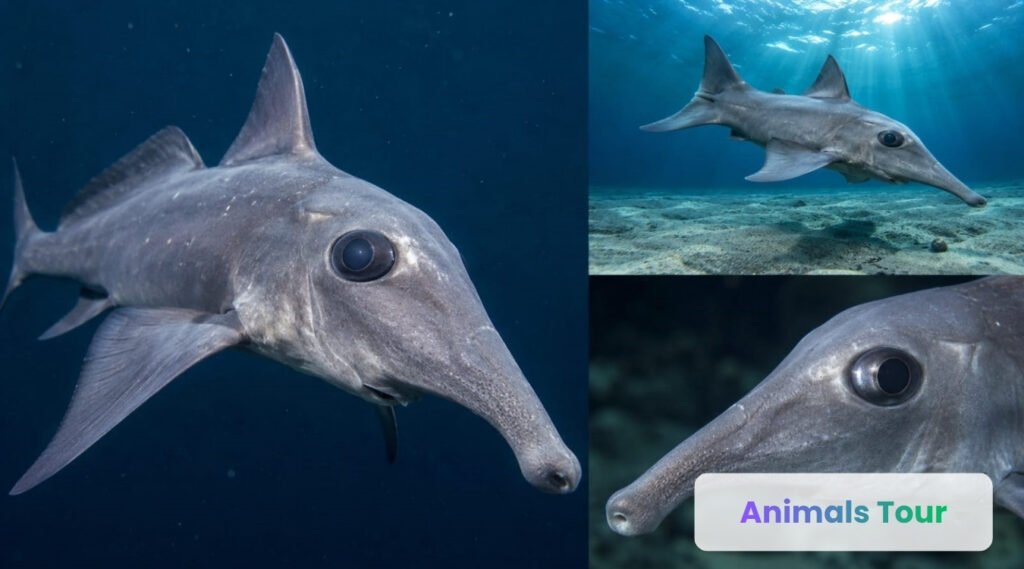
This makes the elephant fish a good example when discussing what animal has a long trunk beyond the usual land mammals. Its snout isn’t used for grasping or breathing like an elephant’s trunk, but purely for sensing movement and electrical signals from buried prey. It’s one of the more unusual entries among animals with trunks, since it lives underwater and uses its trunk for detection rather than manipulation.
Elephant Weevil
Scientific Name: Orthorhinus cylindrirostris
Class: Insecta
Diet: Herbivorous – feeds on plant tissue, particularly wattle (Acacia) trees, boring into stems and bark
The elephant weevil is a beetle native to Australia, easily recognized by its long, curved snout that resembles a small trunk. Unlike the flexible trunks seen in elephants or tapirs, this trunk animal has a rigid, hardened snout that serves a very different purpose. It’s mainly used for feeding on plant tissue and boring into stems, especially those of wattle trees.
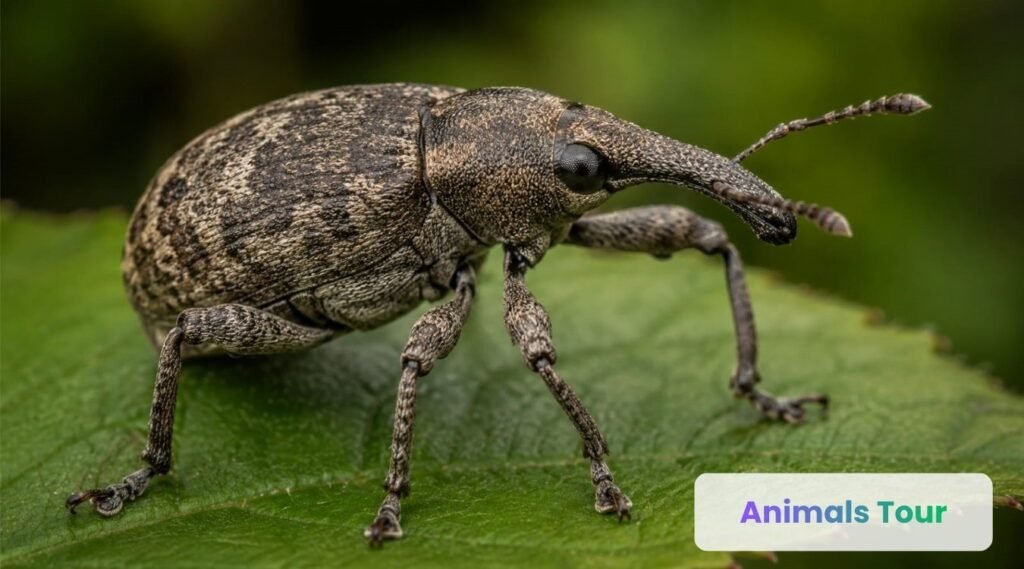
Female elephant weevils also use their trunk-like snout to drill precise holes into plant stems, where they lay their eggs for protection. This dual-purpose design makes the elephant weevil a strong addition to any list of animals with trunks, showing how even insects have evolved trunk-like structures. It’s a useful example for readers curious about what animal has a trunk outside the world of mammals.
Conclusion
Animals with trunks or trunk-like snouts are found across a surprisingly wide range of species, habitats, and evolutionary backgrounds. From the powerful trunk of the elephant to the star-shaped sensory nose of the star-nosed mole, these structures have evolved independently in many different animal lineages, each shaped by the specific survival needs of the animal that carries it.
Whether used for feeding, communication, breathing, or sensing the environment, trunk-like noses represent some of nature’s most creative adaptations. The next time you come across any trunk animal, you will know that this feature likely tells you a great deal about how that animal lives and what it needs to survive.
FAQs
Which animal is famous for having a trunk?
Elephants are the most famous animals for having a trunk. Their trunk is a long, flexible, muscular extension of the nose and upper lip used for breathing, feeding, drinking, lifting objects, and communication.
What is the animal with a short trunk?
The animal with a short trunk is the tapir. It has a short, flexible, prehensile snout that it uses to grasp leaves and fruits, and it can also act like a snorkel when the tapir swims underwater.
Which animal has a long trunk in the world?
Elephant is known as the long trunk animal in the world. African elephant , in particular, have exceptionally longest trunks that can measure up to 7 feet in length.
Which animal has a trunk?
Animals with true trunks are mainly elephants and tapirs. Elephants have a long, flexible trunk used for feeding, drinking, breathing, and communication, while tapirs have a shorter, flexible snout used for grasping food and swimming.
Other animals such as anteaters, elephant shrews, proboscis monkeys, saiga antelopes, and star nosed moles have trunk like or elongated snouts, but these are not true trunks and serve different functions.