Top 14 Animals With Prehensile Tails(With Images)
Animals with prehensile tails possess a special superpower, a tail that acts just like a fifth hand. This amazing adaptation helps them climb trees and hold food with incredible ease. In this article we will discover these amazing creatures that rely on this unique tool to survive in the wild.
List Of Animals With Prehensile Tails
Here is the list of animals with prehensile tails:
- Spider Monkey
- Prehensile-tailed Rat
- Chameleon
- Brazilian Porcupine
- Seahorse
- Kinkajou
- Binturong
- Southern Tamandua
- Monkey-tailed Skink
- Virginia Opossum
- Eurasian Harvest Mouse
- Tree Pangolin
- Green Iguana
- Howler Monke
Spider Monke
Scientific name: Ateles
Class: Mammalia
Diet: Omnivore
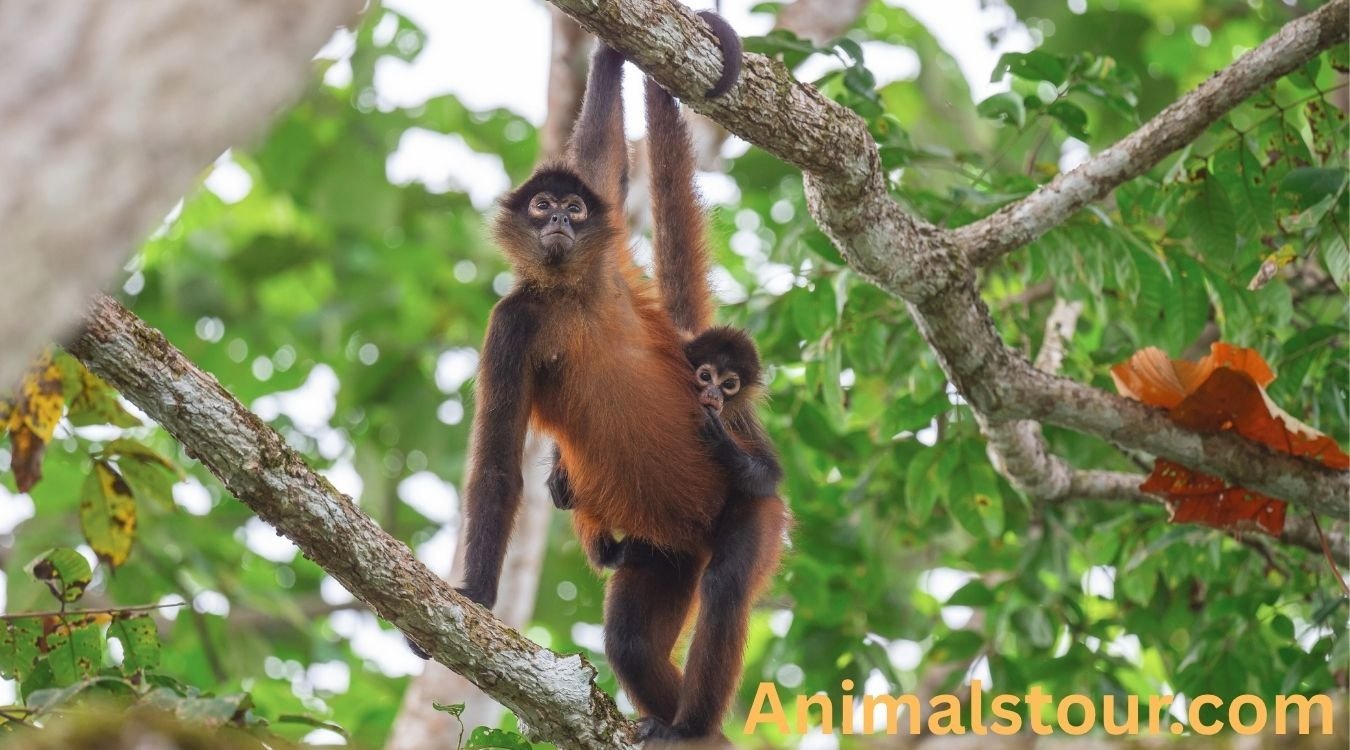
Spider monkeys are amazing New World primates, widely recognized for their remarkably agile prehensile tail. These arboreal creatures inhabit tropical rainforests across Central and South America, from southern Mexico down to Brazil. Their powerful prehensile tail acts as a fifth limb, allowing them to grasp branches, swing effortlessly through the canopy, and even hold food while hanging upside down, providing incredible balance and security high above the forest floor.
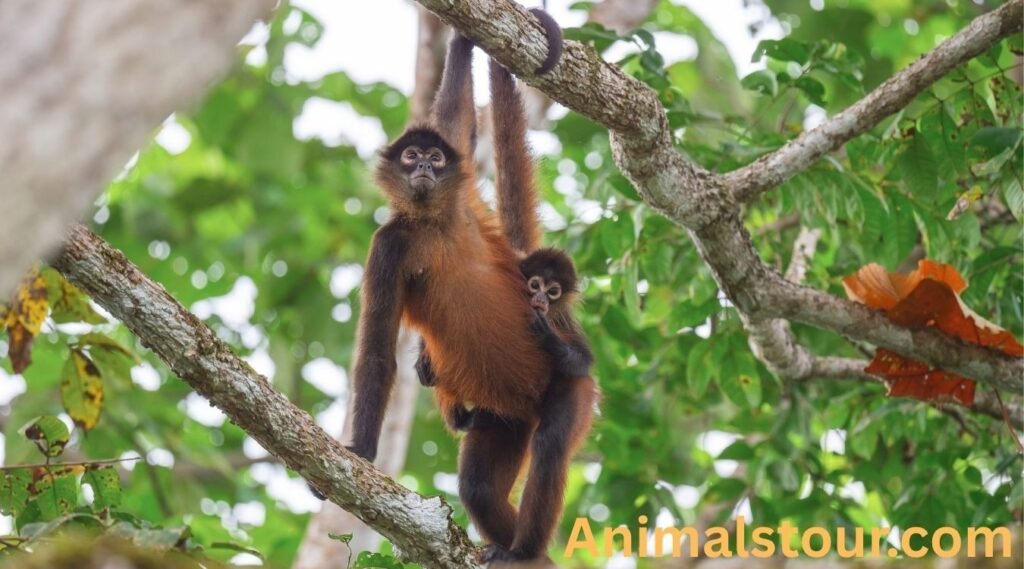
Spider monkeys live in fission-fusion societies, meaning large groups of 20-30 individuals often split into smaller foraging parties during the day and reconvene at night, fostering complex social dynamics. As frugivores, they play a crucial role as seed dispersers, helping to regenerate and maintain the health and diversity of the rainforest ecosystem. Ultimately, the spider monkey’s unique adaptations, especially its highly developed prehensile tail, make it a vital and distinctive component of its vibrant rainforest habitat.
Prehensile-tailed Rat
Class: Mammalia
Diet: Omnivore
The prehensile-tailed rat is a remarkable example of an animal whose survival heavily relies on its specialized prehensile tail. These fascinating rodents are primarily found in the dense rainforests of New Guinea and the Solomon Islands, where their unique tail serves as an indispensable tool. Functioning almost like a fifth limb, the prehensile tail allows them to firmly grasp branches, maintain excellent balance while climbing, and navigate the high canopy with agility and precision.
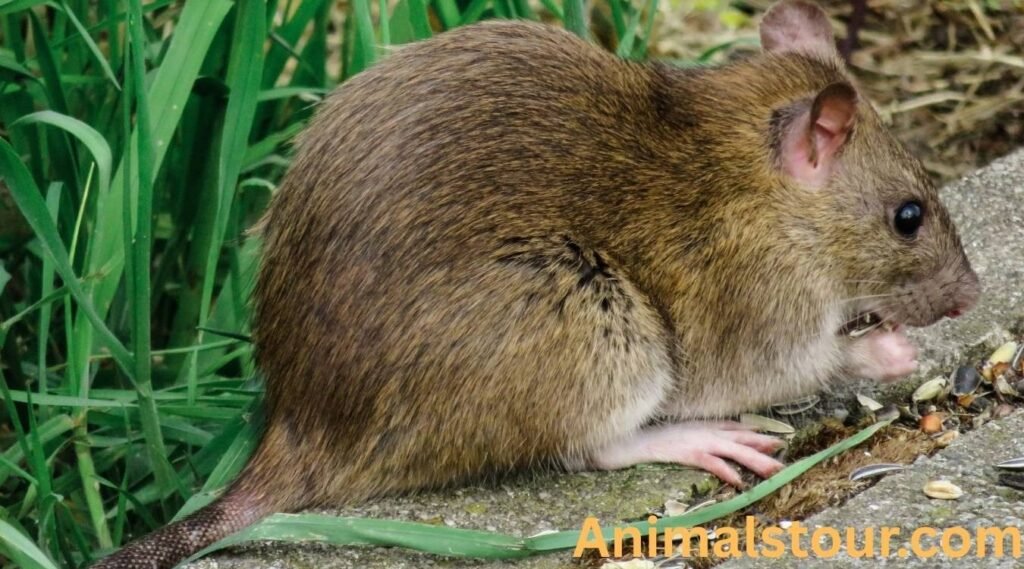
While often solitary, these nocturnal creatures can sometimes be observed in small family groups, foraging for food. In their ecosystem, prehensile-tailed rats contribute by dispersing seeds as they move through the forest and also serve as a food source for various predators, playing a role in the natural food web. Ultimately, the prehensile tail is a crucial adaptation that enables the prehensile-tailed rat to thrive in its arboreal habitat and contribute to the health of its environment.
Chameleons
Scientific name: Chamaeleonidae
Class: Reptilia
Diet: Carnivore
Chameleons are amazing reptiles known for several unique features, including their specialized prehensile tails. These remarkable animals are primarily found in the warm climates of Africa and Madagascar, though some species inhabit parts of southern Europe and Asia. Their prehensile tails are incredibly useful, acting like a fifth limb that allows them to firmly grasp branches, providing stability and security as they navigate their arboreal environments.
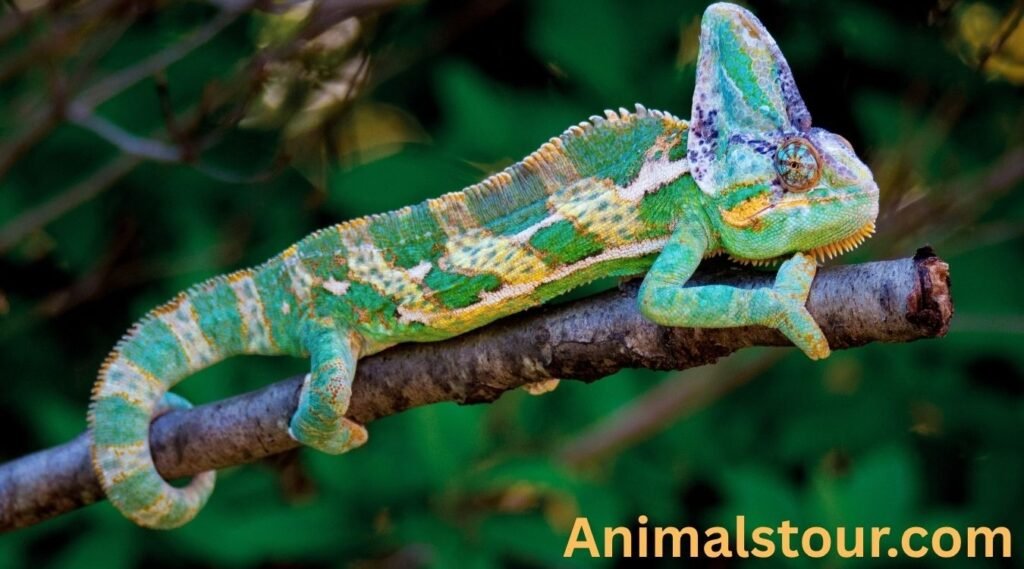
Beyond their tails, chameleons are also famous for their extraordinarily long, sticky tongues, which can be rapidly projected to capture insects from a distance with impressive accuracy. Socially, chameleons are generally solitary creatures, preferring to live alone rather than in groups. In their ecosystems, they play an important role as insect predators, helping to control insect populations and maintain ecological balance. Thus, from their versatile prehensile tail to their unique hunting methods and solitary lives, chameleons are truly distinctive contributors to their natural habitats.
Brazilian porcupine
Scientific name: Coendou prehensilis
Class: Mammalia
Diet: Herbivore
The Brazilian porcupine is a fascinating example among animals with prehensile tails, utilizing this unique feature for its arboreal lifestyle. Found primarily in the tropical forests of Brazil and other parts of South America, these nocturnal rodents spend much of their lives high above the ground. Their specialized prehensile tails act like a fifth limb, allowing them to firmly grasp branches, provide stability while climbing, and offer balance as they navigate through the dense canopy.
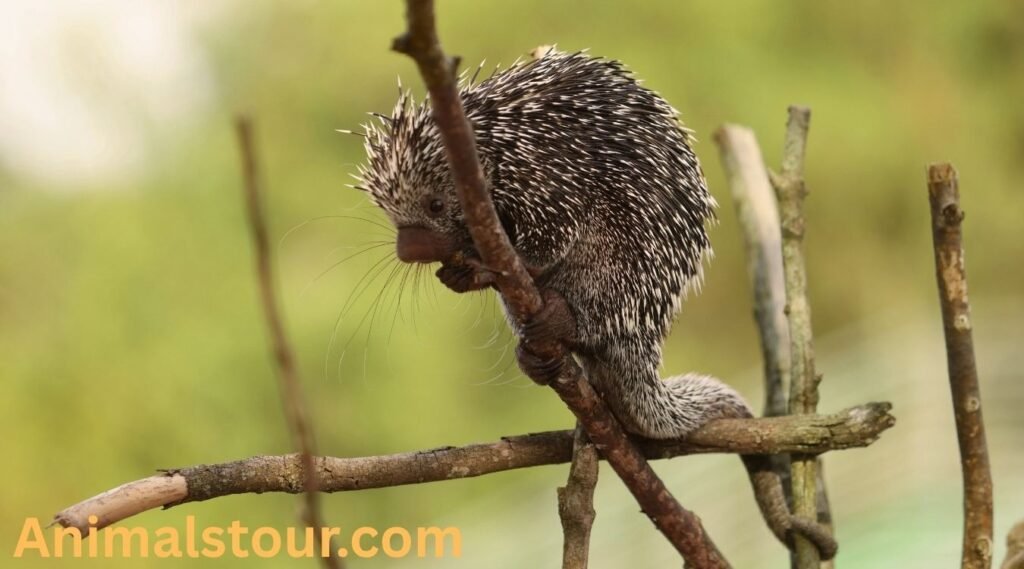
This remarkable tail also plays a role in their interactions, enabling agile movement crucial for finding mates or escaping threats, indirectly facilitating reproductive success and survival within their environment. By efficiently moving through trees to consume vegetation, the Brazilian porcupine contributes to seed dispersal and serves as a prey item for larger predators, thus playing a vital role in maintaining the balance of its forest ecosystem. Ultimately, the Brazilian porcupine’s powerful and versatile prehensile tail is indispensable for its survival, mobility, and ecological function in its natural habitat.
Seahorse
Class: Actinopterygii
Diet: Carnivore
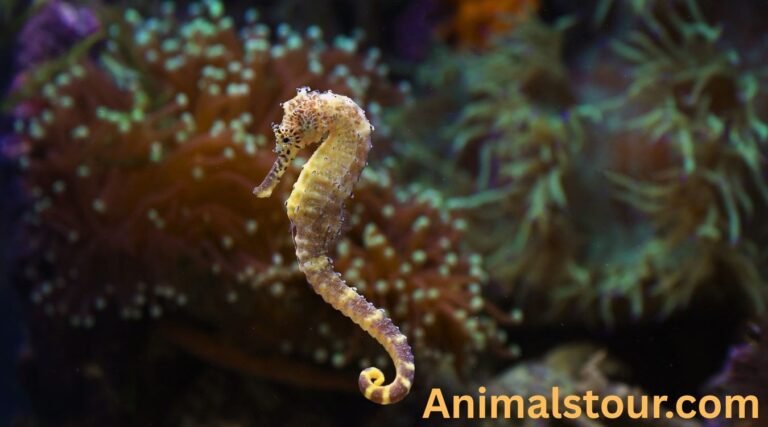
Seahorses are unique animals with prehensile tails, a remarkable adaptation that distinguishes them, much like certain mammals with prehensile tails such as monkeys. This specialized tail is incredibly helpful for seahorses, allowing them to firmly grasp onto seagrass, coral, or other stationary objects in their marine environments. This anchoring ability is crucial for their survival, preventing them from being swept away by strong currents and enabling them to ambush small crustaceans effectively.
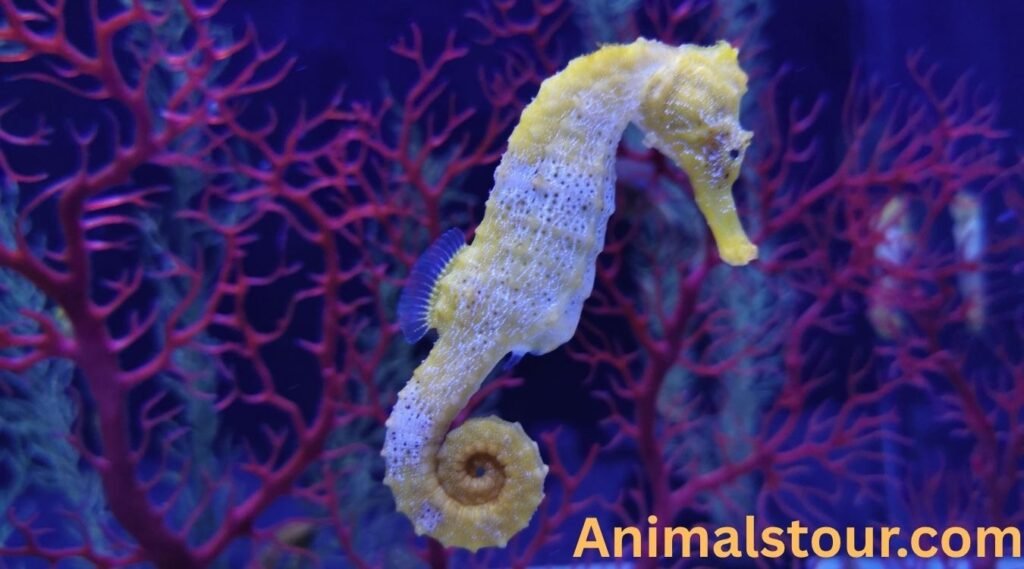
During reproduction, the male seahorse, which uniquely carries the eggs, often uses its tail to maintain a stable position while incubating its brood, ensuring the safety and development of the young. Furthermore, seahorses play an important role in the ecosystem, serving as indicators of healthy seagrass beds and coral reefs, and contributing to the food web as both predators and prey. Therefore, the prehensile tail of a seahorse is a vital tool, essential for its individual survival, reproductive success, and overall contribution to marine biodiversity.
Kinkajou
Scientific name: Potos flavus
Class: Mammalia
Diet: Omnivore
The Kinkajou is an amazing nocturnal mammal, renowned for being one of the unique animals with prehensile tails. This arboreal creature is perfectly adapted to life high in the rainforest canopy, where its diet primarily consists of ripe fruits and nectar, though it also consumes insects and small vertebrates. Its remarkable prehensile tail is incredibly important, acting like a fifth limb to grasp branches securely, allowing it to climb with agility and even hang upside down while foraging for food. This specialized tail is crucial for its survival and movement among the trees.
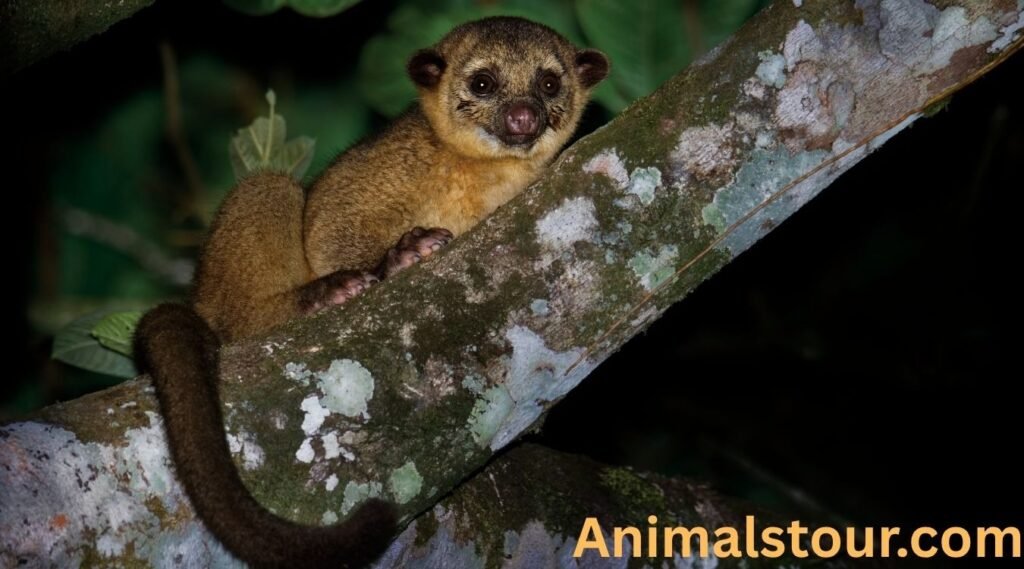
Additionally, its big eyes are essential for navigating and finding food in the dim light of its nocturnal environment. As a fruit-eater, the kinkajou plays a vital role in its ecosystem as a seed disperser, helping to regenerate the rainforest by spreading plant seeds throughout its habitat. Overall, the kinkajou’s specialized features, especially its powerful prehensile tail and keen eyesight, highlight its perfect adaptation to its environment and its importance to the health of the tropical forest.
Binturong
Scientific name: Arctictis binturong
Class: Mammalia
Diet: Omnivore
The binturong, one of the most distinctive mammals with prehensile tails, is an amazing creature often referred to as a “bearcat.” These unique animals with prehensile tails inhabit the dense tropical rainforests of Southeast Asia, where they spend most of their lives high in the canopy. Primarily omnivores, their diet mainly consists of fruits, especially figs, but they also eat small birds, rodents, eggs, and insects. Their powerful prehensile tail is incredibly important, acting like a fifth limb to grasp branches securely, enabling them to move with agility and stability through the trees.
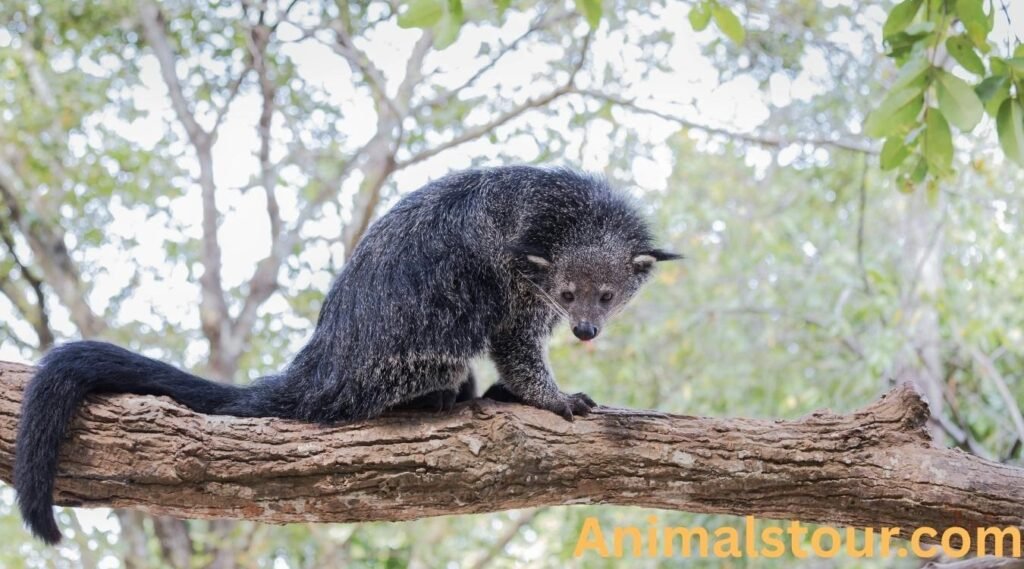
Another remarkable feature is their unusual scent, often described as smelling like hot buttered popcorn, which they use to mark territory and communicate with other binturongs. In their ecosystem, binturongs play a vital role as seed dispersers; by consuming fruits and and then depositing seeds elsewhere, they help new plants grow and contribute to the health and regeneration of the rainforest. Truly, the binturong stands out as an essential and uniquely adapted mammal within its arboreal world.
Southern Tamandua
Scientific name: Tamandua tetradactyla
Class: Mammalia
Diet: Insectivore
The Southern Tamandua stands out as an amazing example among animals with prehensile tails, perfectly equipped for its unique way of life. These medium-sized anteaters typically inhabit a range of environments across South America, from tropical forests to dry savannas, where they primarily feast on ants and termites, using their long, sticky tongues. For these remarkable animals with prehensile tails, their strong, muscular prehensile tail is an essential tool, acting as a fifth limb that allows them to grip branches securely and maintain balance while climbing trees or standing upright to tear open insect nests.
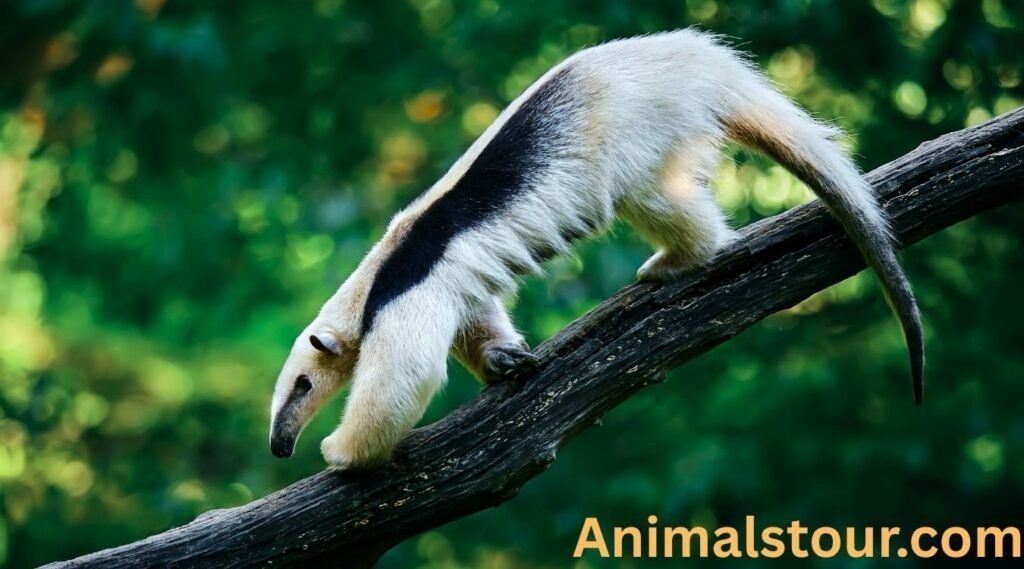
Though generally solitary creatures, their survival is profoundly linked to this powerful prehensile tail, which enables them to quickly ascend to safety from predators and efficiently access food sources high in the canopy, thus also playing a role in controlling insect populations within their ecosystem. Ultimately, the Southern Tamandua’s ability to forage, navigate, and defend itself is intrinsically tied to its extraordinary prehensile tail, making it a prime characteristic of these adept animals with prehensile tails.
Monkey-tailed skink
Scientific name: Corucia zebrata
Class: Reptilia
Diet: Herbivore
The monkey-tailed skink stands out among animals with prehensile tails for its remarkable adaptation to an arboreal life. Native to the Solomon Islands, this large lizard primarily inhabits trees, where its diet consists mainly of leaves, fruits, and flowers. The prehensile tail is incredibly important for its survival, functioning like a powerful fifth limb that allows it to grip branches securely, climb with agility, and maintain balance high above the ground.
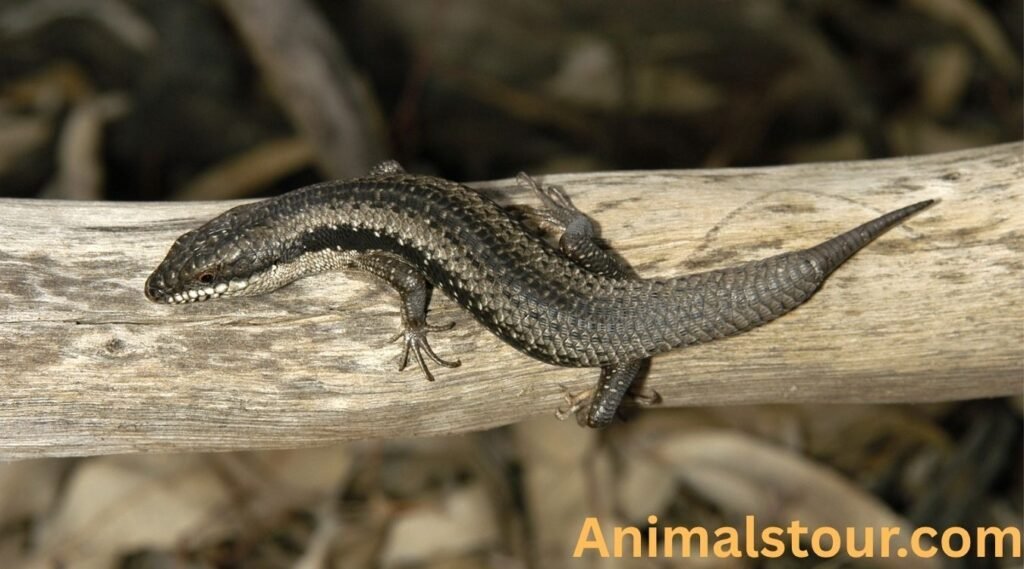
This specialized prehensile tail enables the skink to move effortlessly through dense canopy, making it an expert climber and helping it evade predators while accessing its plant-based food sources. Its role in the ecosystem involves consuming vegetation, which can contribute to seed dispersal and the natural cycling of plant matter within its forest habitat. Truly, the monkey-tailed skink exemplifies how a specialized prehensile tail is fundamental to the life and ecological success of an arboreal species.
Virginia opossum
Scientific name: Didelphis virginiana
Class: Mammalia
Diet: Omnivore
The Virginia opossum stands out among animals with prehensile tails, an adaptable marsupial widely distributed across North and Central America. These nocturnal creatures inhabit a broad range of environments, from dense forests and woodlands to suburban gardens and urban parks, often favoring areas near water. As omnivores, their diet is incredibly varied, consisting of fruits, insects, small rodents, birds, eggs, carrion, and even garden pests like slugs and snails. Their prehensile tails are a key feature, functioning like a fifth limb to help them grip branches, maintain balance while climbing, and even carry nesting materials. This remarkable tail, along with their sharp claws, is vital for their survival, allowing them to escape predators by climbing trees.
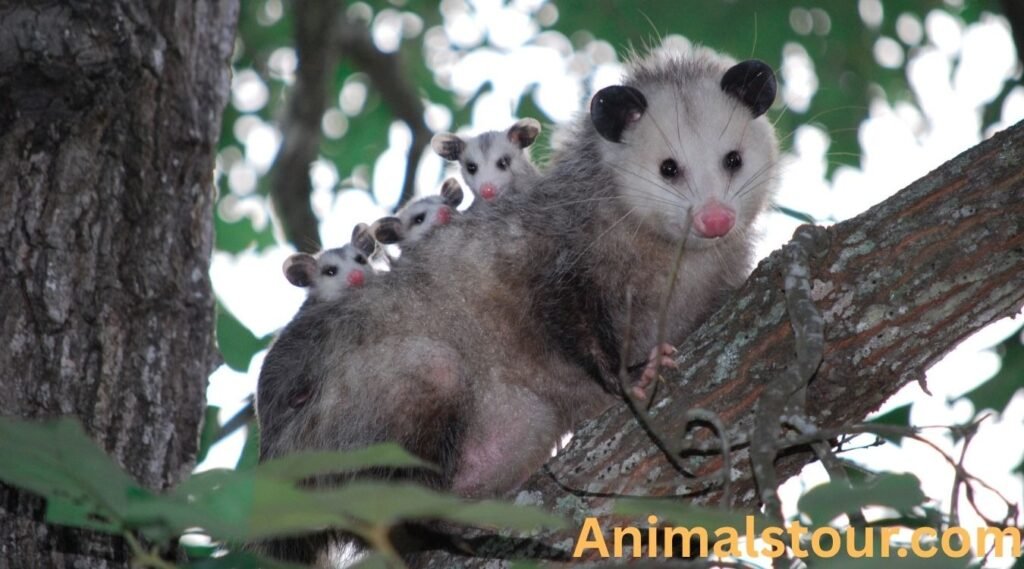
Beyond climbing, their famous “playing dead” strategy (taping) is an involuntary defense mechanism that can deter threats. In the ecosystem, opossums act as significant scavengers, cleaning up decaying matter, and also help control pest populations, contributing to the health and balance of their diverse habitats.
Eurasian Harvest Mouse
Scientific name: Micromys minutus
Class: Mammalia
Diet: Omnivore
The Eurasian Harvest Mouse is an amazing example of the small animals with prehensile tails, perfectly adapted to life among tall grasses and cereal crops across Europe and Asia. These tiny rodents are omnivores, primarily feeding on seeds, fruits, and insects found within their dense habitats. Its most distinctive feature, the prehensile tail, is crucial for its arboreal lifestyle, allowing it to grip onto stalks and branches like an extra limb.
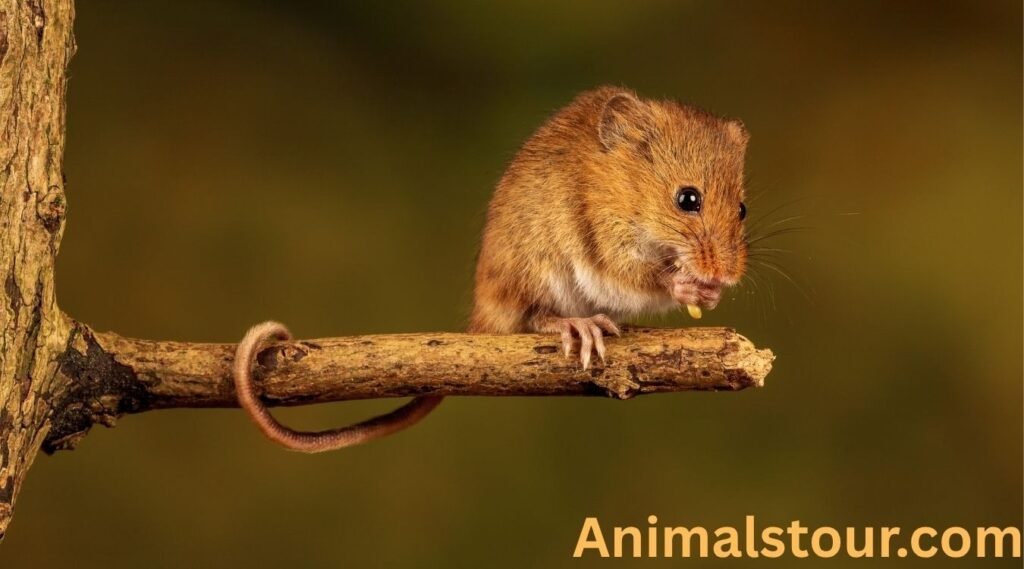
This remarkable prehensile tail enables the mouse to navigate through its complex environment with agility, helping it to avoid predators and reach food sources that would be inaccessible to other small mammals, making it a vital survival strategy. Ultimately, the prehensile tail is not just a unique characteristic but a fundamental tool that underpins the Eurasian Harvest Mouse’s survival and its role as both a seed disperser and a food source for other animals in its ecosystem.
Tree Pangolin
Scientific name: Phataginus tricuspis
Class: Mammalia
Diet: Insectivore
The Tree Pangolin stands out as one of the most fascinating animals with prehensile tails, a unique feature crucial to its arboreal lifestyle and overall survival. Primarily found in the dense forests and woodlands of Central and West Africa, these nocturnal insectivores primarily feast on ants and termites, using their long, sticky tongues to extract prey from nests. Their remarkably strong prehensile tail is not just for show, it serves as a vital fifth limb, allowing them to grasp branches securely, enabling agile movement through the canopy, providing balance, and even acting as an anchor while feeding or resting upside down.
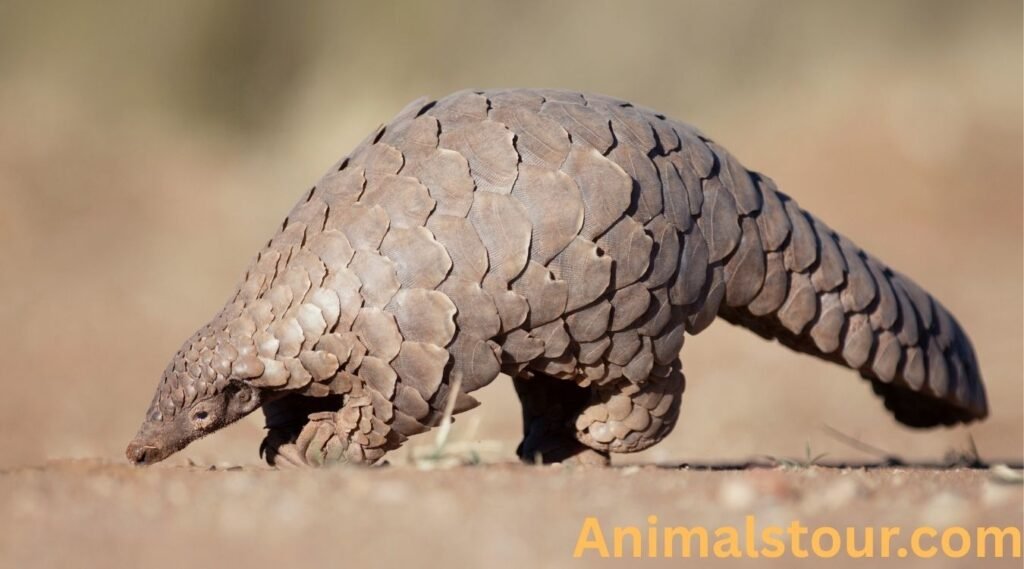
Unfortunately, tree pangolins are increasingly threatened by habitat loss and illegal poaching for their scales and meat, leading to their likely addition to endangered animals lists. As natural pest controllers, their consumption of vast numbers of insects plays an essential role in maintaining the health of forest ecosystems, and their prehensile tail is indispensable for their ability to carry out this role. Ultimately, the tree pangolin’s unique adaptation of a prehensile tail is indispensable for its survival and its continued contribution to the delicate balance of its forest home.
Green Iguana
Scientific name: Iguana iguana
Class: Reptilia
Diet: Herbivore
Green iguanas are amazing reptiles, standing out as prime examples among animals with prehensile tails. These vibrant creatures are native to the tropical rainforests and other arboreal habitats of Central and South America, where they primarily feed on leaves, flowers, and fruits, making them herbivores. They have scales on their body, A key to their successful arboreal life is their long, muscular prehensile tail, which acts like a fifth limb. This powerful prehensile tail is incredibly important for their survival, allowing them to grasp branches firmly, providing essential stability as they climb and navigate high in the canopy, which helps them escape predators and reach vital food sources.
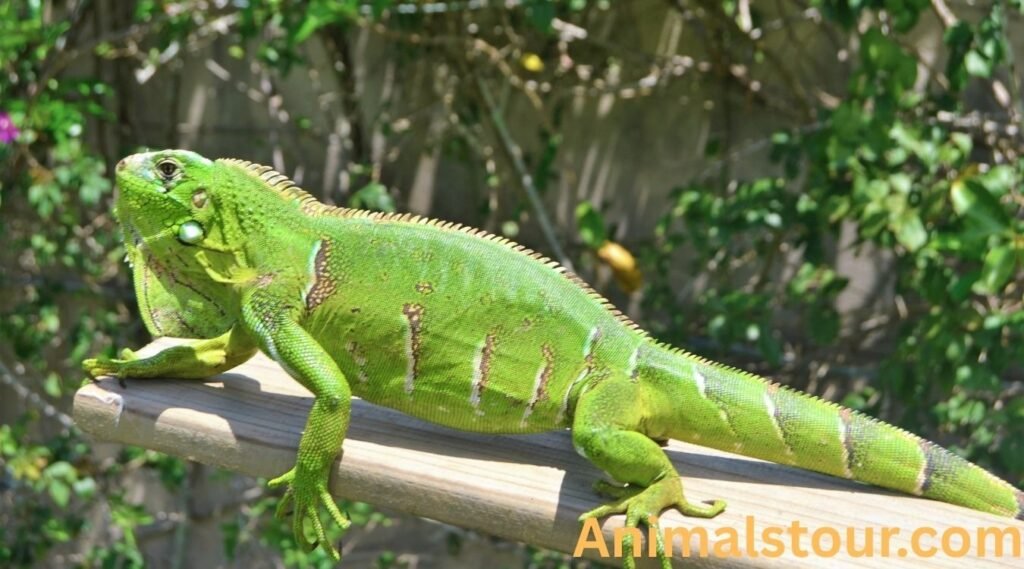
It also serves as a crucial balancing aid and can even be used as a defensive whip when threatened. Within their ecosystem, green iguanas play a significant role by consuming plant matter and dispersing seeds through their waste, thereby aiding in plant regeneration. Thus, the highly adaptable prehensile tail is not merely a unique feature but a crucial asset for the green iguana’s survival and ecological function, firmly establishing its place among remarkable animals with prehensile tails.
Howler Monkey
Scientific name: Alouatta
Class: Mammalia
Diet: Herbivore
Howler monkeys are remarkable animals with prehensile tails, perfectly adapted to their life high in the canopy of Central and South American rainforests. These large, leaf-eating primates spend nearly all their time among the branches, where their diet consists mainly of leaves, fruits, and flowers. The prehensile tail is not just a balance aid but a crucial fifth limb, strong enough to support their entire body weight while they feed, move, or rest, allowing them to navigate the complex forest with incredible security and agility.
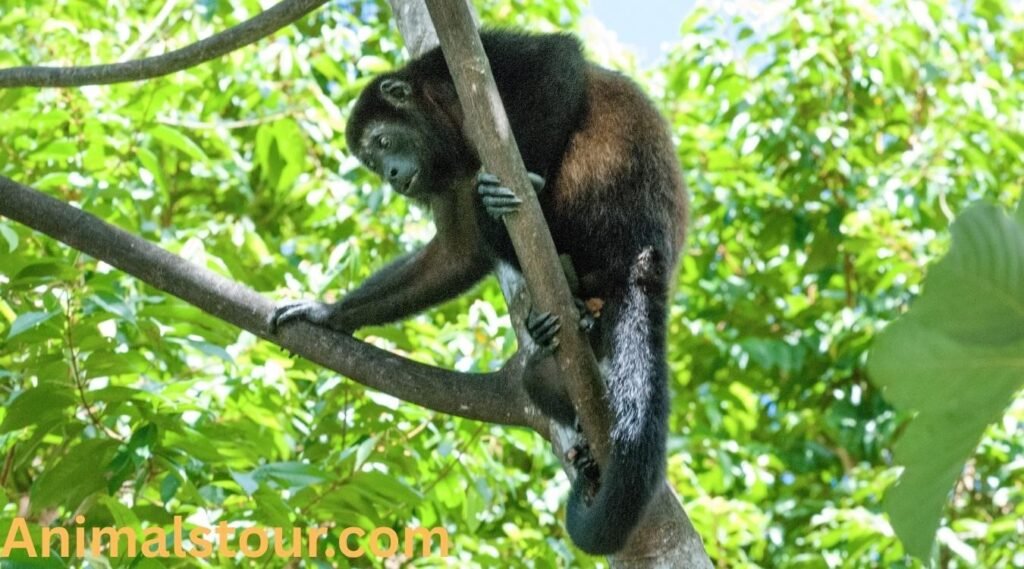
This specialized appendage also facilitates social group movement, helping maintain cohesion as families travel through the trees. As prominent mammals with prehensile tails, howler monkeys play a vital role in their ecosystem by dispersing seeds through their foraging, thus contributing to forest regeneration and biodiversity. Their powerful and versatile prehensile tail is fundamental to their arboreal existence, cementing their place as key inhabitants of their vibrant rainforest habitat.
Final Words
Animals with prehensile tails play a big part in nature. Their tails act like a “fifth hand,” helping them move through trees to find food and spread seeds. This helps new plants grow, proving that animals with prehensile tails are not just skilled climbers, but essential helpers for keeping the forest ecosystem healthy.
FAQS
Does a rat have a prehensile tail?
No, a rat does not have a truly prehensile tail. Their tails are primarily used for balance, stability, and temperature regulation, not for grasping or holding objects.
Is a snake’s tail prehensile?
Yes, some snakes do. Tree-dwelling snakes use their tails to wrap around branches and hold on, but snakes that live on the ground usually do not.
What is the largest animal with a prehensile tail?
The largest animal with a prehensile tail is the Giant Anteater. It is much bigger than any monkey with a prehensile tail, weighing up to 90 pounds (40 kg).
Are porcupine tails prehensile?
Yes, but it depends on the type. New World porcupines (found in the Americas) have prehensile tails that help them climb trees. However, Old World porcupines (found in Europe, Africa, and Asia) live on the ground and do not have prehensile tails.