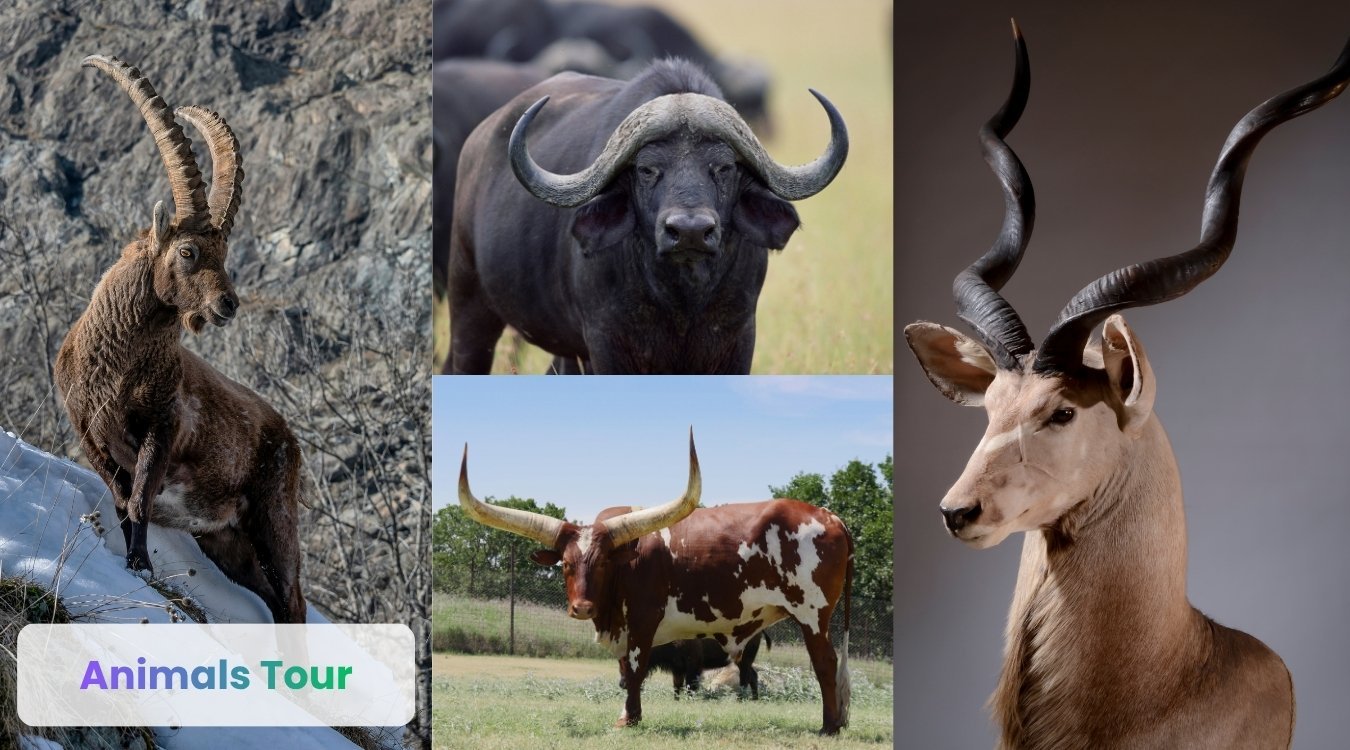
Discover Top 25 Animals with Horns(Images Included)
Horns are one of the most recognizable features in the animal world. From the long sweeping curves of the African Buffalo to the tight corkscrew spirals of the Markhor, animals with horns come in an extraordinary variety of shapes and sizes. True horns, which are the focus of this article, are permanent structures made of a bone core covered in a hard keratin sheath. They grow directly from the skull and stay with the animal for life, unlike antlers which are shed and regrown each year.
Horned animals are found across a wide range of habitats, from Arctic tundra to tropical forests to open desert, and the horns they carry serve real, practical purposes. Whether used as weapons in combat, shields against predators, or signals of strength during mating season, horns on animals are far more than just visual feature. This article explores 25 of the most well-known animals with horns, covering what makes each animal’s horns unique, how they are used, and why they matter.
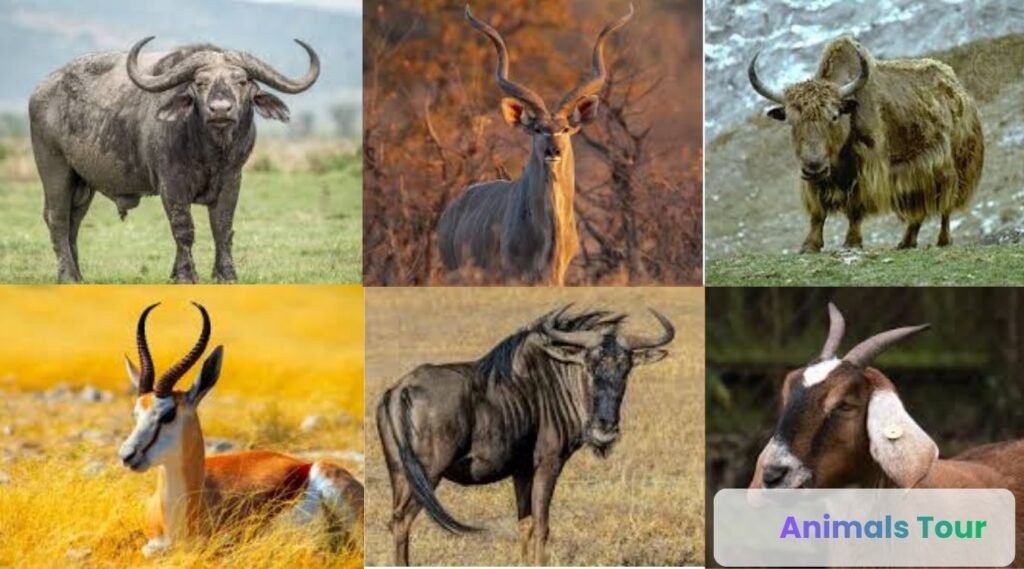
List of Animals with Horns
Below is the complete list of 25 horned animals covered in this article. These species represent a wide range of horn types, from long horns and big horns to smaller, more compact ones. All of them carry true horns, permanent and never shed, and they come from different parts of the world and very different environments.
- African Buffalo
- American Bison
- Springbok
- Domestic Goat
- Ibex
- Gemsbok
- Musk Ox
- Water Buffalo
- Saiga Antelope
- Wildebeest
- Black Rhinoceros
- Greater Kudu
- Ankole-Watusi
- Yak
- Markhor
- Chamois
- Oryx
- Gaur
- Nilgai
- Highland Cattle
- Addax
- Sable Antelope
- Topi
- Bongo
- Common Eland
African Buffalo (Syncerus caffer)
The African Buffalo is one of the most powerful and dangerous animals in Africa, and much of that reputation comes due to its horns. Both males and females carry them, but the bull’s horns are in a class of their own. They form a thick, fused base across the forehead called a boss, which is essentially a solid plate of bone and keratin. From this boss, the horns curve outward and downward before sweeping upward at the tips. In old bulls, the boss becomes so dense it can deflect considerable force.
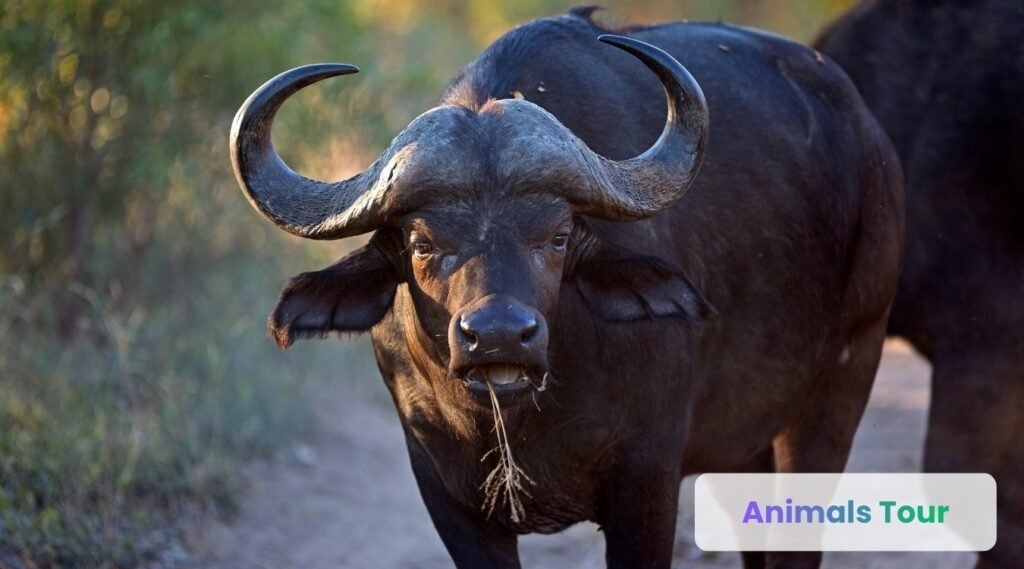
These are not decorative horns. They are weapons built for serious use, and the African Buffalo uses them accordingly. When threatened by lions, a herd will often turn and face the predators together, presenting a wall of horns that even large prides treat with caution. Males also clash head-on during competition for females, their bosses absorbing the full impact of the collision. Few animals on the continent are as dangerous when provoked, and the horns are the main reason.
Fun Fact: The African Buffalo has a well-earned reputation for being unpredictable and aggressive, even toward animals far larger than most of its natural enemies.
American Bison (Bison bison)
The American Bison carries a pair of short, upward-curving horns that grow from the sides of its massive head. Both males and females have them, though the bull’s horns are noticeably thicker and more pronounced at the base. These are true horns with a solid bone core covered in keratin, permanent and continuously present throughout the animal’s life. On an animal that can weigh over 900 kilograms, even relatively short horns deliver a considerable amount of force, and the Bison knows how to use them.
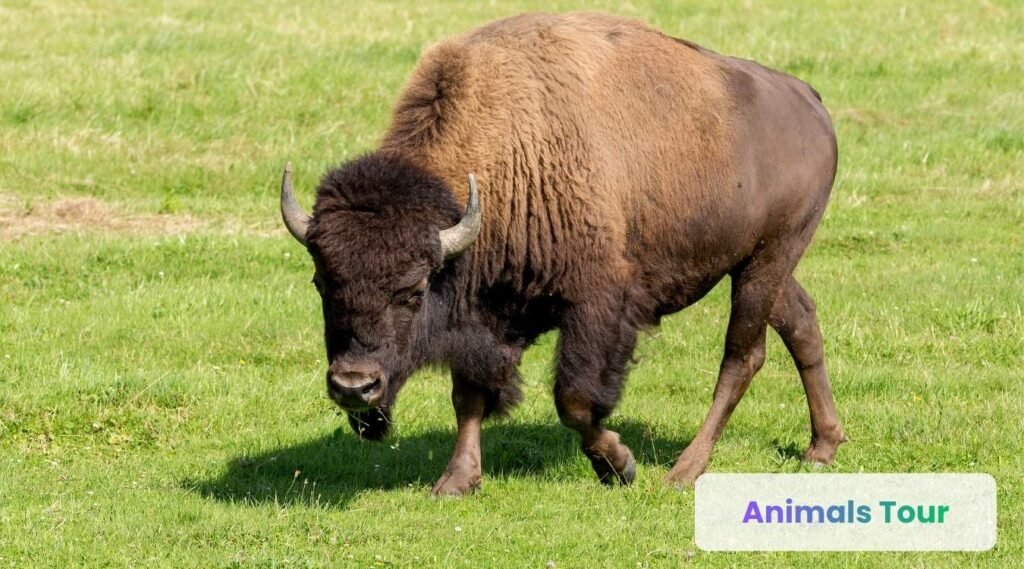
During the rut, male Bison engage in head-to-head pushing contests, using their horns and sheer bulk to establish dominance over rivals. They also use them for defense against wolves, though a healthy adult Bison has few natural predators willing to take the risk. Bison once roamed North America in tens of millions, and their near extinction in the 19th century was one of the most dramatic wildlife collapses in history. Conservation efforts have brought numbers back now.
Fun Fact: Despite its enormous size, a Bison can run at speeds up to 55 km/h, making it considerably faster than it looks.
Springbok (Antidorcas marsupialis)
The Springbok is a slender antelope found across the open plains of southern Africa, and both sexes carry horns. The horns rise from the head in a gentle outward curve before hooking inward and slightly backward at the tips, forming a lyre shape. They are not particularly long, typically between 35 and 50 centimeters, but they are well proportioned for the animal’s size and build. In males, the horns tend to be slightly thicker at the base, though the shape is similar between sexes.
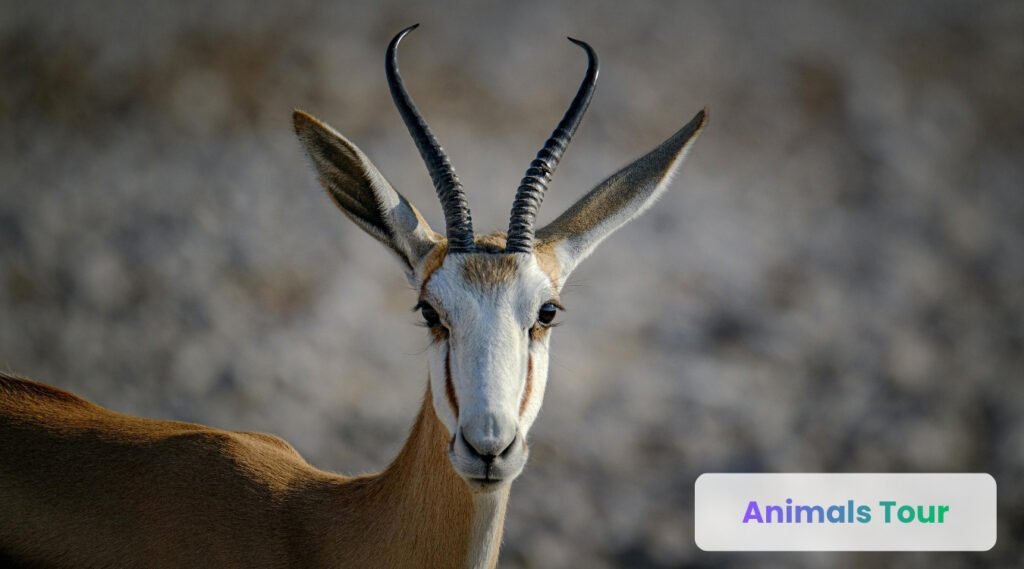
Springbok use their horns mainly for sparring with rivals during the breeding season. Males push and wrestle, locking horns to test each other’s strength. The horns also act as a visual signal of maturity and condition. The Springbok is equally well known for a behavior called pronking, where it leaps repeatedly into the air with an arched back and stiff legs. This display is thought to signal fitness to both predators and potential mates. It is the national animal of South Africa and well known antelope species.
Domestic Goat (Capra aegagrus hircus)
The domestic goat is one of the oldest domesticated animals, and many breeds still carry the horns of their wild ancestors. These horns grow from just behind the forehead and usually sweep backward, sometimes curving outward depending on the breed. Their size and shape vary widely—some goats have long, gently curved horns, while others have shorter, straighter ones. Both males and females can have horns, though they are typically larger and thicker in males.
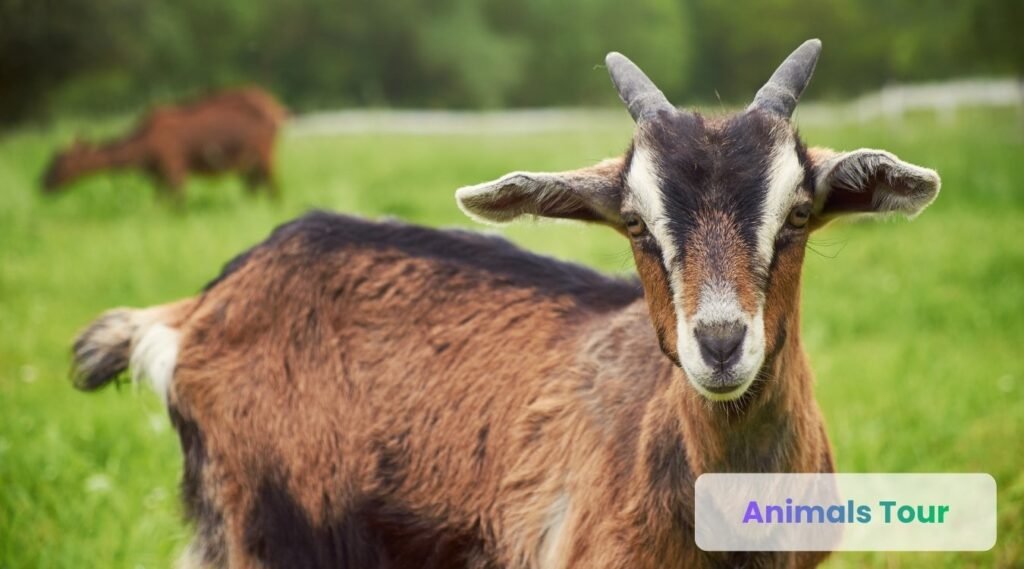
Goat horns play an important role in behavior, especially in establishing dominance. Males often clash head-on during the breeding season, using their horns in pushing and wrestling contests. While horns are useful in the wild, they are sometimes removed in domestic settings for safety. Even so, the presence of horns continues to reflect the goat’s hardy nature and its strong connection to its wild origins.
Ibex (Capra ibex)
Few horned animals make as powerful a visual impression as the male ibex. Its horns rise steeply from the skull and sweep backward in a long, dramatic arc, sometimes growing over a meter in length. The front surface of each horn is marked by bold horizontal ridges that increase with age, giving them a rugged, textured appearance. Females also have horns, but theirs are much shorter, slimmer, and more gently curved.
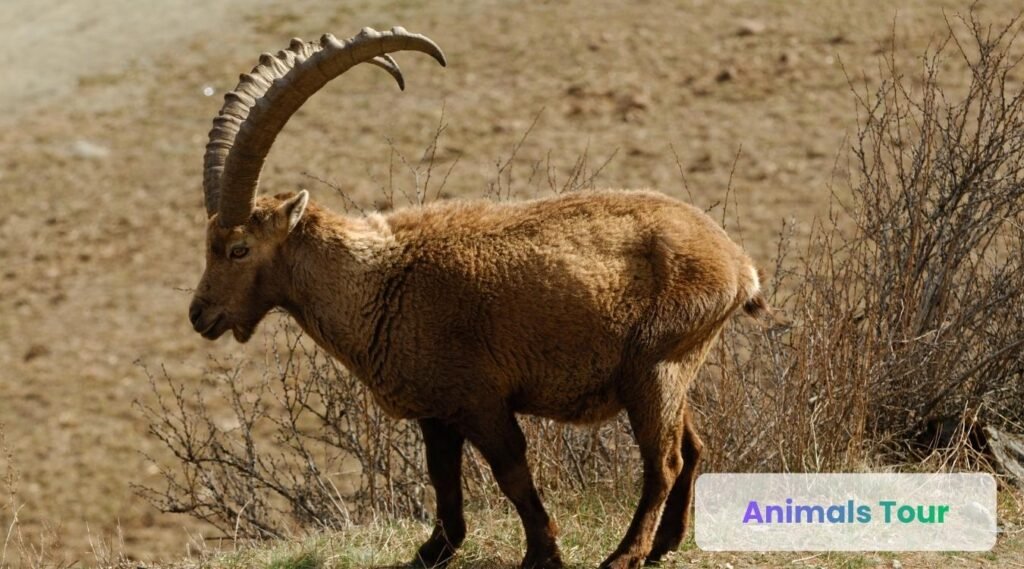
During the winter breeding season, male ibex use these impressive horns in intense clashes to establish dominance. They rear up on their hind legs and crash down against rivals, the curved horns locking together in a test of strength. Living high in rocky mountain ranges such as the Alps and parts of Asia, ibex are incredibly agile, moving with ease across steep terrain where few other animals can survive.
Fun Fact: You can estimate an Ibex’s age by counting the ridges on its horns, much like counting the rings of a tree.
Gemsbok (Oryx gazella)
The Gemsbok is a large Oryx species found across the arid regions of southern Africa, and its horns are known for their length and near-perfect straightness. Both males and females carry horns, and the female’s are often longer and more slender than the male’s. The horns can reach over 1.2 meters and are nearly straight, rising from the skull with only a slight backward lean. They are deeply ridged for most of their length and taper to a sharp, pointed tip that makes them genuinely dangerous.
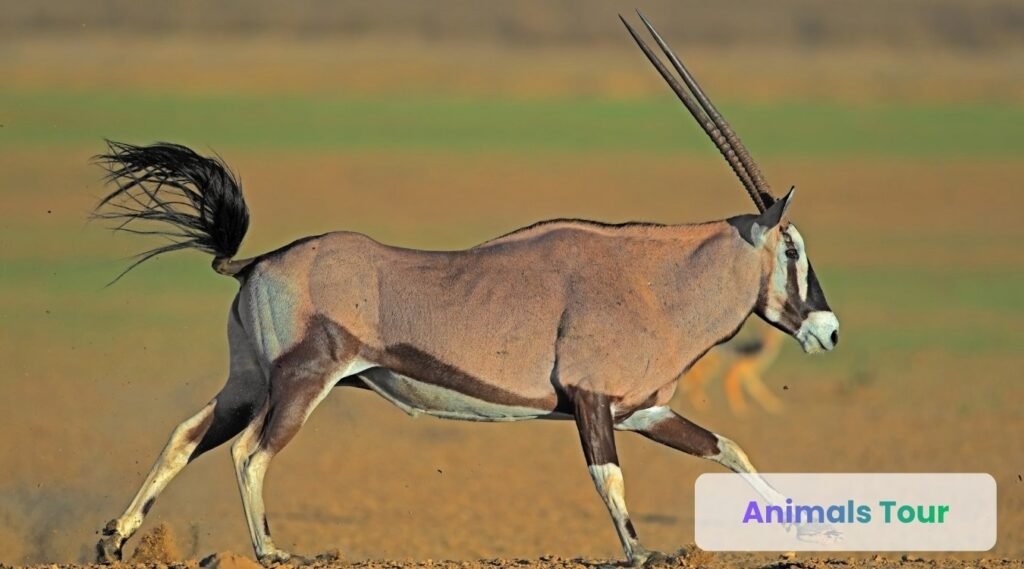
The Gemsbok uses its long horns for defense in a way few other animals can match. When facing a predator, it lowers its head and presents both horns directly forward, pointing a pair of long sharp spikes that even lions approach with caution. Males spar with each other by crossing horns in a fencing motion, testing strength without the risk of a direct stabbing hit.
Fun Fact: The Gemsbok is the national symbol of Namibia and appears on the country’s coat of arms, reflecting how central this animal is to the identity of the region.
Musk Ox (Ovibos moschatus)
The Musk Ox has one of the most distinctive horn shapes among horned animals. The horns emerge from the center of the skull and curve sharply downward along the sides of the head before hooking outward and upward at the tips. In adult males, the bases of the horns form a broad, flat shield across the forehead, similar in function to the boss of the African Buffalo. When two bulls charge each other head-on, those reinforced bases absorb the full force of the collision. The sound of two Musk Ox clashing carries clearly across open Arctic tundra.
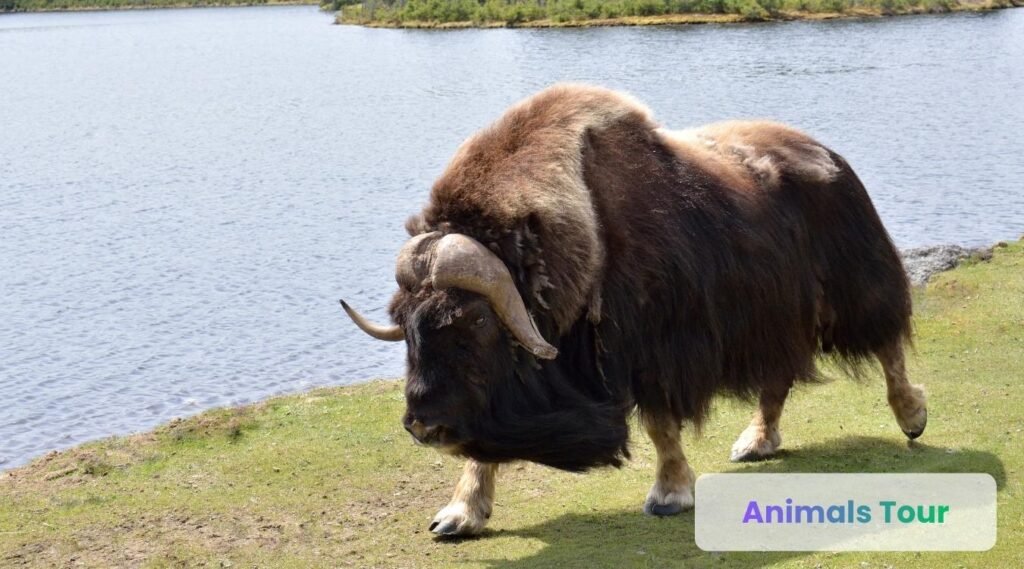
Both males and females carry horns, though the male’s are much larger and more dramatically shaped. Their use in defense is particularly impressive. When wolves threaten, the herd forms a tight outward-facing circle with horns pointing outward and calves protected in the center. This formation makes it very difficult for predators to isolate any individual. Musk Oxen are built for extreme cold, with a thick double coat that insulates against Arctic winters. They are among the few large mammals that remained in the Arctic throughout the last ice age.
Water Buffalo (Bubalus bubalis)
Among all animals with big horns, the Water Buffalo stands out for sheer span. Wild individuals can have horns stretching over 1.5 meters from tip to tip, sweeping outward and then curving backward and upward in a wide crescent shape. The horns are heavily ridged along their length, and the base is broad and solid. Domestic Water Buffalos tend to have shorter, less dramatic horns than their wild counterparts, but some individuals still carry a genuinely impressive spread. Both sexes carry horns.
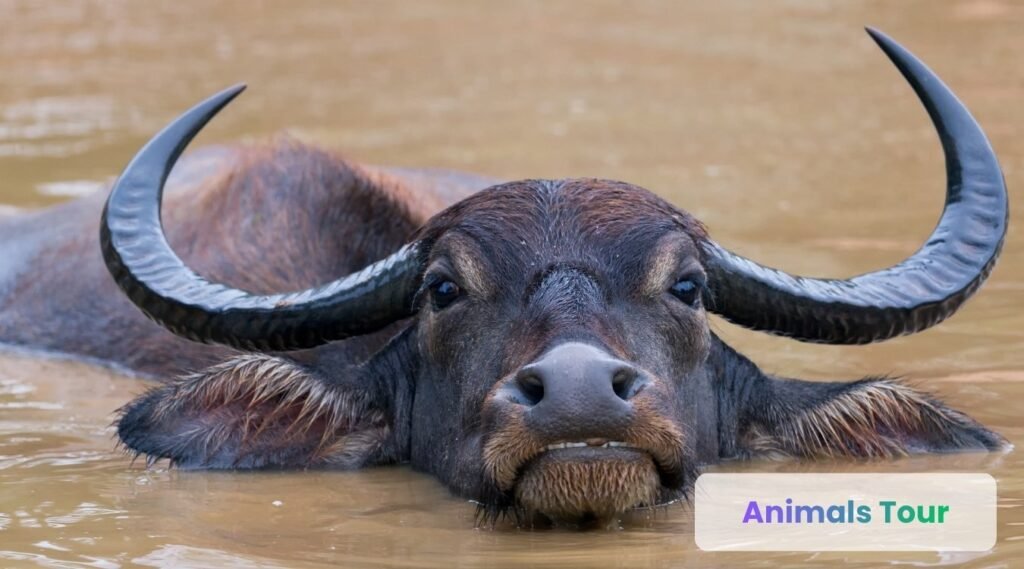
In the wild, Water Buffalo use their horns primarily for defense against tigers and crocodiles. A full-grown buffalo is capable of fighting off a tiger, and the wide-sweeping horns are central to that ability. Males also use them in competition for females, engaging in head-to-head pushing and horn-locking contests. Wild Water Buffalo are now endangered, found mainly in South and Southeast Asia. Their domestic relatives, however, number in the hundreds of millions and remain among the most important working animals across Asian agriculture.
Fun Fact: The Water Buffalo holds the record for the widest horn span of any living bovine, with some wild individuals exceeding 1.8 meters from tip to tip.
Saiga Antelope (Saiga tatarica)
The Saiga Antelope is an unusual-looking animal, most recognized for its enlarged, bulbous nose. Only the males carry horns, and those horns are quite distinctive among the different types of horns found in antelopes. They rise almost vertically from the skull, are semi-translucent with a waxy amber appearance, and are heavily ringed with horizontal ridges along most of their length. They typically reach between 20 and 40 centimeters, making them relatively small horns compared to many other species, but they are striking in their color and texture.
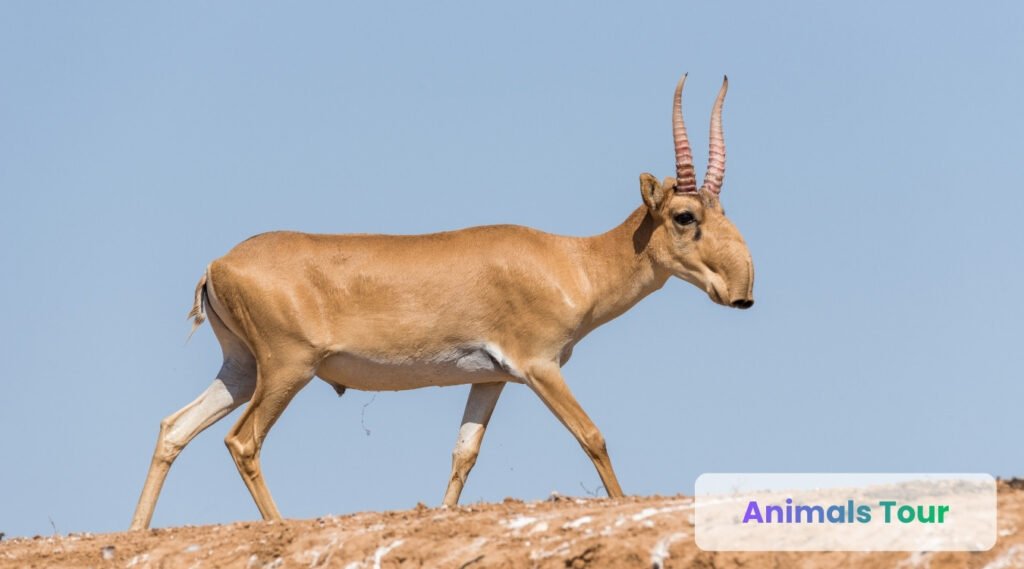
Male Saiga use their horns in combat during the rut, which is short and intense. Males fight aggressively for groups of females, clashing horns and chasing rivals across the steppe. The species has faced catastrophic declines in recent decades, partly due to hunting for the horns and partly due to a mass mortality event in 2015 where a bacterial disease killed around 200,000 animals within just a few weeks. The Saiga remains critically endangered across much of its former range, and conservation efforts are ongoing.
Wildebeest (Connochaetes taurinus)
The Wildebeest, also known as the Gnu, has horns that curve outward from the skull and then bend upward at the tips, forming a shape that looks somewhat like a pair of brackets. Both males and females carry horns, though the male’s are thicker and more curved at the base. The horns emerge from a raised bony platform on the skull, and in older males this area becomes quite pronounced. They are sturdy horns built more for pushing and locking than for piercing, which suits the animal’s fighting style.
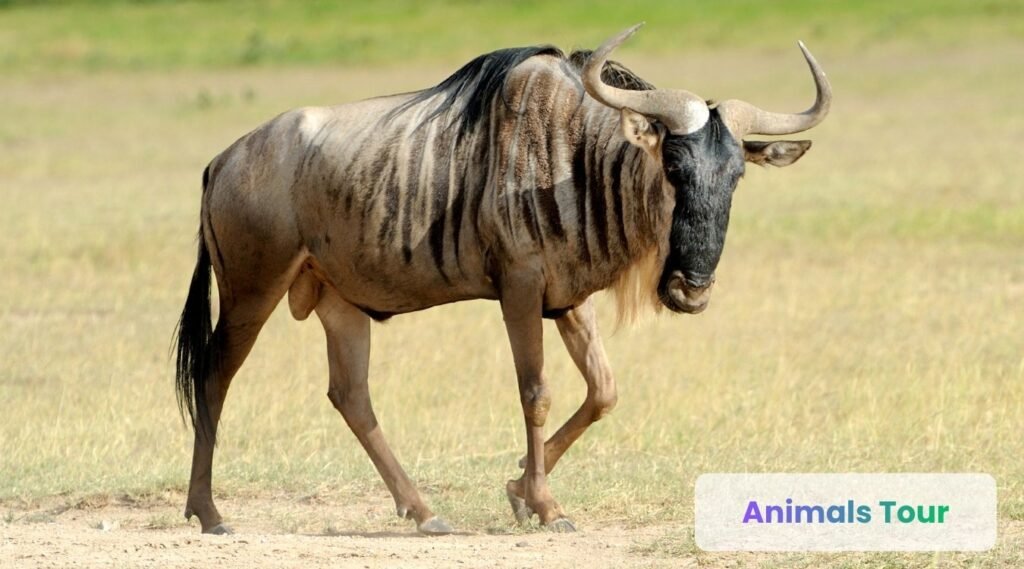
Wildebeest are best known for their enormous annual migration across the Serengeti and Masai Mara, one of the largest animal movements on earth involving over a million individuals. During the rut, males become highly territorial, using their horns to push rivals out of the temporary areas they hold. The horns are also used in predator defense, and a healthy adult Wildebeest is capable of injuring lions, hyenas, and wild dogs that misjudge their approach.
Fun Fact: Wildebeest calves can stand and run within minutes of being born, a critical survival adoptability in their environment.
Black Rhinoceros (Diceros bicornis)
The Black Rhinoceros carries horns unlike those of any other animal with horns on this list. They are made entirely of keratin, with no bone core at all, and they grow directly from the skin over the nasal bones rather than from the skull itself. The front horn is the longer of the two and can exceed a meter in some individuals, though most are considerably shorter. It grows continuously throughout the animal’s life, and if damaged, it can regrow over time.
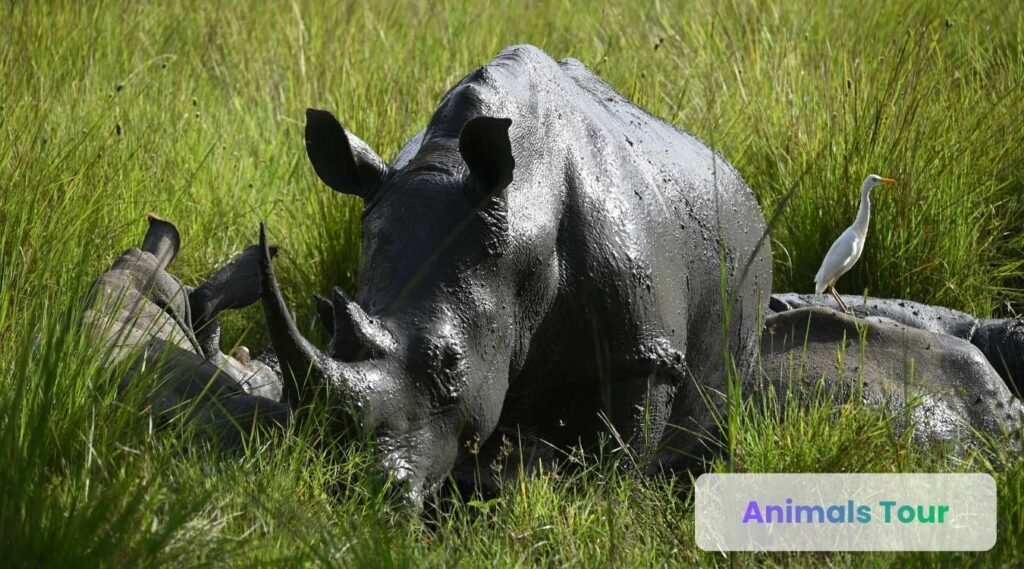
Black Rhinos use their front horn for a range of daily tasks. They dig for water and mineral-rich soil, break branches to reach food, and use the horn aggressively in territorial disputes and against predators. Females use their horns to protect calves from lions and hyenas. Sadly, it is the horn that has made this animal a target for poachers. Demand in certain markets has driven the Black Rhinoceros to critically endangered status, with fewer than 6,000 individuals remaining in the wild today.
Fun Fact: A rhino’s horn is made entirely of compacted keratin, the same protein found in human fingernails, and can regrow if removed or damaged.
Greater Kudu (Tragelaphus strepsiceros)
The Greater Kudu has some of the longest horns in the animal kingdom. Only males carry them, and they grow in a dramatic open spiral that twists upward from the skull. A mature bull’s horns can reach 1.8 meters in length measured along the curve, making them among the longest horns of any antelope species in the world. The spiral makes an impressive two and a half turns in a fully grown male. The horns are pale grey or brown, smooth along most of their length, with slight ridges near the base.
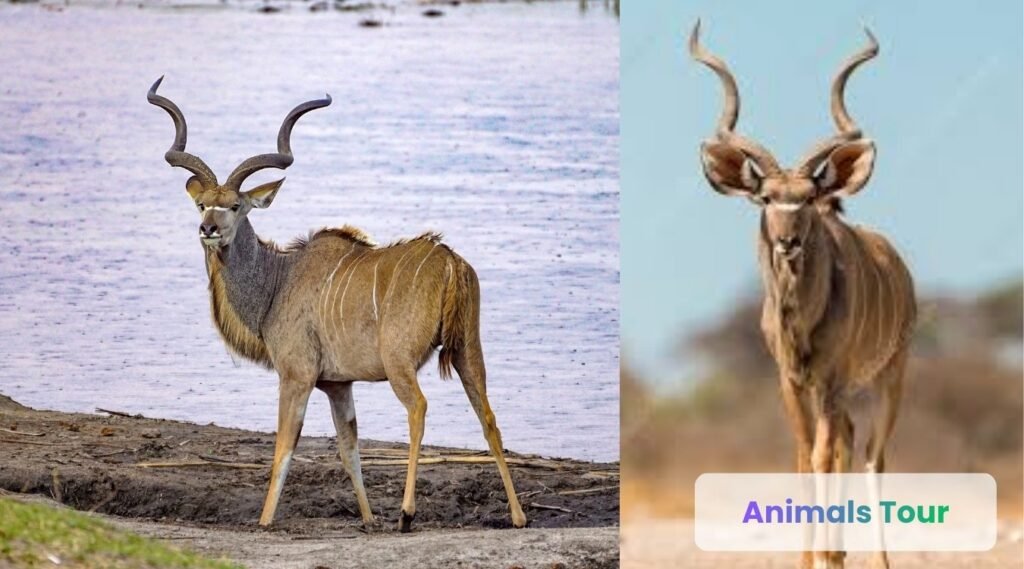
Despite their dramatic size, Kudu bulls rarely cause each other serious injury when fighting. The spiral shape means the horns interlock when two males clash head-on, turning what could be a dangerous collision into a pushing and twisting contest of strength. Occasionally, the horns lock so tightly that the two animals cannot separate, though this is not common. Greater Kudu live in wooded savannas across eastern and southern Africa, where their striped coats provide surprisingly effective camouflage among trees.
Fun Fact: Engineers have studied the interlocking spiral design of Kudu horns as inspiration for structural designs that need to absorb and redirect force efficiently.
Ankole-Watusi (Bos taurus)
The Ankole-Watusi is a breed of domestic cattle from central Africa, and it carries what are arguably the most visually impressive horns of any domestic animal with horns on its head. The horns grow outward from the skull in a wide sweeping arc that can span over 2.4 meters from tip to tip in exceptional individuals. They are not just wide but also substantial, with a thick base that narrows gradually toward the long pointed tips.
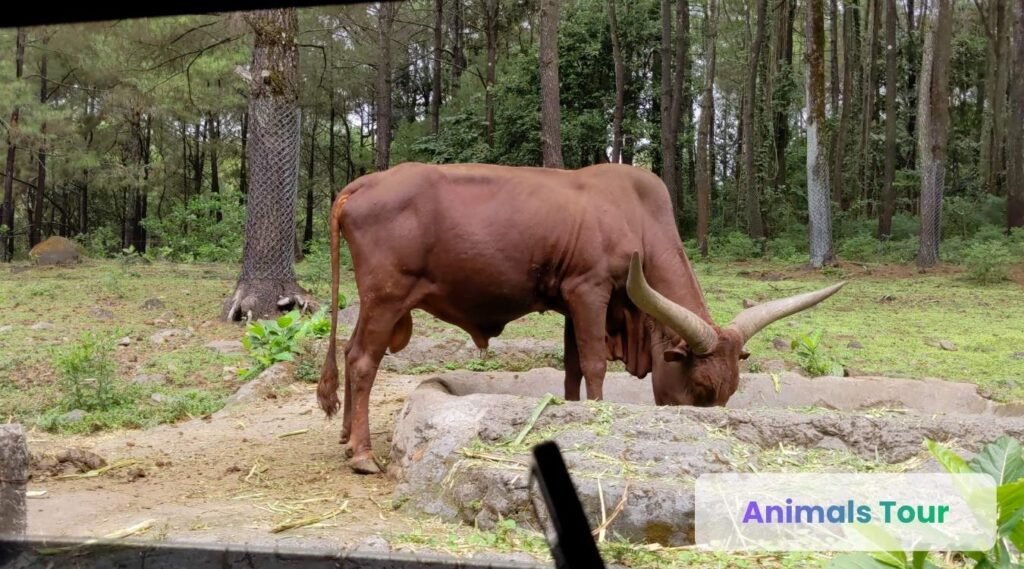
Beyond appearance, the horns serve a practical biological purpose. They have a rich blood supply running through them, and as blood circulates through the large surface area of the horn, heat is radiated away from the body, helping the animal stay cool in the African heat. This natural temperature regulation is a useful adaptation for cattle living on hot open grasslands.
Fun Fact: The hollow horn core of the Ankole-Watusi has an extensive network of blood vessels that helps regulate temperature.
Yak (Bos grunniens)
The Yak is a large, heavily built bovine native to the Tibetan Plateau and surrounding mountain ranges. Both males and females carry horns, though the bull’s are considerably larger and more curved. In males they can reach around 95 centimeters in length. Wild Yaks tend to have larger, more robust horns than their domestic counterparts, which have been selectively bred over generations for other traits.
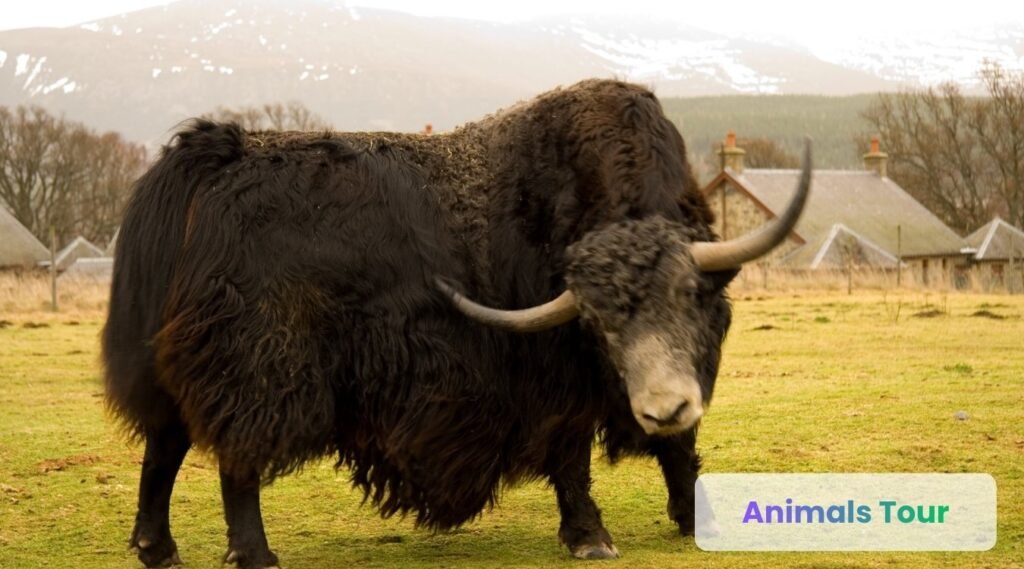
Yak horns are used in defense against predators, particularly snow leopards and wolves, and in male-to-male combat during the rut. Wild Yaks are powerful animals and are capable of defending themselves and their calves effectively. Domestic Yaks have been central to human life on the Tibetan Plateau for thousands of years, providing milk, meat, fiber, and the ability to carry loads at altitudes where most other large animals cannot function. The horns of domestic Yaks are sometimes shaped into utensils and decorative objects.
Markhor (Capra falconeri)
The markhor is one of the most distinctive horned animals, known for its long corkscrew-shaped horns that twist upward from the skull. In large males, these spiraling horns can exceed 1.5 meters in length, forming a tight, elegant spiral that looks almost sculpted. Their pale color and smooth surface add to their unique appearance. Females also have horns, but they are much shorter, thinner, and only lightly twisted compared to those of males.
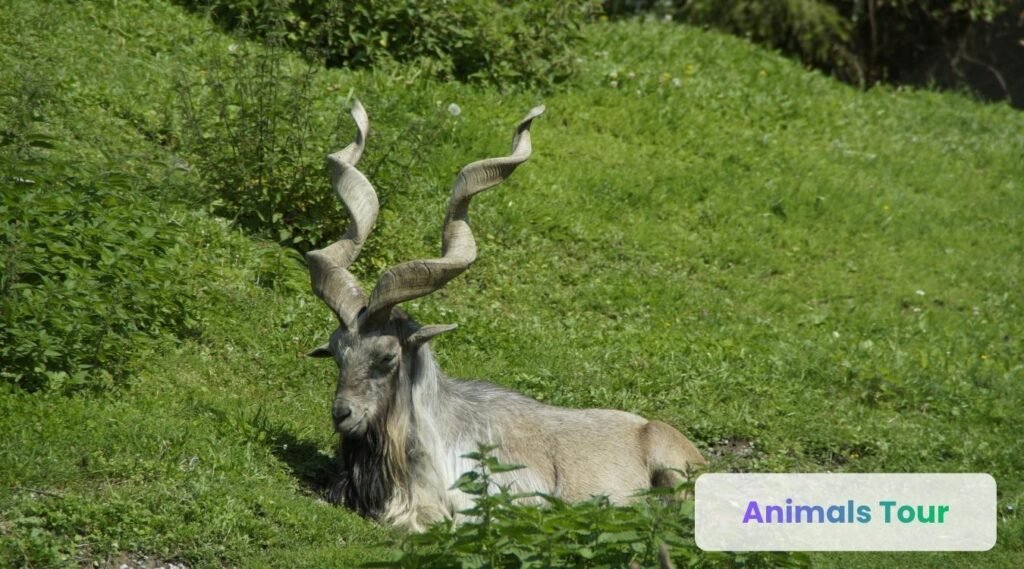
During the breeding season, male markhors engage in dramatic clashes, rearing up and locking their spiral horns in tests of strength. This unique shape helps prevent the horns from slipping during impact. Found in the rugged mountains of Pakistan, Afghanistan, and nearby regions, markhors are highly adapted to steep terrain and high elevations. As the national animal of Pakistan, they represent the strength and beauty of the country’s wild mountain landscapes.
Fun Fact: The name Markhor comes from Persian and loosely translates to snake eater, a reference to the corkscrew shapes of horns that resembles coiled snake.
Chamois (Rupicapra rupicapra)
The Chamois is a mountain-dwelling goat-antelope found across the Alps and other European mountain ranges, and its horns are short but distinctive in shape. They rise almost straight up from the skull before hooking sharply backward at the tip, forming a tight hook similar to a question mark. Both males and females carry horns, and they are present from a young age. At typically 15 to 25 centimeters, these are small horns compared to many others on this list, but the hooked tip gives them a character of their own.
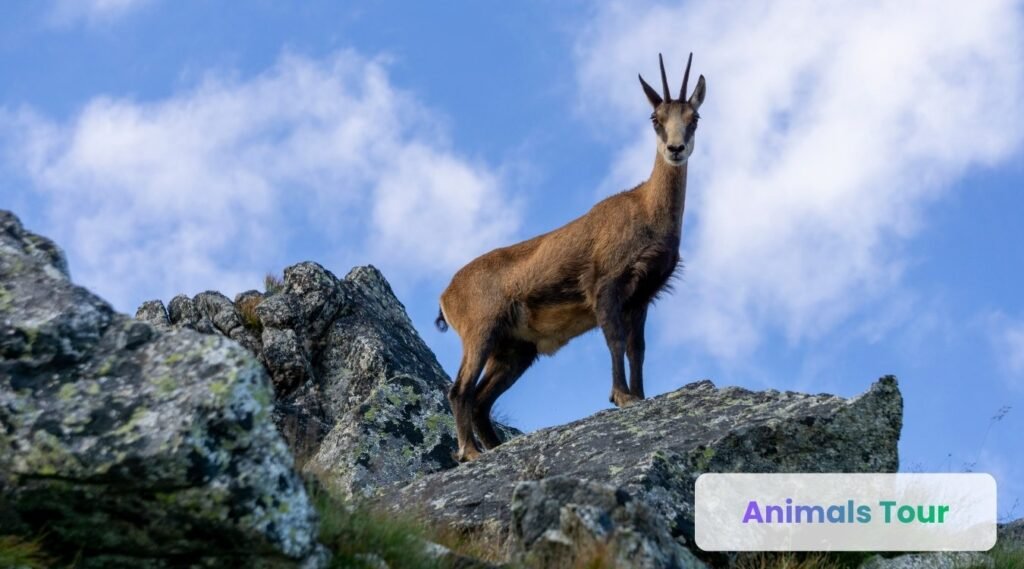
The hook at the tip helps the horns interlock during fights. This prevents them from slipping and reduces the risk of serious injury. Chamois also use their horns to show dominance and defend feeding areas. They live on steep, rocky slopes where food can be limited. These agile animals move easily across near-vertical rock faces. Their hooves are specially adapted, with hard edges for grip and soft inner pads for better friction.
Oryx (Oryx gazella)
The oryx is an antelope known for its long, straight horns that can grow up to 1.2 meters in length. These horns rise almost perfectly upright, giving the animal a sharp, elegant profile. Both males and females have horns, though females often carry slightly longer and slimmer ones. The horns are ridged along most of their length and taper into smooth, pointed tips, making them look like natural spears.
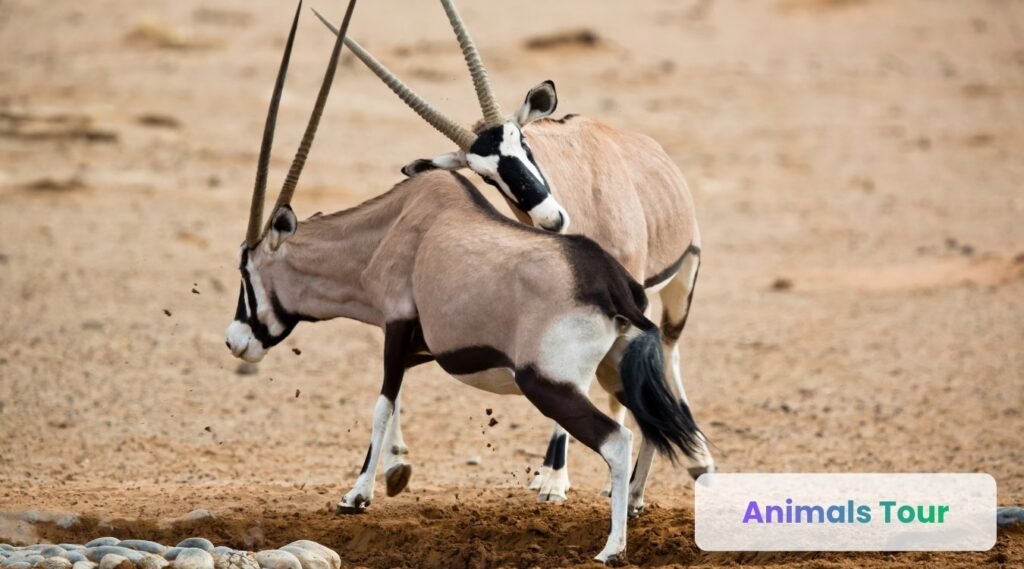
These horns are powerful defensive tools. When threatened, an oryx lowers its head and aims both horns forward, creating a dangerous barrier for predators. Instead of crashing head-on, males engage in controlled sparring, crossing their horns in a careful, fencing-like manner. Living in harsh desert environments, the oryx is also highly resilient, able to survive extreme heat and scarce water while maintaining its strength and agility.
Fun Fact: When viewed from the side, an Oryx can appear to have only one horn as the two overlap. Many historians believe this gave rise to the ancient unicorn legend.
Gaur (Bos gaurus)
The gaur is the largest wild bovine in the world, and its horns reflect its immense size and strength. These horns are thick and solid, rising high above the head with a broad, sturdy base. In large males, they can reach about 90 centimeters in length, gradually narrowing into firm, pointed tips. Both males and females have horns, but those of the males are heavier, more developed, and more prominent overall.
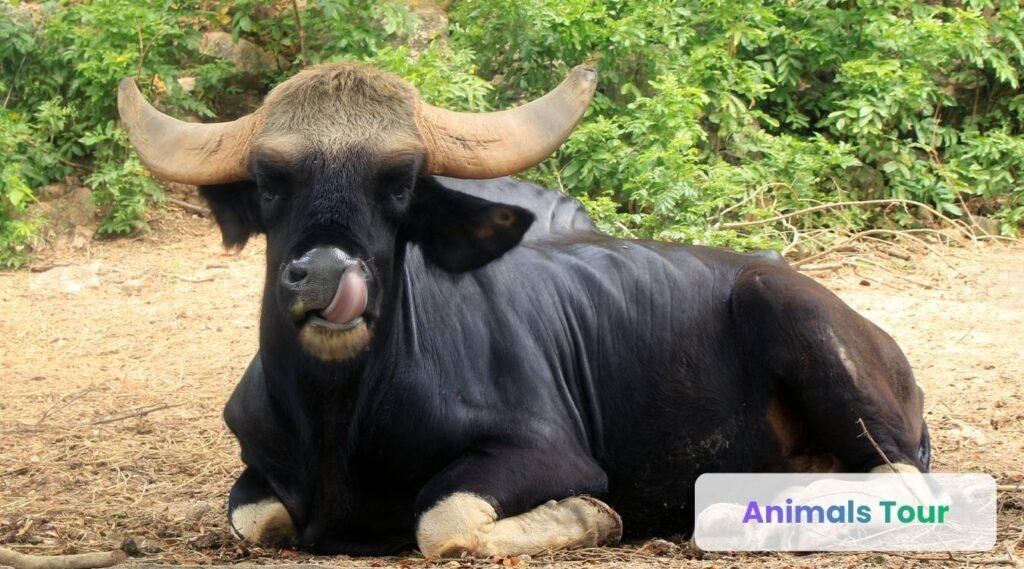
Gaur live in the forests and grasslands of South and Southeast Asia. Adult bulls are so large that they face very few natural threats. Their horns are mainly used during contests between males competing for breeding rights, and these encounters can be intense when rivals are evenly matched. Younger males usually stay away from dominant bulls until they are strong enough to challenge them.
Nilgai (Boselaphus tragocamelus)
The Nilgai is the largest antelope in Asia, and only the males carry horns. They are relatively short and conical, typically between 15 and 24 centimeters. The horns are smooth, dark in color, and taper to a sharp point. These small horns may not draw as much attention as the long horns of the Kudu or the sweeping spread of the Water Buffalo, but they are solid and effective for what the Nilgai actually needs them for.
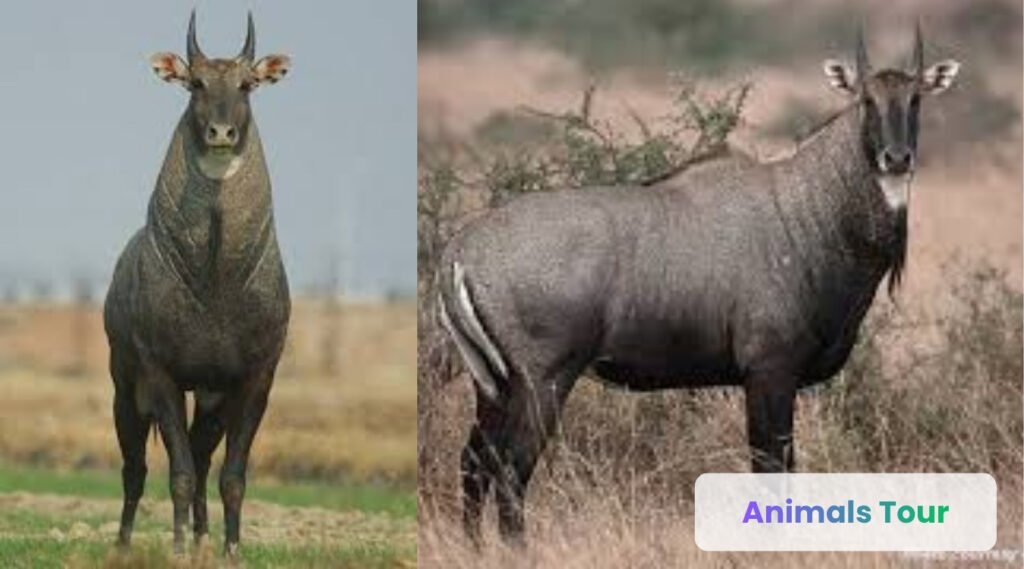
Male nilgai fight in a unique way by dropping to their knees and clashing horns in a low, forward-leaning posture. This unusual fighting style is rarely seen in other horned animals and suits their short, compact horns, which are adapted for close, ground-level combat. Native to the Indian subcontinent, nilgai are widely found across northern India and Nepal, where they have adapted well to both forested regions and agricultural landscapes.
Fun Fact: Nilgai are the only members of their genus and have no close living relatives among Asian antelopes.
Highland Cattle (Bos taurus)
Highland cattle are one of the oldest registered breeds in the world, originating from the Scottish Highlands. They are well known for their long, shaggy coats and prominent horns. Both males and females have horns, and in some individuals, the span from tip to tip can exceed a meter. The horns are smooth and pale in color, often cream or white, and they taper to fairly sharp points.
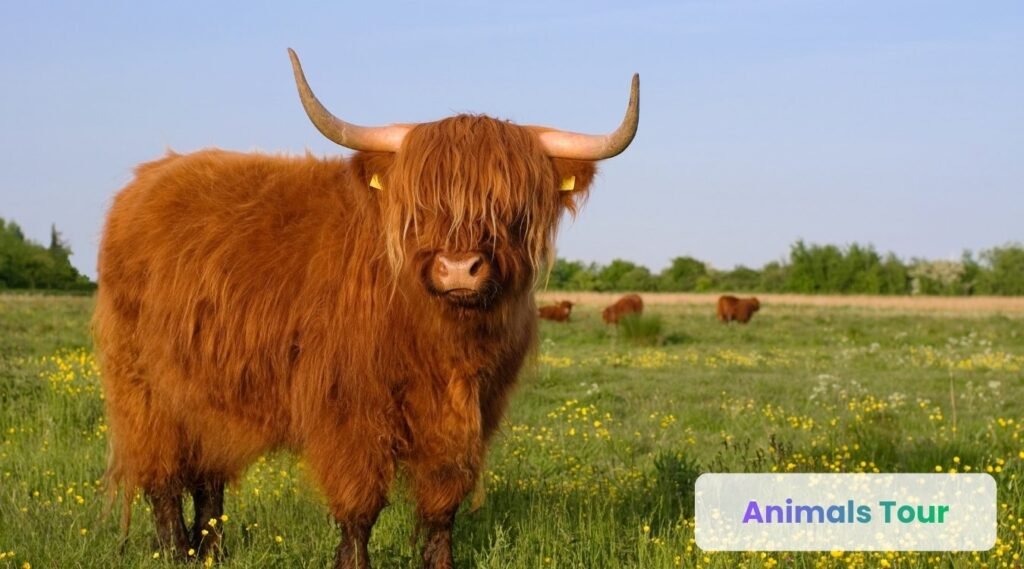
In their native environment, Highland Cattle use their horns to move snow and dig through frozen ground to reach vegetation buried underneath, a survival behavior known as cratering that is important during harsh Highland winters. This breed is highly hardy, thriving in cold, wet, and harsh conditions while needing less extra feed than most cattle.
Addax (Addax nasomaculatus)
The Addax is a critically endangered desert antelope of the Sahara, with both males and females bearing long, slender, spiraling horns that can exceed 80 cm. These pale horns match its sandy coat, which becomes lighter in the dry season, and give the animal an elegant appearance suited to its harsh desert habitat.
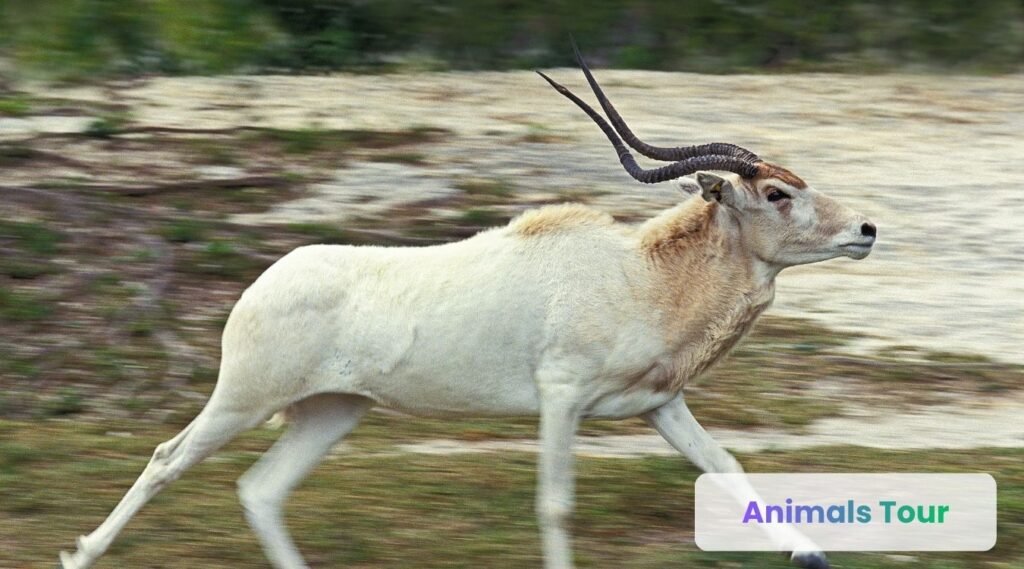
Males use their twisted horns to lock and push during breeding-season fights. The Addax is extremely well adapted to desert life, surviving with little to no free water by getting moisture from plants. However, it is now nearly extinct in the wild, with only a very small population remaining in Niger.
Fun Fact: Ancient Egyptian wall paintings depict the Addax being kept in captivity as a semi-domesticated animal, suggesting it was once numerous enough to be herded.
Sable Antelope (Hippotragus niger)
The Sable Antelope is a striking African species known for its long, heavily ridged horns that sweep backward in a dramatic curve. In mature males, these horns can exceed 1.6 meters, making them among the longest of any African antelope. Both sexes have horns, but males’ are longer and more strongly curved, with deep ridges along most of their length.
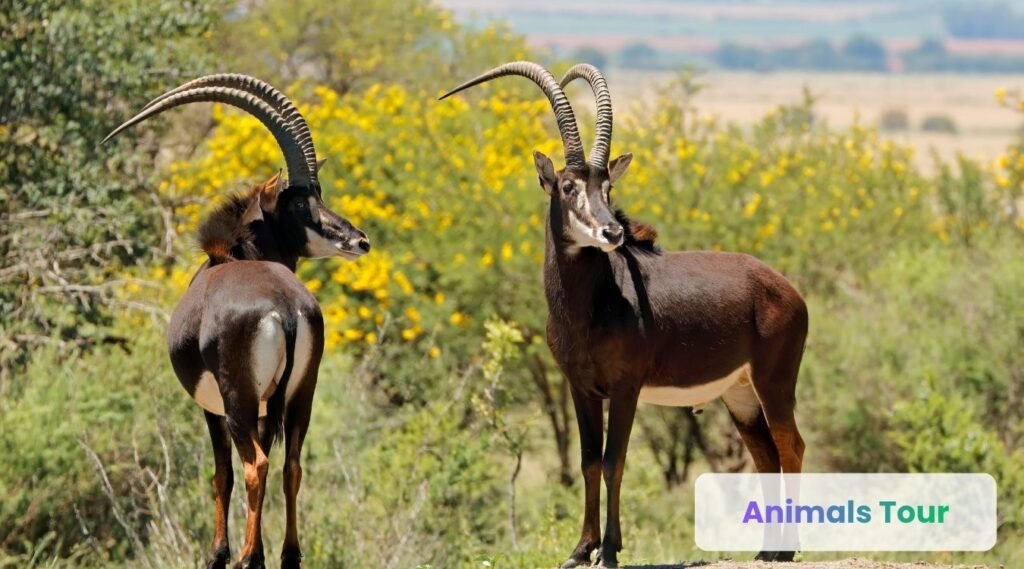
Despite their elegant shape, the horns are powerful defensive weapons. Sable Antelopes can stand their ground against predators like lions, and in rare cases have even killed attacking lions. Males also use their horns in fierce fights for dominance during the breeding season.
Fun Fact: The Sable Antelope is one of the very few antelope species capable of successfully defending itself against and killing a lion.
Topi (Damaliscus lunatus)
The Topi is a medium-sized African antelope found across sub-Saharan regions, with both males and females bearing lyre-shaped horns. These ridged horns usually measure 40–70 cm, with males having slightly thicker bases, though the overall shape is similar in both sexes.
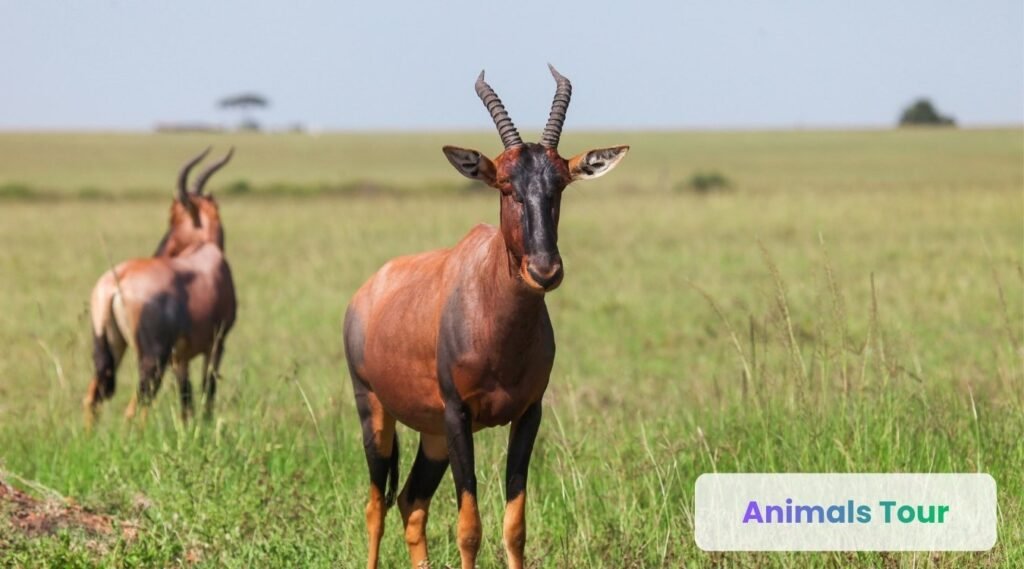
Males are highly territorial and frequently use their horns in breeding-season clashes, often fighting on elevated spots like termite mounds to display strength. They lock horns and push aggressively during these contests. The Topi is one of the fastest antelopes in Africa, capable of reaching speeds above 70 km/h, which combined with sharp alertness makes it a challenging target for predators.
Bongo (Tragelaphus eurycerus)
The Bongo is the largest forest antelope in Africa, with a striking chestnut coat marked by thin white stripes. Both males and females have horns, which is unusual for large antelopes. The horns form a gentle spiral twist, reaching 75–99 cm in large males, and end in smooth, pale yellow tips.
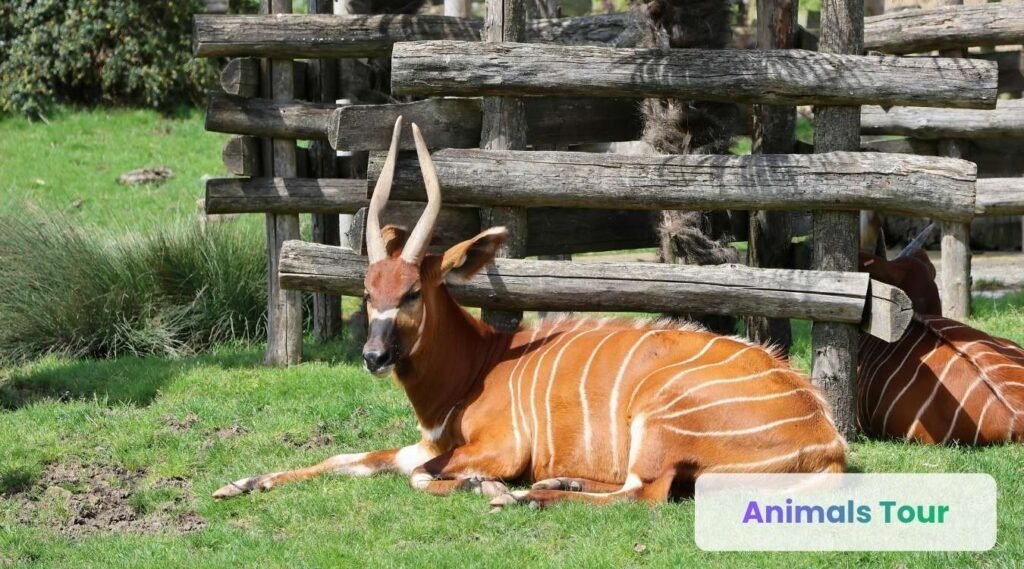
Bongos live in dense forests across central Africa and parts of Kenya. They are shy and rarely seen in the wild. To move through thick vegetation, they lay their horns flat along their back to avoid snagging on branches. Some populations, especially the mountain Bongo in Kenya, are critically endangered.
Fun Fact: The Bongo lays its horns flat along its back when moving through dense forest to avoid snagging them on branches, a behavior unique among horned animals.
Common Eland (Taurotragus oryx)
The Common Eland is the largest antelope in the world, and both males and females carry horns with a single tight spiral twist along their length. The spiral gives the horns a slightly ridged appearance despite being smooth to the touch. In an interesting reversal of the usual pattern among animals with horns, the female’s horns are often longer than the male’s, though the male’s are considerably thicker and more robust at the base.
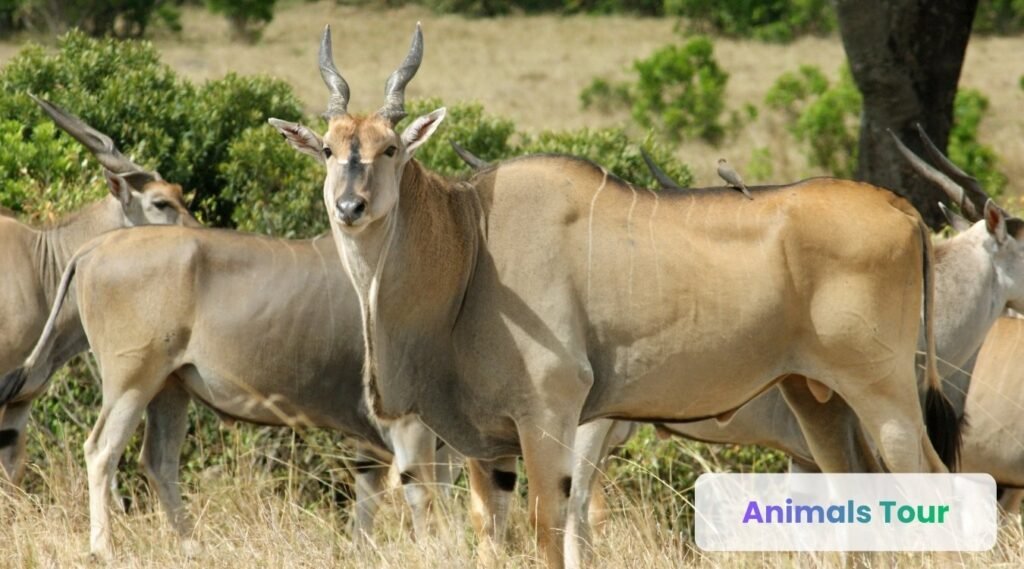
Male Eland use their horns in fights with rivals. They also make a loud clicking sound with their hooves as they walk, which signals a large, dominant male. Adult Eland can use their horns to defend against lions. Even though they are the largest antelope, they are strong jumpers and can clear fences over 2 meters high. They are also partly domesticated in some regions for milk and lean meat.
Conclusion
Looking at these animals with horns shows how important horns are in nature. Horned animals use them in many different ways, including defense, fighting, and showing strength. Each species has developed its own shape and style of horns to match its environment and way of life, from mountain horned animals to those living in open grasslands. Together, they highlight how nature shapes horned animals for survival, and why these animals with horns deserve understanding and protection.
FAQs
What is the difference between horns and antlers?
Horns are permanent and made of a bone core covered in keratin. Antlers are made of bone, shed every year, and are mainly found in deer species.
Do female animals have horns?
Yes, in many horned animals both males and females have horns, such as buffalo, oryx, and musk ox, though in some species only males have them.
Why do animals have horns?
Horns are mainly used for fighting, defense, and showing strength, and in some cases for digging or foraging.
Which animal has one horn on its head?
One-Horned Rhino