How High Can a Golden Eagle Fly? Amazing Facts
If you have ever stood in an open field and watched a bird disappear into the sky until it became little more than a speck, there is a good chance it was a golden eagle. These powerful birds of prey are among the world’s most impressive fliers, capable of soaring for hours and reaching heights that leave most other birds far below.
How high can a golden eagle fly? is a question that fascinates birdwatchers, wildlife enthusiasts, and anyone who has seen one circling high overhead. While golden eagles are capable of reaching remarkable altitudes, they do not simply fly high for the sake of it. Every climb serves a purpose, whether it is hunting, migrating, or taking advantage of rising air currents.
Golden Eagle-Aquila Chrysaetos
The golden eagle is one of the most widely distributed birds of prey in the world. It is found across North America, Europe, Asia, and parts of North Africa. Adults typically have a wingspan of 6 to 7.5 feet, with females larger than males. Their dark brown plumage and golden-bronze feathers on the back of the head and neck give the species its name.
Golden eagles prefer open landscapes such as mountains, plateaus, river valleys, grasslands, and shrublands. They often build large nests on cliff ledges and rocky outcrops, returning to the same site year after year. A breeding pair may defend a territory ranging from 20 to more than 100 square miles, depending on prey availability.

These powerful raptors mainly hunt rabbits, hares, ground squirrels, and prairie dogs, but they can also take larger prey, including foxes and young deer. With exceptional eyesight, powerful talons, and impressive speed, the golden eagle ranks among the top predators in the open habitats it calls home.
What Is the Maximum Altitude a Golden Eagle Can Reach?
Golden eagles are commonly observed flying at altitudes of around 10,000 to 15,000 feet (3,000 to 4,500 meters) above sea level. In mountainous regions, they have occasionally been reported at significantly greater heights while taking advantage of strong thermals and ridge lift.
Most verified observations place golden eagles below 20,000 feet (6,100 meters), although birds living in high mountain environments may approach these elevations under favorable conditions.

It is important to distinguish between a bird’s maximum observed altitude and its normal flight altitude. Most golden eagles spend much of their time much lower, often flying a few hundred to several thousand feet above the ground while hunting, defending territory, or traveling between feeding areas.
Their range includes many rugged landscapes such as the Rocky Mountains, Central Asian mountain ranges, and the Scottish Highlands, where conditions naturally support high altitude soaring.
How Golden Eagles Use Altitude to Hunt
Altitude is one of the golden eagle’s most effective hunting tools.
By climbing high above valleys, grasslands, and mountain slopes, a golden eagle gains a wide view of the landscape below. Their eyesight is estimated to be four to eight times sharper than that of humans, allowing them to detect prey from impressive distances.
From high above, an eagle can spot rabbits, hares, marmots, ground squirrels, and other animals moving across open terrain. Once prey is located, the eagle begins a controlled descent toward its target.

Instead of dropping straight down, the bird constantly adjusts its wings and tail feathers to maintain accuracy. Starting from a greater height gives the eagle more time to track prey movement and build speed before striking.
In some habitats, golden eagles use contour hunting, flying low along hillsides and ridges to surprise prey. However, in open landscapes, altitude often provides the greatest advantage.
Thermal Soaring: How Eagles Gain Altitude Without Flapping
One of the most remarkable aspects of golden eagle flight is how efficiently it uses energy. Golden eagles can gain thousands of feet in altitude without flapping their wings. They achieve this by using “thermal updrafts”, which are rising columns of warm air created when sunlight heats the ground.
When a golden eagle locates a thermal, it circles within the rising air. As the warm air rises, the eagle rises with it. By remaining close to the center of the thermal, the bird can continue climbing while expending very little energy.

On favorable days, a golden eagle may gain several thousand feet of altitude with only occasional wingbeats. Finding and using thermals requires skill. The eagle must constantly adjust its position to stay within the strongest part of the rising air column.
Once it reaches a suitable height, it glides toward another thermal and repeats the process. This method allows the bird to travel long distances while conserving energy.
Golden Eagle Flight Altitude by Region
The altitude at which golden eagles fly varies depending on geography, climate, and weather conditions.
Western North America
In areas such as the Rocky Mountains and Sierra Nevada, golden eagles frequently soar between 8,000 and 12,000 feet. During migration and ridge soaring, they may fly even higher.
Scotland and Northern Europe
Golden eagles in Scotland often hunt at lower altitudes than those living in major mountain ranges. Typical flights occur between “1,000 and 4,000 feet”, although they can soar higher when conditions are favorable.
Central Asia and High Mountain Regions
Golden eagles living in Central Asia regularly operate in high elevation environments. They are well adapted to hunting and traveling through landscapes where thinner air and rugged terrain challenge many other bird species.
Middle East and North Africa
In arid mountain regions, golden eagles often use powerful thermals generated by sun heated rock surfaces. They frequently reach their highest altitudes during the warmest parts of the day.
The important point is that golden eagle flight altitude depends largely on terrain, weather, and behavior rather than a fixed limit.
How High Can a Golden Eagle Fly vs. Other Eagles?
Golden eagles rank among the highest flying eagle species, but they are not the only impressive soarers.
Bald Eagle
The bald eagle, America’s national bird, typically flies at 10,000 feet or below during regular flight. They are strong fliers but are more closely tied to water and lower elevations. The golden eagle generally outperforms the bald eagle at high altitude, largely because the golden eagle’s body and habits are better adapted to mountainous terrain.

Wedge Tailed Eagle
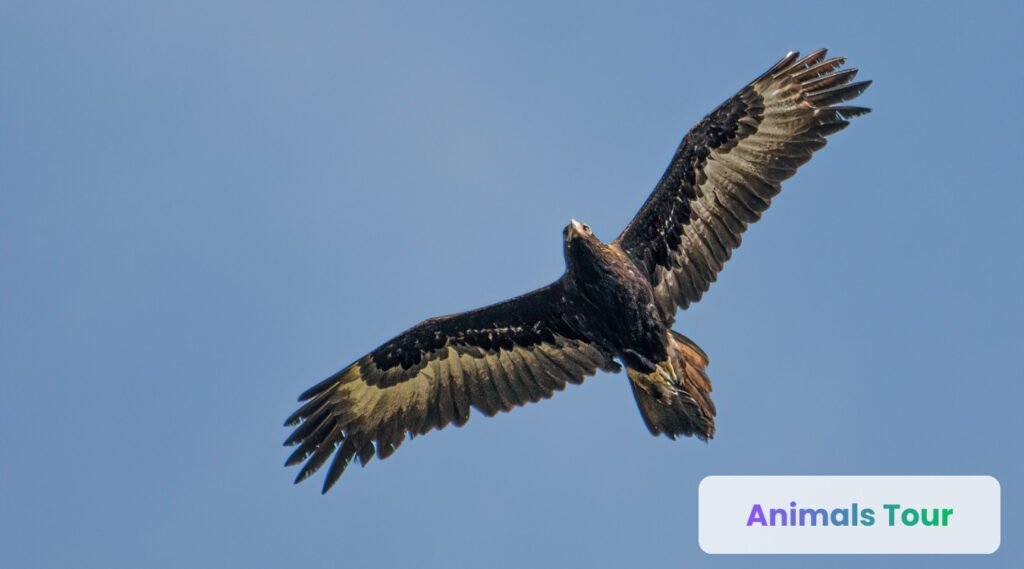
Australia’s largest bird of prey is a close relative in terms of size and habits. Wedge-tailed eagles have been recorded at altitudes similar to golden eagles -around 6,000 to 10,000 feet -but the relatively flat terrain of much of Australia limits how often they actually reach those heights.
Steppe Eagle
Found across Central Asia and parts of Africa, steppe eagles are known to soar at considerable altitudes, particularly during migration. They share some of the same high-altitude habitat with golden eagles in Central Asia, though the golden eagle is generally considered the more powerful and agile flier.

Harpy Eagle
he harpy eagle of Central and South America is the world’s largest eagle by mass, but it is a forest bird that rarely goes above the rainforest canopy. High-altitude soaring simply is not part of its lifestyle. In this specific comparison, the golden eagle wins easily.

Martial Eagle
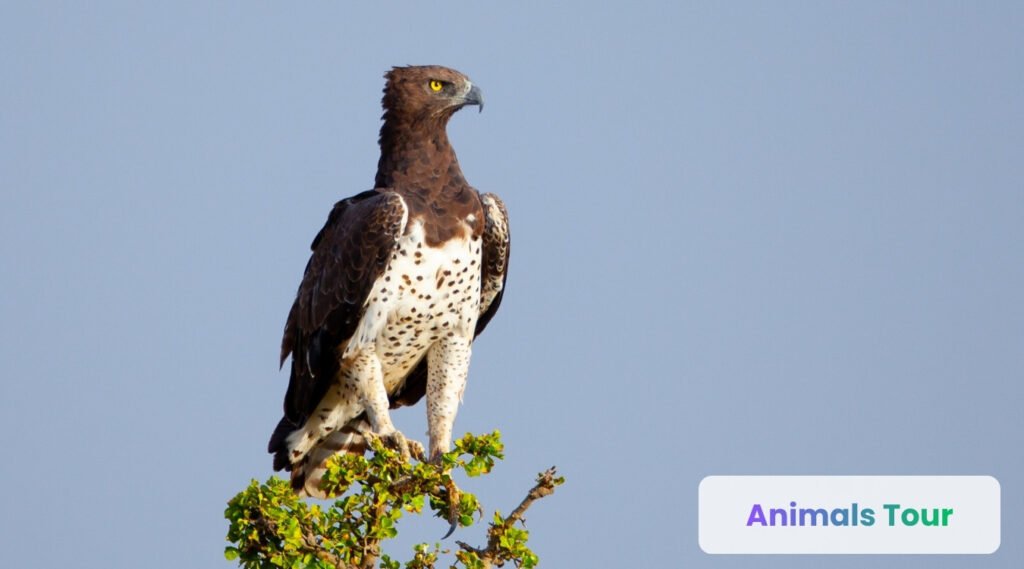
Another large, powerful eagle, the martial eagle soars at high altitudes over African savannas and can reach 6,000 to 9,000 feet. It is a worthy comparison to the golden eagle, though the golden eagle’s mountain-dwelling habits tend to push it higher overall.
Among eagle species, the golden eagle consistently ranks among the best when it comes to high altitude flight.
The Science Behind High Altitude Flight in Raptors
Flying at high altitude presents several challenges. Oxygen levels decrease, temperatures become colder, and thinner air generates less lift. Golden eagles overcome these challenges through a combination of physical adaptations.
Efficient Breathing and Oxygen Use
Like other highly capable raptors, golden eagles possess an efficient respiratory and circulatory system that allows them to function effectively in thinner air. Bird lungs operate differently from mammal lungs. Air moves continuously through specialized air sacs and respiratory passages, helping birds extract oxygen more efficiently.
Wing Design
A golden eagle’s wingspan typically ranges from **6 to 7.5 feet (1.8 to 2.3 meters)**. Its broad wings and slotted primary feathers create excellent lift while reducing turbulence. This wing design makes soaring highly efficient and allows the bird to remain airborne for extended periods.
Energy Efficiency
Soaring flight requires far less energy than constant flapping. By using thermals and ridge lift, golden eagles can travel long distances while conserving energy.
Cold Weather Adaptations
Golden eagles possess dense insulating feathers and physiological adaptations that help them maintain body temperature in cold, high altitude environments.
Together, these features make them exceptionally capable aerial predators.
Golden Eagle Speed and Altitude: How They Work Together
Altitude and speed are closely connected.
During normal flight, a golden eagle typically cruises at approximately 28 to 32 miles per hour (45 to 52 kilometers per hour). This speed allows efficient travel over long distances. During hunting dives, however, the bird becomes dramatically faster.
A golden eagle’s stoop can exceed 120 miles per hour (190 kilometers per hour), and some estimates suggest even higher speeds under ideal conditions. Starting from a greater altitude allows the bird to accelerate for a longer period before reaching its target.

Golden eagles also adjust their speed depending on the type of flight they are performing. They move relatively slowly while circling within thermals but increase speed while gliding between lift sources. This balance between speed and altitude is one of the reasons golden eagles are such effective hunters and travelers.
How High Can a Golden Eagle Fly During Migration?
Migration often pushes golden eagles to some of their greatest flight altitudes.
Golden eagles breeding in northern regions may travel hundreds or even thousands of miles between seasonal ranges. During these journeys, they rely heavily on thermals and ridge lift to conserve energy.
Studies tracking migrating golden eagles have recorded flight altitudes ranging from **3,000 feet to well over 15,000 feet**, particularly in mountainous areas where uplift is strong. Many birds follow ridgelines because winds striking mountain slopes create rising air currents that help maintain altitude without excessive flapping.

Migration altitude varies according to weather conditions. Strong thermals, favorable winds, and mountainous terrain often allow birds to travel higher. Poor weather may force them lower or delay migration. Young golden eagles also tend to fly less efficiently than experienced adults. As they mature, they learn the best migration routes and the most effective soaring strategies.
Quick Answers
How high can a golden eagle fly?
Golden eagles typically fly between “10,000 and 15,000 feet”, although they may occasionally reach greater heights in mountainous regions.
Can a golden eagle fly higher than a commercial airplane?
No. Commercial airliners usually cruise between “35,000 and 40,000 feet”, which is far above a golden eagle’s normal flight range.
How do golden eagles handle thin air at high altitude?
Golden eagles possess larger lungs and a unique circulatory system that helps them use oxygen efficiently, allowing them to thrive at high altitudes.
How fast can a golden eagle fly?
They can reach speeds of up to 200 miles per hour (320 kilometers per hour) during a dive.
Do golden eagles fly higher than other birds of prey?
Golden eagles are among the highest flying birds of prey, but some vultures, such as the “Rüppell’s griffon vulture”, have been recorded at much greater altitudes.
Is a golden eagle the highest flying eagle?
Golden eagles are among the highest flying eagle species, although limited data makes it difficult to identify a single highest flying eagle species with complete certainty.
What Limits How High Can a Golden Eagle Fly?
Despite their impressive capabilities, several factors limit how high golden eagles can fly.
Oxygen Availability
As altitude increases, oxygen becomes less available. Even with highly efficient respiratory systems, there is a practical limit to how much oxygen the bird can obtain.
Temperature
Higher altitudes bring colder conditions. Maintaining body temperature becomes increasingly difficult as elevation increases.
Air Density
Thinner air produces less lift, making sustained flight more challenging at extreme heights.
Thermal Availability
Without rising air currents, climbing requires significantly more energy. In many situations, thermal strength becomes the primary limiting factor.
Practical Need
Perhaps the most important limitation is necessity. Golden eagles generally fly only as high as needed for hunting, migration, or travel.
Final Answer
So, how high can a golden eagle fly?
Golden eagles typically soar between “10,000 and 15,000 feet (3,000 to 4,500 meters)” above sea level and are among the highest flying eagle species in the world. In mountainous regions, they may occasionally reach much greater heights while using thermals and ridge lift to conserve energy.
Their broad wings, exceptional eyesight, efficient respiratory system, and mastery of soaring flight allow them to hunt, travel, and migrate across vast landscapes with remarkable efficiency. Rather than relying on constant wingbeats, golden eagles use the atmosphere itself as a tool, riding invisible currents of rising air to heights that few birds regularly achieve.
When you see a golden eagle circling high overhead, you are watching one of nature’s most skilled aviators, a powerful predator perfectly adapted to life between the mountains and the sky.
FAQs
How high can a golden eagle fly?
Golden eagles can fly up to altitudes of around 15,000 feet (4,500 meters) and may occasionally reach greater heights in mountainous regions. Their broad wings, excellent soaring ability, and efficient respiratory system allow them to fly much higher than most birds of prey.
Can a golden eagle fly higher than a plane?
While they can fly high, golden eagles usually do not reach the cruising altitudes of commercial planes, which fly above 30,000 feet.
What is the highest-flying bird in the world?
The highest-flying bird is the Andean condor, which has been recorded at altitudes over 33,000 feet (10,000 meters).
How fast can a golden eagle fly?
They can reach speeds of up to 200 miles per hour (320 kilometers per hour) during a dive.
How high do golden eagles fly during migration?
During migration, they can fly at altitudes ranging from 10,000 to 15,000 feet (3,000 to 4,500 meters).