Discover Top 18 Animals with Webbed Feet (plus images)
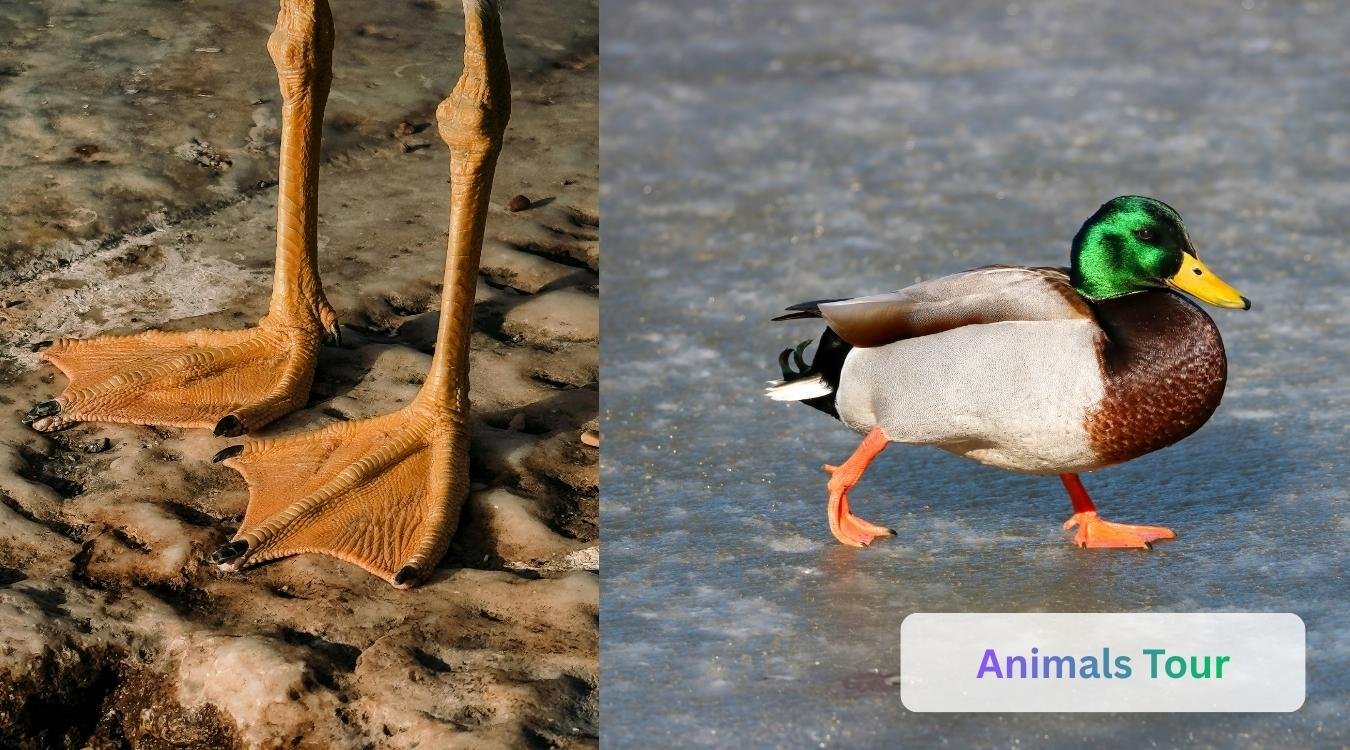
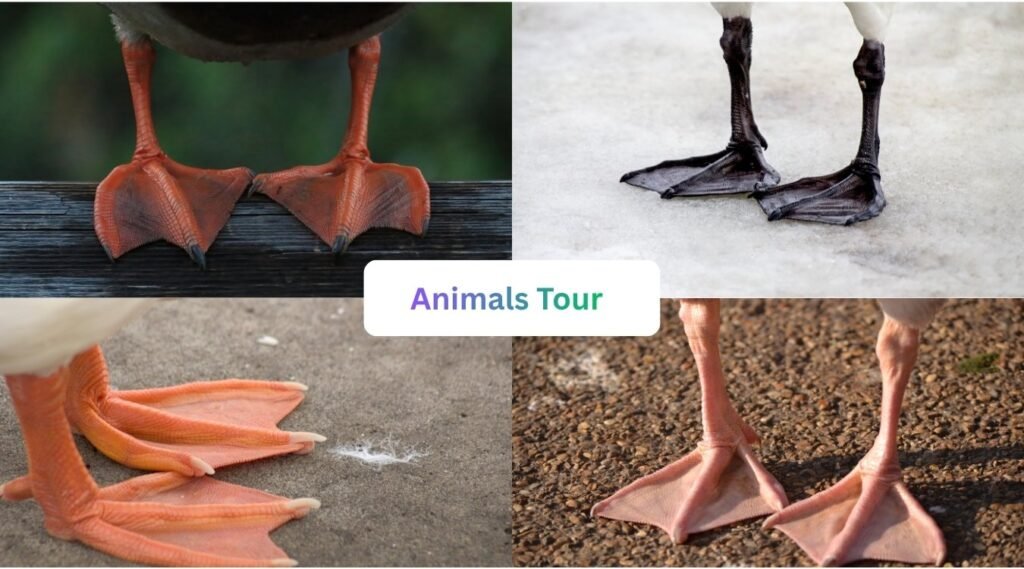
Webbed feet are one of nature’s most practical designs. Found across birds, mammals, reptiles, and amphibians, this feature helps animals thrive in their environments. Animals with webbed feet have developed this adaptation over thousands of years to survive in and around water. The webbing, a thin layer of skin connecting the toes, works like a natural paddle, pushing water backward and driving the animal forward. From the common duck to platypus, animals having webbed feet come in all shapes and sizes. In this article, we will look at the top 18 animals with webbed feet and what makes each one unique.
List of the top 18 Animals with Webbed Feet
- Mallard Duck
- Tufted Puffin
- Canadian Goose
- Wood Duck
- Brown Pelican
- American Beaver
- Platypus
- Sea Otter
- Polar Bear
- American Alligator
- Painted Turtle
- Red-Eared Slider
- Common Frog
- African Clawed Frog
- American Toad
- Common Moorhen
- Axolotl
- Flamingo
Mallard Duck
Scientific Name: Anas platyrhynchos
Class: Aves
Diet: Omnivore
The Mallard is one of the most familiar examples of animals with webbed feet. It is found across North America, Europe, and Asia in lakes, rivers, and wetlands. Its three front toes are joined by a flexible membrane that works like a natural paddle, spreading wide to push against the water and folding back to reduce resistance. This motion helps the bird swim smoothly, while the webbed feet also provide balance and light steering in the water.
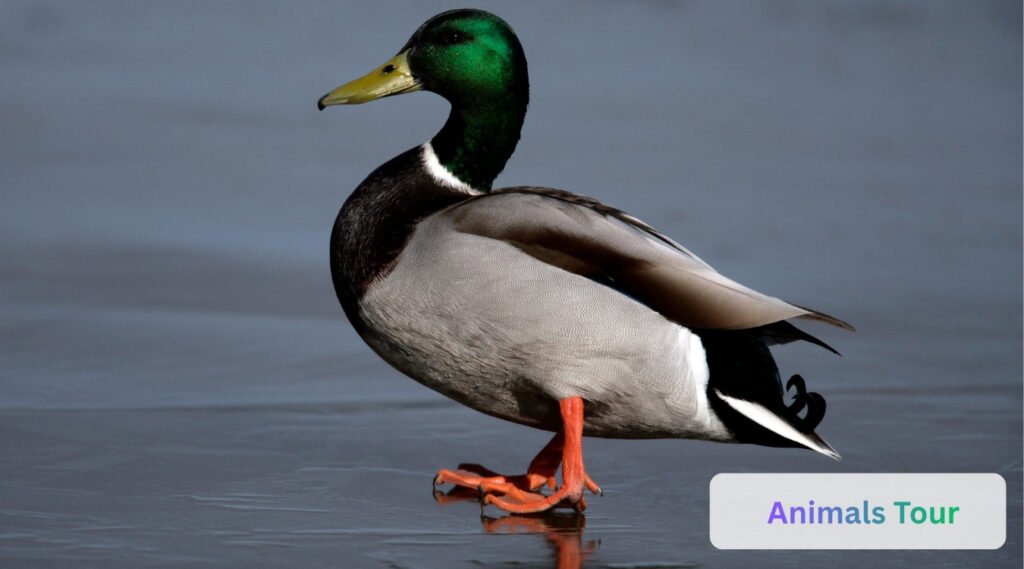
The male has a glossy green head and yellow bill, while the female is brown and speckled, but both share the same well-adapted feet. Mallards are dabbling ducks, feeding in shallow water where their webbed feet help them stay steady. On land, the webbing folds slightly for easier walking, and in colder regions, these feet are adapted to limit heat loss while swimming.
Canadian Goose
Scientific Name: Branta canadensis
Class: Aves
Diet: Herbivore
The Canadian Goose has large, fully webbed feet designed to handle both water and land with ease. In water, the webbing between its front toes creates a broad surface that pushes against the water with each stroke, helping the bird move smoothly despite its heavy body. On soft ground like muddy lakeshores and riverbanks, these wide feet spread its weight, preventing it from sinking.
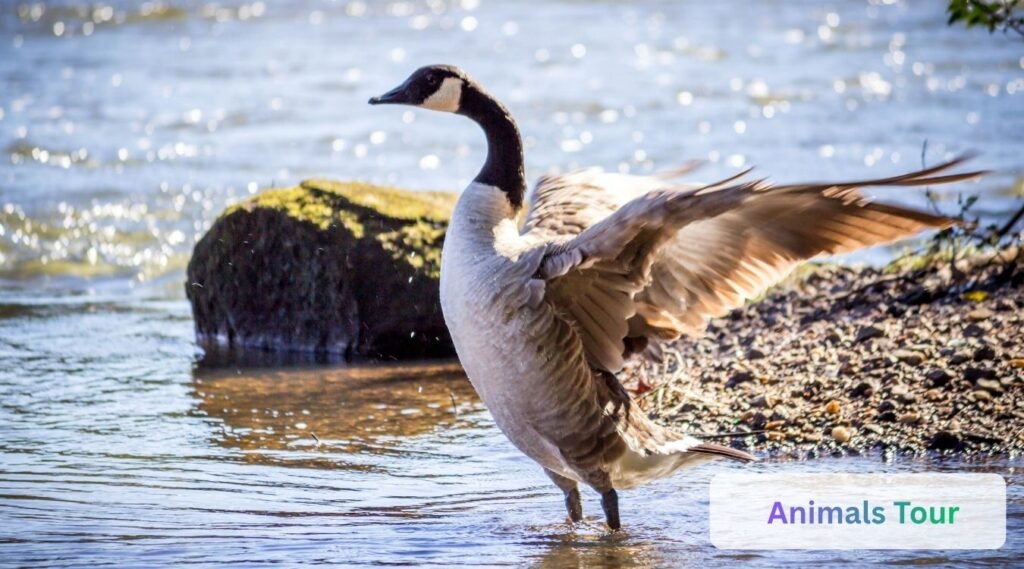
Canada Geese are easily recognized by their black neck, white chin patch, and brown body. Native to North America, they have spread widely across Europe and New Zealand. They are also famous for their V-shaped migration patterns, which help conserve energy during long flights. Their success in different environments is partly due to how effectively their webbed feet perform in both water and on land.
Tufted Puffin
Scientific Name: Fratercula cirrhata
Class: Aves
Diet: Carnivore
The Tufted Puffin’s webbed feet do something that most other birds’ feet cannot. Found along northern Pacific coastlines, this bird uses its wings to swim underwater while its webbed feet act as rudders, angling left or right to guide movement with precision. Instead of providing strong propulsion, the webbing plays a key role in control and balance, making it especially useful during fast dives to catch fish.
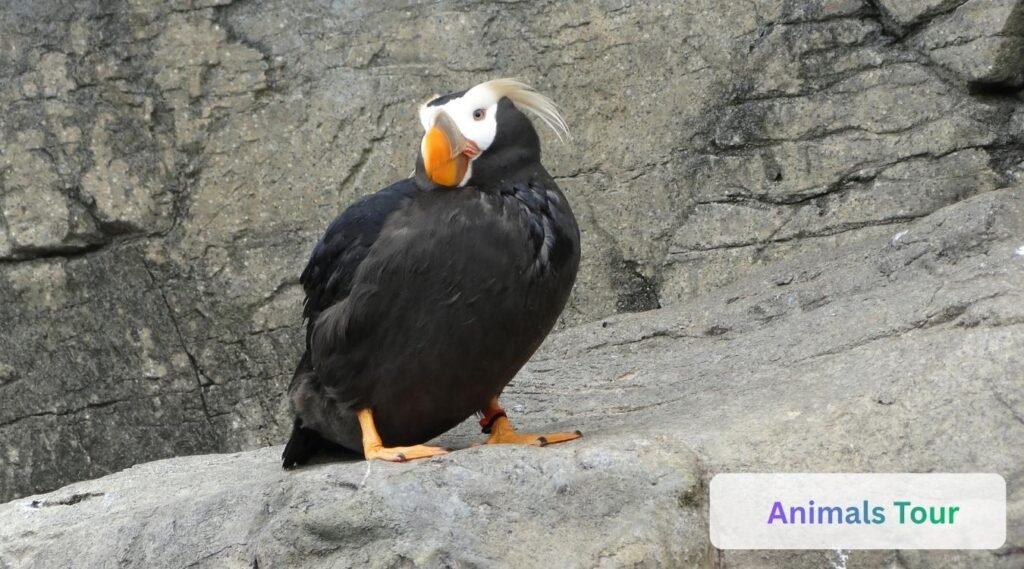
On land, those same feet are used for digging. Puffins nest in burrows on cliff faces, and the tough edges of their toes, along with short claws, help them scrape into soil and create tunnels. This means their webbed feet are useful in three ways: steering underwater, aiding movement at the surface, and digging on land. With its bold black and white body and large orange-red bill, the Tufted Puffin stands out as one of the most specialized examples on this list.
Wood Duck
Scientific Name: Aix sponsa
Class: Aves
Diet: Omnivore
Most ducks have webbed feet built purely for swimming, but the Wood Duck is different. Its feet are webbed for water movement yet also carry sharp claws, which allow it to grip and hold onto tree branches. This is not common among waterfowl. Wood Ducks nest in tree cavities, sometimes quite high above the ground, and the clawed webbed feet make it possible to perch and climb in ways that other ducks simply cannot.
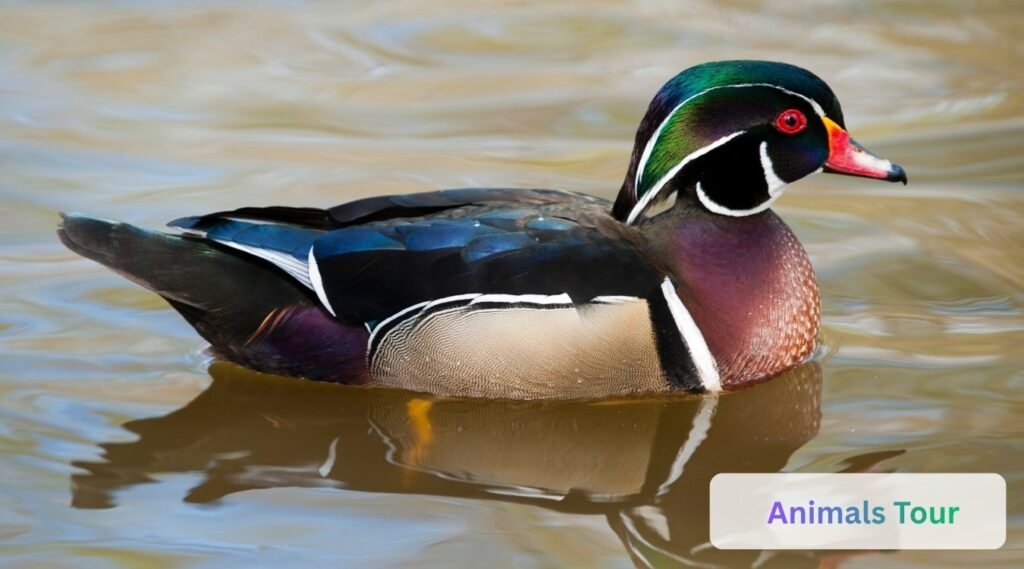
Shortly after hatching, Wood Duck chicks leap from the nest and fall safely to the ground below. From that point, the webbed feet take over for swimming through wooded swamps and slow-moving streams. The male is one of the most colorful ducks in North America, with iridescent green and purple feathers on its head. But it is the unusual combination of webbing and claws that makes the Wood Duck stand out among animals with webbed feet.
Brown Pelican
Scientific Name: Pelecanus occidentalis
Class: Aves
Diet: Carnivore (mainly fish like menhaden, anchovies, sardines)
The Brown Pelican has a kind of webbing you don’t see in most birds. Instead of just the three front toes being connected, all four toes are joined together. This is known as totipalmate webbing, and it gives the foot a broad, paddle-like shape. That extra surface really matters after a dive. When a pelican hits the water at speed, it needs a strong push to get back up, and those fully webbed feet help drive it to the surface with surprising power.
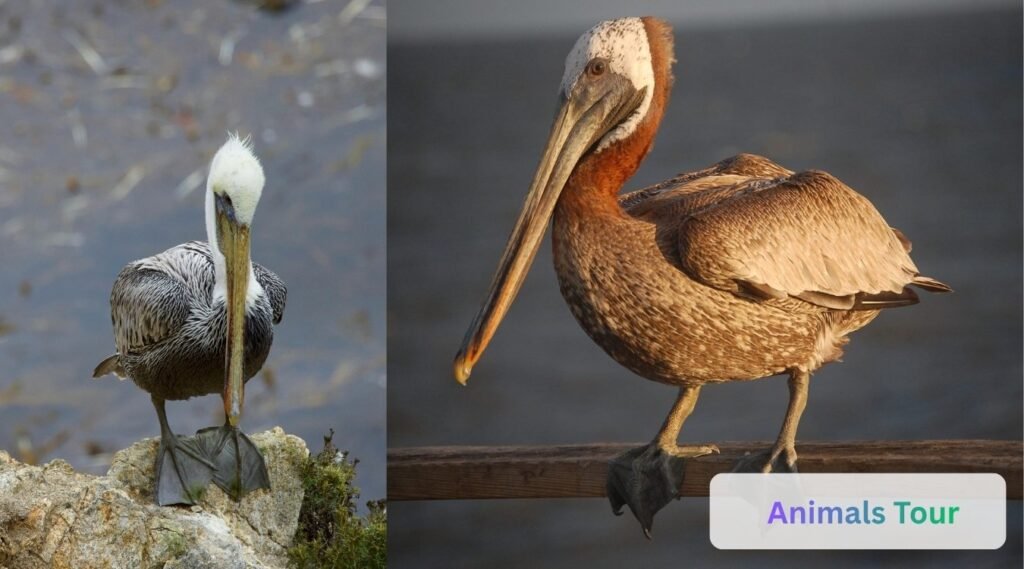
Found along the Atlantic and Pacific coasts of the Americas, the Brown Pelican is the smallest pelican species, but easily one of the most recognizable. It glides over the water, spots fish from above, and then drops headfirst to scoop them up in its throat pouch. Between dives, it moves calmly across the surface, using those same webbed feet for steady swimming. Out of all the animals on this list, its feet are the most completely webbed – built not just for swimming, but for handling the force of its dramatic hunting style.
American Beaver
Scientific Name: Castor canadensis
Class: Mammalia
Diet: Herbivore
Few animals rely on their webbed feet as directly as the American Beaver. Its large, fully webbed hind feet act like powerful paddles, pushing the beaver smoothly through rivers and streams with each kick. These feet are the main source of swimming power, while the flat tail serves as a rudder and helps with balance. The front feet, small and unwebbed, are reserved entirely for carrying and handling building materials.
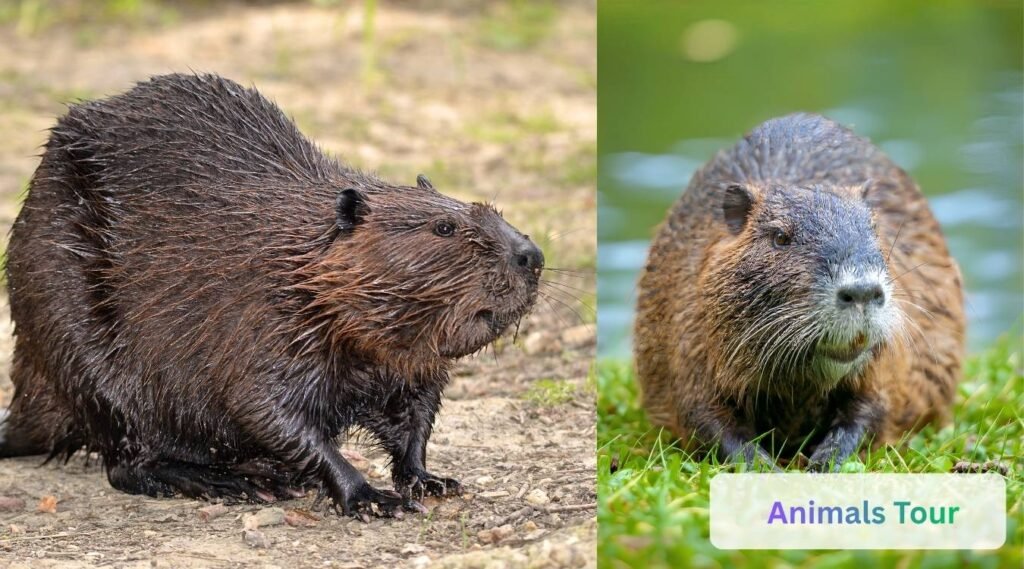
Beavers are famous for constructing dams and lodges, hauling mud, stones, and branches through the water again and again. None of this would be nearly as efficient without their strong, webbed hind feet. They can stay submerged for up to 15 minutes, and their thick, waterproof fur keeps them warm in cold water. Among mammals with webbed feet, the beaver is one of the clearest examples of how a single adaptation can shape almost every aspect of an animal’s life.
Platypus
Scientific Name: Ornithorhynchus anatinus
Class: Mammalia
Diet: Carnivore
The Platypus has one of the most unusual webbed feet in the animal kingdom. Its front feet are fully webbed, with the membrane extending past the claws to form broad swimming flaps. These flaps do most of the work when the Platypus hunts underwater, propelling it along the riverbed in search of food. On land, the extra webbing folds neatly under the foot, exposing the claws for walking and digging. No other animal’s webbed feet work quite like this.
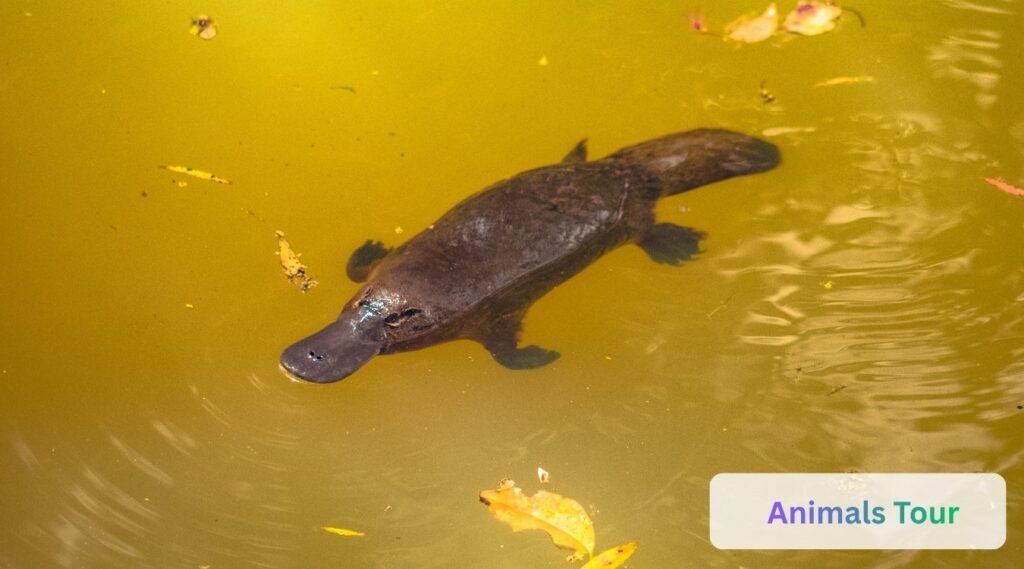
Native to eastern Australia, the Platypus is already one of the strangest mammals alive. It lays eggs, uses its duck-like bill to detect prey underwater, and males even have venomous spurs on their hind legs. When swimming, its eyes and ears close completely, so it navigates entirely through its bill’s electrical sense. The retractable webbing is just one more brilliant adaptation in an animal that seems to have been pieced together from several different creatures.
Sea Otter
Scientific Name: Enhydra lutris
Class: Mammalia
Diet: Carnivore
The Sea Otter’s hind feet are large, flat, and fully webbed, functioning more like flippers than ordinary feet. They provide the propulsion needed for swimming and diving along the Pacific coast, while the small front paws are used almost entirely for handling food. This difference between front and back feet is very noticeable in the Sea Otter, and it reflects how completely this animal has organized its body around life in the water. The hind feet do the traveling; the front paws do the eating.
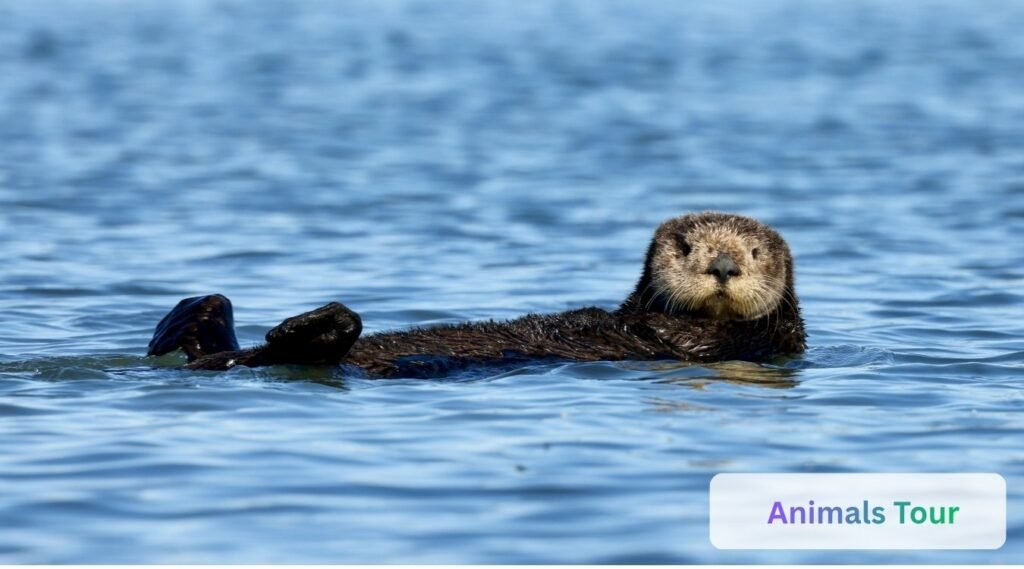
Sea Otters spend most of their lives in the ocean and rarely come onto land. They float on their backs to rest and eat, wrap themselves in kelp to avoid drifting while they sleep, and use stones to crack open shellfish on their chests. Their fur is the densest of any mammal, keeping them warm without the blubber that most marine animals rely on. As webbed feet mammals go, the Sea Otter is among the most fully committed to an aquatic way of life.
Polar Bear
Scientific Name: Ursus maritimus
Class: Mammalia
Diet: Carnivore (mainly seals, especially ringed and bearded seals)
The Polar Bear is not an animal most people would place on a list of webbed feet animals, but the partial webbing between its toes is real and serves a clear purpose. These bears are capable swimmers and can cross long stretches of icy Arctic water between ice floes when hunting or moving between areas. The partial webbing increases the surface area of their already large paws, improving paddling efficiency enough to make a difference over long distances in freezing water.
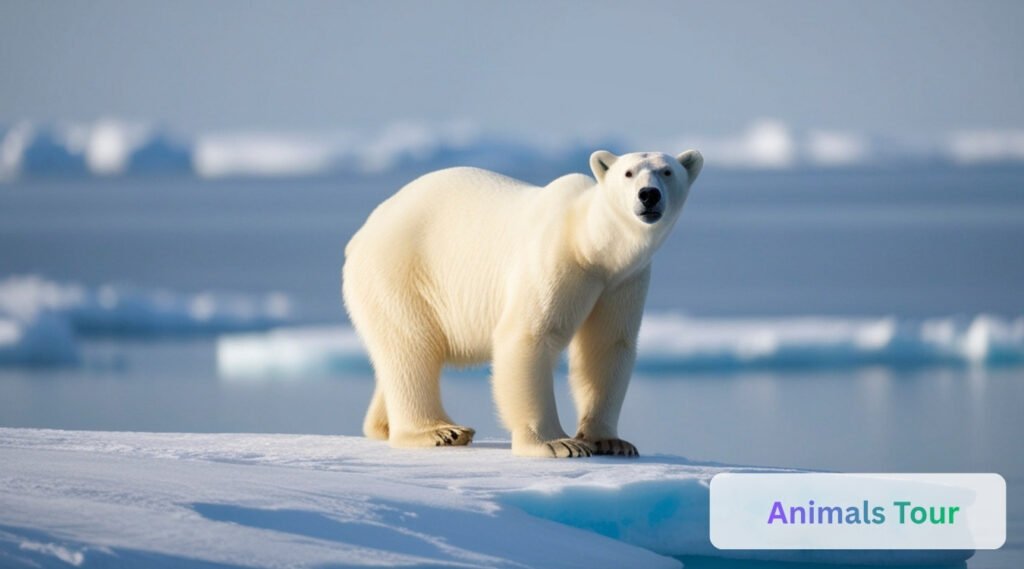
Their paws are also covered in small bumps called papillae that grip ice and prevent slipping. The Polar Bear is the world’s largest land predator and depends almost entirely on seals for food, which means both swimming and moving across ice are essential survival skills. The partial webbing is one part of a body well adapted to an extreme environment. It may be less dramatic than the full webbing of a duck or otter, but in the Arctic, every small advantage counts.
American Alligator
Scientific Name: Castor canadensis
Class: Mammalia
Diet: Herbivore
The American Alligator has webbed hind feet that play a supporting role in how it moves through its environment. In the water, the webbing helps with steering and slow maneuverability, particularly when the alligator needs to turn or hold its position in a gentle current. On soft riverbanks and muddy ground, the wide, webbed feet spread the animal’s considerable weight, making it easier to walk without sinking into the mud. For an animal that regularly moves between water and land, this is a useful feature.
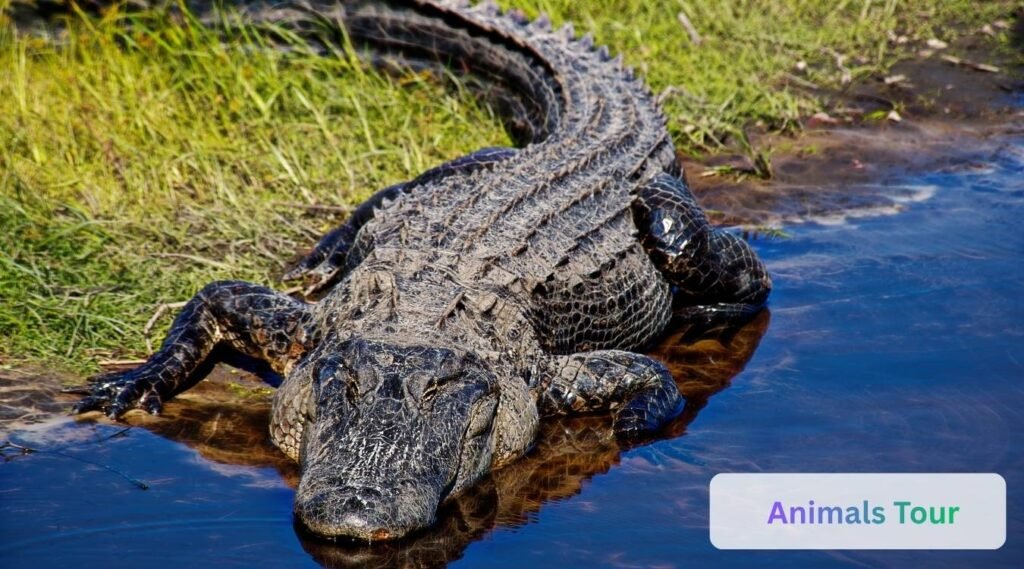
The alligator’s main swimming power comes from its thick, muscular tail rather than its feet. The webbed feet handle the fine adjustments: gentle turns, slow surface paddling, and stability in shallow water. American Alligators can grow over four meters long and are apex predators in the freshwater swamps, rivers, and marshes of the southeastern United States. Their body design has remained largely unchanged for millions of years, which says something about how well it works.
Painted Turtle
Scientific Name: Chrysemys picta
Class: Reptilia
Diet: Omnivore
The Painted Turtle uses its webbed feet as its primary means of moving through water. The toes are connected by a full membrane, and the turtle rows through ponds and streams using an alternating motion with its limbs, each stroke pushing water back and moving the body forward. The webbing gives each stroke more surface contact with the water, which matters when you are moving a shell-covered body that is not built for speed. It is not the fastest swimmer, but the webbed feet make it efficient enough for the life it leads.
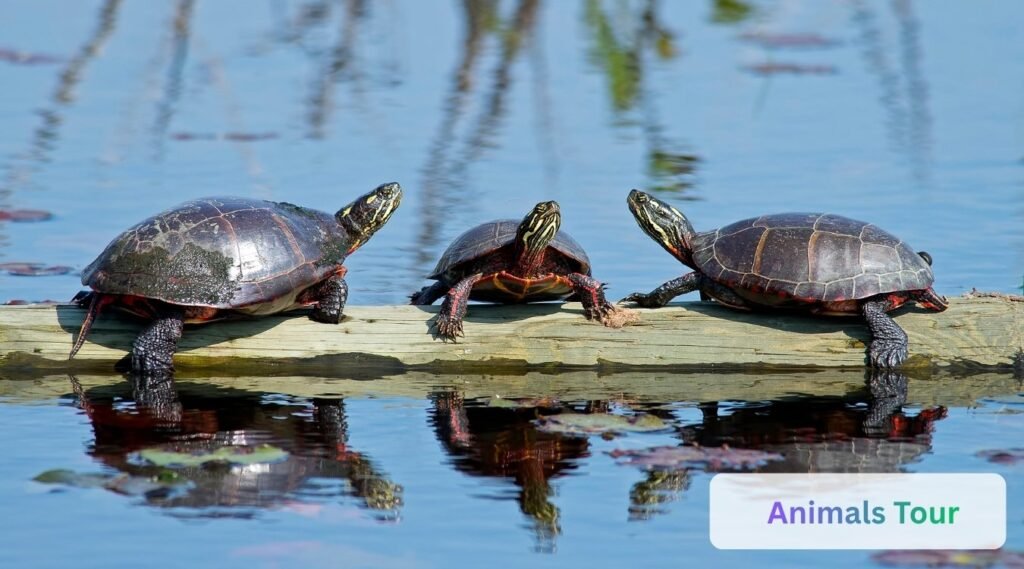
These turtles get their name from the bright red and yellow markings along the edges of their shell and underside, which look almost decorative. They are the most widespread native turtle in North America and are often seen basking on logs in groups at the water’s edge. Being cold-blooded, they depend on sunlight to warm up and become active. When something startles them, the webbed feet carry them back into the water in seconds. This quick retreat to the water is one of their main defenses against predators.
Red-Eared Slider
Scientific Name: Trachemys scripta elegans
Class: Reptilia
Diet: Omnivore
The Red-Eared Slider has fully webbed feet that make it a confident and capable swimmer. The toes are connected by a complete membrane, and the turtle uses a steady rowing motion to move through ponds, lakes, and slow rivers. It spends most of its life in or near the water, and the webbed feet are central to how it gets around, finds food, and escapes threats. When it needs to return to the water quickly from a basking spot, those feet make the transition fast and smooth.
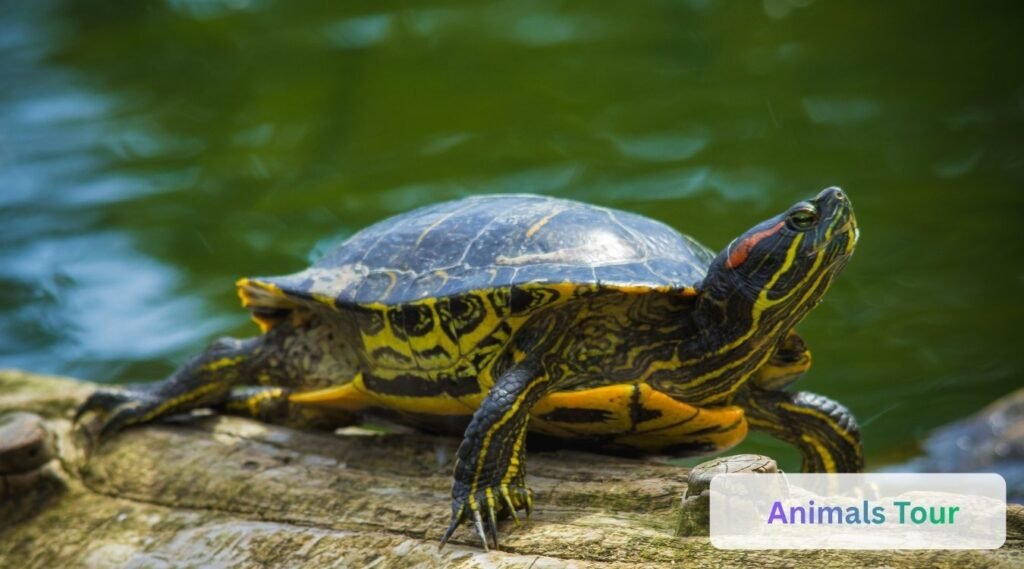
The small red stripe behind each eye gives this turtle its name and makes it easy to identify. Originally from the southern United States and northern Mexico, it has been spread to many parts of the world through the pet trade and is now considered invasive in several regions. Its ability to tolerate a wide range of water conditions has helped it establish itself almost anywhere it is introduced. The webbed feet are part of what makes it so adaptable, allowing it to swim effectively in many different types of freshwater habitats.
Common Frog
Scientific Name: Rana temporaria
Class: Amphibia
Diet: Insectivore
The Common Frog has fully webbed hind feet that are built around one core function: generating a powerful swimming kick. The long back toes are connected by a complete membrane, and when the legs extend backward, the webbing spreads wide and pushes a large volume of water behind the frog. This produces strong forward thrust with each kick. The front feet are small and unwebbed, used for landing and gripping rather than swimming. In the water, nearly all the work is done by those long, webbed back legs.
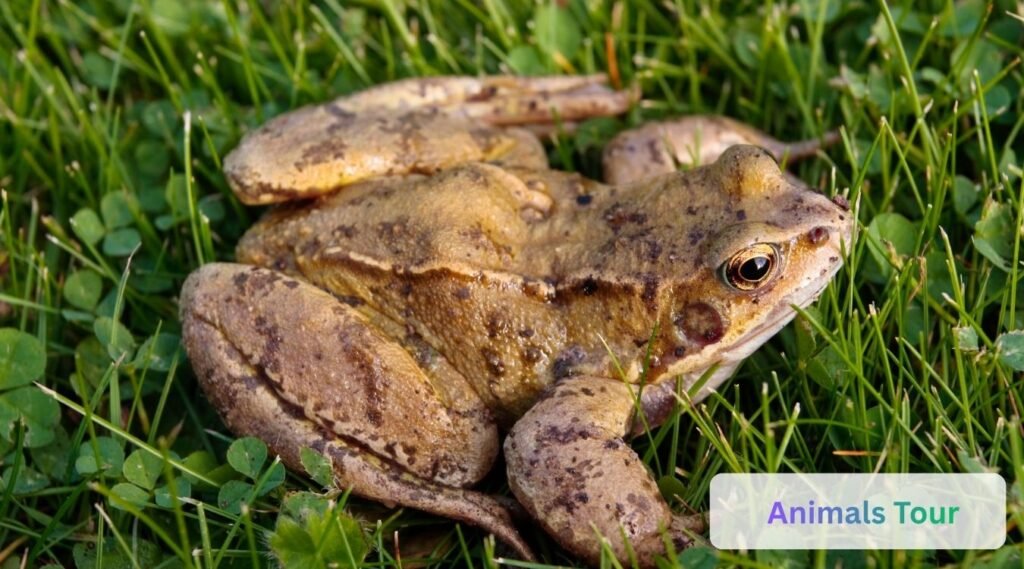
Interestingly, the webbing on a frog’s feet doesn’t cause any trouble on land. Since frogs hop rather than walk, the skin between their toes never gets in the way. The same powerful legs that propel them through water help them leap effortlessly across land. Common Frogs, found throughout much of Europe, can range in color from brown and olive to green and grey. They are a simple yet clear example of how webbed feet can be perfectly adapted to a specific purpose.
African Clawed Frog
Scientific Name: Xenopus laevis
Class: Amphibia
Diet: Carnivore
The African Clawed Frog is built for life in water, with large, heavily webbed hind feet that power both swimming and hunting. The full webbing between its long back toes provides strong propulsion, allowing it to chase small fish and invertebrates with ease. It spends nearly its entire life underwater, surfacing only to breathe, making its webbed feet essential. Its small, clawed front feet help shove prey into its mouth, since this species has no tongue.
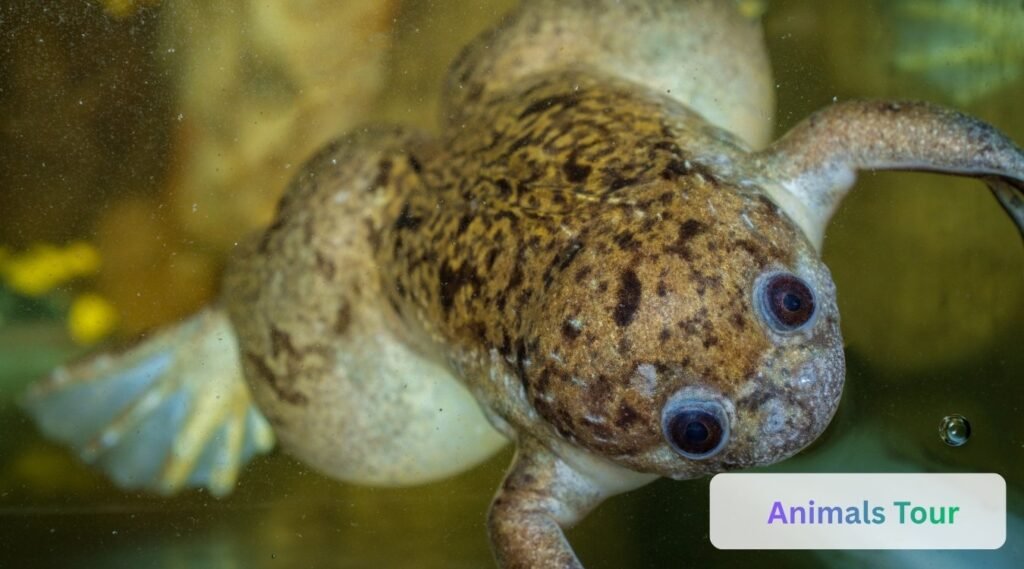
Native to sub-Saharan Africa, the African Clawed Frog is one of the most studied amphibians in science. Its eggs are large and develop externally, making them ideal for laboratory observation. Historically, this frog played a role in human pregnancy testing and continues to be valuable in medical research. Unlike many other frogs, it cannot jump well and has no eyelids—traits that highlight just how specialized it is for life in water. Among all web-footed animals, it is one of the most dependent on an aquatic environment.
American Toad
Scientific Name: Anaxyrus americanus
Class: Amphibia
Diet: Insectivore
The American Toad has only partial webbing between its hind toes, reflecting its mostly land-based life. It spends much of the year in gardens, forests, and grasslands, returning to ponds and streams only during the spring breeding season. The limited webbing provides just enough swimming power for occasional dips, without hindering its movement on land.
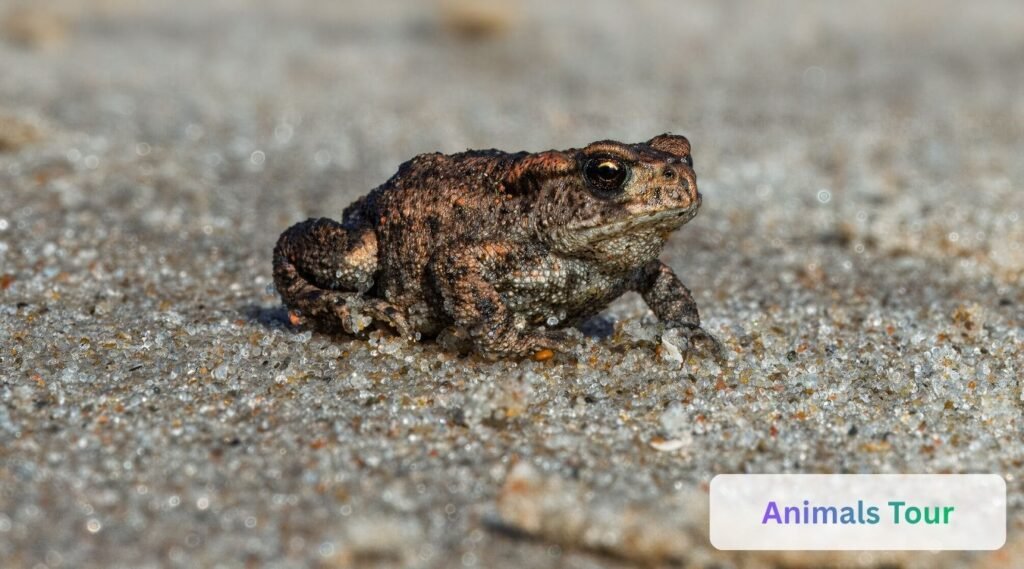
Its dry, bumpy skin, usually brown or grey, blends seamlessly into leaf litter and soil, while the bumps can release a mild toxin to ward off predators. During breeding season, the toads rely on their partial webbing to navigate water, but for the rest of the year, they remain firmly terrestrial. Though modest, their webbed feet serve their purpose precisely when needed.
Common Moorhen
Scientific Name: Gallinula chloropus
Class: Aves
Diet: Omnivore
The Common Moorhen does not have fully webbed feet like a duck. Instead, its long toes have lobes, small flaps of skin running along the sides of each toe rather than connecting them fully. This is a lighter form of webbing that still increases the surface area of the foot enough for decent swimming. The Moorhen uses these lobed toes to paddle across ponds and slow streams, though it is not as fast or powerful in the water as birds with full webbing.
The benefit of this design is that the long, unwebbed toes are excellent for walking on soft mud and floating vegetation, which fully webbed feet would handle poorly. The Moorhen is often seen picking its way along pond edges, bobbing its head as it moves. It has dark plumage, a red and yellow bill, and a white stripe along its flank. Its feet are a practical middle ground, good enough for swimming when needed but better suited to the mixed land and water lifestyle this bird actually leads.
Axolotl
Scientific Name: Ambystoma mexicanum
Class: Amphibia
Diet: Carnivore (worms, insects, small fish, larvae)
The Axolotl moves through the water at its own unhurried pace, and its small, lightly webbed feet perfectly match that lifestyle. It doesn’t chase prey or swim fast; instead, it slowly walks along muddy lake bottoms, gliding gently through the water. The delicate webbing between its toes gives just enough surface to help with these careful movements, making its feet tools for precision rather than power.
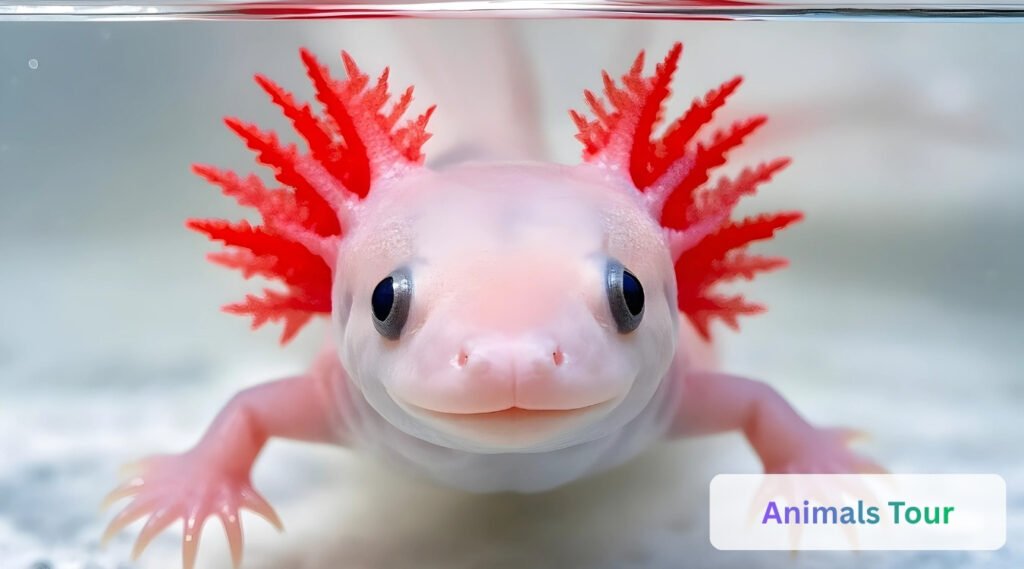
Native to the lake system near Mexico City, the Axolotl is a salamander that never undergoes full metamorphosis. It retains its feathery external gills, flat tail, and juvenile appearance throughout its life, a condition known as neoteny. Critically endangered in the wild, it is widely kept in captivity and studied for its extraordinary ability to regrow limbs, parts of the heart, and even sections of the brain. Among animals with webbed feet, the Axolotl stands out as one of the most biologically unique.
Flamingo
Scientific Name: Phoenicopterus (genus)
Class: Aves
Diet: Omnivore (algae, small crustaceans, plankton, insects)
Flamingos might not be the first animals you think of when it comes to webbed feet, but these birds rely on them in clever ways. Their webbing helps spread their weight across soft, muddy lake bottoms so they don’t sink, and it also lets them stomp the mud to stir up algae and tiny crustaceans. Using their curved bills, they filter these tiny food particles from the water-a method that wouldn’t work nearly as well without those webbed feet.
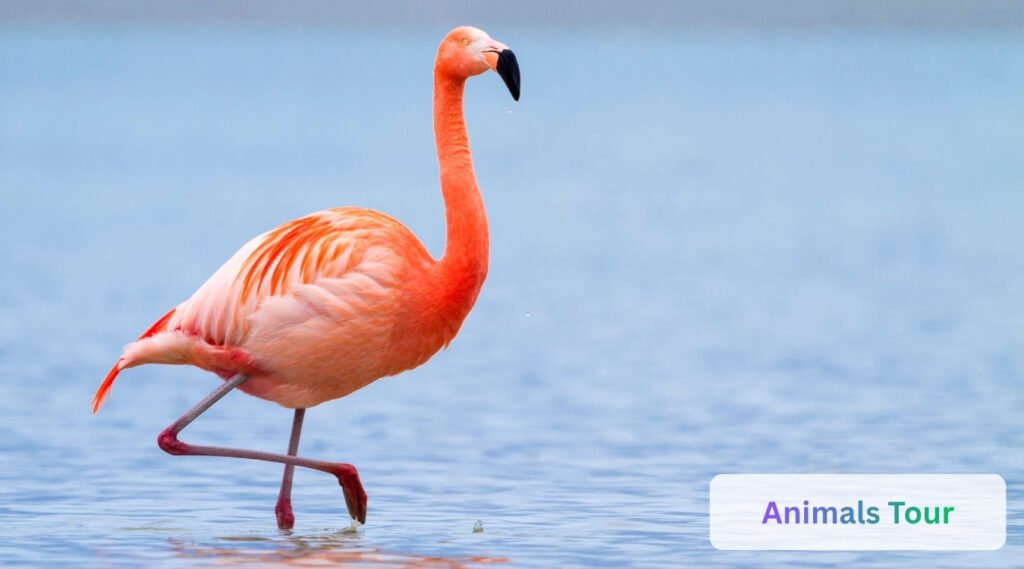
These striking birds gather in large flocks across Africa, the Caribbean, South America, and parts of Europe, often in salty or alkaline waters that most animals avoid. Their famous pink color comes from pigments in their diet, mostly shrimp and algae, and can fade if their food is lacking. Between their webbed feet, filter-feeding bills, and tolerance for extreme habitats, Flamingos show that webbed feet aren’t just for swimming-they can be a tool for balance, foraging, and thriving in surprising places.
Conclusion
By looking at these 18 animals with webbed feet, it is clear that a simple layer of skin between the toes can make a big difference in animal survival. Each species on this list uses its webbing differently, some depend on it for nearly everything, others only when the situation calls for it.
From mammals like the beaver and platypus to water birds like the pelican and puffin, these animals with webbed feet design, span continents, climates, and habitats. Full membranes, partial webbing, lobed toes, every version fits the animal it belongs to. So webbed feet are a brilliant example of how nature finds the right solution for different needs.
Frequently Asked Questions (FAQs)
What are webbed feet?
Webbed feet are the feet where toes are connected by a thin layer of skin. This webbing increases the surface area of the foot and helps animals paddle through water more efficiently.
Which mammals have webbed feet?
Several mammals with webbed feet include the American Beaver, Platypus, Sea Otter, and Polar Bear. Each uses the webbing differently depending on how much time it spends in the water.
Do all ducks have webbed feet?
Most duck species have fully webbed feet, but the degree of webbing can vary slightly between species. Ducks like the Mallard and Wood Duck are typical examples of webbed feet animals in bird world.
Are webbed feet only useful in water?
Not always. Some animals use their webbed feet on soft ground to avoid sinking, for digging burrows, or even for gripping branches, as in the case of the Wood Duck.
What is the difference between fully webbed and partially webbed feet?
Fully webbed feet have complete skin connections between all the toes, as seen in ducks and frogs. Partially webbed feet, like those of the American Toad or Polar Bear, have shorter or incomplete webbing and are found in animals that spend less time in the water.